how to clean a composite deck without damaging it
Learning how to clean composite deck surfaces safely starts with confirming the material, choosing a compatible cleaner, and using gentle tools. Composite boards can be durable, but abrasive brushes, harsh chemicals, dried cleaner residue, and uncontrolled pressure washing may leave permanent marks or discoloration.
Before cleaning, inspect the deck for loose boards, unstable stairs, moving railings, or widespread material damage. Structural problems should be evaluated before the surface becomes wet or slippery.
| Deck condition | Best first step | What to avoid |
|---|---|---|
| Loose dirt and leaves | Sweep with a soft outdoor broom | Scraping debris with metal tools |
| Food or drink spills | Blot or rinse promptly | Grinding the spill into the surface |
| Grease near a grill | Use an approved degreaser if permitted | Harsh solvents and undiluted chemicals |
| Mildew or algae | Apply a material-compatible cleaner | Mixing bleach with another cleaner |
| Rust or mineral stains | Identify the source and check approved products | Unapproved acids or rust removers |
| Unknown or stubborn stains | Test a recommended cleaner in a hidden area | Repeated aggressive scrubbing |
Confirm the Deck Material Before Cleaning
Composite decking products do not all have the same surface or care requirements. Some boards have a protective cap, while others expose more of the composite material. PVC decking may also resemble composite boards but require different products.
Manufacturer instructions take priority over general cleaning advice. Check the product documentation, care guide, warranty information, or manufacturer website when you know the decking brand and product line.
Confirm that a cleaner is approved for capped composite, uncapped composite, or PVC decking before applying it. Do not assume a cleaner intended for wood is safe for a manufactured deck surface.
Test every new product in an inconspicuous area. Allow the test spot to dry completely so you can check for color changes, dullness, residue, or surface damage before cleaning a larger section.
Inspect the Deck Before Cleaning
Walk around the deck from the ground before stepping onto it. Look for loose or damaged boards, raised or missing fasteners, cracks, heat damage, standing water, and slippery growth.
Check stairs and railings visually. Use only gentle hand pressure on a railing that appears stable, and do not lean your weight against it. Avoid walking on an area that shifts or feels unstable.
Surface dirt and stains can usually be addressed through routine cleaning. Structural movement, unstable stairs or railings, widespread cracking, severe deterioration, or separation from the house requires professional evaluation before cleaning begins.
Cleaning will not correct loose framing, damaged connections, or deteriorated supports. Keep people away from unsafe areas and do not work beneath an unstable deck.
Use the full deck inspection checklist when you notice movement, damaged fasteners, unstable stairs, or railing concerns before washing.
Gather Safe Cleaning Tools
Choose tools that remove dirt without grinding, scratching, or cutting into the deck surface.
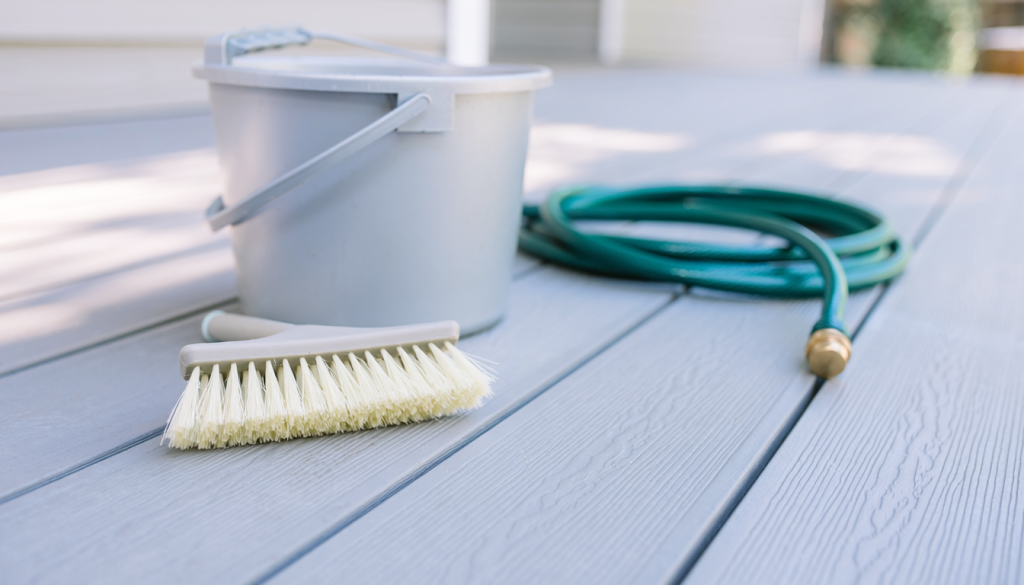
Basic cleaning supplies
- Outdoor broom
- Soft-bristle or manufacturer-approved brush
- Bucket
- Garden hose
- Non-abrasive cloth or sponge
- Manufacturer-approved cleaner
- Gloves and eye protection when required by the cleaner label
Avoid stiff wire brushes, abrasive pads, metal scrapers, and sharp tools. These may scratch protective caps, change the sheen, create permanent grooves, or expose material beneath the surface.
Use a brush that is firm enough to loosen dirt but not so stiff that it leaves visible marks. When uncertain, test the brush along with the cleaner.
Remove Loose Debris First
Sweep away leaves, dirt, pollen, twigs, and other dry debris before introducing water. Pay attention to corners, stair treads, railing bases, and areas near exterior doors.
Check the gaps between boards for trapped leaves and soil. Use a nonmarring tool or soft brush rather than a blade or metal scraper.
Move lightweight furniture, rugs, mats, and planters. Sweep beneath them and inspect for damp debris, rust stains, mildew, or discoloration.
Dry debris removal reduces scratching during washing and makes individual stains easier to identify. It also prevents leaves and soil from turning into muddy residue once the deck becomes wet.
Choose a Compatible Cleaner
Follow the decking manufacturer’s approved-cleaner guidance whenever it is available. Read the cleaner label before use and confirm that the product matches the deck material and type of stain.
Check the required dilution, application method, contact time, rinsing procedure, and protective equipment. Using a stronger concentration than directed can damage the surface without improving the result.
Protect nearby plants according to the product directions. Control runoff so dirty water and cleaner do not collect near the house, enter storm drains when prohibited, or flow into planting beds.
Never mix cleaning products. Combining bleach, ammonia, acids, degreasers, mildew removers, or other chemicals may produce dangerous fumes or damage the decking.
How to Clean a Composite Deck Step by Step
Follow this beginner-safe sequence
- Check the weather and product requirements. Choose conditions that meet the cleaner manufacturer’s temperature, sunlight, rain, and drying instructions.
- Remove furniture and loose debris. Sweep the surface and clear accessible board gaps before washing.
- Test the cleaner. Apply it to a hidden area using the planned dilution, brush, and rinsing method. Let the spot dry before continuing.
- Wet the surface only when instructed. Some cleaners are applied to a damp surface, while others require a dry surface.
- Apply cleaner in manageable sections. Work in an area small enough to scrub and rinse before the product dries.
- Scrub gently when appropriate. Use a soft brush and follow the board direction when recommended. Avoid aggressive back-and-forth grinding.
- Keep the cleaner from drying. Unless the instructions say otherwise, do not leave cleaner on the boards until it forms residue.
- Rinse thoroughly. Remove loosened dirt and cleaner from the boards, gaps, edges, stairs, and nearby railings.
- Inspect for residue. Look for suds, streaks, cloudy areas, or slippery patches and rinse again if permitted.
- Allow the deck to dry. Wait until the boards, stairs, and railings are dry before replacing furniture, rugs, or planters.
Clean Food and Drink Spills
Blot liquid spills or rinse them promptly before they spread. Pick up solid food carefully instead of scrubbing it into the board texture.
Use a mild, compatible cleaner when water alone is not enough. Apply it according to the label, scrub gently if allowed, and rinse away all residue.
Repeat the process only as permitted by the cleaner and decking manufacturers. Repeated strong applications or aggressive scrubbing may create a more noticeable mark than the original stain.
Some spills can leave lasting discoloration, especially when they remain on the deck for a long time. Cleaning may improve the appearance without removing every trace.
Remove Grease and Grill Stains
Clean grease and cooking oil as soon as practical. Blot excess material without spreading it across the deck.
Use a manufacturer-approved degreaser only when the decking care instructions permit it. Test the product first and follow the exact dilution and dwell-time directions.
Rinse thoroughly so cleaner and loosened grease do not remain in the board texture or joints. Check beneath grill mats for trapped grease, moisture, heat marks, and discoloration.
Avoid harsh solvents. Strong solvent-based products can soften, dull, discolor, or otherwise damage composite and PVC surfaces.
Clean Mildew, Mold, and Algae
Organic growth often appears where leaves, pollen, moisture, and shade remain together. Areas beneath rugs, furniture, planters, and overhanging vegetation deserve particular attention.
Use a cleaner approved for the specific decking material. Keep people and pets off the area while it is wet, scrub gently, and rinse the surface completely.
Do not mix bleach with any other cleaner. Use chlorine bleach only when the decking manufacturer specifically permits it and follow all stated limits.
Improve simple drying conditions after cleaning. Move items that trap moisture, remove wet leaves, and avoid draining planters repeatedly onto one location.
Surface cleaning does not identify or correct hidden moisture damage in the deck framing. Persistent dampness, structural movement, or deterioration beneath the boards requires professional evaluation.
Address Rust, Mineral, and Tannin Stains
Identify the likely stain source before choosing a product. Check metal furniture feet, planter hardware, fasteners, irrigation water, hard-water deposits, and wet leaves.
Rust-colored marks do not always come from the decking itself. Removing or isolating the source may help prevent the stain from returning.
Use only a specialty cleaner approved by the deck manufacturer. Test it in a hidden area and follow the label closely.
Do not use acids or general-purpose rust removers unless they are specifically approved for the decking product. Stop immediately if the test area becomes lighter, darker, dull, sticky, or otherwise discolored.
Can You Pressure-Wash Composite Decking?
Some manufacturers permit limited pressure washing, while others set strict requirements for the machine, nozzle, spray pattern, and distance from the surface.
Excessive pressure can damage a board’s protective cap, cut visible lines into the surface, disturb joints, and force water into places where it should not go. A narrow or concentrated spray may leave permanent marks.
Never guess at a safe pressure. Follow the exact instructions for the decking brand and product line.
When the manufacturer cannot be identified or its guidance is unavailable, use a garden hose, compatible cleaner, and soft brush instead. This gentler approach offers more control and less risk of surface damage.
How to Rinse Without Leaving Cleaner Residue
Work in manageable sections so the cleaner can be rinsed before it dries. Avoid cleaning a large sun-heated area all at once.
Rinse board surfaces, gaps, edges, stair treads, railing bases, and nearby vertical surfaces. Cleaner can collect in textured areas and around fasteners.
Watch for suds, streaks, cloudy spots, or areas that feel slick. Rinse again when the product instructions allow it.
Direct runoff away from sensitive plants and storm drains as required by the cleaner label and local rules. Do not allow large amounts of water to collect beside the house or around deck supports.
Cleaner residue may leave streaks, attract dirt, or create a slippery surface. Let the deck dry fully before reopening it to normal foot traffic.
What Not to Use on Composite Decking
Avoid these damaging methods and products
- Wire brushes: They can scratch or cut the surface.
- Abrasive sanding pads: They may remove texture or change the sheen.
- Metal scrapers: They can gouge protective caps and board edges.
- Unapproved solvents: They may soften, discolor, or deform the material.
- Undiluted harsh chemicals: Strong concentrations can cause permanent damage.
- Mixed cleaning products: Chemical combinations may create fumes or harmful reactions.
- Aggressive pressure washing: Excessive force can leave lines and surface damage.
- Paint stripper: It may attack the board material or factory finish.
- Wood brightener: It may contain ingredients unsuitable for composite decking.
- Chlorine bleach: Use it only when the manufacturer specifically permits it.
- Sandpaper or power sanding: Sanding can permanently alter the color and texture.
Clean Composite Railings and Stairs
Use products approved for both the deck boards and railing material. Composite boards, coated metal railings, vinyl components, and painted parts may have different cleaning requirements.
Clean hand-contact areas with a non-abrasive cloth or soft brush. Rinse stair treads carefully and make sure cleaner does not remain in textured surfaces or corners.
Inspect visible fasteners and connections while cleaning. Missing hardware, movement, corrosion, or connections pulling apart require further evaluation.
Restrict access until stairs, handrails, and walking surfaces are fully rinsed and dry. Do not provide support or temporary use of a loose railing or unstable stair.
Prevent Future Buildup
Use these simple maintenance habits
- Sweep the deck regularly.
- Clean food, grease, and drink spills promptly.
- Move rugs, furniture, and planters occasionally.
- Keep grill areas free of grease and dropped food.
- Avoid repeated planter drainage onto one spot.
- Remove wet leaves before they compact.
- Keep board gaps clear of accessible debris.
- Follow the manufacturer’s care instructions.
These habits reduce cleaning effort without replacing routine deck inspections.
Add these cleaning habits to a broader deck maintenance checklist so debris, drainage, fasteners, and walking surfaces are reviewed throughout the year.
When to Contact the Manufacturer or a Professional
Contact the decking manufacturer when you cannot identify an approved cleaner, need warranty guidance, or are uncertain whether a stain treatment or pressure washer is permitted.
Seek additional help for
- An unknown decking brand or material
- Persistent discoloration after approved cleaning
- Stains that worsen during testing
- Surface peeling, cracking, swelling, or delamination
- Melted or distorted areas caused by heat
- Widespread slippery growth that returns quickly
- Movement in the deck or supporting structure
- Loose railings or unstable stairs
- Questions involving warranties or approved products
A qualified deck professional should evaluate structural movement, damaged framing, unstable stairs, and loose railings before cleaning continues.
Final Thoughts
Composite decking is best cleaned with gentle tools, compatible products, careful testing, and complete rinsing. Manufacturer instructions matter because capped composite, uncapped composite, and PVC boards may respond differently to the same cleaner or method.
Avoid abrasives, harsh solvents, mixed chemicals, and uncontrolled pressure washing. These shortcuts can cause discoloration, scratches, residue, or permanent surface damage that ordinary cleaning cannot reverse.