Deck Inspection Checklist for Homeowners
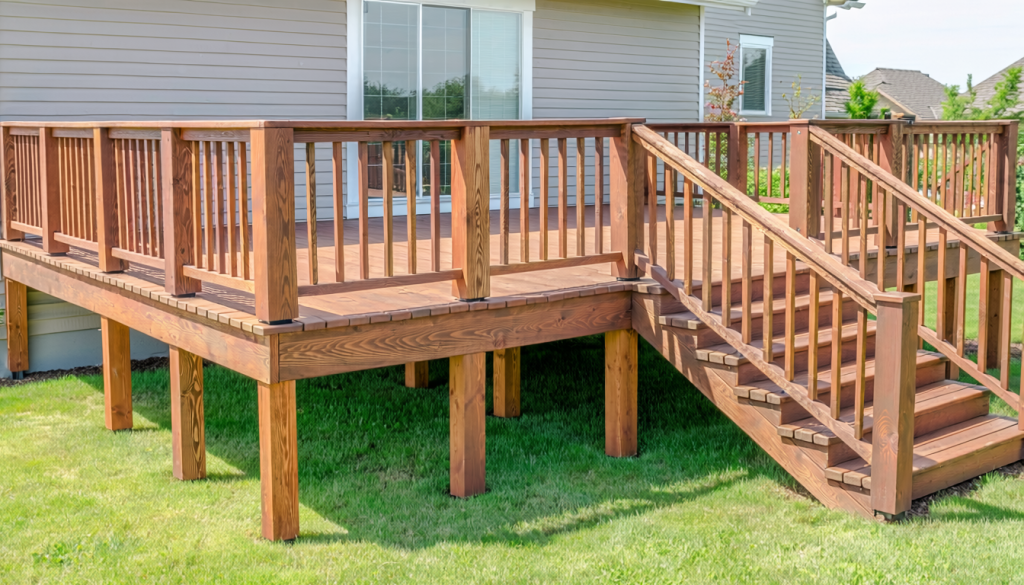
A regular deck inspection checklist helps homeowners notice loose surfaces, moisture damage, movement, and other warning signs before someone gets hurt. The inspection should remain visual and observational, especially around structural supports and connections.
Begin from the ground and stop immediately if the deck appears unstable. Significant movement, sagging, leaning posts, loose railings, unstable stairs, or separation from the house require professional evaluation before the deck is used again.
| Deck area | What to inspect | Warning signs |
|---|---|---|
| Deck boards | Cracks, warping, softness, splinters, and movement | Soft boards, raised edges, widespread deterioration, or sudden level changes |
| Railings and stairs | Posts, balusters, treads, handrails, and connections | Significant movement, loose parts, open gaps, or unstable steps |
| Fasteners and connections | Nails, screws, bolts, brackets, and visible gaps | Missing hardware, corrosion, pulling apart, or widening gaps |
| Posts and supports | Alignment, cracks, decay, corrosion, and movement | Leaning posts, sagging beams, damaged supports, or crumbling material |
| Drainage and moisture | Standing water, erosion, wet areas, and blocked gaps | Repeated dampness, soil loss, water near posts, or rot |
| House connection | Alignment, staining, gaps, hardware, and water damage | Separation, movement, corrosion, rot, or an uncertain connection |
Inspect the Deck From the Ground First
Walk around the entire deck before stepping onto it. View the structure from several angles and compare the alignment of posts, beams, stairs, and railings. Changes are often easier to spot when you stand back rather than looking from directly beside the deck.
Look for leaning posts, sagging areas, visible movement, badly deteriorated wood, and separation between the deck and the house. Check the ground for fallen hardware, pieces of wood, erosion, or debris that may have dropped from above.
Inspect the deck after severe storms, high winds, heavy snow, flooding, or impact from a fallen branch. Weather damage may affect connections or supports even when the walking surface initially looks normal.
Keep people and pets away if the structure appears unstable. Do not climb beneath it, shake railings or supports, place heavy objects on it, or load the deck to see whether it moves. Testing a questionable structure can worsen the damage or cause a sudden failure.
Check the Deck Surface
Step onto the deck only when the initial ground-level inspection reveals no visible instability. Walk normally and stay alert for boards that shift or feel different underfoot.
Look for cracked, warped, or cupped boards. Raised edges and badly warped boards can create trip hazards, while large cracks may weaken an individual board. Splinters are usually a surface concern, but widespread splitting can indicate advanced weathering or deterioration.
Check for soft or unusually dark wood, especially near doors, railings, stairs, planters, and areas that stay shaded. Surface discoloration alone does not prove that wood is rotten. Softness, crumbling fibers, or movement under ordinary foot pressure are more serious warning signs.
Look for raised nails, loose screws, missing fasteners, and uneven walking surfaces. One protruding nail or small splinter may be a limited maintenance issue. Several moving boards, broad soft areas, or sudden changes in deck level may indicate deterioration beneath the visible surface and require professional evaluation.
Inspect Railings and Balusters
Use gentle hand pressure only when checking a railing that appears stable. Do not lean your body weight against it or push forcefully to test its strength.
Watch for loose or moving railing posts, shifting top rails, and balusters that rotate or pull away. Check for open gaps caused by missing pieces, movement, or damaged connections.
Inspect wooden railings for splits, decay, and fasteners that no longer hold securely. On metal components, look for rust, corrosion, loose fittings, and cracked coatings.
Connections that are pulling apart, widening gaps, or missing hardware need attention. A loose railing is a safety hazard and should not be relied upon for support. Block access to the affected area and arrange professional evaluation when a post or structural railing connection moves.
When movement is limited to the guard system, use this loose deck railing guide to identify the affected area and the correct professional-handoff conditions.
Check Stairs and Handrails
Inspect deck stairs from stable ground before walking on them. Look along the stairway for changes in alignment, leaning, or movement where the stairs meet the deck or ground.
Watch for loose or rocking treads, unstable handrails, cracked stair components, and uneven surfaces that create trip hazards. Pay attention to raised fasteners, deteriorated edges, and places where a tread has pulled away.
Look for rot or corrosion near visible stair supports and connections. Staining may be caused by normal weather exposure, but soft wood, severe rust, open gaps, and visible movement need professional attention.
Keep the inspection observational. Do not remove stair components or attempt to repair stair stringers, supports, structural connections, or foundations. Restrict access when stairs or handrails are unstable.
Look for Protruding or Corroded Fasteners
Fasteners can reveal both surface wear and movement in the deck. Check for raised nails, loose screws, missing fasteners, rust stains, and corroded bolts.
Look closely at visible brackets and hardware without touching or disassembling them. Hardware pulling away from the wood, enlarged holes, or open gaps at connections may indicate movement.
A raised nail in an otherwise stable surface may be a limited maintenance concern. Repeatedly loosening fasteners, corroded structural hardware, or several connections opening at once can point to a larger problem beneath the decking.
Do not replace structural bolts, anchors, brackets, or connectors as part of a basic inspection. Their size, location, compatibility, and installation affect how the deck carries loads. Contact a qualified professional when structural hardware is missing, corroded, loose, or separating.
An isolated raised nail in an otherwise sound board can be checked using this guide to deck nails popping up.
Inspect Posts, Beams, and Joists Visually
Inspect visible framing only from a safe, accessible location. Do not crawl beneath a deck that moves, sags, leans, or shows significant deterioration.
Look for leaning posts, sagging beams, cracked or badly split structural wood, and connections that appear to be separating. Check whether beams and joists appear aligned or whether one section has dropped below the surrounding framing.
Watch for soft, crumbling, or deeply deteriorated wood. Metal framing and hardware should be checked for severe rust, flaking, and corrosion.
Examine visible post bases for damage, erosion, persistent moisture, or separation from their supports. Soil washing away around a post or footing may affect stability and needs professional evaluation.
These checks are visual only. Do not cut, probe, jack, brace, or attempt to straighten structural framing.
Check the Deck-to-House Connection
The connection between an attached deck and the house is safety-critical. Inspect it from a safe location without removing siding, flashing, trim, or structural components.
Look for visible separation, open gaps, movement, dark staining, soft wood, corrosion, and water damage. Check whether the deck appears level where it meets the house or whether one end has moved away or dropped.
Visible hardware should not appear loose, severely rusted, or pulled from the surrounding material. Water staining or discoloration may signal a moisture problem, even when the exact source is not obvious.
Do not attempt to diagnose or repair this connection yourself. Professional evaluation is appropriate whenever it appears damaged, moves, has visible gaps, or cannot be assessed with confidence.
Look for Moisture, Rot, and Insect Damage
Moisture can affect deck boards, framing, posts, stairs, and connections. Pay attention to areas that stay damp long after nearby surfaces have dried.
Look for soft or darkened wood, crumbling fibers, fungal growth, and wood that appears swollen or distorted. Surface mildew or discoloration is not the same as structural rot, but it can indicate that an area remains wet.
Check for insect holes, tunnels, sawdust-like material, or damaged wood. These signs do not always identify the insect or the extent of the damage, so avoid making structural assumptions based on appearance alone.
Remove accessible debris packed around posts without disturbing supports. Soil or mulch should not remain piled against wooden components. Water collecting beneath the deck or around posts may contribute to deterioration.
Softness, crumbling, widespread damage, and movement are serious warning signs that require professional evaluation.
Check Drainage Around the Deck
Inspect drainage during or after rain from a stable location. Look for standing water beneath the deck, around posts, beside stairs, or near the house.
Check whether downspouts discharge close to supports. Concentrated runoff can wash soil away, keep structural wood damp, and contribute to erosion.
Watch for soil washing away around posts or visible footings. Also note water moving toward the house instead of away from it.
Clear leaves and debris from deck-board gaps when this can be done safely from above. Blocked gaps can hold moisture and slow drying.
Routine debris removal may solve a small surface drainage issue. Major erosion, repeated standing water, foundation concerns, or drainage problems requiring grading or excavation need professional planning.
Inspect After Severe Weather
High winds, heavy snow, ice, flooding, falling branches, and severe storms can damage a deck suddenly. Inspect the area before returning furniture or allowing normal use.
Look for shifted railings, cracked boards, displaced stairs, leaning posts, sagging, and new gaps at connections. Check for impact marks or broken components after branches or other objects have struck the deck.
Flooding can erode soil around supports and leave debris or moisture beneath the structure. Heavy snow and ice may also place unusual loads on the deck.
Storm damage is not always obvious from the surface. New movement, cracking, separation, or changes in alignment require professional evaluation before the deck is used again.
Wood Deck vs Composite Deck Inspection
Wood decking may show rot, splits, splinters, warping, and finish failure. Moisture-related damage can affect both the surface boards and structural framing.
Composite deck boards may show cracks, movement, heat damage, staining, or fastener problems. A board that moves or has broken around its fasteners needs closer attention.
Composite decking does not mean the entire deck is made from composite material. The framing beneath it may still be wood and can develop rot, insect damage, or connection problems.
Both wood and composite decks require inspections of railings, stairs, supports, drainage, fasteners, and the connection to the house. Follow the decking and deck-system manufacturer’s instructions when they provide material-specific inspection guidance.
Simple Seasonal Deck Inspection Schedule
| Season | Main inspection tasks |
|---|---|
| Spring | Check winter damage, surface boards, railings, stairs, framing, drainage, and the house connection |
| Summer | Watch high-traffic areas, loose boards, railings, moisture beneath items, and storm damage |
| Fall | Remove debris, inspect drainage, check fasteners, and look for finish or moisture problems |
| Winter | Inspect from the ground after heavy snow, ice, high winds, or fallen branches |
Stop Using the Deck When You Notice These Signs
Do not continue using the deck when there is a reasonable concern about stability. Keep people away and avoid working beneath the structure.
Stop-use warning signs include
- Significant movement during normal use or light wind
- Sagging in the deck surface, beams, or framing
- Leaning posts or supports
- Loose railings that cannot provide support
- Unstable stairs or handrails
- Separation between the deck and the house
- Widespread soft, rotten, or crumbling wood
- Damaged beams, joists, posts, or other supports
- Major storm or impact damage
- Sudden changes in level, alignment, or connection gaps
Do not attempt a temporary structural repair to keep the deck in service. Restrict access until the cause has been evaluated.
When to Call a Professional
A qualified deck contractor, carpenter, building professional, or structural engineer can assess conditions that are beyond a visual homeowner inspection.
Arrange professional evaluation for
- Structural movement, sagging, or shifting
- Damage or uncertainty at the house connection
- Rot in posts, beams, joists, stairs, or supports
- Loose structural brackets, bolts, anchors, or connectors
- Foundation or footing movement
- Widespread rust or corrosion
- Major drainage, erosion, or soil-loss problems
- Questions involving permits, inspections, or building requirements
- Any condition where safety remains uncertain
Do not rely on appearance alone to declare a damaged deck safe. Structural evaluation may require access, tools, measurements, and knowledge that are outside the scope of a homeowner checklist.
Final Thoughts
Using a deck inspection checklist several times a year can help homeowners notice loose boards, unstable railings, moisture damage, drainage problems, and changes in structural alignment before those conditions become more severe.
Keep the inspection visual and cautious. Do not crawl beneath, shake, load, or attempt structural repairs on a questionable deck. When you see significant movement, sagging, separation, severe deterioration, or damage to supports and connections, stop using the deck and contact a qualified professional.