shade sail vs pergola: which is better for a patio?
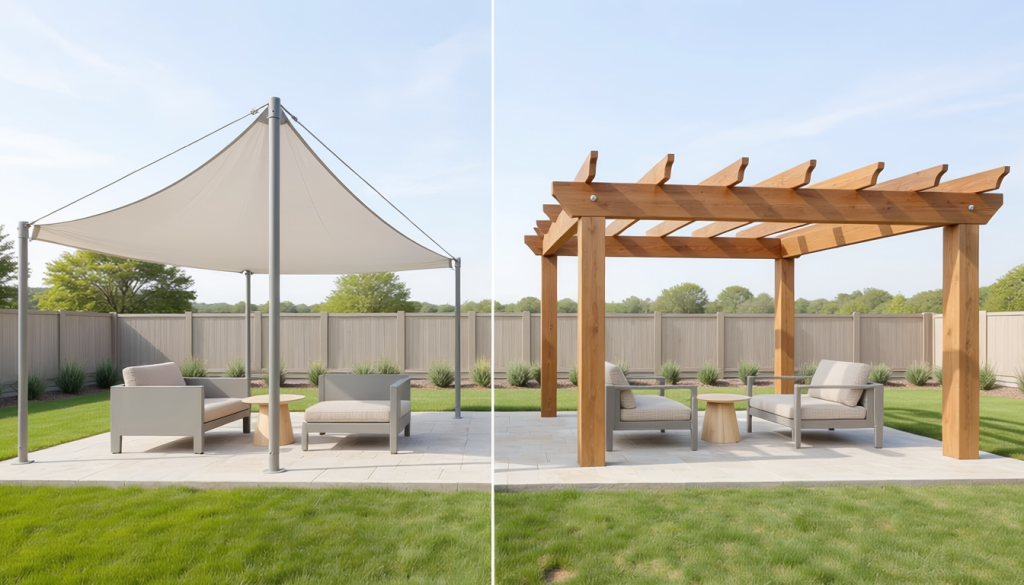
Choosing between a shade sail vs pergola usually comes down to whether you want affordable, flexible shade or a permanent structure that defines the patio. Shade sails are generally lighter and less expensive, while pergolas offer more architectural presence and long-term use.
Before buying either option, consider wind exposure, support locations, drainage, patio layout, local restrictions, and how long you want the shade system to remain in place.
| Patio priority or condition | Better starting choice | Main caution |
|---|---|---|
| Lower-cost seasonal shade | Shade sail | Proper supports and storm removal can add cost |
| Permanent architectural feature | Pergola | Higher installation and maintenance commitment |
| Wind-exposed yard | Neither without professional guidance | Both must resist significant wind forces |
| Patio beside the house | Freestanding option | House attachment requires structural planning |
| Flexible shade location | Shade sail | Shade shifts as the sun moves |
| Homeowner wants rain protection | Covered or louvered pergola | Drainage and structural requirements increase |
| HOA or permit restrictions | Confirm rules before buying | Size, height, color, and placement may be limited |
Shade Sail vs Pergola: The Quick Answer
A shade sail is a tensioned fabric canopy supported by approved attachment points. A pergola is a permanent or semi-permanent framed outdoor structure with an open or partially covered top.
Shade sails generally cost less and work well for flexible, targeted, or seasonal shade. Pergolas provide a more permanent appearance and may support approved canopies, louvers, slats, or climbing plants.
Neither is universally better. Wind exposure, support locations, drainage, local rules, appearance, budget, and intended lifespan determine which option fits the patio.
What Is a Shade Sail?
A shade sail is a triangular, square, or rectangular outdoor fabric panel installed under tension. Breathable fabric allows air and water through, while some water-resistant materials shed more rain when properly sloped.
The sail requires strong, correctly located support points and is often removable or seasonal. Its shade coverage changes as the sun moves. It is not simply a loose tarp stretched over a patio.
What Is a Pergola?
A pergola is an outdoor frame with posts, beams, and an open or partially covered top. It may be freestanding or attached when professionally designed and permitted.
An open pergola creates partial shade. Approved canopies, louvers, slats, or climbing plants can increase coverage. Unless it has a specifically designed roof system, a pergola should not be treated as weatherproof.
Advantages and Disadvantages of a Shade Sail
Shade sails appeal to homeowners who want targeted shade without the visual bulk of a framed structure. They are available in several shapes, sizes, and colors and can often be removed during winter or severe weather.
Main advantages
- Lower initial cost in many situations
- Flexible shape and placement
- Light, modern appearance
- Seasonal removal when permitted
- Useful shade over seating or dining areas
The main limitation is that the fabric depends on suitable structural support. Wind forces can be substantial, and ordinary fence posts, fascia boards, or weak structures may not be appropriate.
Main disadvantages
- Fabric may stretch, fade, stain, or wear
- Shade changes throughout the day
- Poor slope can allow water to collect
- Storm or winter removal may be required
- Less architectural permanence than a pergola
Advantages and Disadvantages of a Pergola
A pergola creates a defined outdoor living area and can coordinate with the house and landscaping. It also provides a permanent base for approved shade accessories or plants.
Main advantages
- Permanent architectural appearance
- More defined patio space
- Predictable partial shade
- Supports approved shade systems
- Longer-term use when properly maintained
Pergolas require more materials, planning, and site preparation. Posts can also reduce usable space or interfere with furniture and walking paths.
Main disadvantages
- Higher total cost
- More complex installation
- Possible permit or HOA approval
- Wood may need regular recoating
- Open roofs allow most rain through
- Large or attached designs require structural planning
Shade Coverage
Shade sails create concentrated shade over selected areas, but coverage depends on height, angle, patio orientation, season, and the sun’s position. Trees and nearby buildings also affect the result.
Pergola slats create moving bands of shade. Closer slats, approved canopies, or louvers can increase coverage. Neither option guarantees all-day shade without careful placement, so observe the patio at different times before choosing a size or location.
Wind, Rain, and Drainage
Shade sails can place significant force on their attachment points. Large sails are not automatically suitable for fence posts, fascia, walls, or other existing structures. Product wind ratings and removal requirements vary, and exposed properties may need professional design or installation guidance.
Pergolas must also resist wind and weather loads. Loose components, damaged framing, or inadequate support can make either option unsafe.
Breathable shade fabric usually allows rain through. Water-resistant sails need an approved slope so water does not collect. Flat or loose fabric can hold water and overload the sail and its supports.
Open pergolas allow most rain through. Covered or louvered systems may provide better protection but add structural and drainage requirements. Runoff should not flow toward the house or pool on the patio.
Resolve recurring puddles, erosion, or runoff toward the house as patio drainage problems before installing either shade option.
Cost and Installation Complexity
Shade sails usually have a lower product cost, but suitable posts, hardware, site preparation, and professional installation can raise the total. A low-priced sail may not be an inexpensive project if the property lacks safe support points.
Pergolas generally require more materials, labor, and preparation. Prefabricated kits vary in size, strength, finish, and included components. Attached structures often cost more because they require careful design and may need permits.
Compare total installed cost rather than the price of the canopy or kit alone.
Maintenance, Lifespan, and Patio Use
Shade sails
Clean the fabric as directed and inspect seams, edges, and hardware for wear. Retension only when the product allows it, and remove the sail seasonally when required. Replace fabric that becomes badly stretched, torn, faded, or damaged.
Shade sails create a lighter, less permanent look, although support points may extend beyond the patio or affect nearby landscaping.
Pergolas
Inspect wood, metal, finishes, fasteners, and shade accessories. Wood may need periodic recoating, while metal should be checked for corrosion. Canopies, louvers, and climbing plants add maintenance.
Pergolas create an outdoor-room effect, but posts can affect furniture placement, doors, windows, views, and walking paths. In both cases, the scale and color should complement the house.
Homeowners choosing a permanent structure should also account for the inspections and recurring care covered in this pergola maintenance guide.
Permits, HOA Rules, and Property Boundaries
Local rules may apply to either option, although permanent pergolas are more likely to require permits. HOA standards may control color, height, size, materials, and placement.
Setbacks, easements, utilities, and property lines also matter. Attached structures require particular caution because they interact with the house structure and exterior water management. Confirm requirements before purchasing materials.
Shade Sail vs Pergola Comparison
| Factor | Shade sail | Pergola |
|---|---|---|
| Initial cost | Usually lower | Usually higher |
| Permanence | Often removable | Permanent or semi-permanent |
| Shade flexibility | Good for targeted areas | More fixed coverage |
| Wind sensitivity | High in exposed areas | Requires structural wind resistance |
| Rain protection | Limited | Limited unless specially covered |
| Maintenance | Fabric and hardware | Frame, finish, and accessories |
| Installation complexity | Moderate to high | High |
| Permit likelihood | Varies | More likely |
| Appearance | Light and modern | Substantial and architectural |
| Seasonal removal | Often possible or required | Usually remains year-round |
Choose a Shade Sail When
A shade sail is a practical starting choice when:
- Lower-cost shade is the priority
- You prefer a seasonal or removable option
- Approved support points can be provided
- Targeted shade matters more than permanence
- Fabric care and storm removal are acceptable
- Local rules allow the planned placement
Choose a Pergola When
A pergola is a practical starting choice when:
- You want a permanent architectural feature
- The patio needs a defined outdoor-living area
- A larger budget is available
- Professional design or installation is acceptable
- You may add approved slats, canopies, louvers, or plants
- Site conditions and local rules allow it
When Neither Is the Right First Step
Resolve these concerns before buying:
- No suitable support locations
- Weak fascia, fence posts, walls, or structures
- Severe wind exposure without an approved design
- Patio settlement or drainage problems
- Water already flowing toward the house
- Utility, easement, setback, or property-line uncertainty
- HOA or permit restrictions
- An unstable or damaged patio area
Common Buying Mistakes
Avoid these common errors:
- Choosing by appearance alone
- Buying a sail before confirming supports
- Assuming fence posts can hold a shade sail
- Installing fabric without adequate slope
- Expecting an open pergola to stop rain
- Ignoring wind exposure
- Comparing only kit prices
- Blocking doors, windows, or walking paths
- Overlooking maintenance or local rules
When to Contact a Professional
Professional guidance is appropriate for:
- New structural posts or footings
- Attachment to the house
- Large or high-mounted sails
- Wind-exposed properties
- Covered or louvered pergolas
- Uncertain drainage
- Utility or property-line concerns
- Permit or engineering requirements
- Damaged proposed attachment points
- Large custom installations
Final Thoughts
Shade sails generally offer lower-cost, flexible, seasonal shade. Pergolas provide a more permanent architectural structure and can support approved shade accessories.
The better choice depends on wind, support points, drainage, cost, maintenance, appearance, and local restrictions. Proper structural planning matters more than product appearance, and neither option should be attached to weak, damaged, or unsuitable structures.