how to clean an epoxy garage floor
If you’re learning how to clean epoxy garage floor surfaces, start with the least aggressive method that will do the job: remove loose grit, spot-clean spills, then mop with water and a mild cleaner that is compatible with your coating. Epoxy is durable, but abrasive debris, harsh chemicals, and aggressive scrubbing can scratch, dull, stain, or damage the finish.
For routine maintenance, the floor usually needs more frequent dry cleaning than heavy wet cleaning. Always follow the instructions for your specific coating and cleaner when they differ from general guidance.
| Garage floor condition | Best cleaning approach | What to avoid |
|---|---|---|
| Loose dirt and grit | Sweep or vacuum before mopping | Grinding grit under a mop |
| Light everyday grime | Mild compatible cleaner and microfiber mop | Strong chemicals by default |
| Oil spill | Absorb or wipe promptly, then spot-clean | Spreading the liquid |
| Tire marks | Mild cleaner with gentle brush agitation | Aggressive abrasive pads |
| Road salt residue | Remove grit, then mop and rinse as needed | Letting salty residue build up |
| Sticky or unknown residue | Test a compatible cleaner in a small area | Scraping or using random solvents |
Wet epoxy can be slippery, especially on glossy floors. Keep people and pets off wet areas, control runoff, and wear gloves or eye protection when the cleaner label calls for them. Never mix cleaning chemicals unless their labels specifically permit it.
What You Need to Clean an Epoxy Garage Floor
Most routine cleaning requires only a few basic supplies:
- Soft broom or a vacuum suitable for hard floors
- Microfiber or other soft mop
- Bucket
- Mild cleaner confirmed as compatible with the coating
- Clean water
- Absorbent towels or pads for spills
- Soft- or medium-bristle nonmetallic brush for spot cleaning
Decorative flakes and traction additives can make the surface more textured. A soft or medium nonmetallic brush may reach those areas better than a flat mop without requiring aggressive abrasion.
If you are unsure whether the surface is epoxy or another coating, it may help to understand the differences between garage floor paint and epoxy before choosing a cleaning method.
Step 1: Remove Loose Dirt and Grit
Move vehicles, mats, storage bins, and other movable items out of the cleaning area.
Sweep the floor thoroughly, paying attention to corners and the areas around garage doors. Vacuuming is useful for sand, small stones, dried mud, and other abrasive particles that may be difficult to collect with a broom.
Do this before adding water. Dirt and debris tracked onto resinous floors can contribute to surface abrasion when they are dragged under foot traffic, tires, or cleaning tools.
Step 2: Mix a Mild Compatible Cleaning Solution
For ordinary dirt, start with water and a mild cleaner that the coating manufacturer allows. A neutral or mild detergent-type cleaner is often appropriate for routine resinous-floor maintenance.
Check both the floor-coating instructions and the cleaner label. Follow any specified dilution, rinsing, ventilation, or protective-equipment requirements rather than using a universal mixing ratio.
For an unfamiliar cleaner, test an inconspicuous area first when the directions recommend it. Move to a stronger degreaser only when the coating instructions permit one, and the soil actually requires it.
Step 3: Mop or Scrub the Floor Gently
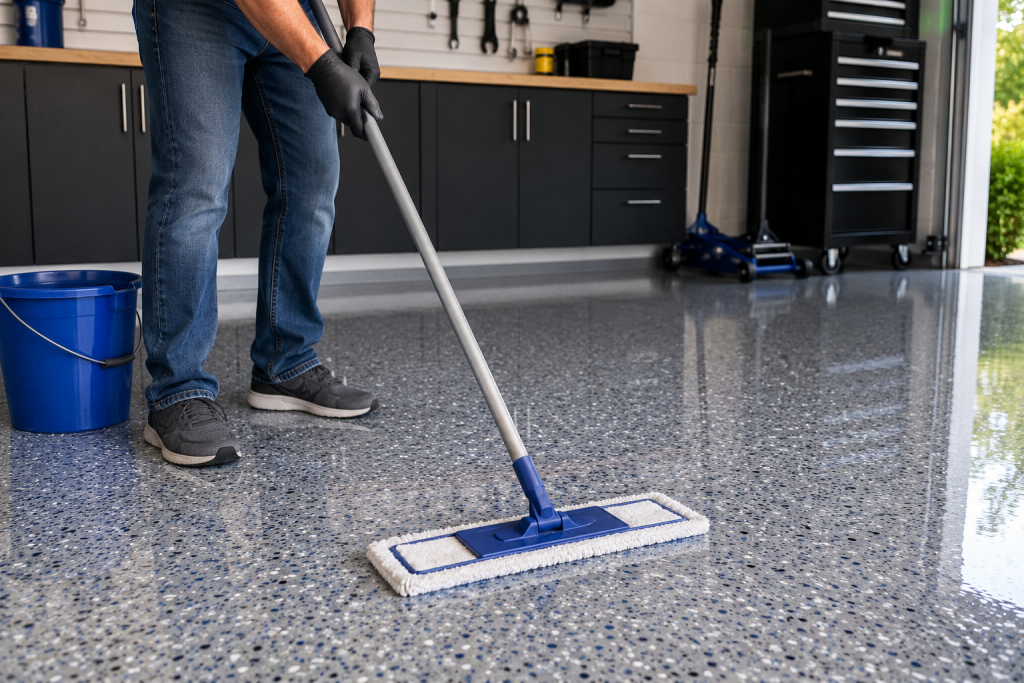
Mop the floor in manageable sections with a microfiber or other soft mop. For textured areas or stubborn spots, use a soft- or medium-bristle nonmetallic brush.
The goal is to loosen grime without wearing down the finish. Vigorous or abrasive cleaning can reduce the gloss of some resinous floors.
A simple routine works well:
- Remove vehicles and movable items.
- Sweep or vacuum loose grit and debris.
- Spot-clean spills.
- Apply a mild compatible cleaning solution.
- Mop or gently scrub dirty areas.
- Rinse if the cleaner requires it.
- Remove excess water where practical.
- Let the floor dry before returning vehicles or stored items.
Pressure washing is not necessary for normal maintenance. If you consider using it for heavier cleaning, do so only when the coating-system instructions and pressure-washer guidance specifically allow the method.
Step 4: Rinse if Needed
Some cleaners need a clean-water rinse so detergent and loosened soil do not remain on the floor. Follow the product instructions.
Use a mop, wet vacuum, or another appropriate method to collect dirty water rather than pushing it toward walls, stored items, or places where runoff may cause problems.
Pay attention to metal door tracks, shelving legs, tools, and other nearby components that could remain wet.
Step 5: Let the Floor Dry
Remove excess water where practical and leave the floor open to dry. Ventilate the garage when the cleaner instructions require it.
Do not bring vehicles or movable items back while the surface is still wet enough to be slippery. Glossy coatings can provide less traction when wet, while textured floors may hold small amounts of water in their surface profile.
How to Clean Oil and Automotive Fluids
Deal with automotive-fluid spills promptly. Blot or absorb free liquid rather than spreading it across a larger area, then clean the remaining residue with a product confirmed as compatible with the coating.
Oil, grease, gasoline, brake fluid, solvents, and other automotive chemicals do not all interact with coatings in the same way. Chemical resistance should not be treated as permission for unlimited exposure.
For greasy contamination, stronger degreasers may be appropriate on some flooring systems, but they should be used only when permitted for that coating.
If discoloration remains after proper cleaning, check the coating instructions before trying stronger chemicals. A persistent mark may be staining or coating damage rather than removable dirt.
The methods used to remove oil stains from bare concrete should not automatically be used on an epoxy-coated surface.
How to Remove Tire Marks
Dark tire marks are often material transferred onto the floor rather than proof that the coating has failed.
Start with a mild compatible cleaner. Let it work as directed, then gently agitate the mark with a soft- or medium-bristle nonmetallic brush. Clean away the loosened material and rinse if required.
Avoid repeatedly attacking the mark with a harsh pad or stiff abrasive tool. Aggressive cleaning can dull a glossy surface even if it eventually removes the mark.
For marks that do not respond, use only a stronger cleaner or degreaser that is specifically permitted for the coating. Do not reach for a harsh solvent by default.
How to Remove Road Salt and Winter Residue
Winter vehicles can bring sand, road salt, and salty slush into the garage. Remove loose grit before mopping so it is not dragged across the coating.
Do not allow a film of salt residue to accumulate throughout the season. Mop the affected areas with a compatible cleaner and rinse when the product or coating instructions call for it.
Also remove standing salty water when practical. Besides creating a slip hazard, it can expose nearby metal tracks, fasteners, shelving, tools, and vehicle components to prolonged moisture and salt.
Garages that see frequent winter driving may therefore need cleaning more often than garages used mainly in dry weather.
What Cleaners Should You Avoid?
Do not assume a cleaner is safe simply because epoxy is considered chemically resistant.
Be cautious with:
- Acids and acidic cleaners
- Strong solvents
- Heavy-duty degreasers not approved for the coating
- Bleach-based products
- Strong alkaline cleaners
- Any product with uncertain compatibility
Some resinous flooring systems tolerate stronger cleaners than others, so product-specific instructions should control. Cleaning guidance for epoxy systems commonly distinguishes between mild cleaners for routine soil and stronger products for heavier contamination.
Never combine cleaners unless the labels specifically say the combination is permitted. Keep ignition sources away from any flammable cleaning product and provide ventilation when required.
What Cleaning Tools Should You Avoid?
The wrong tool can turn a cleaning job into surface damage.
Avoid using:
- Wire brushes
- Metal scrapers
- Aggressive abrasive pads
- Extremely harsh stiff-bristle tools
- Sharp blades or tools
- Grinding equipment
- Scraping methods that cut into the coating
A nonmetallic soft- or medium-bristle brush is different from an abrasive wire brush or grinding tool. Use enough agitation to loosen the contamination without cutting or scuffing the finish unnecessarily.
How Often Should You Clean an Epoxy Garage Floor?
There is no single cleaning schedule that fits every garage. Base maintenance on traffic, weather, and what is accumulating on the floor.
Sweep or vacuum whenever visible grit, sand, or debris builds up. Clean spills promptly rather than waiting for the next full-floor cleaning.
Wet-clean when grime, mud, tire residue, or road salt becomes noticeable. A heavily used garage or one exposed to winter slush will generally need attention more often than a lightly used garage that stays dry.
Regular removal of tracked-in dirt helps limit abrasion and keeps routine cleaning easier.
When Cleaning Is Not Enough
Cleaning can remove surface contamination, but it cannot restore a coating that is physically failing.
Look more closely if you see:
- Peeling or flaking
- Blistering
- Delamination or loss of bond
- Widespread whitening or cloudy areas
- Deep gouges through the coating
- Cracks reflecting through the finish
- Active slab movement
- Damage associated with moisture beneath the coating
A crack that continues through the underlying slab is a different problem from dirt on the surface. See why garage floors crack for help understanding possible concrete movement.
Likewise, widespread peeling or bond failure may require coating repair, recoating, or professional evaluation rather than stronger cleaning. If replacement becomes necessary, reviewing the main garage floor coating options for homeowners can help with the next decision.
Final Thoughts
Keeping an epoxy garage floor clean is mostly about preventing small problems from becoming harder ones. Remove abrasive grit first, clean spills promptly, and use the mildest compatible cleaner and tool that will handle the contamination.
After cleaning, make sure the floor is free of residue and allowed to dry before normal use. If marks remain because the coating is peeling, blistering, deeply gouged, whitening, or losing its bond, stop treating the problem as ordinary dirt and evaluate the coating itself.