
dryer smells like burning: what to do
Dryer smells like burning is a stop-use condition. Stop the dryer, do not run another test load while the burning odor remains, and allow the appliance to cool. Burning smells may come from lint, restricted airflow, foreign objects, mechanical wear, electrical problems, or internal heating components. Continued operation can worsen an overheating or damaged condition.
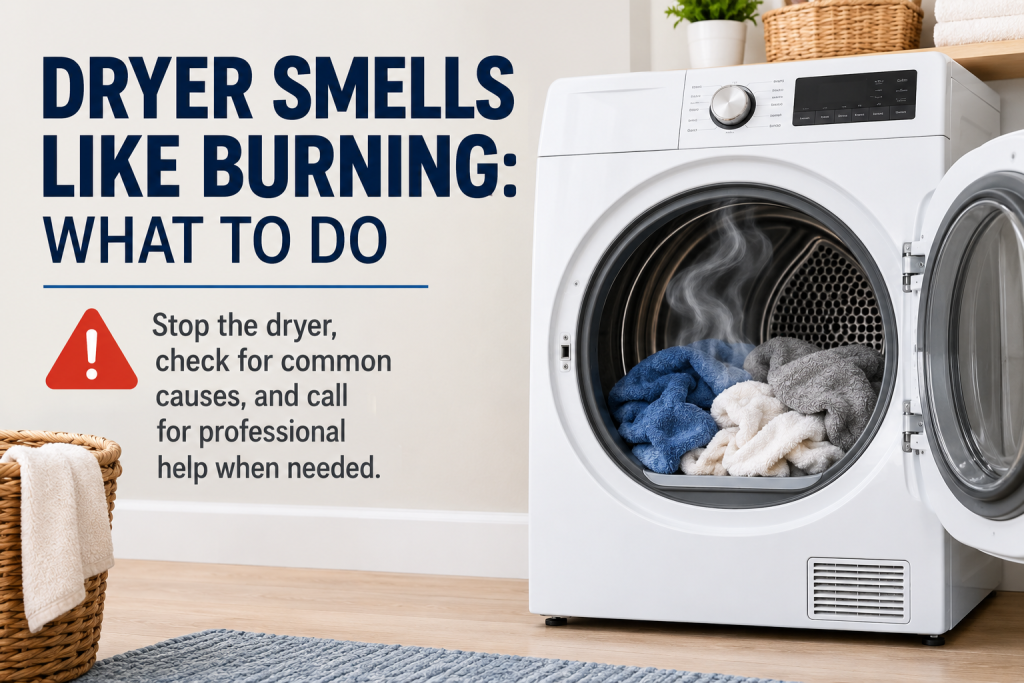
Dryer Smells Like Burning? Do This First
| What You Notice | What It May Mean | What to Do |
|---|---|---|
| Burning lint smell | Lint buildup or restricted airflow | Stop dryer, let it cool, check accessible lint areas |
| Hot or scorched odor | Overheating or airflow problem | Stop use and inspect accessible airflow points |
| Visible smoke | Active overheating or fire | Stop use, leave the area if needed, use emergency services when appropriate |
| Plastic or electrical smell | Wiring, connection, motor, or control problem | Keep dryer off and arrange qualified evaluation |
| Rubber smell | Belt, friction, or foreign object | Check only for loose accessible objects |
| Unusual overheating | Vent restriction or internal fault | Do not run another load |
| Natural gas or rotten-egg odor | Possible gas leak | Leave the area and contact the gas utility or emergency services from a safe location |
| Burning smell plus slow drying | Possible restricted airflow | Check lint screen, duct, and accessible exterior vent |
If there is sparking, arcing, visible flames, glowing or scorched wiring, a damaged cord or receptacle, or severe overheating, leave the area as needed and use emergency services when appropriate.
Disconnect power when it can be done safely. Unplug the dryer only if the plug and surrounding area are safely accessible and dry. If the plug is inaccessible or the dryer is hardwired, use the appropriate electrical shutoff or qualified professional help.
Do Not Run Another Test Cycle
Do not restart the dryer simply to see whether the smell returns.
Continued operation can allow lint or debris to keep heating, worsen restricted-airflow overheating, or aggravate electrical and mechanical damage. The absence of visible smoke does not make an active burning odor safe to ignore.
Complete only checks that can be performed with the dryer stopped and cool. If you cannot identify a simple accessible cause, leave the appliance off until it is evaluated.
Check the Lint Screen After the Dryer Cools
Once the dryer is off and cool, inspect the lint screen.
Look for:
- Heavy lint buildup
- Mesh coated with residue
- Tears or holes
- Warping
- Melting or scorching
Clean the screen using the normal method for your dryer. If residue has coated the mesh, follow the manufacturer’s cleaning instructions.
Replace a damaged screen with a compatible part. Never operate the dryer without the lint screen installed.
If the screen itself shows melting or scorching, keep the dryer off and consider professional evaluation rather than assuming cleaning has corrected the underlying heat problem.
Check the Accessible Lint-Screen Housing
Lint can also collect around the opening where the screen sits.
With the dryer cool and disconnected from power where appropriate, use a flashlight to inspect only normally accessible areas. A vacuum crevice attachment or lint brush may be used where the manufacturer intends routine cleaning access.
Do not push tools deep into the dryer or probe around wiring, the heater, motor, blower, or other internal components. Heavy lint farther inside the cabinet may require professional service.
Could a Restricted Dryer Vent Cause a Burning Smell?
Restricted exhaust airflow can contribute to excessive dryer temperatures.
Possible clues include:
- Drying times have increased
- Clothes remain damp longer
- Exterior airflow seems weak
- The transition duct is crushed or kinked
- The exterior vent is obstructed
- The dryer or laundry area becomes unusually hot
A clean lint screen does not prove the rest of the vent is clear.
Vent-cleaning needs vary with dryer use, laundry volume, pets, vent length, routing, and installation conditions. Do not rely on one universal cleaning interval.
If the vent is hidden, long, heavily restricted, or difficult to access safely, use a dryer-vent professional rather than aggressive DIY disassembly.
If the vent is accessible and suitable for homeowner maintenance, a dryer vent cleaning kit may help with routine lint removal after the burning-smell issue has been safely resolved.
Inspect the Transition Duct
The transition duct connects the dryer to the household exhaust vent.
Inspect whatever portion is safely visible for:
- Crushing
- Kinks
- Sharp bends
- Excessive compression
- Partial disconnection
- Visible lint leakage
- Obvious damage
Do not abruptly pull a heavy dryer away from the wall. Moving it can damage flooring, strain electrical connections, disturb the vent, or affect a gas connection on a gas dryer.
If access requires major appliance movement or disturbing gas piping, use qualified help. Do not run another cycle while the burning-smell cause remains unresolved.
Check the Exterior Vent if It Is Safely Accessible
If the exterior termination can be inspected from ground level or another safe location, look for:
- Lint buildup
- Leaves or debris
- Nesting material
- Snow or ice
- A blocked or damaged damper
Do not climb onto a roof or use an unsafe ladder setup to reach the vent.
If the termination is high, inaccessible, or in a location with fall risk, have a dryer-vent professional inspect it. Clearing visible material at the outlet also does not prove that the entire vent run is unrestricted.
Could Something Be Stuck Inside the Drum?
A foreign object or unsuitable item can sometimes create friction, melt, or produce an unusual odor.
After the dryer cools, inspect the drum, door opening, clothing, and pockets for loose items such as:
- Coins or metal objects
- Small plastic pieces
- Rubber items
- Foam-backed materials
- Objects caught near the door opening
Remove only loose, accessible objects.
Do not dismantle the drum, remove cabinet panels, or reach into internal spaces to retrieve something. If an object appears trapped inside the cabinet, arrange appliance service.
What Does a Burning Rubber Smell Mean?
A rubber-like odor may come from a foreign rubber or plastic item, mechanical friction, a slipping belt, or another overheated moving component.
Check the drum and accessible door area for obvious loose objects first.
If nothing accessible explains the smell, keep the dryer off. Diagnosing belts, pulleys, motors, bearings, or other internal mechanical components requires more disassembly than is appropriate for beginner troubleshooting.
What Does a Burning Plastic or Electrical Smell Mean?
A plastic or electrical burning odor requires qualified evaluation.
Possible causes may include:
- Damaged wiring
- An overheated electrical connection
- A motor problem
- An overheated control component
- Damage to the cord, plug, or receptacle
Do not touch damaged electrical parts, remove service panels, or perform live electrical testing.
An appliance technician is appropriate when the suspected problem is inside the dryer. An electrician may be more appropriate if overheating or damage appears to involve the receptacle, plug connection, branch circuit, or household electrical wiring.
Could the Heating System Be Overheating?
Abnormal dryer heat can result from restricted airflow or an internal heating-system problem.
Depending on the dryer design, possible causes may involve the heating element, controls, thermal protection components, or a gas burner system.
Clues may include a burning odor, unusual heat, scorching, or heating behavior that has changed noticeably.
Do not test heating elements, thermostats, thermal devices, gas valves, burner components, wiring, or controls. Professional appliance diagnosis is appropriate when abnormal heating remains after accessible airflow checks.
Could the Motor or Belt Be the Cause?
Worn or binding mechanical components can create friction, heat, and unusual odors.
You may also notice:
- Squealing
- Grinding
- A rubber-like smell
- Abnormal drum movement
- Trouble starting
- A drum that struggles to turn
Depending on the dryer, the cause could involve a belt, motor, pulley, bearing, blower, or another moving part.
Do not open the dryer to determine which internal component has failed. Burning odor combined with abnormal mechanical operation is a reason for appliance service.
What If the Burning Smell Started After Drying a Certain Item?
Sometimes the load itself provides the clue.
Rubber, plastic, foam, adhesives, and other heat-sensitive materials can produce unusual odors if they are unsuitable for machine drying.
Examples include:
- Rubber-backed mats
- Foam-containing items
- Plastic-containing materials
- Certain coated fabrics
Check item care labels and dryer manufacturer instructions before machine drying.
Use particular caution with fabrics contaminated by gasoline, solvents, oils, or other flammable substances. Do not place materials in the dryer when their care or safety instructions prohibit machine drying.
If potentially flammable contamination is involved, stop dryer use and follow the applicable product or material safety guidance.
What If the Dryer Smells Hot but There Is No Smoke?
No visible smoke does not make an active burning smell safe to ignore.
After stopping and cooling the dryer, limit your checks to the lint screen, accessible lint housing, transition duct, safely accessible exterior vent, and obvious foreign objects.
If those checks do not explain the odor, have the dryer evaluated before using it again. A smell disappearing after the appliance cools does not prove that the underlying problem has been corrected.
What If the Dryer Also Takes Too Long to Dry?
A burning smell combined with increasingly slow drying can point toward restricted airflow.
Check:
- The lint screen
- Accessible lint buildup
- The transition duct
- The accessible exterior vent
If these areas appear clear but drying has steadily become slower, the deeper exhaust system may need professional inspection.
Do not run repeated or extended drying cycles while a burning smell or abnormal overheating remains.
If slow drying continues after the immediate burning-smell concern is resolved, use our dryer taking too long to dry guide to work through the airflow, load, vent, and cycle checks.
When a Dryer Burning Smell Needs Professional Service
Professional help is appropriate when accessible checks do not reveal and correct a simple cause.
Use a dryer-vent professional when the vent is heavily restricted, inaccessible, long, hidden, or difficult to inspect safely.
Use an appliance technician when the suspected problem involves the:
- Motor or belt system
- Blower
- Heating system
- Gas ignition components
- Sensors or controls
- Internal wiring
An electrician may be appropriate if the plug, receptacle, branch circuit, or household electrical supply shows burning, melting, damage, or overheating.
Keep the dryer off if there is continuing burning odor, smoke, scorching, sparking, arcing, severe overheating, damaged wiring, or repeated breaker trips.
For a gas dryer, a natural gas or sulfur-like rotten-egg odor requires a different response. Stop using the appliance, do not operate electrical switches or create ignition sources, leave the affected area, and contact the gas utility or emergency services from a safe location.
Do not attempt DIY gas-leak detection, gas-line repair, gas-valve work, or burner adjustment.
Common Dryer Burning-Smell Mistakes
Avoid these mistakes:
- Running another load to see whether the smell returns
- Ignoring increasingly slow drying
- Assuming lint-screen cleaning rules out deeper airflow problems
- Overlooking a crushed transition duct
- Ignoring plastic or electrical odors
- Climbing onto a roof for vent access
- Removing service panels too early
- Attempting live electrical testing
- Trying to repair gas components
- Continuing to use the dryer because no smoke is visible
Dryer Smells Like Burning FAQ
Why does my dryer smell like it is burning?
If a dryer smells like burning, possible causes include lint buildup, restricted venting, a foreign object, mechanical friction, an overheating belt or motor, electrical trouble, or a heating-system problem. Stop the dryer first and do not run another test load while the burning smell remains.
Can lint make a dryer smell like burning?
Yes. Lint can restrict airflow or collect where heat builds up. Check the lint screen and accessible lint areas after the dryer cools. Deeper lint accumulation or vent restriction may require professional service.
Can a clogged dryer vent cause a burning smell?
A restricted vent can contribute to excessive heat and may be associated with a burning or overheated odor. If accessible vent checks do not locate the restriction, professional vent inspection is appropriate.
Why does my dryer smell like burning rubber?
Possible causes include a rubber or plastic item in the load, a slipping or overheating belt, or another mechanical component creating friction. Remove only loose accessible objects. Internal belt or motor diagnosis belongs to an appliance technician.
Is it safe to use a dryer after a burning smell goes away?
Do not assume it is safe simply because the odor disappears after cooling. Identify and correct an accessible cause or have the dryer evaluated before normal use, especially if the smell was electrical, accompanied by overheating, or has occurred more than once.
Final Thoughts
If your dryer smells like burning, stop it, do not run another test load, and let it cool. Then check the lint screen, accessible lint-screen housing, transition duct, safely accessible exterior vent, and drum for obvious foreign objects.
Stop before internal electrical, heater, belt, motor, blower, or gas-system work. Persistent burning odor, electrical smells, scorching, smoke, abnormal overheating, or mechanical trouble calls for qualified service rather than continued operation.