
frost in the attic: why it happens and what to do
Finding frost in attic spaces usually means warm, moisture-containing air has reached surfaces cold enough for that moisture to freeze. The frost is a clue to a moisture pathway, not proof that the attic simply needs more ventilation. Air leakage from the home, high indoor humidity, improperly routed exhaust ducts, and other moisture sources should be considered before adding vents or making roof changes.
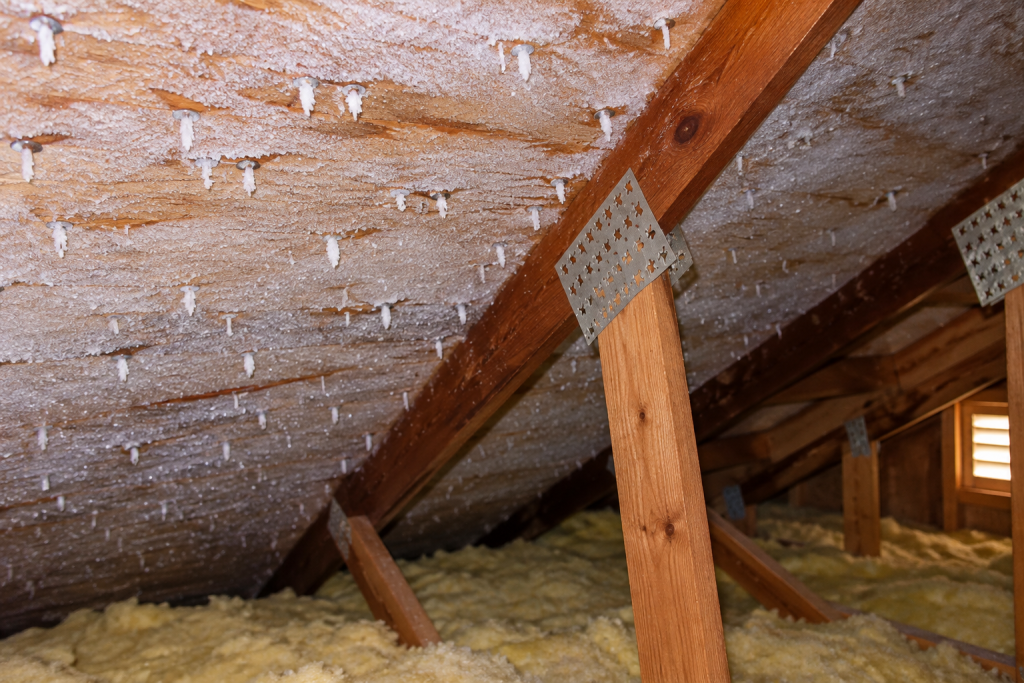
What Frost in Attic Spaces Means
Attic frost forms when three conditions come together: moisture is present, that moisture reaches the attic, and attic materials are below freezing.
In a conventional vented attic, roof sheathing, framing, roofing nails, and other components can become very cold during winter. Moist air that reaches those surfaces can condense and freeze.
A useful way to think about attic frost is to look for four parts of the problem:
- Moisture source: Where is the water vapor coming from?
- Air-leakage path: How is moisture-containing air reaching the attic?
- Cold surface: Where is the moisture freezing?
- Attic airflow: Are ventilation pathways open and functioning as intended?
Ventilation can influence how quickly moisture leaves an attic, but it cannot prevent a continuing moisture source from entering the space.
Why nails and fasteners may frost first
Metal roofing nails and other fasteners can become cold quickly. Moisture may freeze on them before frost becomes obvious on surrounding wood.
This can produce rows of white or icy nail tips even when the roof sheathing appears less affected. The pattern can look dramatic, but the amount of actual water involved may still be relatively small.
The important question is not how impressive the frost looks. It is why moisture is reaching that location.
Why Warm Indoor Air Often Contributes to Attic Frost
During cold weather, indoor air usually contains more moisture than the cold attic air. When that heated air leaks through the ceiling plane, it carries water vapor with it.
The attic may contain enough insulation to slow heat transfer while still having openings that allow air to pass around or through the insulation. That is why simply adding more insulation does not necessarily solve a frost problem.
Common leakage paths can include:
- Attic hatches and pull-down stairs
- Recessed lights and other ceiling penetrations
- Plumbing and wiring penetrations
- Gaps at wall top plates
- Duct and mechanical chases
- Other openings through the ceiling plane
A homeowner does not need to dismantle these areas to recognize that they may matter. The goal during a basic inspection is to look for obvious patterns or openings and note them for further evaluation.
If warm indoor air is leaking through the ceiling plane, our attic air sealing guide explains the common gaps and penetrations that can carry moisture into the attic.
Indoor humidity can increase the moisture load
Higher indoor humidity during cold weather means more moisture is available to move through leaks into the attic.
Normal household activities such as cooking, bathing, drying clothes, and operating humidifiers can all add indoor moisture. How much indoor humidity is appropriate varies with climate, outdoor temperature, the home, and its construction, so there is no single percentage that is right for every house.
If attic frost appears during periods of unusually high indoor humidity, reducing avoidable moisture may help. That can include using existing kitchen and bathroom exhaust correctly, checking humidifier settings if one is installed, and addressing obvious indoor moisture sources.
Exhaust Ducts and Other Moisture Sources
Air leakage from the living space is not the only way moisture reaches an attic.
Bathroom and dryer exhaust
Bathroom exhaust ducts should discharge outdoors rather than into the attic. Clothes-dryer exhaust entering an attic can also introduce substantial moisture.
From a safe viewing position, look for ductwork that appears disconnected, damaged, or obviously terminating inside the attic. Do not dismantle ducts, electrical equipment, or ceiling fixtures to investigate.
If a clothes dryer is discharging into the attic, see our guide to why a dryer vent into attic space can create moisture, lint, and condensation problems.
Plumbing and HVAC moisture
Plumbing leaks, leaking equipment, or condensation associated with HVAC components can also wet attic materials.
A localized wet area deserves investigation even when frost is present elsewhere. Do not assume every damp attic surface has the same cause.
Roof leaks can resemble frost-related moisture
When frost melts, it can create damp sheathing, wet insulation, or ceiling staining that may resemble a roof leak. Conversely, an actual roof leak can be mistaken for condensation.
Location and timing can provide clues. Moisture concentrated near one roof penetration may suggest exterior water entry, while widespread frost or dampness across cold sheathing can point toward a different moisture pattern.
Do not climb onto a steep roof or modify flashing to investigate. If the source is unclear, professional evaluation is safer and more reliable.
Why Frost Is Heavier in Some Attic Areas
Attic frost is rarely distributed perfectly evenly.
North-facing or heavily shaded roof sections may stay colder than surfaces receiving more sun. Frost can therefore remain longer or become more noticeable in those locations.
Air leakage may also be concentrated around a particular attic hatch, chase, ceiling penetration, or section of the house. A localized moisture pathway can create much heavier frost above one area than another.
Differences in insulation, airflow, roof geometry, and attic compartments can contribute to uneven patterns as well.
This is why noting where frost forms can be more useful than simply noting that frost exists.
What Happens When Attic Frost Melts
Warmer weather can make attic frost disappear, but the water does not disappear with it.
As frost melts, water may:
- Drip onto attic insulation
- Dampen roof sheathing or framing
- Create stains on wood or ceiling materials
- Wet areas of the ceiling below
- Contribute to mold-like growth if materials remain damp
One limited frost event does not automatically mean serious damage has occurred. Repeated freeze-and-thaw cycles, however, can keep materials wet for longer periods and justify finding the moisture source.
If water appears inside the living space during a thaw, remember that melting frost is one possible source, but roof leakage and other water problems also need to be considered.
What Homeowners Can Safely Check
A visual attic inspection can provide useful clues when there is stable flooring or another safe viewing platform. You do not need to crawl through every part of the attic to gather useful information.
Look for:
- Whether frost is localized or widespread
- Areas where frost is noticeably heavier
- Frost on nails, roof sheathing, or framing
- Wet or compressed insulation below frosted areas
- Water staining or darkened sheathing
- Bathroom or dryer ducts that appear to end in the attic
- Obvious gaps around an accessible attic hatch
- Blocked soffit intake or obstructed ventilation pathways
- Missing, displaced, or crushed airflow baffles visible from a safe position
Patterns may help identify where moisture is entering or where attic surfaces remain especially cold.
Do not walk on unsupported ceiling drywall. Avoid exposed or questionable electrical wiring, and do not dismantle recessed lights or other electrical fixtures.
Do not disturb vermiculite insulation or material that may contain asbestos. Avoid removing large areas of insulation simply to look for air leaks. If safe access is limited, stop the inspection rather than crawling into an unsupported or hazardous area.
Why More Ventilation Is Not Always the Fix
Attic ventilation can help move moisture out of a conventional vented attic, and blocked intake or exhaust paths can make moisture conditions worse.
But ventilation does not eliminate the source of moisture.
If warm, humid indoor air is continually escaping through ceiling gaps, simply adding roof vents may leave the main problem untouched. The same is true if a bathroom exhaust duct is releasing moisture directly into the attic.
Insulation alone may also fall short if air is bypassing it through gaps and penetrations. Insulation slows heat flow; it does not automatically create an airtight ceiling.
Before changing the ventilation system, look at moisture sources, likely leakage paths, and whether existing intake and exhaust pathways are blocked. Roof openings, flashing, framing, and ventilation modifications should be left to qualified professionals.
When Professional Evaluation Makes Sense
Professional evaluation is appropriate when frost is recurring, widespread, difficult to trace, or followed by significant wetting.
Consider a qualified insulation, building-envelope, roofing, or attic professional when:
- Frost returns repeatedly during cold weather.
- Roof sheathing or framing remains damp after a thaw.
- Insulation is significantly wet.
- Ceiling staining or dripping occurs below the attic.
- Extensive mold-like growth or material deterioration is visible.
- Bathroom or dryer exhaust appears improperly routed.
- The suspected air-leakage paths cannot be inspected safely.
- Attic ventilation paths are difficult to evaluate.
- Roof leakage and frost melt are difficult to distinguish.
- Correcting the condition would require roof, electrical, structural, or extensive insulation work.
A professional can evaluate the moisture source, ceiling air barrier, insulation, ventilation, and roof condition together rather than treating frost as a ventilation-only problem.
Frequently Asked Questions
Is frost in the attic normal?
A small amount can occasionally appear during very cold conditions, but frost shows that moisture has reached a surface cold enough to freeze. Repeated or widespread frost deserves closer attention to the moisture source and air-leakage path.
Does attic frost mean I need more ventilation?
Not necessarily. Restricted ventilation can contribute, but air leakage, indoor humidity, exhaust ducts, and other moisture sources are often important. Adding vents without addressing those conditions may not solve the problem.
Will adding insulation stop attic frost?
Not always. Insulation slows heat transfer, but warm, moist air can bypass insulation through gaps in the ceiling plane. Air leakage and moisture sources need to be considered along with insulation.
What should I do when attic frost starts melting?
Observe accessible areas for wet insulation, damp sheathing, staining, or dripping without entering unsafe portions of the attic. If wetting is substantial, repeatedly reaches ceiling materials, or the source is uncertain, arrange a professional evaluation.
Final Thoughts
Attic frost is usually a sign that moisture is reaching cold attic surfaces. The most useful next step is to identify the moisture source, the path allowing it into the attic, and whether blocked or inadequate airflow is contributing.
Do not assume the solution is simply more ventilation or insulation. A safe inspection of frost patterns, exhaust ducts, visible air-leakage clues, and ventilation pathways can help determine whether the problem is limited or needs professional evaluation.