
attic air sealing before insulation: what to seal and what to avoid
Attic air sealing means closing appropriate gaps and penetrations between conditioned living space and the attic before adding insulation. The goal is to reduce uncontrolled airflow through the ceiling plane, help the insulation perform as intended, and limit indoor moisture carried into a colder attic. Homeowners should focus only on accessible, low-risk gaps and leave uncertain electrical, combustion, structural, or hazardous-material areas to qualified professionals.
Inspect only from stable flooring or another safe access point. Do not step on ceiling drywall or balance on exposed joists. If suspected vermiculite or another asbestos-containing material is present, do not disturb it to reach air leaks.
| Attic location | General approach | Important caution |
|---|---|---|
| Small plumbing or utility gaps | May be suitable for sealing | Avoid damaged wiring or hot components |
| Top plates and framing joints | Seal accessible gaps where appropriate | Stay within safely reachable areas |
| Attic access opening | Reduce perimeter leakage | Preserve normal access |
| Large open chases | May need blocking plus sealing | Check for ducts, wiring, or combustion components |
| Recessed lights | Treat cautiously | Confirm fixture rating and clearances |
| Flues and chimneys | Professional or assembly-specific treatment | Do not use ordinary foam or caulk against hot surfaces |
| Soffit, ridge, and roof vents | Leave open | These are intentional ventilation paths |
Why Air Sealing Comes Before Attic Insulation
Insulation and air sealing do different jobs.
Insulation slows heat moving through ceilings and other building materials. Air sealing reduces air moving through cracks, holes, and open cavities.
A thick insulation layer does not automatically stop that airflow. Air can still travel through penetrations beneath or around the insulation.
Sealing suitable leaks before adding more insulation has a practical advantage: the gaps remain visible and accessible. Once loose fill or batts cover the ceiling plane, finding and reaching those locations becomes harder.
Air leakage can also carry indoor moisture into an attic. During cold weather, that moisture may reach colder surfaces and contribute to condensation under the wrong conditions. Air sealing is therefore part of preparing the attic, not simply an energy-saving add-on.
Where Attic Air Leaks Commonly Occur
The most important leakage points are usually where something interrupts the ceiling plane or where open framing connects the living space to the attic.
Common locations include:
- holes around plumbing pipes
- wiring penetrations through framing
- utility and duct chases
- gaps along accessible top plates
- framing joints and transitions
- attic hatch rough openings
- open floor or wall cavities
- gaps where ducts pass through the ceiling
- openings around bathroom exhaust duct penetrations
- larger transitions around dropped ceilings or changing ceiling heights
Not every visible gap is appropriate for homeowner sealing. First determine what passes through the opening and whether heat, electricity, combustion, drainage, ventilation, or required access affects how it must be treated.
One common leakage point is the attic access itself, so our guide on how to insulate an attic hatch also covers sealing around removable hatches and pull-down stairs.
What Homeowners Can Safely Air Seal
Limited homeowner work can be reasonable when a gap is clearly identifiable, safely accessible, and separated from hazardous components.
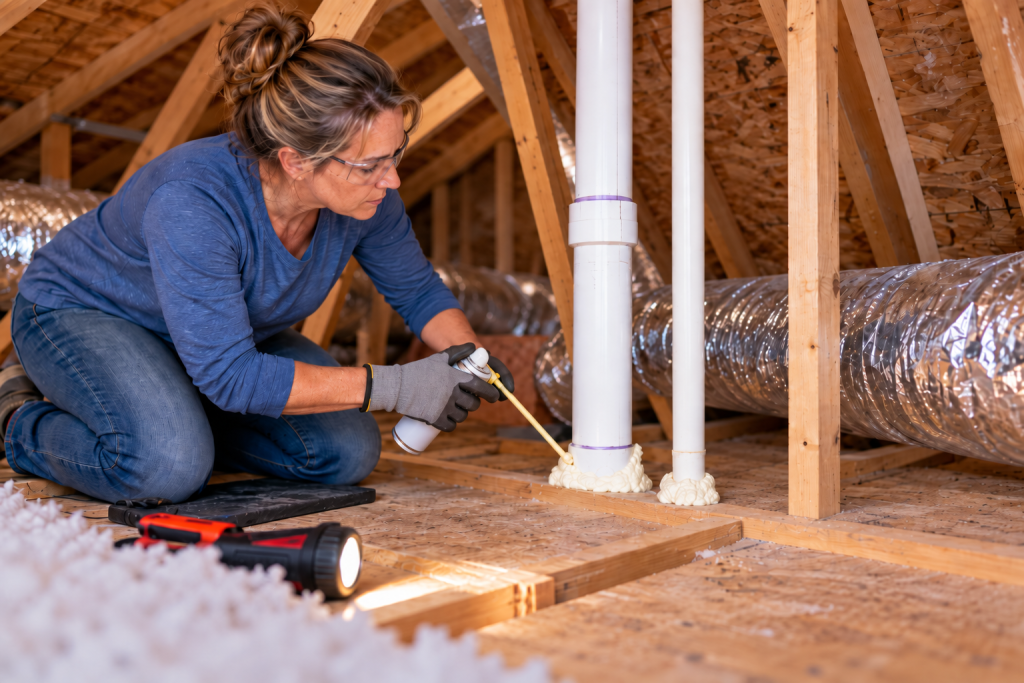
Examples may include small gaps around ordinary non-energized plumbing penetrations, minor framing cracks, accessible gaps around an attic hatch rough opening, and clearly visible top-plate openings.
The material depends on the gap and surrounding construction. Caulk may suit some small cracks. Approved foam sealants can be appropriate for certain larger gaps. Large open cavities may require rigid blocking combined with a suitable sealing material.
No single sealant is correct everywhere.
Do not move wiring, fixtures, ducts, or questionable insulation merely to reach a gap. A leak that requires electrical modification, structural alteration, hazardous-material disturbance, or unsafe attic access has moved beyond a basic homeowner air-sealing project.
What Not to Seal in an Attic
Air sealing the ceiling plane is not the same thing as sealing the attic itself.
Do not casually seal or block:
- soffit vents
- ridge vents
- roof vents
- ventilation baffles or chutes
- other intentional attic ventilation openings
- required flue or chimney clearances
- combustion-air openings
- mechanical ventilation openings
- uncertain recessed-light assemblies
- energized electrical components
- junction boxes that must remain accessible
- drainage or vent pathways intended to remain open
Avoid the idea that every opening you can see represents unwanted leakage. Some openings have a specific safety or building-system purpose.
Recessed Lights, Wiring, Flues, and Other High-Risk Areas
Certain attic penetrations deserve more caution because the wrong sealing method can create electrical or fire hazards.
Recessed lights
Older recessed-light housings may not be rated for direct insulation contact. Some fixtures require clearance from insulation and other materials.
Fixtures rated for insulation contact or designed as airtight assemblies may be handled differently, but the fixture rating needs to be confirmed rather than assumed.
Do not pack insulation or ordinary sealant directly around an uncertain recessed fixture. If you cannot identify the fixture or its requirements, have it evaluated before proceeding.
Wiring and junction boxes
Holes where wiring passes through framing can contribute to air leakage, but the presence of wiring changes the work area.
Do not work around damaged or exposed electrical components, open boxes, or uncertain energized wiring. Junction boxes that are required to remain accessible should not be buried or sealed over.
Electrical repairs and modifications belong to qualified personnel.
Flues, chimneys, and hot components
Flues, chimneys, and other heat-producing components may require specific clearances and noncombustible or fire-rated construction details.
Do not apply ordinary spray foam, caulk, or other combustible sealing products directly against these components.
When an air leak involves a flue, chimney, or uncertain heat-producing assembly, professional evaluation is the appropriate next step rather than improvising a seal.
Bathroom Exhaust and Duct Penetrations
A duct passing through the ceiling can leave a gap around the penetration. When safely accessible, the ceiling-plane gap may sometimes be appropriate for air sealing.
That does not change where the duct itself must terminate. Bathroom exhaust should discharge outdoors, not into the attic.
Similarly, sealing around a duct penetration should not mean modifying the duct, restricting its airflow, or covering electrical or mechanical components associated with the fan.
Large Open Cavities and Utility Chases
Large chases and open framing cavities can move much more air than a small crack.
These openings may occur around plumbing groups, duct chases, dropped ceiling areas, or transitions in framing. Insulation placed over an open cavity may hide the opening without stopping air movement through it.
Large openings often require a durable blocking or air-control layer before the perimeter is sealed. The exact approach depends on what passes through the chase.
If wiring, plumbing, ducts, flues, or combustion equipment complicate the opening, treat it as an assembly that needs evaluation rather than filling it indiscriminately.
How Attic Ventilation Fits Into the Plan
A conventional vented attic is supposed to exchange air through designated ventilation openings. Ceiling-plane air leaks are different: they connect conditioned rooms to the attic unintentionally.
Attic air sealing should reduce the second type without blocking the first.
Keep soffit intake vents, ridge vents, roof vents, baffles, and ventilation channels open. Insulation added afterward should also be kept from obstructing those pathways.
If you cannot tell whether an opening is an air leak or part of the ventilation system, identify its purpose before sealing it.
Before sealing near eaves or roof ventilation paths, review our attic ventilation guide to understand how intake and exhaust airflow should remain open.
Moisture Problems to Fix Before Air Sealing
Air sealing should not be used to hide an attic moisture problem.
Stop before covering areas with:
- active roof leaks
- wet insulation
- recurring condensation or frost
- mold-like growth
- damaged or wet roof decking
Find and correct the moisture source first. Significant mold, widespread moisture, or an uncertain roof-deck condition may require professional evaluation.
Suspected vermiculite deserves a separate stop point. Do not dig through it, vacuum it, or move it aside to reach gaps underneath. Some vermiculite insulation historically used in homes may contain asbestos, so professional evaluation should come before any work that could disturb it.
A Safe Attic Air-Sealing Sequence
Step 1: Inspect safely from accessible areas
Identify visible penetrations and framing transitions without crawling into areas where footing is uncertain.
Step 2: Identify clear air-leakage points
Focus on openings through the ceiling plane, such as plumbing penetrations, top plates, access openings, and open chases.
Step 3: Separate safe gaps from uncertain areas
Set aside anything involving electrical equipment, recessed fixtures, flues, combustion components, hazardous materials, or unclear ventilation.
Step 4: Correct other problems first
Resolve active moisture, damaged wiring, contamination, and other conditions that make sealing or insulation inappropriate.
Step 5: Seal only clearly appropriate gaps
Use a sealing approach suited to the size and construction of the opening. Avoid one-product-for-everything solutions.
Step 6: Protect ventilation and required clearances
Recheck that soffit vents, baffles, roof ventilation, heat clearances, and required access remain unobstructed.
Step 7: Reinspect before adding insulation
Confirm that completed air sealing is secure and that no unresolved hazards or moisture conditions will be hidden by the new insulation.
Common Attic Air-Sealing Mistakes
A useful air-sealing project is selective rather than aggressive.
Avoid:
- sealing soffit, ridge, or roof ventilation
- using ordinary foam against flues or chimneys
- packing insulation around uncertain recessed lights
- sealing over damaged wiring
- burying junction boxes that require access
- ignoring leaks, condensation, or wet materials
- waiting until new insulation hides accessible leaks
- assuming insulation by itself stops air movement
- filling every visible opening without identifying its purpose
When the function of an opening is unclear, finding out what it serves is more important than closing it.
When Professional Help Makes Sense
Professional evaluation is appropriate when air sealing involves:
- damaged, exposed, or uncertain electrical wiring
- recessed lights with unknown ratings or clearances
- flues, chimneys, or combustion equipment
- significant mold or recurring attic moisture
- suspected vermiculite or asbestos-containing material
- inaccessible areas or unsafe footing
- large complicated chases containing multiple utilities
- structural alterations
- unclear ventilation or mechanical openings
The goal is not to seal every possible gap personally. It is to address straightforward leaks without creating a larger electrical, fire, moisture, ventilation, or indoor-air problem.
Frequently Asked Questions
Should you air seal an attic before adding insulation?
Usually, yes. Appropriate ceiling-plane leaks are easier to find and reach before new insulation covers them.
Can you use spray foam for attic air sealing?
Approved foam sealant can be appropriate for some gaps, but not every location. Do not use ordinary foam against hot flues, chimneys, uncertain fixtures, or other assemblies requiring specialized materials or clearances.
Should soffit vents be sealed?
No. Soffit vents are intentional ventilation openings in a vented attic and should remain unobstructed.
Does attic insulation stop air leaks?
Not reliably. Insulation slows heat transfer, while air sealing controls unwanted airflow through gaps and penetrations. An effective attic upgrade may require both.
Final Thoughts
Effective attic air sealing before insulation means closing accessible, appropriate leaks through the ceiling plane—not sealing every opening in the attic. Plumbing and utility penetrations, framing gaps, attic access openings, and some open cavities may be reasonable places to address when conditions are clear and safe.
Leave ventilation openings open, respect heat and electrical clearances, and stop around uncertain fixtures, flues, wiring, moisture damage, or hazardous materials. Once those issues are addressed, the attic is better prepared for a continuous insulation upgrade.