
soffit materials: how to choose the right type for your home
The right soffit material depends on your budget, climate, maintenance tolerance, ventilation needs, and the look of your home. Vinyl and aluminum are common low-maintenance choices, while wood offers a traditional appearance with more upkeep. Fiber cement and PVC or composite products can provide durable, moisture-resistant alternatives, but they may cost more or have fewer locally available profiles.
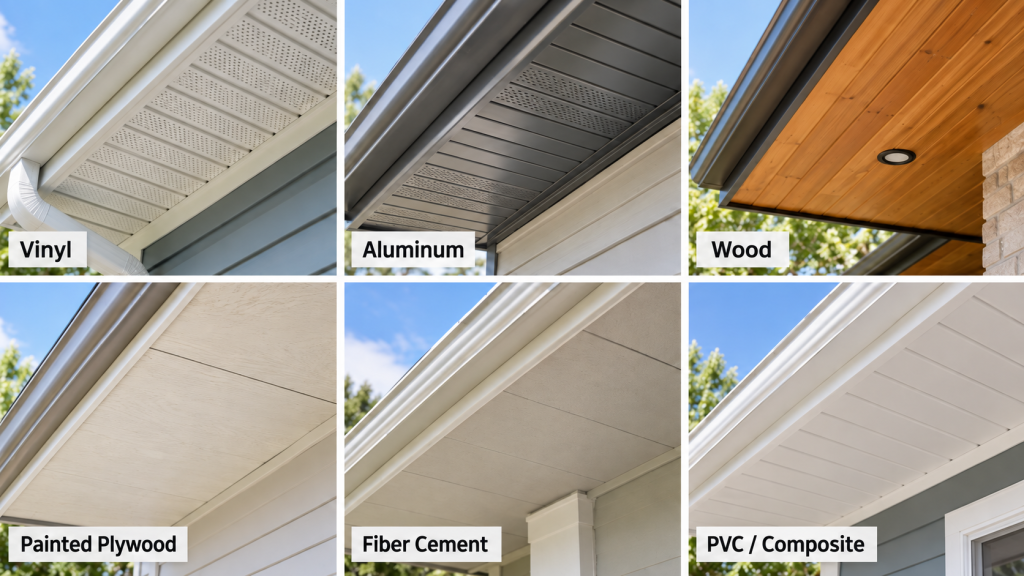
| Material | Typical cost level | Maintenance | Moisture resistance | Vent options | Best fit |
|---|---|---|---|---|---|
| Vinyl | Budget to mid-range | Low | High | Common | Value and low upkeep |
| Aluminum | Mid-range | Low | High | Common | Durable, clean exterior finish |
| Wood | Mid-range to higher | Higher | Lower without protection | Available | Traditional or custom appearance |
| Plywood | Budget to mid-range | Moderate to high | Depends on finishing | Can be vented | Simple painted soffits |
| Fiber cement | Mid-range to higher | Low to moderate | High | Available | Durable painted appearance |
| PVC/composite | Mid-range to higher | Low | High | Product-dependent | Moisture-prone locations |
What Is Soffit Material?
Soffit is the finished surface underneath a roof overhang, between the exterior wall and the outer roof edge. It covers the underside of the eave and contributes to the home’s appearance.
Some soffit is also vented. Perforated or purpose-made vent panels can provide intake air for an attic ventilation system, so material selection may affect both appearance and airflow.
Vinyl Soffit
Vinyl is relatively affordable, low maintenance, and widely available in solid and vented panels. It resists moisture and insects and does not require routine painting.
Its main drawbacks are appearance and movement with temperature changes. Thicker, better-quality panels may feel more substantial, while lighter products can look less suited to highly detailed or traditional homes.
Vinyl is a practical choice for homeowners who want low upkeep and broad product availability at a moderate cost.
Aluminum Soffit
Aluminum is another low-maintenance material that resists moisture and will not rot. Solid and vented panels are commonly available, and the material is often paired with aluminum fascia trim.
It can dent from impact, and factory finishes may fade or chalk over time. As a metal, aluminum also has noncombustible material characteristics.
Aluminum can be a strong choice when durability, low maintenance, and a clean, uniform exterior finish are priorities.
Wood Soffit
Wood offers a traditional appearance that can suit older homes, custom architecture, porches, and exposed eaves. It can be painted or stained to match detailed exterior trim.
The tradeoff is maintenance. Wood needs protection from moisture and may eventually experience peeling finishes, insect damage, swelling, or decay if water repeatedly reaches it.
Wood is best suited to homeowners who value its appearance and are comfortable with periodic inspection and refinishing.
Plywood Soffit
Plywood is a wood-based sheet material that can create a simple, smooth painted soffit. Depending on local material and labor costs, it can be an economical option.
Like other wood products, plywood depends on good finishing and moisture protection. It generally requires more upkeep than vinyl or aluminum.
Plywood can work well when the goal is a straightforward painted soffit rather than individual panel profiles.
Fiber Cement Soffit
Fiber cement offers good durability and resistance to moisture and pests when properly installed and maintained. Vented and solid soffit products are available, and the finished appearance can work well with painted siding and trim.
The material is heavier than vinyl or aluminum, and installation is more involved. Some products are factory finished, while others require painting.
Modern fiber-cement products are different from unknown older cementitious materials. Older exterior panels may contain asbestos. If existing material is suspected of containing asbestos, do not cut, drill, sand, grind, break, or remove it until it has been appropriately evaluated.
PVC or Composite Soffit
PVC and composite soffit products can offer strong moisture resistance and relatively low maintenance. Some provide a painted or trim-like appearance without the upkeep requirements of traditional wood.
Cost, profiles, ventilation options, and availability vary by product, and these materials may be less commonly stocked than vinyl or aluminum.
PVC or composite soffit may be a good fit where moisture resistance and reduced refinishing are priorities.
Which Soffit Material Is Lowest Maintenance?
Vinyl, aluminum, and many PVC or composite products are generally the lowest-maintenance choices. They avoid the recurring scraping, priming, and repainting associated with exposed wood.
Fiber cement can also be relatively low maintenance, although painted versions may eventually need finish renewal.
Low maintenance does not mean maintenance-free. Any soffit should still be checked periodically for loose panels, blocked vents, damaged finishes, pest activity, or signs of water intrusion.
Choosing for Moisture, Heat, and Climate
Climate can change which material characteristics matter most.
Which Soffit Material Handles Moisture Best?
Vinyl, aluminum, fiber cement, PVC, and many composite products generally tolerate moisture better than traditional wood or plywood.
However, moisture-resistant soffit does not fix an active roof leak, overflowing gutter, condensation problem, or failed flashing. Those conditions can still damage backing, framing, or other hidden materials and should be corrected separately.
What About Hot or Sunny Climates?
For sunny locations, consider color, finish durability, and how the material responds to temperature changes.
Vinyl and PVC-based products can expand and contract, while painted metals and other finishes may weather differently depending on exposure. Product quality and installation details matter more than broad claims that one material is universally best for heat.
What About Humid or Coastal Areas?
In humid climates, moisture resistance becomes more important. Coastal areas add salt exposure, which can affect metal finishes, fasteners, and accessories.
Aluminum, vinyl, fiber cement, PVC, and composite products can all be viable choices when the specific product and finish are appropriate for the environment. Fastener compatibility and corrosion resistance deserve particular attention near salt air.
Which Soffit Material Looks Best?
Appearance depends on the architecture rather than one universal winner.
Wood often suits traditional or highly detailed homes. Plywood can create a simple painted surface, while vinyl and aluminum provide uniform panel lines and a broad range of colors.
Fiber cement and some composites can offer a heavier, more substantial painted appearance. The best visual choice is usually the one that coordinates with the home’s siding, trim, fascia, roof color, and overall style.
Vented vs. Solid Soffit Material
Vented and solid refer to panel function rather than the base material. Vinyl, aluminum, fiber cement, and some other soffit systems may be available in both forms.
Vented soffit may serve as intake ventilation near the lower edge of a vented attic. Solid soffit can be appropriate where intake ventilation is not required at that location.
Not every section necessarily needs to be vented, but replacing existing vented panels with solid material can reduce attic airflow if those panels are part of the intake system.
Likewise, adding more perforated soffit will not solve an airflow problem if insulation or another obstruction blocks the air path inside the eave. Ventilation decisions should fit the overall attic system rather than being made from soffit appearance alone.
If soffit ventilation is part of your attic intake system, our soffit repair guide explains how damaged or blocked soffit can affect airflow and when repair or replacement may be needed.
Soffit Material Cost Comparison
Relative cost is usually more useful than a single price because material, profile, finish, project size, and labor vary widely.
Vinyl is commonly among the more budget-friendly choices. Aluminum often falls into the budget-to-mid or mid-range category.
Plywood can be economical as a material but may add painting and future refinishing costs. Finished wood can become more expensive depending on species and detailing.
Fiber cement, PVC, and specialty composites often fall into the mid-range or higher-cost categories. Labor can also increase for heavier materials, difficult access, or projects requiring more finishing and trim work.
How to Choose the Right Soffit Material
Use the house itself to narrow the options. Consider these eight factors:
- Exterior style: Choose a material that fits the architecture and trim.
- Maintenance tolerance: Decide how much future painting or refinishing you accept.
- Moisture exposure: Favor suitable moisture-resistant materials where exposure is high.
- Climate: Account for sun, humidity, salt air, and temperature changes.
- Ventilation needs: Confirm that appropriate vented profiles are available.
- Budget: Compare installed cost and future maintenance, not material price alone.
- Matching requirements: Check color, profile, texture, and trim compatibility.
- Availability: Common local products may be easier to match or replace later.
No single factor should decide the purchase by itself. The best choice is the one that balances appearance, maintenance, performance, and cost for your particular home.
Should You Match Soffit to Fascia or Siding?
The soffit does not have to use the same material as the fascia or siding.
It is common to combine materials, such as vinyl soffit with aluminum-covered fascia or fiber-cement siding with metal soffit. Visual coordination is usually more important than exact material matching.
Focus on color, trim style, texture, and maintenance expectations so the roof edge looks intentional and fits the rest of the exterior.
If you are replacing both roof-edge components together, our soffit and fascia replacement guide explains when combined replacement makes sense, what affects cost, and which warning signs matter.
When Professional Help Makes Sense
Professional evaluation is appropriate when existing soffit is deteriorated, hidden water damage is suspected, attic vent configuration is unclear, or the work is high above the ground.
Older painted wood may involve lead-based paint, especially on pre-1978 homes. Unknown older cementitious soffit should be evaluated before disturbance if asbestos is a possibility.
Professional help is also appropriate when soffit work is near electrical service conductors or equipment. Do not place ladders, tools, or removed materials near energized service components.
Final Thoughts
There is no universal best soffit material. Vinyl is affordable and low maintenance, aluminum combines low upkeep with durable metal construction, and wood offers traditional character with more maintenance. Plywood provides a simple painted sheet option, fiber cement is durable but heavier and more involved, and PVC or composite products can offer strong moisture resistance at a potentially higher cost.
Choose based on your home’s architecture, climate, moisture exposure, maintenance expectations, ventilation needs, budget, and locally available profiles. A material that fits those conditions will usually serve the home better than one chosen on price or appearance alone.