
soffit and fascia replacement: cost, signs, and when it’s needed
Soffit and fascia replacement may be needed when deterioration affects both parts of the roof edge, repeated repairs keep failing, or correcting moisture damage requires opening a larger section of the eave. Replacing both is not automatically necessary because one component is damaged. The decision depends on how far deterioration extends, whether the cause has been corrected, and whether the remaining materials are still sound.
Because soffit and fascia are located at the roof edge, homeowners should limit inspection to safe ground-level observation. Replacement involving ladders, roof access, gutter removal, or concealed damage is generally a job for qualified professionals.
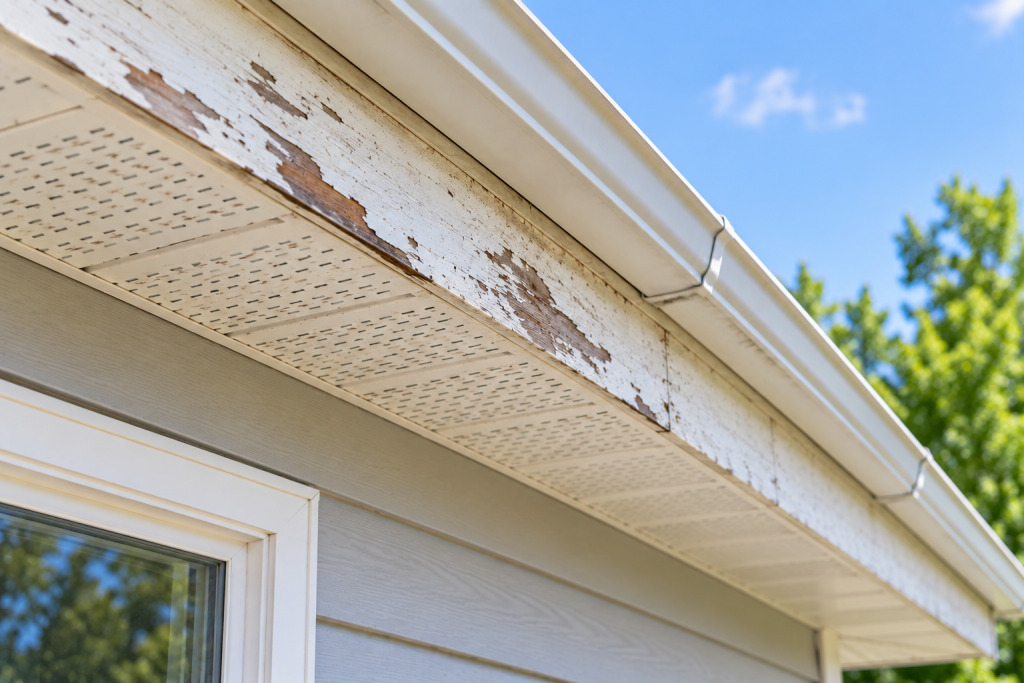
| Condition | Limited repair may still fit | Combined replacement is more likely |
|---|---|---|
| Damage extent | One isolated area | Long sections or multiple areas |
| Soffit condition | Most panels remain secure | Several panels sag, loosen, or deteriorate |
| Fascia condition | Board remains firm | Board is soft, warped, or will not hold fasteners |
| Previous repairs | Repairs remain stable | Patches repeatedly fail |
| Water problem | Source identified and corrected | Moisture continues or hidden damage is suspected |
| Materials | Matching pieces are available | Older material is difficult to match reliably |
What Are Soffit and Fascia?
Fascia runs along the outer roof edge and commonly provides the surface where gutters are attached. The soffit covers the underside of the roof overhang between the wall and fascia.
Both help finish and protect the eave. Vented soffit may also provide intake airflow for a vented attic, so replacement should preserve the intended ventilation arrangement.
When Are Soffit and Fascia Replaced Together?
Combined replacement makes the most sense when the damage overlaps.
The same moisture problem can sometimes affect fascia, soffit, backing, and nearby trim. If removing one deteriorated component exposes damage in the other, replacing both within that section may be more practical than making separate repairs.
Other reasons include widespread deterioration, gutters that must already be removed for access, older materials that are difficult to match, or a larger exterior project that has already exposed the roof edge.
That does not mean both parts should automatically be replaced. A damaged soffit with sound fascia, or damaged fascia with otherwise serviceable soffit, may still justify a more limited repair.
Signs Soffit and Fascia Replacement May Be Needed
The strongest signs involve deterioration that extends beyond one isolated defect.
Widespread Rot or Soft Material
Soft, crumbling, or decayed material across multiple areas suggests that patching may no longer provide a reliable repair.
When deterioration affects both the soffit and fascia, the damaged section may need to be opened far enough to remove all unsound material.
Repeated Repairs Keep Failing
Repeated patching, repainting, or refastening can become impractical when the underlying material has lost integrity or the cause of the damage was never corrected.
If the same areas continue failing, broader replacement may provide a more durable solution.
Sagging or Loose Soffit
One loose panel may be repairable. Multiple sagging, displaced, or loose panels suggest a larger issue with fasteners, backing, moisture exposure, wind damage, or aging material.
If the problem is limited mainly to the soffit, our soffit repair guide covers common damage, repair options, costs, and when a larger section may need replacement.
Fascia No Longer Holds Fasteners
Fascia needs enough strength to hold its own fasteners and, on many homes, gutter attachments.
If fasteners repeatedly loosen because the board has become soft or deteriorated, adding more fasteners does not restore the material. Replacement is usually more appropriate.
Gutters Are Pulling Away
Gutters pulling away from the roof edge can indicate weakened fascia or failed attachment points.
The gutter itself may not need replacement, but the supporting fascia should be evaluated before the gutter is reattached.
Large Areas of Failed Finish
Peeling paint alone does not require replacement if the material underneath remains solid.
The concern increases when widespread finish failure appears with staining, swelling, softness, open joints, or recurring moisture. Those signs can point to deterioration below the surface.
Persistent Water Intrusion
Recurring staining or deterioration after previous repairs suggests that water is still reaching the roof edge.
New materials should not be installed as a cosmetic cover over an active moisture problem.
Damage Extends Into Nearby Components
Soffit and fascia damage can sometimes extend into soffit backing, roof sheathing, rafter tails, trim, or gutter attachment areas.
This does not mean every replacement project includes structural repairs, but concealed deterioration should be addressed rather than covered.
When Repair May Still Be Enough
Combined replacement is not always necessary.
A smaller repair may still make sense when damage is localized, surrounding material is firm, fasteners hold securely, and the underlying cause has been corrected. Replacing only the damaged component can also be reasonable when the neighboring soffit or fascia remains serviceable.
Compatible replacement material is another factor. If a damaged section can be matched without compromising appearance or performance, sectional repair may avoid unnecessary work.
If only the fascia is damaged and the soffit remains sound, our fascia repair guide explains common repair options, costs, and when replacement becomes the better choice.
Soffit and Fascia Replacement Cost
Soffit and fascia replacement cost varies because project scope can change dramatically from one house to another.
Replacing a short, accessible section with sound material behind it is very different from second-story work involving gutters, vented soffit, finish work, and concealed deterioration.
The main cost factors include:
- Total length and width of the affected roof edge
- Soffit and fascia materials
- House height and accessibility
- Gutter handling
- Hidden damage discovered after removal
- Ventilation requirements
- Painting or other finishing
- Disposal and cleanup
- Local labor rates
A written estimate should clearly explain what is included. Pricing based only on visible linear footage can change if removing damaged material reveals additional deterioration.
What Affects Replacement Cost?
Several factors have an outsized effect on the final price.
Linear Footage and Project Size
Longer roof edges require more material and labor. Several separate repair areas can also increase setup time compared with one continuous section.
Material Type
Vinyl and aluminum soffit often use formed panels, while wood soffit may require more cutting and finishing.
Fascia may be painted wood, PVC, or composite, or wood covered with aluminum. Aluminum-wrapped fascia can involve both the outer metal covering and the board beneath it.
House Height and Access
Second-story eaves, sloped ground, additions, landscaping, and tight side yards can increase labor because safe access requires more setup or equipment.
Homeowners should not attempt unsafe ladder or roof-edge work simply to reduce access costs.
Gutters
Gutters may need to be supported or temporarily removed when they cover fascia scheduled for replacement.
Whether existing gutters can be reinstalled depends on their condition, attachment, and alignment. Long gutter sections should not be detached or handled from a ladder by an inexperienced homeowner.
Hidden Damage
Opening the eave may reveal deterioration that was not visible beforehand, including damaged sheathing, rafter tails, backing, flashing, or other moisture-affected material.
When present, these conditions can expand the scope and should be repaired before the roof edge is closed again.
Finishing and Matching
Wood may require painting or another protective finish. Factory-finished metal, vinyl, PVC, and composite products reduce some field finishing but may be harder to match to weathered existing materials.
Older profiles and colors may also be discontinued, making replacement to a natural break in the roofline more practical.
Does Soffit and Fascia Replacement Affect Attic Ventilation?
It can if the existing soffit is part of the attic intake system.
Vented soffit replacement should preserve the intended intake openings. Replacing vented panels with solid material without considering the ventilation design can reduce airflow.
Blocked insulation or other obstructions inside the attic can also interfere with intake airflow. Those conditions may require separate evaluation rather than simply adding more vented soffit.
Should Gutters Be Replaced at the Same Time?
Not automatically.
Gutters in good condition may be temporarily removed or supported and then reinstalled after fascia work. Replacement becomes a separate consideration when gutters are damaged, badly corroded, misaligned, leaking repeatedly, or no longer suitable for secure reattachment.
Their condition should determine the decision, not simply the fact that fascia work is being performed.
Can Soffit and Fascia Be Replaced in Sections?
Yes. Partial replacement can work when deterioration is confined to a clearly defined area and surrounding materials remain sound.
The main limitations are appearance and practicality. New material may not perfectly match older faded panels or trim, and discontinued profiles can make transitions difficult.
If several isolated sections are failing, repeated setup and repair work may eventually make a longer continuous replacement more sensible.
Why the Moisture Source Must Be Fixed First
New soffit and fascia will not solve an active roof leak, failed roof-edge flashing, gutter overflow, chronic water intrusion, persistent condensation, or another unresolved moisture source.
The cause should be identified and corrected before new material closes the assembly.
Water can also travel along roof-edge components before appearing somewhere else, so visible damage does not always identify the exact entry point.
What If Damage Is Found Behind the Soffit and Fascia?
Concealed damage can expand the project once deteriorated materials are removed.
Possible findings include:
- Damaged roof sheathing
- Decayed rafter tails
- Deteriorated backing
- Failed flashing
- Wet insulation
- Pest damage
These conditions should be addressed rather than covered with new trim. Structural deterioration, roofing defects, or significant pest damage may require additional qualified professionals.
Older painted soffit, fascia, or trim may contain lead. If older cementitious exterior materials are present and asbestos-containing material is suspected, do not cut, sand, drill, grind, break, or remove them before appropriate evaluation.
How to Compare Replacement Estimates
A useful estimate should make the planned scope clear enough that you can compare contractors on more than price.
Look for details covering:
- Approximate linear footage or project area
- Soffit and fascia materials
- Vented versus solid soffit
- Gutter handling
- Removal and disposal
- Trim and finish work
- How concealed damage will be documented and priced
- Access equipment or special setup
- Cleanup
- Applicable workmanship and material warranty information
Two estimates with different totals may include very different scopes, so compare what each contractor is actually providing.
Repair vs. Replacement: A Simple Decision Guide
The decision should be based on the condition of the affected roof edge rather than replacing both components simply because they meet in the same area.
| Factor | Repair may still fit | Combined replacement is more likely |
|---|---|---|
| Extent | Small, contained area | Long or multiple damaged sections |
| Components affected | Only soffit or fascia | Both are deteriorated |
| Fasteners | Remain secure | Fascia or supports no longer hold |
| Repair history | Limited repairs remain sound | Repairs repeatedly fail |
| Moisture | Source corrected | Water intrusion persists or is unclear |
| Hidden condition | No signs of more serious damage | Opening the assembly is necessary |
| Matching | Compatible material available | Existing products are obsolete or difficult to match |
Professional evaluation is appropriate when both components are deteriorated, gutters must be removed, damage is high on the house, water intrusion remains unexplained, or concealed roof-edge problems are suspected.
Professional help is also appropriate when work would place ladders, tools, gutters, or workers near electrical service conductors or equipment.
Final Thoughts
Soffit and fascia replacement makes the most sense when deterioration is broad enough that isolated repairs no longer restore the roof edge reliably. Replacing both components should be based on their actual condition, not simply because they meet at the same part of the house.
Identify which materials are damaged, correct the source of moisture, determine how far deterioration extends, and then compare limited repair with combined replacement. When new soffit is vented, preserve the intended airflow, and never cover concealed water, pest, or structural damage simply to finish the exterior.