
fascia repair: damage, costs, and when replacement makes sense
Fascia repair may involve refinishing a solid board, patching a small defect, replacing a damaged section, or installing a new board when deterioration is extensive. The right choice depends on how much of the fascia remains sound and whether the condition that caused the damage has been corrected. A cosmetic repair will not last if the board is soft, badly warped, or repeatedly exposed to moisture.
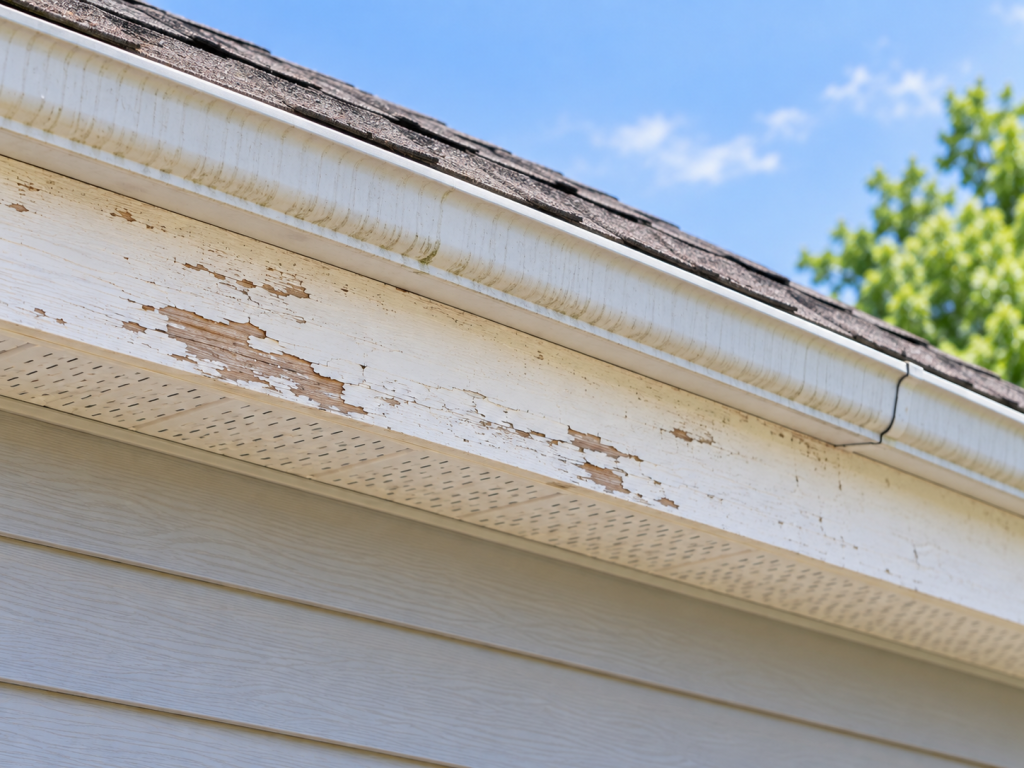
| Condition | Repair may make sense | Replacement is more likely |
|---|---|---|
| Peeling finish | Board remains solid | Material underneath is deteriorated |
| Small crack or split | Damage is localized | Board is badly weakened or separated |
| Loose area | Board and backing remain sound | Fasteners no longer hold securely |
| Warping | Minor and localized | Board is substantially bowed or twisted |
| Rot | Limited surface deterioration | Wood is soft or decay is extensive |
What Is Fascia and What Does It Do?
Fascia is the finished board or surface along the outer edge of a roof, typically covering the ends of the roof framing. It gives the eave a finished appearance and helps protect roof-edge components from weather exposure.
On many homes, gutters are fastened directly to the fascia. That makes the board’s condition important because weakened fascia may no longer provide a secure attachment surface.
Common fascia materials include painted wood, PVC or composite boards, and wood covered with aluminum or another metal wrap.
Common Types of Fascia Damage
Fascia faces sun, rain, wind, temperature changes, and water moving off the roof. Some damage is mostly cosmetic, while other conditions indicate that the material itself is failing.
Peeling or Failing Paint
Peeling, blistering, or flaking paint may only require refinishing when the fascia underneath is firm and stable. Repeated finish failure, staining, or bubbling can point to recurring moisture that should be addressed before repainting.
Older painted fascia or trim may contain lead-based paint. Avoid casual sanding or scraping when lead may be present without appropriate lead-safe practices.
Cracks and Splits
Small cracks can result from age, drying, movement, weather, or impact. A localized defect may be repairable if the surrounding material remains solid.
Deep splits or separation that weakens the board usually favor section replacement over patching.
Warped or Bowed Fascia
Moisture, age, movement, or fastening problems can cause fascia to cup, twist, or bow. Minor distortion may remain serviceable, but significant warping can create gaps and make secure fastening difficult.
Loose Fascia Boards
Loose fascia can result from failed fasteners, weakened wood, or deterioration in the material behind the board. Simply adding more fasteners is not a reliable fix when the existing material can no longer hold them.
Impact Damage
Storm debris, branches, ladders, or other contact can dent, crack, split, or dislodge fascia. Localized impact damage may be repairable, while severe damage can justify replacing the affected section.
Rot or Decay
Rot in wood fascia indicates prolonged moisture exposure. Keep the focus on whether the board remains sound: soft or crumbling material generally requires replacement rather than cosmetic patching.
Detailed rot diagnosis belongs to a separate evaluation, but the moisture source still needs correction before new material is installed.
If rot is the main problem, our fascia board rot guide explains the common moisture causes, warning signs, and when deteriorated fascia should be repaired or replaced.
Can Damaged Fascia Be Repaired?
Yes. Repair can make sense when the problem is confined to a small area and most of the board remains firm, stable, and capable of holding fasteners.
A limited repair is most appropriate when the underlying cause has been corrected and neighboring roof-edge materials appear sound. The decision should be based on the condition of the board itself rather than appearance alone.
Fresh paint can hide weak material, while an unattractive but solid board may need only surface restoration.
Common Fascia Repair Options
The appropriate approach depends on how deeply the damage affects the material.
Refinishing
Refinishing is appropriate when paint or another protective coating has failed but the board underneath is still solid. Recurring peeling or staining should be investigated before applying another finish.
Limited Patching
Small surface defects may sometimes be patched when the surrounding fascia remains sound. Patching should not be used to cover soft wood, extensive decay, or material that cannot hold fasteners.
Section Replacement
A damaged portion can sometimes be removed and replaced while sound fascia on either side remains in place. This often makes sense for localized impact damage, splitting, or deterioration.
Full Board Replacement
Replacing an entire board may be more practical when damage extends through much of its length, the board is badly warped, or several previous repairs have left little reliable material.
If the damage extends beyond the fascia and the soffit is also deteriorated, our soffit and fascia replacement guide explains when replacing both components together may make more sense.
When Replacement Makes More Sense Than Repair
Replacement becomes the stronger option when the fascia has lost too much integrity to perform reliably.
Common signs include:
- Soft or extensively deteriorated material
- Damage covering much of the board
- Fasteners that repeatedly loosen or pull out
- Significant bowing, twisting, or splitting
- Multiple patches that continue to fail
- Gutters that cannot remain securely attached
- Suspected deterioration behind the fascia
- Material that can no longer be finished effectively
Damage to fascia does not automatically mean nearby soffit also needs replacement. Broader combined replacement is a separate decision when deterioration extends into both components.
Fascia Repair Cost
Fascia repair cost varies because the visible board is only one part of the job. Refinishing a short, accessible section is very different from replacing deteriorated fascia on an upper story where gutters must be moved and concealed damage is discovered.
The main cost factors are:
- Length of damaged fascia
- Repair type
- Fascia material
- House height and access
- Gutter removal or support
- Hidden roof-edge damage
- Painting or other finish work
- Local labor rates
For planning, a detailed quote based on the actual damaged area is more useful than a single price-per-foot number. Costs may change if removing fascia reveals deterioration that was not visible beforehand.
Amount of Damage
A small isolated repair generally requires less labor than several damaged sections. Multiple repair locations can also increase setup time, particularly on taller homes or complicated rooflines.
House Height and Access
Second-story fascia, sloped ground, additions, landscaping, and difficult roof edges can increase labor because safe access requires more equipment and setup.
Homeowners should not treat those access costs as a reason to attempt unsafe ladder or roof-edge work.
Gutters Attached to the Fascia
When gutters cover or attach through fascia that must be replaced, they may need to be temporarily supported or removed during the repair.
That work can add labor, particularly when long gutter sections are involved. Do not attempt to detach or support heavy gutter runs from a ladder.
Hidden Damage
Removing fascia may expose deterioration in nearby backing, soffit, roof sheathing, or rafter tails. These findings do not occur on every project, but they can expand the scope when present.
Concealed damage should be repaired rather than covered with new trim.
Fascia Repair Cost by Material
Material type affects the repair method, finishing requirements, and whether a localized fix is practical.
Wood Fascia
Solid wood fascia may be refinished or patched for limited surface damage. More serious deterioration usually requires section or full-board replacement, followed by appropriate finishing.
Aluminum-Wrapped Fascia
Metal-covered fascia can have damage in the aluminum covering, the board underneath, or both. Repair may therefore involve replacing the metal wrap, repairing the substrate, or replacing both layers.
PVC or Composite Fascia
PVC and composite fascia can still crack, loosen, distort, or suffer impact damage. Whether repair or replacement makes sense depends on the product, fastening condition, and extent of damage.
If an older cementitious exterior material is present and asbestos-containing material is suspected, do not cut, sand, drill, grind, break, or remove it before appropriate evaluation.
Can You Repair Fascia Without Removing the Gutter?
Sometimes.
Minor finish work or an exposed localized repair may be possible without disturbing the gutter. More extensive fascia replacement can require temporary gutter removal or support because gutter fasteners often pass through the board being replaced.
The answer depends on the attachment method, location of the damage, and length of fascia involved. When gutter removal is needed, professional handling is appropriate rather than trying to manage long sections from a ladder.
What If the Fascia Keeps Failing?
Repeated fascia failure usually indicates an unresolved condition rather than bad luck with the repair.
Persistent water exposure, roof-edge problems, gutter issues, failed coatings, or hidden moisture can all contribute. Repainting a repeatedly wet board or fastening a gutter back into weakened material is unlikely to provide a lasting result.
The underlying condition should be corrected before another repair is considered complete.
How to Inspect Fascia Safely
A ground-level inspection can reveal many useful clues. Walk around the house in daylight and look for peeling paint, cracks, warping, gaps, loose trim, damaged sections, or gutters pulling away from the roof edge.
Use binoculars or a phone camera with zoom for upper-story areas.
Do not climb onto the roof or lean from a ladder to investigate fascia. High sections, concealed damage, gutter removal, and areas near electrical service equipment should be evaluated by an appropriate professional.
Repair vs. Replacement: A Simple Decision Guide
The condition of the board matters more than the size of the visible blemish.
| Consideration | Repair may fit | Replacement is more likely |
|---|---|---|
| Extent | Small, isolated damage | Large or multiple damaged areas |
| Board condition | Firm and stable | Soft, badly split, or severely warped |
| Fasteners | Hold securely | Repeatedly loosen or pull out |
| Previous repairs | Limited and successful | Multiple repairs are failing |
| Gutters | Remain securely supported | Cannot be fastened reliably |
| Hidden condition | No signs of deeper trouble | Concealed deterioration suspected |
Professional evaluation makes sense when several fascia sections are damaged, gutters are pulling away, roof-edge deterioration is suspected, or determining the repair scope requires access above ground level.
When to Call a Professional
Fascia repair often becomes professional work because of its location and the possibility of concealed damage.
Call for evaluation when the job requires roof-edge access, multiple sections are deteriorated, gutters must be removed or supported, or damage may extend into sheathing, soffit, backing, or rafter tails.
Professional help is also appropriate when electrical service conductors or equipment are close to the damaged area. Ladders, tools, gutters, and removed materials should not be brought near energized service components.
Final Thoughts
Successful fascia repair starts with determining whether the existing board is still sound. Small surface defects and finish problems may justify limited repair, while soft material, severe warping, failed fasteners, or widespread deterioration usually make replacement more practical.
Identify the visible damage, confirm that the remaining fascia still has good integrity, correct the condition that caused the problem, and choose a repair scope that restores the roof edge without covering unresolved deterioration.