
board and batten siding: materials, cost, pros and cons
Board and batten siding is a vertical siding style made from wide boards or panels with narrower battens covering the seams or creating the traditional look. It can be made from wood, engineered wood, fiber cement, vinyl, or metal. The best choice depends on budget, maintenance, climate, and architectural fit. Cost can range from moderate to high depending largely on material and installation complexity.
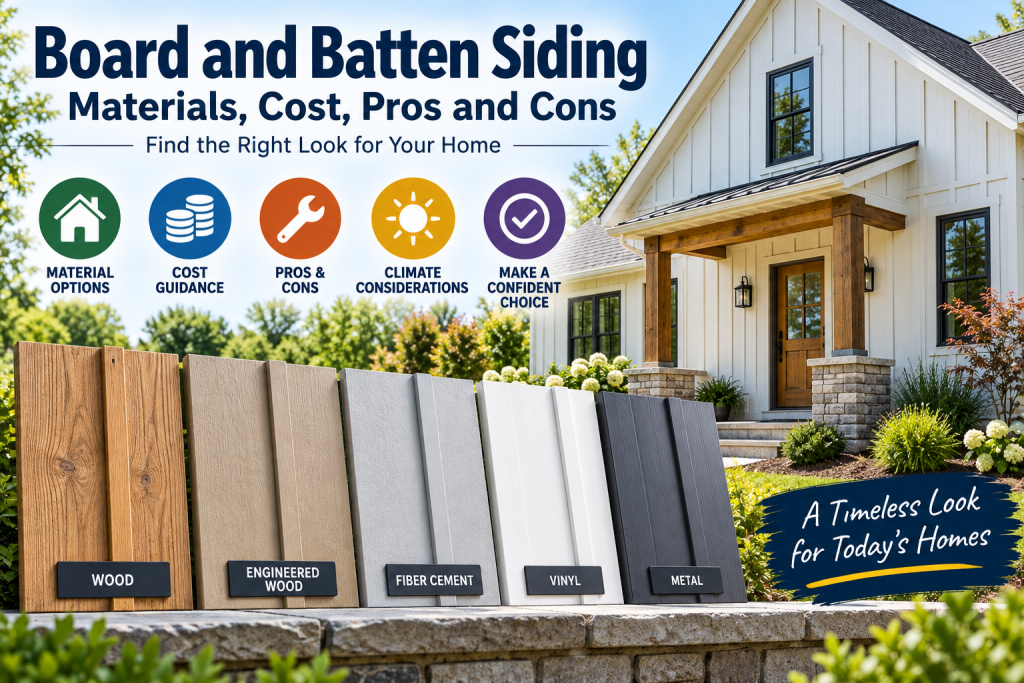
| Material | Cost level | Maintenance | Moisture resistance | Appearance | Best fit |
|---|---|---|---|---|---|
| Wood | Mid-range to high | High | Moderate with protection | Most traditional | Historic or custom character |
| Engineered wood | Mid-range | Moderate | Good | Wood-like | Traditional look with less upkeep |
| Fiber cement | Mid-range to high | Moderate | High | Substantial painted finish | Durable full-wall or accent use |
| Vinyl | Budget to mid-range | Low | High | Clean, manufactured look | Lower-maintenance projects |
| Metal | Mid-range to high | Low | High | Modern and crisp | Contemporary applications |
What Is Board and Batten Siding?
Traditional board and batten uses wide vertical boards with narrower battens covering the joints between them. Modern products may use panels or molded profiles that reproduce the same vertical rhythm.
The style has agricultural and rural roots but is now common on farmhouse, craftsman, modern, and mixed-style homes. It can cover an entire exterior or be used on gables, additions, entries, or other accent areas.
Common Board and Batten Siding Materials
Performance depends more on the material than on the style itself.
Wood Board and Batten
Wood provides the most traditional appearance, with real grain and the option to paint or stain.
Its main drawback is maintenance. Wood needs protection from moisture and may develop peeling finishes, insect damage, swelling, or decay when water repeatedly reaches it. Species and grade also affect price.
Wood is a strong fit when authentic material and custom detailing matter more than low upkeep.
Engineered Wood Board and Batten
Engineered wood offers a wood-like appearance with more consistent dimensions and usually less maintenance than solid wood. Many products are factory-primed or factory-finished.
It can be a useful middle ground between natural wood and lower-maintenance manufactured siding, but correct water-management details still matter.
Fiber Cement Board and Batten
Fiber cement offers a substantial painted appearance and strong resistance to moisture and pests when properly installed and maintained.
It is heavier than vinyl and usually more involved to install. Systems may use panels with separate battens or products designed specifically for vertical siding.
If older cementitious siding is present and asbestos-containing material is suspected, do not cut, drill, sand, grind, break, remove, or otherwise disturb it.
Vinyl Board and Batten
Vinyl provides the vertical look with relatively low maintenance. It resists moisture, does not require routine painting, and is lighter than fiber cement or many wood systems.
The trade-offs are appearance and temperature-related movement. Some homeowners prefer the depth and texture of real wood, and vinyl expands and contracts as temperatures change.
Metal Board and Batten
Steel and aluminum board-and-batten products offer durability, low routine maintenance, and a crisp appearance that often suits modern homes.
Metal can dent, finishes can weather, and local availability varies. It is also less common in some residential markets.
Board and Batten Siding Cost
Board and batten siding cost depends mainly on material and project conditions.
Vinyl is often among the more budget-friendly options. Engineered wood commonly falls in the mid-range. Traditional wood varies widely by species and finish, while fiber cement and metal often move toward the mid-range or higher-cost end.
Installed cost can rise with tall walls, difficult access, extensive trim, many openings, old-siding removal, wall preparation, and field painting or staining.
For a broader look at whole-project pricing, our siding replacement cost guide explains how material choice, removal, labor, access, trim, and hidden wall damage can affect the final total.
What Affects Board and Batten Siding Cost?
Key cost factors include:
- Material: Wood species, vinyl grade, fiber cement, engineered wood, or metal profile.
- Wall area: Larger surfaces require more material and labor.
- House height: Multi-story work increases access requirements.
- Trim: Corners, windows, doors, and transitions add labor and material.
- Old siding removal: Tear-off and disposal increase cost.
- Wall preparation: Damaged sheathing or water problems should be corrected first.
- Finishing: Some products require painting or staining.
- Local market: Labor rates and material availability vary by region.
Is Board and Batten More Expensive Than Horizontal Siding?
Sometimes, but not always.
Board and batten may cost more when extra battens, trim, detailed layout, or premium materials are involved. A custom wood installation can cost considerably more than basic horizontal vinyl.
However, some vinyl and engineered board-and-batten systems can remain competitive with horizontal products in the same material class. Material choice and installation complexity usually matter more than orientation alone.
Pros of Board and Batten Siding
Distinctive Vertical Appearance
Vertical lines create a noticeably different look from conventional horizontal lap siding and can visually emphasize wall height.
Available in Several Materials
Homeowners can choose among wood, engineered wood, fiber cement, vinyl, and metal, allowing the style to fit different budgets and maintenance preferences.
If you want to compare these materials beyond the board-and-batten style, our guide to the different types of house siding covers the major options by cost, maintenance, durability, and climate performance.
Works as an Accent or Full Exterior
Board and batten can cover an entire house or appear only on gables, additions, entries, or upper stories.
Fits Traditional and Modern Homes
Material, color, batten width, and trim can shift the look from rustic or traditional to clean and contemporary.
Cons of Board and Batten Siding
Cost Can Be Higher
Premium materials, extra trim, and detailed installation can raise the price compared with simpler siding systems.
Detailing Matters
Vertical siding still depends on correct water-management details around openings, transitions, and penetrations.
Maintenance Varies Widely
Wood usually requires the most upkeep. Vinyl is typically much lower maintenance, while fiber cement, engineered wood, and metal fall between depending on product and finish.
Repairs and Matching Can Be Difficult
Older colors, profiles, board widths, or wood finishes may be difficult to match after years of weathering or when a product is discontinued.
How Durable Is Board and Batten Siding?
Durability depends more on material than style.
Wood can perform well with good water management and finish maintenance but remains vulnerable to moisture and insects. Engineered wood generally reduces some maintenance demands while still requiring proper detailing.
Fiber cement resists moisture and pests well. Vinyl avoids rot and needs little finish maintenance but can crack, deform, or loosen. Metal resists rot but can dent or suffer finish damage.
No material compensates for active leaks, failed flashing, or damaged wall sheathing.
Does Board and Batten Need More Maintenance?
Not necessarily. Maintenance follows the material.
Traditional wood generally needs the most painting or staining. Fiber cement may eventually need paint maintenance. Engineered wood depends on product and finish. Metal may need finish inspection, while vinyl usually needs only cleaning and condition checks.
Climate and Moisture Considerations
Wet or Humid Climates
Board and batten can work in rainy or humid climates when the material and wall system are appropriate.
Vinyl, fiber cement, and metal offer strong moisture resistance, while wood and engineered wood depend more heavily on finish condition and correct clearances. No siding material can make up for failed flashing, roof leaks, missing drainage, or damaged sheathing.
Cold Climates
Cold-weather performance depends on material and installation. Vinyl and metal move with temperature, while wood-based products also respond to moisture.
Wind exposure and the overall wall assembly matter as well. The board-and-batten style itself should not be treated as a major source of insulation.
Can Board and Batten Be Used With Other Siding Styles?
Yes. Board and batten is often used on gables or upper walls while horizontal lap siding covers lower areas. It can also be paired with brick, stone, or other exterior materials.
Used selectively, it can add vertical emphasis without committing the entire house to one siding style.
Board and Batten vs. Horizontal Lap Siding
| Factor | Board and batten | Horizontal lap |
|---|---|---|
| Appearance | Strong vertical lines | Traditional horizontal lines |
| Materials | Broad range | Broad range |
| Maintenance | Depends on material | Depends on material |
| Cost | Can rise with battens and detailing | Often simpler in common systems |
| Matching | Profiles may be specialized | Common profiles may be easier to source |
| Best fit | Vertical emphasis or accent areas | Broad traditional application |
Neither style is automatically more durable. Material, installation quality, wall preparation, and maintenance matter more.
What to Check Before Choosing Board and Batten Siding
Before selecting a product, compare:
- Material: Appearance and performance.
- Cost: Complete installed scope, not panel price alone.
- Maintenance: Future painting or refinishing needs.
- Climate: Rain, humidity, temperature swings, and wind.
- Moisture exposure: Especially on splash-prone walls.
- Home style: Whether the vertical look fits the architecture.
- Extent: Full exterior, full wall, or accent use.
- Availability: Local access to panels and replacement pieces.
- Trim system: Compatible corners and transitions.
- Warranty: Material and finish coverage.
- Contractor experience: Familiarity with the chosen vertical system.
- Future matching: Likelihood of finding replacement material later.
When Board and Batten Siding Makes the Most Sense
Board and batten is a strong fit when you want clear vertical lines, the home’s architecture supports the look, and you can choose a material that matches your maintenance tolerance and climate.
Another siding style may be better when minimum initial cost is the priority, an exact historic horizontal appearance must be preserved, matching existing siding is essential, or suitable products are difficult to source locally.
When Professional Help Makes Sense
Professional evaluation is appropriate for full-wall or whole-house installation, multi-story work, old-siding removal, or projects with suspected water damage, failed flashing, or deteriorated sheathing.
Older painted siding may contain lead-based paint, so avoid casual sanding or scraping without appropriate lead-safe practices.
Work near electrical service conductors or equipment also requires additional caution. Siding panels, tools, ladders, and removed materials should be kept away from energized components.
Final Thoughts
Board and batten siding is a style rather than a single material. Wood offers the most traditional appearance, engineered wood balances a wood-like look with lower maintenance, fiber cement emphasizes durability, vinyl offers low upkeep, and metal can suit modern, durable applications.
Choose based on material performance, maintenance, climate, cost, and architectural fit. When those factors align with the vertical look, board and batten can work well as a full exterior or a focused accent.