
siding replacement cost: what affects the total price?
Siding replacement cost can vary from a modest project on a small, simple house to tens of thousands of dollars on a large or complex home. As a broad national planning range, many whole-house projects fall around $6,000 to $30,000, but premium materials and hidden damage can push the total higher. The final price depends on far more than the siding itself.
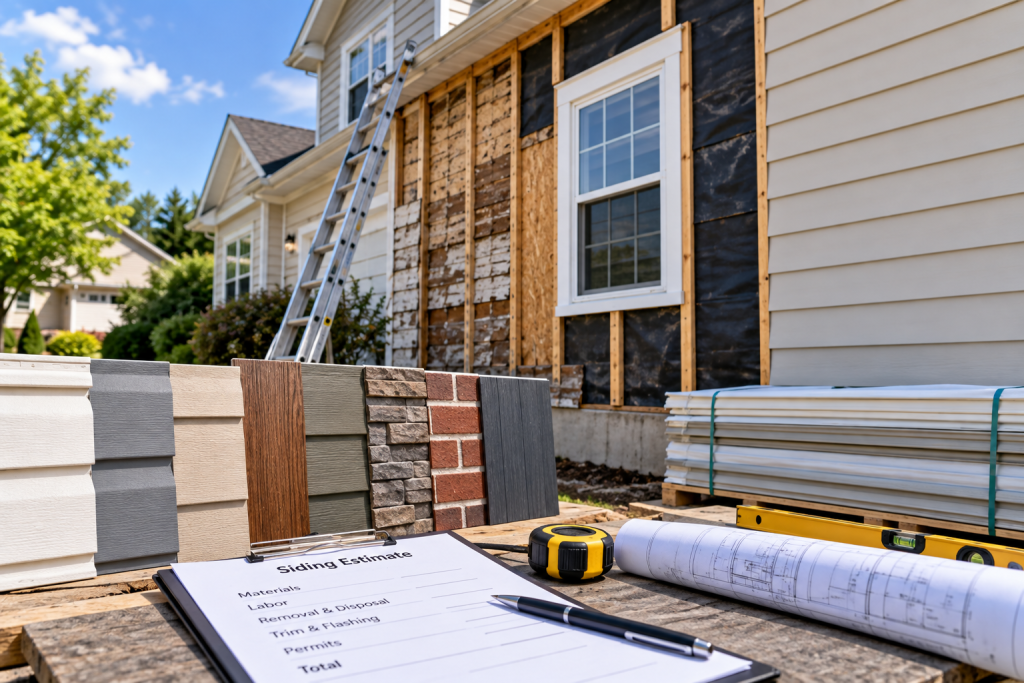
Average Siding Replacement Cost
Recent national cost guides use different assumptions, but they point to the same conclusion: there is no single “average” that fits every house. A broad planning range of roughly $6,000 to $30,000 covers many whole-house replacement projects, while simpler jobs can fall below that and premium or highly complex projects can exceed it.
Use online figures to establish a budget range, not to decide whether a contractor quote is automatically high or low. Material, demolition, access, trim, flashing, wall condition, and regional labor can all change the scope.
| Cost Factor | Lower-Cost Situation | Higher-Cost Situation |
|---|---|---|
| Siding material | Vinyl or basic engineered products | Masonry, premium wood, or stone |
| House size | Small exterior wall area | Large wall area and additions |
| Number of stories | One story, easy access | Two or more stories |
| Existing siding | Easy removal, one layer | Multiple or difficult layers |
| Wall complexity | Long, open walls | Gables, corners, many openings |
| Trim and flashing | Limited replacement | Extensive new detailing |
| Hidden damage | Sound wall underneath | Rot, wet sheathing, failed flashing |
| Finishing | Factory-finished product | Field painting or staining |
Siding Replacement Cost by Material
Material choice affects both what you buy and the labor needed to install it.
Vinyl Siding
Vinyl generally sits in the low-to-moderate cost range. It is lightweight, widely available, and usually less labor-intensive to handle than heavier claddings. Product grade, profile, insulated backing, trim, and house complexity still create a wide range within vinyl projects.
If you are pricing vinyl specifically, our vinyl siding cost guide breaks down material, labor, installed price, removal, trim, and other project factors in more detail.
Fiber Cement
Fiber cement usually falls in the moderate-to-high range. The boards are heavier than vinyl and require careful handling and fastening.
Cutting fiber cement can create respirable crystalline silica dust, so professional installation should use appropriate cutting methods and dust controls rather than uncontrolled dry cutting.
Wood and Engineered Wood
Traditional wood can range from moderate to high cost depending on species, grade, profile, and finish. Field painting or staining can add labor and materials.
Engineered wood often occupies a middle cost position. It is lighter than many fiber cement products but still requires correct clearances, finishing, and moisture-management details.
Stucco, Brick, Stone, and Metal
Stucco pricing is strongly affected by regional labor and substrate preparation. Brick and stone veneer tend toward the higher end because of material cost, masonry labor, support, and detailing.
Metal varies widely. Simple steel or aluminum profiles may be more accessible, while architectural panels and specialized systems can increase both material and labor costs.
House Size and Wall Area
Interior square footage is only a rough clue to siding cost. Contractors care more about how much exterior wall surface must actually be covered.
A compact two-story home and a sprawling one-story home can have similar living space but different exterior wall areas. Garages, additions, dormers, and tall gables also change material quantity and labor.
Existing Siding Removal and Disposal
A replacement quote may include removing the existing siding, hauling it away, and preparing the exposed wall.
Removal costs rise when siding is heavy, installed in multiple layers, difficult to dismantle, or costly to dispose of locally. Demolition can also reveal wall conditions that were impossible to see beforehand.
Installing new siding over old material is sometimes permitted, but it is not automatically the better approach. The existing wall must suit the proposed assembly, and manufacturer requirements and local code still apply.
Older materials need special caution. Some older cementitious siding may contain asbestos and should not be cut, drilled, sanded, ground, broken, or removed casually. Older painted siding and trim may contain lead, requiring appropriate lead-safe practices when coatings will be disturbed.
Labor, House Height, and Access
Labor is a major part of replacement, and local rates vary with wages, contractor demand, and installer familiarity with a particular material.
A one-story rectangular house with open ground around it is generally easier to work on than a multi-story home with steep grades, narrow side yards, decks, porches, or dense landscaping. Difficult access can require extra equipment and setup.
Homeowners should not try to reduce labor charges by taking on demolition or siding work from unsafe ladders or near roof edges.
Windows, Doors, Corners, and Gables
Open wall area is relatively efficient to cover. Transitions take more time.
Windows and doors can require cuts, flashing integration, and trim. Corners add components, while gables introduce angled cuts and more work at height.
Two homes with similar wall area can therefore receive very different estimates if one has simple elevations and the other has many openings and architectural details.
Trim, Flashing, and Water-Management Work
A siding project is rarely just a purchase of panels or boards.
The scope may include corner trim, window and door trim, starter components, flashing, repairs to the water-resistive barrier, penetration details, and transitions where walls meet roofs or other materials.
These items matter because siding is not the home’s only defense against rain. The wall behind it needs properly integrated water-management layers that direct water back outside.
Soffit or fascia work may interact with the project where components meet, but estimates should identify that additional work separately.
Hidden Damage Can Change Siding Replacement Cost
Hidden damage is one of the largest budget variables.
Once old siding comes off, contractors may discover rotted sheathing, water staining, insect damage, failed flashing, deteriorated wall components, or damage around windows and doors.
Those problems should be corrected before new siding covers the wall. Installing new cladding over wet or decayed material can hide the symptom while leaving the cause in place.
Ask how the estimate handles hidden damage. Some contractors use unit prices for common repairs; others document the problem and provide a change order before additional work begins.
Painting and Finishing Costs
Finish requirements vary by material.
Vinyl and many metal products arrive with their finished color. Fiber cement and engineered wood may be factory-finished or field-painted. Traditional wood may require priming, painting, or staining.
Field finishing adds labor, materials, drying time, and future maintenance considerations. Make sure one estimate does not appear cheaper simply because required finishing is listed separately.
Does Removing Old Siding Always Make Sense?
Not always, but the decision should be based on the wall assembly rather than cost alone.
In some situations, an approved siding system can be installed over an existing flat, sound surface. In others, removal is needed to meet manufacturer requirements, inspect the wall, correct moisture problems, or achieve proper flashing and alignment.
If there is evidence of water intrusion, rot, loose material, or uncertain wall conditions, covering the existing siding can make the underlying problem harder to address.
Why Price Per Square Foot Can Be Misleading
Price per square foot is useful only when the scope behind the number is clear.
A low advertised rate may exclude removal, disposal, trim, wall repairs, flashing, painting, permits, difficult access, or specialty work. Even the measurement basis may differ between an exterior-wall estimate and a consumer calculator based on interior floor area.
Use square-foot pricing as a rough comparison tool, not as a substitute for reading the proposal.
How to Compare Siding Replacement Estimates
A useful estimate should make it possible to see what each contractor is actually proposing.
Look for clear information about:
- Siding manufacturer, product line, profile, and finish
- Material quantity
- Existing siding removal and disposal
- Wall preparation and water-resistive barrier work
- Flashing, penetrations, and trim
- Painting or finishing when applicable
- Access equipment or unusual setup
- Permit responsibility where applicable
- Process for handling hidden damage
- Cleanup and debris removal
- Product and workmanship warranties
Compare the complete scope line by line. Two totals that look far apart may include very different amounts of preparation, flashing, trim, or finishing.
If you are still deciding which siding material is worth pricing, our guide to the best siding for a house compares the main options by cost, maintenance, durability, climate, and overall fit.
When a Low Estimate May Not Be the Best Estimate
A lower quote can be legitimate when a contractor has lower overhead, a simpler project, or favorable material pricing.
The concern is an estimate that leaves necessary work vague or excluded. Check removal, water-management details, trim, wall preparation, finishing, disposal, and allowances that could increase after work begins.
Installer experience also matters because installation requirements differ among vinyl, fiber cement, wood, masonry, and metal systems.
Can Siding Replacement Be Done in Sections?
Sometimes. Replacing one wall can make sense when damage is concentrated there, or a larger project needs to be phased.
The main challenges are material availability, color matching, and transitions between old and new work. Phased replacement can also repeat setup, trim, and access costs later.
Consider the condition of the remaining siding before assuming several smaller projects will cost less overall.
When Replacement May Make More Sense Than Repair
Replacement deserves comparison when deterioration is widespread, siding has become brittle or badly weathered, matching material is unavailable, or repairs keep recurring across multiple walls.
It may also be more practical when large areas already must come off to correct moisture damage or failed wall details.
The decision depends on how much sound siding remains and how much work is required to restore the exterior reliably.
Final Thoughts
Siding replacement cost depends on the entire exterior project, not just the price of the visible siding. Material choice, labor, house complexity, demolition, trim, flashing, finishing, and hidden wall damage can all move the total substantially.
Use national ranges to establish a budget, then compare contractor estimates by complete scope. The most useful proposal clearly explains what will be removed, repaired, flashed, finished, installed, and cleaned up—not simply the one with the lowest headline price.