
vinyl siding cost: material, labor, and installed price
Vinyl siding cost is typically made up of three parts: the siding and accessories, installation labor, and project-specific extras such as old-siding removal, wall repairs, disposal, or permits. For broad planning, standard vinyl siding often falls around $1.50 to $4 per square foot for basic material packages and roughly $4 to $12 or more per square foot installed. Local pricing, product grade, access, and house complexity can move a project outside those ranges.
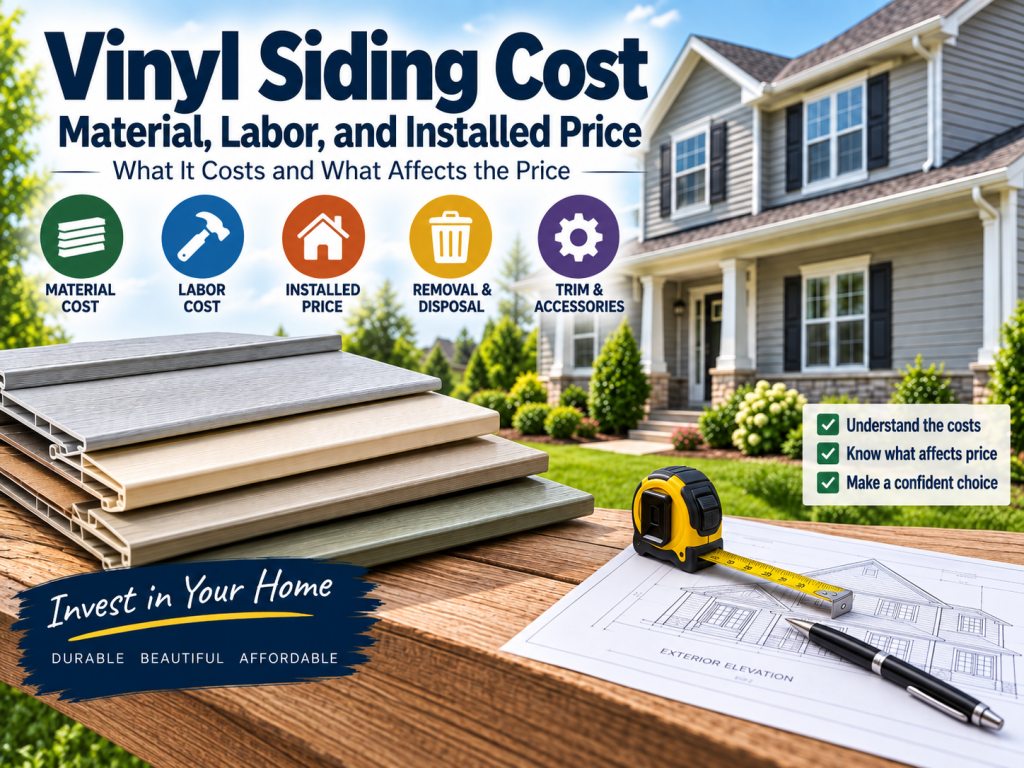
| Cost category | Broad planning level | What it includes |
|---|---|---|
| Material only | About $1.50–$4+ per sq. ft. | Standard panels; premium products cost more |
| Labor | Often several dollars per sq. ft. | Setup, installation, trim work, openings, cleanup |
| Installed vinyl siding | About $4–$12+ per sq. ft. | Material and labor; exact scope varies |
| Removal/disposal | Project-dependent | Taking off old siding and hauling it away |
| Trim/accessories | Project-dependent | Corners, channels, starter pieces, mounting blocks |
| Hidden repairs | Not predictable from panel price | Sheathing, rot, water damage, flashing-related work |
These are broad planning estimates, not quotes. A contractor may include or exclude different items, so the scope behind the number matters as much as the price.
How Much Does Vinyl Siding Cost?
Vinyl is generally one of the lower-cost mainstream siding choices, but the panel price is only the starting point.
Vinyl Siding Material Cost
For standard vinyl siding, a reasonable planning range is roughly $1.50 to $4 per square foot for the siding package before installation. Premium textures, thicker panels, specialty profiles, and insulated products can cost more.
Material pricing is influenced by panel thickness, profile, texture, color, product tier, insulation, and specialty accessories. The visible panels are only part of the order; a complete job also uses corners, starter strips, channels, mounting blocks, and finishing pieces.
Vinyl Siding Labor Cost
Labor is often a substantial share of the installed price. When separated from material, it may amount to several dollars per square foot, but many contractors price labor as part of the complete project.
Labor can include setup, wall preparation, fitting siding around openings, installing trim pieces, cleanup, and removal of existing siding when included. A simple one-story home generally requires less labor than a multi-story house with gables, dormers, porches, and difficult access.
Vinyl Siding Installed Cost
A broad planning range of about $4 to $12 or more per square foot installed is useful for many standard residential projects, but it should not be treated as a quote for a particular home.
“Installed” should ideally include the siding, normal accessories, labor, setup, and cleanup. It may or may not include old-siding removal, disposal, permits, wall repairs, upgraded water-management work, or specialty trim. Always ask what the installed figure actually covers.
How House Size Affects Vinyl Siding Cost
Siding is priced from exterior wall area, not interior floor area.
A 2,000-square-foot one-story home can have a very different siding area from a 2,000-square-foot two-story home. Wall height, gables, attached garages, additions, and architectural shape all change the amount required.
Windows and doors reduce some wall coverage, but they also add cutting and trim work. That is why multiplying interior square footage by an advertised siding price usually produces a poor estimate.
What Is a “Square” of Vinyl Siding?
In siding, one “square” generally means enough material to cover 100 square feet of wall area.
Contractors may estimate projects in squares rather than individual square feet. Material orders also account for cuts, waste, transitions, and layout.
Standard, Premium, and Insulated Vinyl Siding
Product choice can noticeably change the material portion of the project.
Standard vs. Premium Vinyl Siding
Standard vinyl typically offers common profiles, basic colors, and a lower material price. Premium products may use thicker panels, more detailed textures, specialty shapes, upgraded colors, or designs intended to improve rigidity.
Thicker does not automatically mean best for every home. Profile design, wind exposure, appearance, and manufacturer specifications also matter.
Insulated Vinyl Siding Cost
Insulated vinyl includes a foam backing attached to or formed with the siding system. It generally costs more than standard hollow-back vinyl because of the additional material and product construction.
If insulated siding is being considered, compare it as a separate product category rather than assuming a standard vinyl price applies.
If you are considering the foam-backed upgrade, our insulated vinyl siding guide explains the added cost, thermal benefits, drawbacks, and when the premium may be worth it.
What Raises or Lowers the Installed Price?
Project conditions can change the total as much as the siding itself.
Removal and Disposal
Removing existing siding adds labor and disposal expense. Cost depends on the existing material, number of layers, access, and local disposal fees.
Some approved systems may allow existing siding to remain, while other projects require removal. Existing material should not simply be covered to avoid addressing moisture or deterioration underneath.
House Height, Access, and Complexity
Second-story walls, steep ground, tight side yards, landscaping, porches, and additions can increase labor and equipment needs.
More corners, windows, doors, gables, dormers, bump-outs, and decorative details also mean more cuts, transitions, and trim. These access costs are part of professional project pricing, not a reason to attempt unsafe ladder or multi-story work.
Trim and Accessories
A vinyl siding project requires more than field panels. Depending on the design, the material package may include outside and inside corners, starter strip, J-channel, utility trim, mounting blocks, and finishing pieces.
Homes with many openings and details can use considerably more accessory material and labor than simple walls with similar square footage.
Hidden Damage and Wall Repairs
Old siding can conceal damaged sheathing, rot, insect damage, water intrusion, or failed flashing. Those repairs are not part of the basic panel price and can increase the total after the wall is opened.
A detailed estimate should explain how unexpected damage will be documented and priced. Structural wall repairs or extensive water damage require appropriate professional evaluation rather than being hidden behind new siding.
Soffit or fascia work may appear in a proposal when included in the same exterior project, but it should be identified separately.
Regional Pricing and Permits
Vinyl siding cost varies by region because labor rates, contractor availability, material distribution, disposal fees, and project practices differ.
Permit requirements also vary. Some jurisdictions require a building permit for siding replacement while others may not, and historic districts or homeowners associations can add separate review requirements. Verify the rules that apply to the property.
Why Vinyl Siding Estimates Can Be So Different
Two contractors can quote the same house and produce different totals without pricing the same scope.
Differences can come from the product, measured wall area, removal scope, trim quantities, access, wall preparation, disposal, permit handling, warranty, contractor overhead, and treatment of hidden repairs.
The lowest initial quote is not automatically the lowest final cost. A bid that excludes disposal, trim, or likely preparation can look cheaper until those items are added later.
How to Compare Vinyl Siding Quotes
Compare equivalent scope rather than only the bottom-line number. A useful proposal should identify:
- Siding product: Enough detail to identify the material.
- Profile or grade: Standard, premium, specialty, or insulated.
- Approximate wall area: The basis for material and labor.
- Removal scope: What existing material will be taken off.
- Trim and accessories: Included corners, channels, blocks, and finish pieces.
- Wall preparation: Assumptions before new siding goes on.
- Hidden-damage process: How unexpected deterioration will be approved and priced.
- Labor: Whether installation is included in the stated total.
- Disposal: Whether hauling and fees are included.
- Permit responsibility: Who obtains and pays for required permits.
- Warranty: Product and workmanship coverage.
- Cleanup: Debris removal and final site cleanup.
A detailed estimate is easier to compare because fewer major items are left to assumption.
Can You Reduce Vinyl Siding Cost?
The safest savings come from simplifying choices and comparing equivalent bids, not eliminating necessary preparation.
Practical options include choosing common colors and profiles, avoiding unnecessary specialty details, getting multiple detailed quotes, and planning non-emergency replacement before hidden damage becomes extensive.
Do not cut costs by skipping required flashing work, covering damaged sheathing, ignoring active leaks, or removing necessary water-management details.
Is Vinyl Siding Usually Cheaper Than Other Siding?
Vinyl is often among the more affordable mainstream siding materials when comparing typical installed projects.
Premium vinyl, insulated products, difficult access, extensive trim, and major wall preparation can still raise the total substantially. Compare complete installed projects with similar scope rather than the panel price of one material with the installed price of another.
If you want to compare vinyl with the broader market before choosing, our guide to the best siding for a house compares the main materials by cost, maintenance, durability, climate, and overall fit.
When Professional Help Makes Sense
Professional evaluation is appropriate for whole-house replacement, multi-story work, old-siding removal, suspected water damage, flashing or sheathing problems, or projects that are difficult to measure accurately.
Vinyl may cover older materials. If older cementitious siding is exposed and asbestos is suspected, do not cut, drill, sand, grind, break, remove, or otherwise disturb it. Older painted siding or trim may contain lead, so avoid casual sanding or scraping without appropriate lead-safe practices.
Work near electrical service conductors or equipment also requires professional caution. Siding panels, tools, ladders, and removed materials should be kept away from energized service components.
Final Thoughts
Vinyl siding cost is more than the price of the panels. A complete budget may include material, labor, old-siding removal, trim and accessories, wall preparation, hidden repairs, disposal, and local permit requirements.
Broad per-square-foot ranges are useful for early planning, but the most meaningful number is the complete installed price for your actual wall area and project scope. Compare detailed quotes line by line so you know whether contractors are truly pricing the same work.