
insulated vinyl siding: cost, benefits, and is it worth it?
Insulated vinyl siding combines vinyl siding with a rigid-foam backing. Compared with standard hollow-back vinyl, it usually costs more but provides a stiffer panel and some added thermal resistance. It may be worth the premium when siding replacement is already planned, and the home can benefit from modest exterior insulation. It is less compelling when walls already perform well, or the budget would produce more benefit elsewhere.
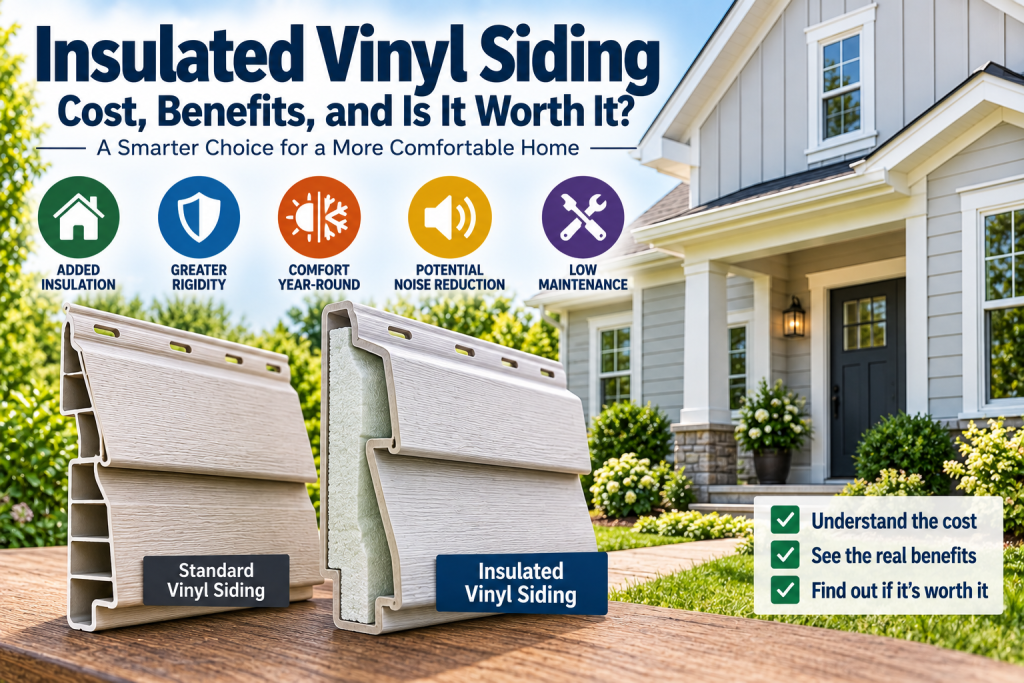
| Factor | Standard vinyl siding | Insulated vinyl siding |
|---|---|---|
| Upfront cost | Lower | Higher |
| Rigidity | More flexible | Stiffer, foam-supported panel |
| Insulation value | Minimal | Adds modest thermal resistance |
| Maintenance | Low | Low |
| Thickness | Thinner | Thicker overall system |
| Energy benefit | Limited | Can reduce some heat flow and thermal bridging |
| Best fit | Budget-focused replacement | Added rigidity and insulation are priorities |
What Is Insulated Vinyl Siding?
Insulated vinyl siding pairs a vinyl siding profile with shaped rigid foam behind the panel. The foam supports the siding, reduces some of the hollow space behind it, and adds resistance to heat flow.
It is still exterior cladding. It does not replace wall-cavity insulation, flashing, drainage, air sealing, or repairs to damaged sheathing.
How Is Insulated Vinyl Siding Different From Standard Vinyl?
Standard vinyl is usually hollow-backed, lighter, less expensive, and widely available.
Insulated vinyl adds a foam layer, making the system thicker and more rigid while adding some insulation value. The upgrade can also affect trim, accessories, handling, and installation details.
Both products still require sound wall preparation and proper water management.
If you are comparing vinyl against other siding materials before deciding, our guide to the best siding for a house covers the main options by cost, maintenance, durability, climate, and overall fit.
How Much Does Insulated Vinyl Siding Cost?
The most useful cost comparison is the premium over comparable standard vinyl.
As a broad 2026 planning range, installed insulated vinyl commonly falls around $5 to $12 or more per square foot, depending on product line, wall area, access, labor, and region. Standard vinyl is often less expensive, and the insulated upgrade can add a few dollars per square foot on some projects.
Those numbers are planning estimates, not quotes. Compare the same house, removal scope, trim package, wall preparation, and contractor assumptions for both options.
The premium is affected by:
- Product line and profile
- Foam thickness and construction
- Color and finish
- House size and complexity
- Trim and accessory requirements
- Local labor and availability
For a broader look at standard vinyl pricing, our vinyl siding cost guide breaks down material, labor, installed price, removal, trim, and other factors that affect the total project cost.
Why Does Insulated Vinyl Siding Cost More?
The higher price reflects added foam, a thicker product, specialized manufacturing, and sometimes different accessories or handling.
Insulated products are also often sold in premium siding lines, so upgraded textures, colors, or panel construction may be part of the price. Compare similar product grades rather than premium insulated siding with the least expensive standard vinyl.
How Much Insulation Does Insulated Vinyl Siding Add?
R-value measures resistance to heat flow. Higher R-value means greater insulating resistance.
Insulated vinyl siding adds real but modest R-value. Certified products commonly provide at least about R-2, while some products provide more. Exact values vary by product.
Because the foam covers much of the wall exterior, it can also reduce some thermal bridging through wall studs. That can improve wall performance, but it is still a relatively small addition compared with full wall-cavity insulation or thicker continuous exterior insulation.
Can Insulated Vinyl Siding Lower Energy Bills?
Possibly, but savings vary widely by house.
Results depend on existing wall insulation, air leakage, climate, windows, attic insulation, HVAC efficiency, house size, and occupant behavior.
A poorly air-sealed house can still be drafty after insulated siding is installed. A house with already strong wall insulation may see only a modest change.
For that reason, insulated siding should not be purchased on the assumption that utility savings alone will quickly repay the premium.
Benefits of Insulated Vinyl Siding
Added Rigidity
The foam backing supports the panel, reducing some of the hollow feel of standard vinyl and helping the siding feel more substantial.
It may also improve resistance to minor impacts, but the material can still crack, puncture, melt, or loosen.
Modest Thermal Improvement
The foam adds continuous resistance to heat flow over much of the exterior wall.
This can be useful where existing walls have little continuous insulation, especially when siding replacement is already planned.
Reduced Thermal Bridging
Wall studs conduct heat more readily than insulated cavities. A continuous foam-backed layer can reduce part of that heat-transfer path.
The benefit depends on the complete wall assembly.
Smoother Appearance
Foam support may help panels lie flatter over minor surface irregularities.
It should not be expected to conceal bowed framing, rotten sheathing, or major wall defects.
Potential Comfort Improvement
Slightly better wall thermal performance may help interior wall surfaces feel more consistent in some homes.
The effect can be subtle, and insulated siding does not fix drafts caused by air leakage.
Low Maintenance
Maintenance is similar to standard vinyl: occasional cleaning, inspection for damage, and keeping drainage and panel movement unobstructed.
Drawbacks of Insulated Vinyl Siding
Higher Initial Cost
The main disadvantage is the upfront premium.
If the budget is limited, other work such as fixing water damage, improving attic insulation, or addressing major air leaks may provide greater value.
Energy Savings May Be Modest
Homes with well-insulated walls may gain less from the added foam than older homes with limited exterior insulation.
Product Availability Can Vary
Colors, profiles, and contractor familiarity may be more limited than with standard vinyl.
That can affect lead times and future matching.
Repairs and Matching Can Be Harder
Foam-backed siding is thicker and more product-specific. Years later, finding an exact match for the profile, color, and backing may be difficult if the product line changes.
Does Insulated Vinyl Siding Make the House Quieter?
The foam backing may reduce some exterior sound transmission, but insulated siding is not a soundproofing system.
Windows, doors, wall construction, and air leaks usually have a larger influence on indoor noise. Treat any noise reduction as a secondary benefit rather than a guarantee.
Is Insulated Vinyl Siding More Durable?
Foam support can make panels feel more rigid and may help them resist some minor impacts.
Durability still depends on product quality, installation, UV exposure, temperature, and physical impact. The siding can still crack, melt, warp, loosen, or become damaged.
Does Insulated Vinyl Siding Trap Moisture?
Insulated vinyl does not automatically cause or prevent moisture problems.
Walls still need correct flashing and drainage. Active leaks should be repaired first, and wet or deteriorated sheathing should never be covered simply because the new siding includes foam.
The insulated siding becomes part of the overall wall assembly, so product instructions and local requirements matter.
Climate Considerations
Cold Climates
Insulated vinyl can be appealing in heating-dominated climates because it adds exterior thermal resistance and reduces some thermal bridging.
Homes with limited existing wall insulation may benefit more than homes that already have well-insulated walls. It does not eliminate drafts or replace air sealing.
Hot Climates
Added exterior thermal resistance can also reduce some heat flow inward.
Cooling performance still depends on the whole building envelope, including attic insulation, windows, shading, air sealing, and HVAC efficiency.
Insulated Vinyl Siding vs. Standard Vinyl Siding
| Factor | Standard vinyl | Insulated vinyl |
|---|---|---|
| Upfront cost | Lower | Higher |
| Maintenance | Low | Low |
| Rigidity | Moderate | Higher |
| Added R-value | Minimal | Modest |
| Appearance | Broad range | Often thicker, more substantial |
| Energy benefit | Limited | Some reduction in heat flow |
| Availability | Very broad | More product-dependent |
| Best fit | Lowest-cost vinyl option | Added insulation and rigidity matter |
When Insulated Vinyl Siding May Be Worth It
The upgrade is easier to justify when siding replacement is already planned, and several benefits matter at once.
It may be worth considering when:
- Exterior walls have little continuous insulation.
- Reducing thermal bridging is a priority.
- You prefer a more rigid siding profile.
- The climate makes added wall insulation useful.
- The budget comfortably covers the premium.
- The desired product and accessories are readily available.
- A contractor familiar with the system is available.
The case is strongest when you value both the siding characteristics and the modest thermal benefit.
When Standard Vinyl May Be the Better Value
Standard vinyl may make more sense when lowest upfront cost is the priority, existing walls are already well insulated, or the expected energy benefit is small.
It can also be the better choice when major air leaks, weak attic insulation, active water problems, or damaged sheathing deserve attention first.
Standard vinyl also has broader product availability in many markets, which can simplify matching and future repairs.
What to Ask Before Buying Insulated Vinyl Siding
Before paying for the upgrade, ask:
- What is the product’s tested R-value?
- What is the installed price premium over comparable standard vinyl?
- What panel profile and thickness are included?
- What foam type and thickness are used?
- Are preferred colors and profiles readily available?
- Are matching trim and accessories included?
- What does the warranty cover?
- How experienced is the contractor with the system?
- How will hidden wall damage be handled?
- What maintenance is expected?
- How likely is future matching material to remain available?
- Should other insulation or air-sealing work come first?
When Professional Help Makes Sense
Professional evaluation is appropriate for whole-house siding replacement, multi-story work, old-siding removal, suspected water damage, uncertain wall insulation, or visible flashing and sheathing problems.
Vinyl siding may cover older materials. If older cementitious siding is exposed and asbestos-containing material is suspected, do not cut, drill, sand, grind, break, remove, or otherwise disturb it. Older painted siding or trim may contain lead-based paint, so avoid casual sanding or scraping without appropriate lead-safe practices.
Work near electrical service conductors or equipment also requires professional caution. Ladders, siding panels, tools, and removed materials should be kept away from energized components.
Final Thoughts
Insulated vinyl siding can be worth the extra cost when you value added rigidity, modest thermal improvement, reduced thermal bridging, and vinyl’s low maintenance in one product. Its strongest case is usually a planned siding replacement where the wall assembly can benefit from additional exterior insulation.
Standard vinyl may remain the better value when budget matters most, walls are already well insulated, or other efficiency improvements deserve priority. The best decision comes from comparing the added installed cost with the specific thermal, appearance, and durability benefits the home is likely to receive.