
ants in the house: why they appear and what to check
If you are seeing ants in house areas such as the kitchen, bathroom, or near exterior doors, they are usually finding one of four things: food, moisture, shelter, or an easy route indoors. Before choosing a control method, note where the ants appear, what they are moving toward, and whether they follow the same path repeatedly. Those clues can help you narrow down the source.
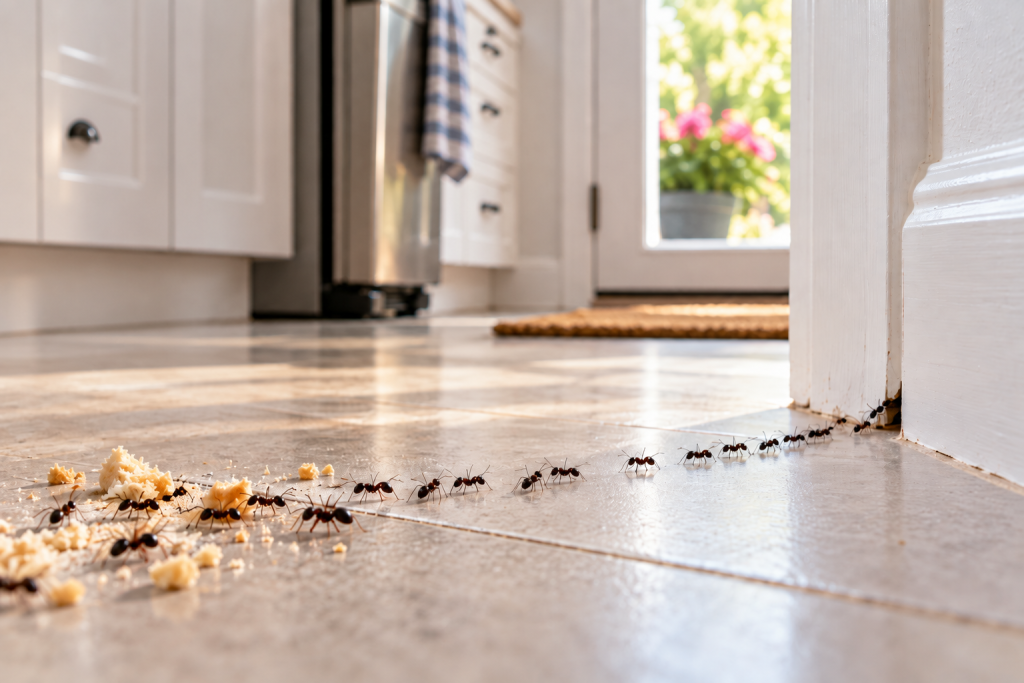
Why Ants Come Into Houses
Ants commonly enter homes while foraging for food or water. They may also move indoors because a building offers warmth, shelter, or a protected route between an outdoor colony and a resource they have found.
Seasonal activity and weather can change how often you notice them. Warm periods can increase outdoor foraging, while heavy rain, dry conditions, or temperature changes may shift where ants travel.
Finding ants does not mean a house is dirty. Even a clean home can have a small food spill, a dripping faucet, condensation, pet food, or a narrow opening that ants can use.
The useful question is not simply, “Why are ants here?” It is, “What are they using here?”
Common Things That Attract Ants Indoors
Different ants may seek different foods, and their preferences can change. For diagnosis, focus on the resources available near the activity rather than trying to identify the species from food preference alone.
Sweet foods
Sugar-rich foods can attract many common household ants. Check for:
- Sugar, syrup, honey, or baking residue
- Fruit and juice
- Sticky drink spills
- Crumbs around counters or floors
- Residue on food containers
A very small amount of sticky residue can support repeated foraging if ants have established a route to it.
Grease and protein foods
Ants may also forage around cooking grease, meat residue, pet food, or other protein- and fat-containing foods.
Look at stovetop edges, food-preparation areas, pet bowls, trash containers, and places where grease or food particles can collect.
Water and moisture
Food is not the only draw. Ants may repeatedly visit areas where water is readily available.
Possible clues include:
- Dripping faucets
- Plumbing leaks
- Condensation
- Damp sink areas
- Pet water bowls
- Moisture beneath appliances
- Damp basements or utility spaces
Repeated ant activity in a damp location is a reason to inspect the moisture source as well as the ants.
Trash and recycling
Food residue around trash and recycling can create an easy feeding area. Sticky bottles, cans, spills beneath a bin, and food residue on packaging may attract foragers even when the rest of the room is clean.
Ants in House Areas: What Their Location Can Tell You
Where ants appear can help narrow the inspection.
Kitchens and pantries point first toward food, water, trash, pet feeding areas, and entry routes around windows, doors, cabinets, or utility penetrations.
Bathrooms, laundry rooms, and utility spaces make moisture more important to investigate. Ants near sinks, plumbing, or damp surfaces may be using water or traveling along pipes and gaps around them.
Ants near windows and exterior doors may be coming directly from outside. Activity along baseboards or wall edges can indicate an established travel route rather than a random appearance.
Basements and garages can combine several clues at once: exterior access, utility penetrations, moisture, stored food, and quiet edges where activity can go unnoticed.
What an Ant Trail Can Tell You
Many ants travel along repeated routes between a resource and the area they came from. A visible trail can therefore be more useful diagnostically than a few scattered ants.
Watch for repeated movement:
- Along baseboards or wall edges
- Between a doorway and a food source
- Around window frames
- Along pipes or utility lines
- From a crack, trim gap, or other opening
- Between pet feeding areas and nearby walls
If you are trying to determine where the ants are coming from, observe the trail before disrupting it. Follow the movement visually as far as you safely can without opening walls, dismantling fixtures, or entering inaccessible areas.
A few isolated ants may simply be foragers searching for resources. Consistent traffic along the same route provides a stronger clue about where to inspect next.
If the trail is well established and you are considering bait, our ant bait guide explains the main bait types, placement choices, and how to match the product to the situation.
Check Food, Moisture, and Entry Points First
A simple inspection sequence can usually tell you more than immediately treating the ants you see.
Check nearby food sources
Start close to the activity and work outward.
Inspect:
- Pantry shelves and dry goods
- Counters and backsplashes
- Beneath small appliances
- Beside or beneath large appliances where safely accessible
- Pet feeding areas
- Trash and recycling
- Spilled flour, cereal, sugar, or other dry goods
- Fruit bowls
- Syrup, honey, sugar, and baking-storage areas
Look for residue as well as obvious food. A sticky ring beneath a container or crumbs behind a toaster may be enough to keep ants returning.
Check for moisture
Next, inspect for water sources near the trail or repeated sightings.
Look beneath sinks, around faucets, near dishwashers, around accessible appliance connections, and where condensation collects. Check plumbing penetrations and damp utility or basement areas without opening walls or disassembling equipment.
Wet cleaning cloths, sponges, or other materials left damp for long periods can also create localized moisture.
If you find a recurring leak or hidden dampness, that maintenance problem deserves attention independently of the ants.
Check likely entry points
Trace activity toward the exterior when possible and inspect accessible openings such as:
- Gaps beneath exterior doors
- Window edges
- Damaged screens
- Cracks around trim
- Gaps around pipes, wires, and utility penetrations
- Foundation-to-siding transitions
- Garage-door edges
- Visible crawlspace openings
Keep this inspection visual and accessible. Do not open walls, dismantle electrical equipment, or enter unsafe crawlspaces to follow ants.
What Kitchen, Bathroom, and Doorway Patterns May Mean
Ants in the kitchen
Kitchen activity often points toward a combination of food and water. Check food residue, pantry goods, pet food, trash, recycling, sinks, and nearby entry points.
The path matters. Ants moving directly between a window and a counter suggest a different inspection area than ants repeatedly emerging from beneath a cabinet near plumbing.
Ants in bathrooms or damp areas
Repeated activity around a bathroom, laundry room, or other damp area makes moisture an important clue.
Inspect accessible plumbing penetrations, condensation, dripping fixtures, damp surfaces, and nearby wall or floor edges. Persistent moisture may be attracting ants or helping create conditions they prefer.
Ants near windows or doors
Ants concentrated near a window or exterior door may be following a route from outdoors.
Check frame edges, weatherstripping, small trim gaps, damaged screens, and nearby exterior vegetation that contacts the structure. The purpose here is to identify a possible route, not to assume every visible gap is the source.
What Sudden or Recurring Ant Activity Can Mean
A sudden appearance does not automatically mean a large indoor infestation.
Changes in weather, seasonal foraging, outdoor disturbance, newly available food, moisture, or a newly accessible route can all make ants noticeable in a short period.
Recurring activity deserves closer attention. If ants repeatedly return to the same place, one or more underlying conditions may still be present:
- A food or water source remains available.
- The same entry route is still being used.
- A colony is nearby.
- Visible ants are being removed without identifying the source.
- The ant or situation may require more specific identification.
At that point, the pattern you have observed becomes useful when choosing the next control step.
Once you have identified the likely food, moisture, or entry-point issue, see our guide on how to get rid of ants in the house for a low-risk control approach.
When Large Ants or Wood-Related Activity Deserves More Attention
Large ants should not automatically be labeled carpenter ants. Size alone is not enough for reliable identification.
Closer identification is worthwhile when unusually large ants repeatedly appear indoors, activity is associated with damp or damaged wood, or ants consistently emerge from areas with a known moisture problem.
Those clues can matter because some ants nest in wood or in structural voids, and moisture-related building conditions may need attention separately from pest control.
Do not open walls or damage wood to investigate. If the activity appears connected with inaccessible or deteriorated structural material, a pest professional or appropriate building professional can help determine what is happening.
A Practical Ant Inspection Checklist
Before choosing a treatment, use this short diagnostic check:
- Note exactly where ants first appear.
- Watch whether they form a repeated trail.
- Observe what they seem to be moving toward.
- Check nearby food and pantry items.
- Inspect pet food and water areas.
- Look around trash and recycling.
- Check for leaks, condensation, or damp surfaces.
- Inspect accessible windows, doors, and trim gaps.
- Check visible gaps around pipes and utility penetrations.
- Note whether activity repeatedly returns to the same location.
- Pay closer attention to unusually large ants associated with damp or damaged wood.
The goal is not to find every ant or identify every species. It is to determine whether food, moisture, or a practical entry route explains the pattern you are seeing.
Final Thoughts
When ants appear indoors, the most useful first step is observation. Look at where they are active, what resource is nearby, whether they follow a trail, and where that trail appears to lead.
Food, moisture, shelter, and access are the main clues. Once you know which of those factors is involved, you can choose a more targeted response instead of treating visible ants without understanding why they are there.