
how to get rid of drain flies: find the source and stop them safely
How to get rid of drain flies starts with finding the wet organic buildup or moisture source that is allowing them to reproduce. Adult flies may be trapped or killed, but lasting control depends on removing the material supporting them. Confirm the source, clean accessible buildup safely, reduce recurring moisture, and monitor whether activity declines.
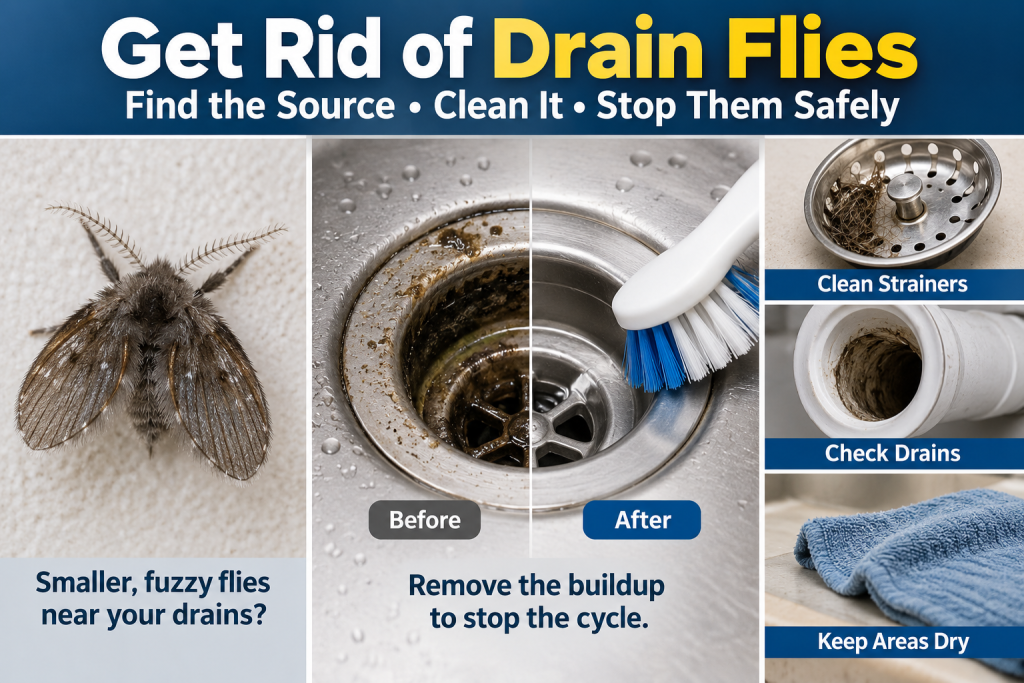
What Drain Flies Are
Drain flies are small flying insects that often look fuzzy or moth-like when resting.
They are commonly associated with moist organic buildup in drains or other persistently damp areas. Homeowners may notice them near sinks, showers, tubs, floor drains, utility sinks, or other wet locations.
Seeing small flies near a sink does not automatically mean the drain is responsible. The first step is to connect the insects with a specific wet source.
How to Tell Whether the Drain Is Really the Source
Watch where the flies are most active before cleaning every drain in the house.
Useful clues include:
- Flies repeatedly resting near one drain opening
- Activity concentrated around one sink, shower, tub, or floor drain
- Flies repeatedly appearing from the same wet area
- Visible slime or organic residue near the drain
- Recurring moisture around nearby plumbing
- Little activity around fruit, trash, recycling, or houseplants
Also look for another nearby wet source. A drain pan, damp container, utility area, or persistent leak can support similar activity.
If flies cluster around fruit or food waste, fruit flies may be more likely. If they gather around moist potting soil, fungus gnats may be the better match.
Drain Flies vs. Fruit Flies and Fungus Gnats
Drain flies vs. fruit flies
Drain flies are often fuzzy or moth-like and are usually associated with wet organic residue.
Fruit flies are more commonly linked with ripe or fermenting fruit, sugary beverages, food waste, and recycling.
Drain flies vs. fungus gnats
Fungus gnats are commonly associated with moist houseplant soil.
If most activity is concentrated around plant pots rather than drains or wet plumbing areas, inspect the plant soil and watering conditions instead.
If the flies are concentrated around ripe produce, sugary residue, trash, or recycling instead of a wet drain area, see our guide on how to get rid of fruit flies by finding and removing the breeding source.
Common Places Drain Flies Can Develop
Drain flies can develop anywhere persistent moisture combines with organic residue.
Possible sources include:
- Sink drains
- Shower drains
- Tub drains
- Floor drains
- Utility sinks
- Drain pans
- Condensate-related wet areas
- Neglected wet containers
- Damp residue around plumbing
Do not assume every drain needs treatment. Focus on locations where adult activity and moisture overlap.
Inspect the Drain Safely
Use good lighting to look at the visible drain opening, removable stopper or strainer, and nearby surfaces. Note slime, trapped hair, debris, or residue you can see without taking plumbing apart.
Also check for standing water, leaking fixtures, damp mats, wet cleaning materials, or residue around the sink, tub, or shower.
Do not remove inaccessible traps, enter drain lines, dismantle plumbing unnecessarily, or push improvised tools deep into the system.
How to Get Rid of Drain Flies by Cleaning the Source
The goal is to physically remove accessible organic buildup so the flies no longer have the same breeding material available.
Step 1: Remove accessible debris
Remove hair, visible debris, and loose organic material from the drain opening where it can be reached safely.
Clean removable strainers or stoppers according to normal fixture-care guidance.
Step 2: Scrub accessible drain surfaces
Use a suitable drain brush on accessible interior surfaces when the fixture design allows it.
Focus on loosening slime and organic residue rather than relying only on chemicals poured into the drain.
Do not force tools into inaccessible plumbing.
Step 3: Clean nearby components
Clean accessible stopper surfaces, strainers, sink overflows, and nearby wet areas when appropriate.
Step 4: Rinse loosened residue
Rinse away loosened material with water appropriate for the plumbing and fixture.
Avoid treating boiling water as a universal solution. Very hot water can be inappropriate for some plumbing systems, seals, or fixture materials.
Step 5: Dry surrounding wet areas
Remove standing water and dry nearby surfaces that do not need to remain wet.
What About Baking Soda and Vinegar?
Baking soda and vinegar are often suggested because the reaction bubbles and foams.
That does not make the combination a guaranteed drain-fly treatment. It may loosen some residue, but it does not replace physically removing the organic buildup.
Avoid layering homemade mixtures or combining cleaners.
What About Bleach or Drain Cleaner?
Bleach and caustic drain cleaners should not be treated as substitutes for source removal.
A harsh chemical may pass through the drain without removing buildup coating accessible surfaces. These products can also create safety or material-compatibility concerns when used incorrectly.
If you use a commercial drain or cleaning product, follow its label and make sure it is appropriate for the plumbing.
Never mix drain cleaners. Never mix bleach with vinegar, ammonia, acids, or other cleaners.
Enzyme or Bio-Based Drain Cleaners
Some enzyme or bio-based products are designed to help break down organic residue.
They may be useful as a supporting maintenance product when the label allows use in the affected drain. Results vary, and they do not replace accessible physical cleaning.
They also cannot correct a plumbing leak, standing water, or deeper drainage problem.
Clean Nearby Wet Areas
The source may be beside the drain rather than deep inside it.
Inspect and clean:
- Sink overflows
- Removable drain stoppers
- Shower edges
- Floor-drain surroundings
- Utility sink surfaces
- Drain pans
- Damp mats
- Wet cleaning materials
- Residue around plumbing fixtures
A clean drain will not solve the problem if a nearby damp source continues supporting activity.
Reduce Moisture After Cleaning
Fix dripping faucets and small accessible leaks within normal homeowner maintenance. Dry standing water and avoid leaving wet cleaning materials in place for long periods.
Persistent drainage, leak, or standing-water problems need to be corrected as plumbing issues. Repeated pest treatment will not fix a drain that backs up or a fixture that continually leaks.
Can Drain Fly Traps Help?
Sticky traps or monitoring cards can help show whether adult activity is declining or which area has the most activity.
They do not remove organic buildup. Their main value here is monitoring the trend.
If you determine the insects are actually fruit flies, our fruit fly trap guide compares the main trap types and explains how to use them for adult reduction and monitoring.
How Long Does It Take to Get Rid of Drain Flies?
Do not expect every adult fly to disappear immediately after cleaning.
Flies already present may remain for a period even when the breeding source has been removed. What matters is whether activity begins to decline.
If adult numbers stay high, recheck the cleaned area and nearby wet sources. The buildup may not have been fully removed, another source may be involved, or the insect may have been misidentified.
Why Drain Flies Keep Coming Back
Possible reasons include:
- Organic buildup remains
- The wrong drain was cleaned
- Another wet source exists
- Moisture is still present
- The insect is not actually a drain fly
- A deeper plumbing or drainage issue remains
Reassess the source before using stronger chemicals.
A Practical Drain Fly Control Sequence
Step 1: Confirm the source
Watch where the flies rest and emerge to determine whether activity is tied to a drain or wet area.
Step 2: Inspect the affected area
Look at accessible drain surfaces, removable components, and nearby damp locations.
Step 3: Remove accessible organic buildup
Remove visible debris and physically clean reachable residue using methods appropriate for the fixture.
Step 4: Clean nearby surfaces and components
Clean stoppers, strainers, overflows, and surrounding wet areas where appropriate.
Step 5: Avoid hazardous chemical mixtures
Do not combine cleaners, drain products, bleach, vinegar, ammonia, or acids.
Step 6: Reduce recurring moisture
Address accessible leaks, standing water, and persistently wet materials.
Step 7: Monitor adult activity
Use sightings or simple monitoring tools to judge whether the number of flies is declining.
Step 8: Reinspect or escalate if activity stays high
Check for another source, incomplete cleaning, misidentification, or a plumbing problem.
When Drain Flies May Signal a Plumbing Problem
Professional plumbing evaluation may be appropriate when activity continues despite thorough accessible cleaning, and the source appears deeper in the drainage system.
Call a plumber when the problem is associated with:
- Recurring sewage odor
- Slow or backing-up drains
- Persistent standing water
- Ongoing leaks
- Several drains remaining active
- An inaccessible drain line or plumbing area
When Professional Pest Help May Be Useful
Pest identification can help when the insect cannot be confidently identified, several possible sources exist, or activity continues after accessible wet organic material has been removed.
This is especially useful when you are unsure whether you are dealing with drain flies, fruit flies, fungus gnats, or another small flying insect.
Final Thoughts
The most effective way to get rid of drain flies is to find and remove the wet organic buildup or moisture source supporting them. Clean accessible drain surfaces and nearby wet areas, avoid hazardous chemical mixtures, reduce recurring moisture, and monitor whether adult activity declines.
If the flies keep returning, recheck the source rather than reaching for a stronger cleaner. Bring in a plumber or pest professional when the problem appears deeper, persistent, or uncertain.