are gutter guards worth it?
If you are asking are gutter guards worth it, the answer depends on how much debris reaches your gutters, how often they need cleaning, how difficult maintenance is, and what the guard system costs. Guards can be worthwhile when they materially reduce a recurring cleaning problem. They are usually less valuable when gutters already stay fairly clean. Gutter guards reduce maintenance; they do not eliminate it.
| Home Situation | Likely Value | Why |
|---|---|---|
| Heavy tree coverage | Often higher | More recurring debris may be kept out of the gutter channel |
| Frequent gutter clogging | Often higher | Reducing interior buildup can lower maintenance burden |
| Repeated paid gutter cleaning | Potentially higher | Fewer difficult cleanouts may offset part of the cost |
| Little nearby tree debris | Often lower | There may be little maintenance to reduce |
| Pine needles or fine debris | Depends heavily on guard design | Fine debris can challenge some systems |
| Difficult maintenance access | Potentially higher | Reducing gutter-channel cleaning can be especially valuable |
| Damaged or poorly draining gutters | Low until repaired | Guards do not fix the underlying gutter system |
| Expecting zero maintenance | Poor fit | Guard surfaces and gutters still need inspection and cleaning |
What Gutter Guards Actually Change
Gutter guards are designed to reduce the amount of leaves and other debris entering the gutter while still allowing rainwater to reach the gutter channel.
The realistic benefit is usually fewer large accumulations inside the gutter and, in a successful installation, fewer full interior cleanouts. That can be valuable on homes where leaves, seeds, needles, or other debris repeatedly fill the gutters.
Maintenance does not disappear. Some of it shifts from removing material inside the gutter to clearing debris from the guard surface and inspecting the system for buildup and drainage problems.
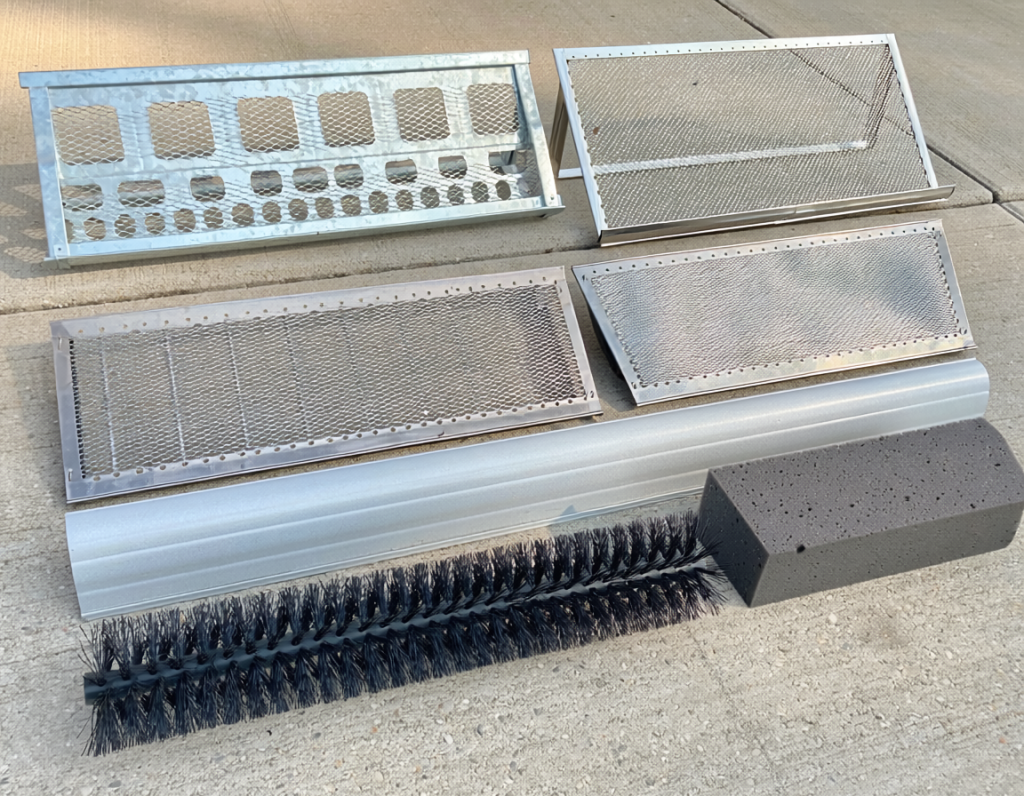
Different gutter guard types for homeowners handle debris and water differently, but the broader value question is whether the chosen system meaningfully reduces maintenance on your house.
What Gutter Guards Do Not Eliminate
Even a well-performing guard system still needs attention.
Leaves, pine needles, seeds, blossoms, roof granules, and fine organic material can collect on top of guards or work through openings over time. Debris may also gather at seams, edges, valleys, or where water enters heavily.
Homeowners should still expect periodic inspections, surface cleaning, outlet and downspout checks, and occasional interior gutter cleaning when needed.
Guards also do not correct gutter leaks, sagging, poor drainage, loose sections, blocked downspouts, or other existing defects. They cannot guarantee perfect performance during intense rainfall, and they do not make gutters maintenance-free.
If the purchase decision depends on the idea that the gutters will never need attention again, the expected value is likely being overstated.
When Gutter Guards Are More Likely Worth It
Gutter guards tend to make more sense when a house has a recurring debris problem rather than simply having a few nearby trees.
A property surrounded by mature trees may require several gutter cleanings each year. If gutters repeatedly clog with leaves, seeds, needles, or other material, reducing how much debris enters the gutter can save meaningful time and effort.
The value may be greater when professional cleaning is repeatedly required because the gutters are high or difficult to reach. In that situation, even a partial reduction in interior cleanouts can be useful.
The existing gutters should be in good condition before guards are considered. They should drain normally and be free of unresolved sagging, leakage, or outlet problems.
The strongest candidates are usually homeowners who have a clear recurring maintenance burden and realistic expectations that inspections and surface cleaning will still be necessary.
When Gutter Guards May Not Be Worth the Cost
Guards can provide poor value when there is little debris to stop.
If gutters already remain relatively clean and require only occasional, inexpensive service, installing a complete guard system may not reduce enough maintenance to justify the cost.
Value is also questionable when the gutters need repair first. Installing guards over sagging, leaking, poorly pitched, or repeatedly overflowing gutters can add expense without correcting the underlying problem.
The selected guard must also suit the debris found on the property. A system that requires frequent surface cleaning or performs poorly with the dominant debris may simply replace one maintenance problem with another.
High installation cost matters most when the original cleaning problem is small. The purchase decision should be based on the actual maintenance burden being reduced.
How Debris Type Changes the Value
Different debris behaves differently on gutter guards.
Broad leaves may be relatively easy for some systems to shed, while small leaves, seeds, blossoms, and roof granules may lodge in openings or accumulate on the surface. Fine organic material can sometimes pass through and settle inside the gutter.
Pine needles can be especially challenging because their narrow shape allows them to enter or become caught in openings that stop larger leaves. Homeowners dealing with substantial pine debris should evaluate best gutter guards for pine needles separately rather than assuming every guard design will perform the same way.
Debris kept out of the gutter does not necessarily disappear. It may remain on top until wind, rain, gravity, or maintenance removes it.
The right question is not simply whether a guard blocks debris. It is whether the system reduces the difficult part of gutter maintenance enough to be worthwhile.
Cleaning Frequency Versus Surface Maintenance
Traditional gutter cleaning usually involves removing material accumulated inside the gutter channel. Guard maintenance often involves clearing material from the surface before it interferes with water entry.
A successful guard system may reduce the frequency of removing packed leaves and organic material from inside the gutter while still requiring leaves, needles, seeds, roof granules, or organic film to be removed from the guard surface.
General inspection remains necessary. Homeowners should still watch for damaged or shifted guard sections, blocked outlets, unusual overflow, and debris collecting at seams or edges.
This maintenance shift can still represent good value. If a homeowner previously needed frequent difficult interior cleanouts and now faces less demanding surface maintenance, the system may be doing what was intended.
There is no useful universal cleaning schedule. Actual debris accumulation and system performance should determine when maintenance is needed.
Cost Versus Maintenance Savings
The financial decision is broader than comparing the price of one gutter cleaning with the price of a guard system.
Consider the material cost, installation cost, and whether professional installation is required. Then compare those expenses with how often the gutters currently need cleaning and how much professional cleaning costs over time.
Continued expenses after installation matter too. Guards may still need surface maintenance, occasional interior cleaning, and repair or replacement if sections become damaged.
Expected service life and safe future access should also be part of the decision. A system that is difficult or expensive to inspect and maintain may provide less value than its initial debris-control performance suggests.
The useful comparison is total long-term system cost versus the real maintenance burden it reduces.
There is no universal payback period, break-even date, or guaranteed return on investment because homes, debris conditions, labor costs, and maintenance needs vary.
Why Safe Access Changes the Value
Reducing gutter-channel cleaning may be especially valuable when the existing gutters are difficult to reach safely.
Multi-story height, steep roof edges, poor ladder-placement areas, landscaping, sloped terrain, and other access problems can make routine gutter work more difficult.
If guards reduce the number of times professional gutter cleaning is required, that reduction may add meaningful value beyond simple convenience.
However, gutter guards do not eliminate working-at-height concerns. Surface cleaning, inspection, repairs, or occasional interior maintenance may still require professional service.
A homeowner should not count on guards as a way to eliminate all future access to the gutter line.
Why Existing Gutter Condition Matters
Gutter guards should be installed on a system that already works properly.
Sagging gutters, poor pitch, leaks, loose fasteners, corrosion, standing water, damaged fascia, blocked downspouts, and repeated overflow should be evaluated before guards are added.
A guard cannot correct water flowing in the wrong direction or fix a gutter that is pulling away from the house.
Repairing the existing system first may change the value calculation. Think of guards as debris-management equipment, not as a repair for an unhealthy gutter system.
Rainfall and Water-Handling Performance
Debris reduction is only part of the value equation. The gutter system must still handle rainwater effectively.
Heavy rainfall, steep roof sections, roof valleys, guard-surface buildup, poor positioning, or existing gutter problems can affect how quickly water enters the gutter.
A system that keeps leaves out but repeatedly allows water to overshoot the gutter may not provide good overall value.
That does not mean every overflow event is caused by the guards. Gutter condition, roof geometry, drainage capacity, and debris accumulation can all contribute.
The important point is that good debris control must be paired with acceptable water-handling performance.
DIY Versus Professional Installation Cost
DIY installation can reduce upfront labor cost when the guard is designed for homeowner installation and the gutter can be reached safely.
Professional installation may make more sense when gutters are high, ladder placement is difficult, roof edges are steep or complex, overhead electrical conductors are nearby, or the gutters need repair before guards are installed.
Some systems also depend on precise placement to handle both debris and water correctly.
If installation would require roof walking or unsafe work at height, the labor savings are not worth the added risk.
Installation cost should therefore be evaluated together with access, gutter condition, and future maintenance.
Common Expectations That Lead to Disappointment
These assumptions can make otherwise reasonable gutter guards feel like a poor purchase:
- “I will never clean my gutters again.”
- “Nothing will get through the guards.”
- “Guards will fix my existing gutter problems.”
- “Every guard performs the same.”
- “A more expensive guard automatically saves more money.”
- “The cheapest DIY system is always the best value.”
- “Once installed, the system never needs inspection.”
- “All debris types behave the same.”
- “Guards always prevent overflow.”
Realistic expectations are central to value. A guard system does not have to eliminate every maintenance task to be worthwhile. It needs to reduce the tasks that create the most recurring cost, effort, or access difficulty.
A Simple Homeowner Value Checklist
Before buying, ask:
- Do my gutters collect substantial debris?
- Do they clog repeatedly?
- Do I pay for multiple cleanings?
- Is safe gutter access difficult?
- Would fewer gutter-channel cleanouts materially help me?
- Are my gutters currently sound and draining properly?
- Do I understand my dominant debris type?
- Have I accounted for continued surface maintenance?
- Does the expected maintenance reduction justify the total cost?
- Can future inspection and cleaning still be performed safely?
If most answers point toward a recurring debris problem and meaningful maintenance reduction, gutter guards may be worthwhile.
If the gutters already require little attention, the financial and practical value may be weak.
When Professional Help Makes Sense
Professional evaluation or installation is appropriate when:
- Gutters are high.
- Safe ladder access is difficult.
- Roof walking would otherwise be required.
- Electrical conductors are nearby.
- Gutters need repair before installation.
- The cause of gutter overflow is unclear.
- Several drainage problems are present.
- The selected guard system requires professional installation.
Do not overreach from ladders, work from unstable positions, walk on the roof, or work near overhead electrical conductors to install or maintain gutter guards.
Final Thoughts
Gutter guards are worthwhile when they solve a real, recurring debris and maintenance problem. They are less valuable when the current gutter system already requires little attention.
The goal is to reduce maintenance, not eliminate it. Compare total cost with the amount of difficult or repeated cleaning the system is realistically expected to prevent.
Existing gutters should work properly before guards are installed, and future inspection must remain practical and safe. Realistic expectations about debris, maintenance, cost, and access matter more than marketing claims when deciding whether gutter guards are a good purchase for your home.