best door sweep for exterior threshold doors
The best door sweep for exterior door use is the one that matches the door’s existing bottom-seal design, actual width and thickness, bottom-gap height, and threshold shape. Width alone is not enough. A properly fitted sweep should make light, controlled contact with the threshold without creating heavy drag or interfering with closing, latching, or locking.
Before buying a replacement, inspect the existing door bottom seal and threshold. Surface-mounted fin sweeps, brush sweeps, slide-on designs, wraparound sweeps, inserted seals, and door-specific replacements all fit differently.
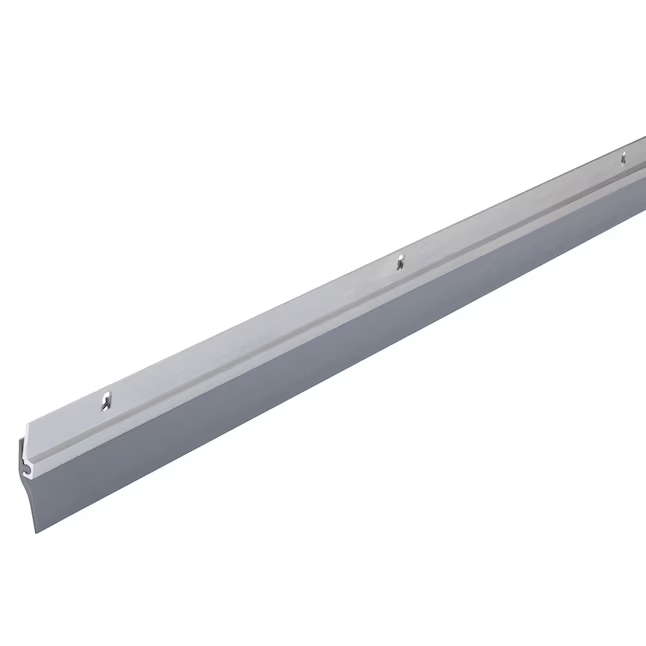
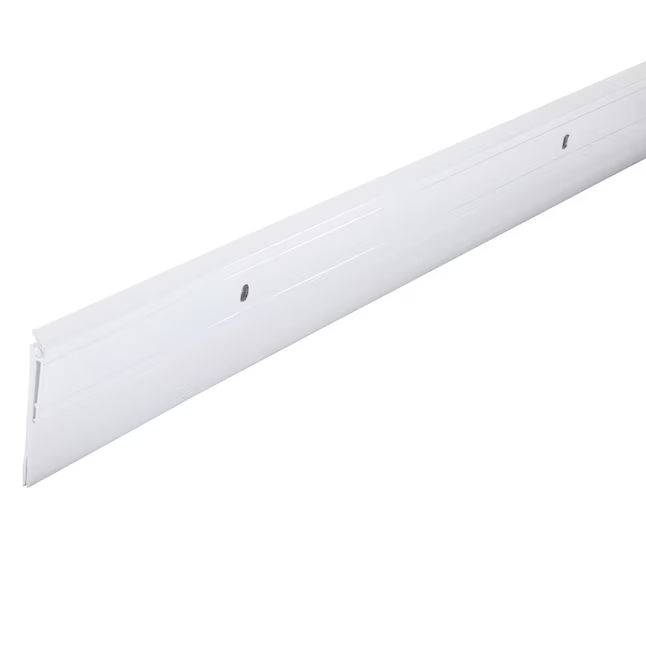
| Door-sweep type | Common use | Main fit concern |
|---|---|---|
| Surface-mounted fin sweep | Many ordinary exterior doors | Mounting height and threshold contact |
| Brush sweep | Slightly irregular surfaces | Bristle length and density |
| Slide-on or U-shaped sweep | Compatible door bottoms | Channel must match door thickness |
| Wraparound sweep | Doors suited to an enclosing bottom profile | Door thickness and bottom geometry |
| Under-door or kerf-mounted seal | Doors with matching grooves or retainers | Profile and attachment spacing must match |
| Door-specific bottom seal | Metal, fiberglass, composite, or specialty doors | Replacement may require a specific system |
What a Door Sweep Is Designed to Do
A door sweep or bottom seal closes the movable gap between the bottom edge of an exterior door and the threshold. It should make light, controlled contact as the door closes, reducing airflow while still allowing the door to swing, latch, and lock normally.
Too much contact is not an improvement. A sweep that drags heavily can make the door harder to operate, cause the flexible material to fold or wear prematurely, and affect how the latch or deadbolt lines up. Too little contact leaves part of the opening exposed.
A sweep is also different from the other sealing components around a doorway. Perimeter weatherstripping seals the top and sides of the door. The threshold is the surface beneath the door that the bottom seal meets. Caulk seals fixed joints that should not move, while a removable draft stopper is generally a temporary accessory. See door sweep vs weatherstripping for a closer comparison of these two sealing locations.
Whatever style is used, the sweep should remain securely attached during repeated operation and must not block drainage features built into the door or threshold assembly.
Common Door-Sweep and Bottom-Seal Types
Surface-Mounted Fin Sweeps
A surface-mounted fin sweep attaches to the face of the door near its lower edge. A flexible vinyl, rubber, or similar fin extends downward to contact the threshold when the door closes.
This type can work with many ordinary exterior doors, but placement height is critical. The fin needs enough contact to close the gap without bending sharply against the threshold. The mounting surface and fasteners must also be appropriate for the door.
A surface-mounted sweep cannot compensate for a severely uneven threshold or a badly misaligned door. Lowering the sweep until one end drags heavily usually creates more problems than it solves.
Brush Sweeps
Brush sweeps use flexible bristles rather than a solid fin. The bristles can follow small surface irregularities and often produce less friction than a solid compression-style seal.
Fit still matters. Bristles that are too short will not reach the threshold consistently. Bristles that are excessively long may remain heavily crushed, collect debris, or wear more quickly. Length, density, threshold shape, and exposure all affect performance.
A brush sweep can be useful where low resistance is important, but it does not necessarily provide the same type of compression seal as a solid flexible fin.
Slide-On and U-Shaped Sweeps
Slide-on or U-shaped sweeps fit over the bottom edge of a compatible door. Because the channel surrounds part of the door, the inside width of the product must match the actual door thickness.
An oversized channel may remain loose or shift during use. An undersized one may not seat properly and can damage the finish if forced into place. Overall product height is important as well because it determines how much clearance remains beneath the door.
Do not assume a slide-on replacement fits simply because the labeled width matches the door width.
Wraparound Sweeps
Wraparound sweeps cover the bottom edge and extend partially up one or both faces of the door. Their larger contact area can provide secure attachment when the design is compatible with the door.
The profile still has to match the door thickness and bottom geometry. Fastener locations must also be appropriate for the construction of the door. A replacement should never be forced onto an incompatible bottom edge.
Under-Door, Kerf-Mounted, and Inserted Seals
Some exterior doors use bottom seals that fit into grooves, kerfs, retainers, or channels beneath the door. These products may use barbs, fins, bulbs, or other shaped sections that lock into the original mounting system.
Similar-looking seals are not necessarily interchangeable. The replacement profile, groove spacing, retainer arrangement, and sealing section must match closely enough to remain secure and make proper threshold contact.
Inspection should be limited to material that is safely accessible. Do not remove the complete door slab simply to identify a hidden bottom-seal profile.
Door-Specific Replacement Seals
Metal, fiberglass, composite, and specialty doors may use manufacturer-specific bottom seals. These can depend on a particular channel, retainer, profile, or door construction.
When possible, preserve information from the original part before buying a replacement. Photographs, measurements, profile shape, and manufacturer markings can all help. A product labeled universal may still be incompatible with a door-specific mounting system.
How to Choose the Correct Sweep
Inspect the Existing Bottom Seal
The original system is usually the best starting point. Look at how the existing exterior door sweep is attached and note any channels, retainers, fastener holes, fins, bulbs, or bristles.
Check the material for tearing, curling, hardening, looseness, or missing sections. Uneven wear can also provide clues. One end that is badly worn while the other barely touches the threshold may indicate an alignment or threshold problem rather than simple seal deterioration.
Photograph the sweep before removing accessible pieces, including the orientation of fins or sealing surfaces. Also watch for stacked or mismatched old seals, which can make it harder to identify the intended configuration.
Measure the Door Width
Measure the actual door rather than assuming a nominal size from the original installation or product labeling. The replacement should span the bottom of the door without extending far enough to strike the jambs.
If a sweep is designed to be trimmed, check the manufacturer’s intended trimming areas. Some products have a rigid mounting strip and a separate flexible sealing section, and both may have different limits.
Width is only one measurement. A replacement door sweep can be the correct length and still be unusable because its channel, mounting system, or sealing height does not match the door.
Check the Bottom Gap
With the door normally closed, observe the gap from one side to the other. A small, stable variation may be manageable, but a large height difference can indicate a sagging door, threshold problem, frame movement, deteriorated material, or previous alteration.
There is no single ideal bottom gap for every exterior door. The correct clearance depends on the door, threshold, bottom-seal design, and intended amount of contact.
A sweep should bridge the gap without being used to disguise severe unevenness.
Examine the Threshold
The threshold and sweep work together, so inspect the surface the new seal will contact. It may be flat, raised, curved, smooth, fixed, or adjustable.
Remove ordinary dirt and debris before judging the fit. Also check for looseness, corrosion, cracking, rot, heavy wear, or damaged drainage features. A deteriorated threshold can prevent even a correctly selected sweep from sealing properly.
Threshold adjustment is a separate issue from choosing a sweep. Do not select an oversized bottom seal simply to compensate for a threshold that needs repair or adjustment.
Match the Door Material and Thickness
Wood, fiberglass, insulated metal, and composite doors can have very different internal construction. This matters particularly for slide-on, wraparound, and mechanically attached sweeps.
Measure the actual thickness where the replacement will fit and consider how the original product was attached. Avoid drilling into unknown internal door construction merely to make a generic product fit.
Whenever practical, matching the original mounting style reduces the need to alter the door.
Choose Controlled Contact
A properly fitted sweep should lightly touch or compress against the threshold when the door is closed. The material should not bend sharply, roll underneath the door, or create enough resistance to change how the door closes.
If threshold height appears to be part of the problem, see how to adjust door threshold height rather than trying to correct the issue solely with a deeper sweep.
Signs of excessive contact include:
- The door requires noticeably more force to close.
- A fin folds or rolls beneath the door.
- Brush bristles remain heavily crushed.
- The sweep scrapes or catches.
- The door does not close completely.
- The latch or deadbolt becomes difficult to operate.
Signs of insufficient contact include:
- Daylight remains beneath the door.
- Airflow continues through the bottom gap.
- The lower corners remain open.
- The sweep does not reach the threshold.
- Contact disappears when the door is latched normally.
Choosing the Sweep Material
Vinyl
Vinyl is common in flexible fins, bulbs, and slide-on door-bottom profiles. Its flexibility and durability vary with the formulation, thickness, and environmental exposure.
The fact that a sweep is made from vinyl does not determine whether it will fit or perform well. Profile, attachment method, and threshold contact remain more important.
Rubber
Rubber can provide flexible contact and controlled compression against a threshold. As with vinyl, performance varies depending on the exact formulation, profile, thickness, and exposure conditions.
A rubber seal that is too deep or too stiff for the available clearance may produce excessive drag despite being made from a suitable exterior material.
Silicone
Silicone may remain flexible across a broad range of temperatures, making it useful in some exterior sealing applications. It still has to match the required profile and mounting system.
Do not choose silicone simply because it appears to be the premium material. A correctly fitted vinyl or rubber sweep can be a better choice for a particular door.
Brush Material
Brush sweeps use bristles that can follow slight irregularities with relatively low friction. Their effectiveness depends on bristle length, density, moisture exposure, and the shape of the threshold.
Choose the material only after confirming the door, mounting system, bottom gap, and required threshold contact.
Matching the Sweep to the Door and Threshold
The best exterior door sweep is one whose sealing element suits the threshold it actually contacts. A flexible fin may work well against a smooth raised threshold, while a brush may tolerate minor irregularities. If the door was designed with an inserted gasket or under-door retainer, matching that system may provide the most reliable fit.
Remember that contact changes as the door swings. A sweep may clear the interior flooring while the door is open but begin dragging against the sill during the last portion of travel. It may also seal across the center of the threshold while missing one or both corners.
Frequently used exterior doors benefit from low operating resistance and secure mounting. Exposed doors also need materials suited to outdoor conditions, but the sweep must not block drainage paths or create a place where water is trapped.
Basic Replacement Expectations
Before attaching a replacement, confirm that the door and threshold are structurally sound. Verify the width, bottom gap, and existing mounting method, and preserve any drainage features.
Flexible material should be installed without stretching. Position the sweep evenly and check how it reaches the threshold before making the attachment permanent. Protect finished surfaces and avoid altering unknown internal door construction.
After replacement, open and close the door several times. Confirm that it closes fully, the latch and deadbolt operate normally, the sweep maintains light and reasonably even contact, and the assembly stays secure.
Also listen and feel for scraping or catching. Normal security and emergency operation must remain unaffected. If the sweep prevents normal use of the door, stop and reassess the fit.
Common Selection Mistakes
Buying by width alone is one of the most common mistakes. Two sweeps may both fit a 36-inch-wide door but have completely different channels, sealing depths, mounting systems, or intended door thicknesses.
Another mistake is assuming that universal means suitable for every exterior entry door. Storm-door seals, garage-door seals, and products intended for unrelated openings should not be substituted merely because their dimensions appear close.
A fin that is too long can drag heavily, while one that is too short leaves the opening exposed. Lowering a surface-mounted sweep until it scrapes is not a good substitute for correcting an uneven threshold or door alignment problem.
Avoid stacking multiple seals to close a large gap, blocking drainage openings, or drilling into unknown door construction to force a product to fit. Once installed, never force the door closed if the replacement changes normal operation.
A sweep is a sealing component, not a repair for a sagging door, damaged threshold, or active water-entry problem.
When a New Sweep Is Not the Complete Repair
A replacement sweep cannot correct a badly sagging or warped door, loose hinges, an out-of-square frame, or a severely uneven bottom gap. It also cannot repair a loose, rotten, cracked, or badly corroded threshold.
Soft or split material at the bottom of the door needs more than another seal. The same applies to broken hardware, structural movement, or active water entry around the opening.
A useful clue is uneven contact. If a sweep seals tightly at one corner but misses the threshold at the opposite side, alignment or threshold geometry may be the real problem.
Do not conceal these conditions by choosing progressively thicker material or creating excessive drag. Correct door and threshold geometry are what allow the sweep to perform properly.
Safety and When to Call a Professional
Professional evaluation is appropriate when:
- The door must be removed to reach the bottom seal.
- The slab is heavy, unstable, or difficult to control.
- The door cannot open, close, latch, lock, or remain secure.
- Glass is cracked, loose, shifting, or unstable.
- The door or frame is badly warped.
- Major hinge or framing alteration is required.
- Structural movement is visible.
- The threshold is severely damaged.
- Door-bottom material is soft, split, corroded, or rotten.
- Water enters around the opening during rain.
- Staining, mold, or concealed moisture appears widespread.
- The correct door-specific seal cannot be identified.
- Emergency exit operation may be affected.
- Older coatings may contain lead and would need to be disturbed.
Do not remove a heavy or unstable door slab, dismantle glass components, alter structural framing, drill into unknown internal door construction, or disturb questionable older coatings as part of a routine sweep replacement.
Final Thoughts
The best door sweep for exterior door use is the one that matches the actual door, mounting system, bottom gap, and threshold. Inspect the original system, measure the real opening, and choose a replacement that provides light, controlled contact rather than heavy drag.
After installation, verify that the door opens, closes, latches, and locks normally. If you find severe unevenness, water intrusion, damage, or alignment problems, the opening needs more than a new sweep.