Best Drywall Repair Kit for Small and Medium Holes
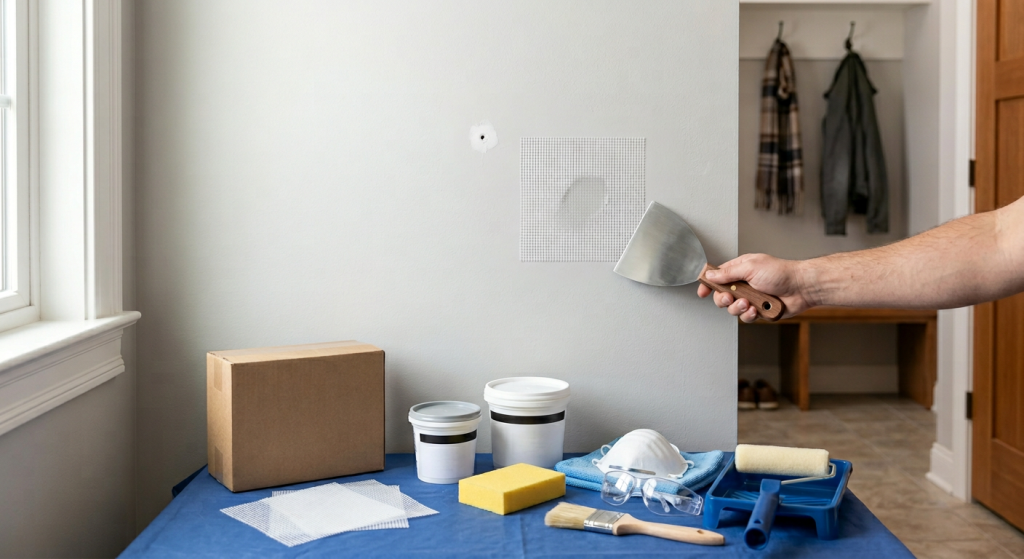
A good drywall repair kit should match the hole rather than simply include the most pieces. For many small or medium open holes, look for a patch or reinforcing material, enough compatible patching compound, a usable putty knife or spreader, and sanding material. Mesh works well for many straightforward repairs, while reinforced patches, backing systems, or drywall-piece systems can provide more support when the opening demands it.
| Kit type | Best use | Main advantage | Main limitation |
|---|---|---|---|
| Small mesh patch kit | Small to moderate open holes | Simple, lightweight reinforcement | Requires careful feathering |
| Reinforced metal patch | Holes needing a firmer bridge | More rigid than mesh alone | Can create a thicker repair |
| Patch plate or backing system | Openings needing support | Provides firmer backing | More involved installation |
| Drywall-piece repair system | More substantial damage | Replaces damaged drywall more directly | More cutting and finishing |
| Compound-only or filler kit | Minor surface defects | Simple and convenient | Does not reinforce an open hole |
Before buying a kit, inspect the wall itself. A repair involving moisture damage, crumbling drywall, exposed utilities, or other underlying problems should not be treated as an ordinary cosmetic patch.
Which Drywall Repair Kit Type Fits Your Hole?
The right kit depends on what is missing from the wall and what will support the finished repair.
A small surface defect in otherwise intact drywall may not require reinforcement at all. Once there is an open hole, however, the repair often needs something that bridges or supports the damaged area before finishing compound is applied.
If you are unsure whether the damage needs reinforcement or only filler, see Drywall Patch Kit vs Spackle: Which Should You Use?.
Once you know a kit is appropriate, compare the different repair formats rather than assuming all patch kits work the same way.
Mesh Patch Kit
Mesh patch kits are commonly designed to bridge small to moderate openings. The mesh provides a surface across the damaged area, while patching compound covers and feathers the repair into the surrounding wall.
Their main advantage is simplicity. The patch is lightweight, relatively easy to position, and often approachable for a homeowner handling a basic repair.
The tradeoff is finish quality. The mesh and compound need to be covered smoothly enough that the patch does not remain visible as a raised area after painting.
Mesh is also not appropriate for every hole. Check the kit’s stated repair-size range and make sure the drywall surrounding the opening is solid enough to support the patch.
Reinforced Metal Patch
Some patch kits combine mesh with a thin metal reinforcement. The added rigidity creates a firmer bridge over an opening than flexible mesh alone.
That can be useful when the repair needs more support across the center of the hole.
The tradeoff is thickness. A reinforced patch sits on or near the wall surface, so the finishing material must transition gradually from the patch to the surrounding drywall. Poor feathering can leave a noticeable hump.
A stronger patch does not automatically produce a better-looking repair. You still need sound drywall around the opening and enough room to feather the repair properly.
Backing or Patch-Plate System
A backing system supports the repair from behind or across the opening instead of relying only on a surface patch.
This approach can provide firmer support where an open hole needs more than a flexible bridge. Depending on the system, the backing may support patching material or a separate repair piece.
Installation is generally more involved than placing a simple self-adhesive patch. Check what the kit requires before buying it, including access, cutting, fastening, or other preparation.
For homeowners comfortable with a few additional steps, that extra support may be worthwhile when the opening is not a good candidate for a surface patch.
Drywall-Piece Repair System
A drywall-piece repair system uses a fitted section of drywall as part of the repair. This can be a better approach for more substantial damaged areas where replacing the missing wall material makes more sense than spanning the opening with mesh.
The advantage is that the repair restores drywall more directly.
The disadvantage is complexity. The job may require cutting the damaged opening to a controlled shape, fitting or supporting the replacement piece, and finishing a wider transition around it.
This is more involved than applying a small mesh patch and should not be chosen merely because a kit includes more substantial components.
What to Look for in a Drywall Repair Kit
The package contents matter, but they should come after compatibility with the repair itself.
Patch Size and Repair Range
Check the manufacturer’s stated repair-size limits rather than choosing a patch solely because its dimensions appear larger than the hole.
A surface patch generally needs to extend beyond the damaged opening onto sound material. If the surrounding drywall is crumbling or badly torn, the effective damaged area may be larger than the opening you initially see.
A larger patch is not automatically better. More patch area can also mean a larger area to cover and feather.
Reinforcement Strength and Thickness
Consider how much support the opening needs.
Flexible mesh may be sufficient for one repair, while another opening may benefit from a reinforced patch or backing system. At the same time, additional rigidity can increase patch thickness and make the repair more challenging to conceal.
The best balance is enough reinforcement for the repair without creating unnecessary finishing work.
Backing Method
Look at how the kit actually supports the damaged area.
Some kits bridge the surface. Others provide support behind the opening. Still others use a fitted repair piece.
This distinction can matter more than the number of accessories in the package. Choose a backing method appropriate for the wall condition and the type of opening rather than buying a general-purpose kit and assuming it will adapt to anything.
Included Patching Compound
Check whether the kit includes compound and whether there is enough for the intended repair.
A small packet may be adequate for covering a modest patch but insufficient for a repair requiring several coats or broad feathering. Conversely, there is little benefit in paying for a large quantity when the repair needs very little.
Also check what type of filler or compound the system requires. Different materials have different intended uses and working characteristics. For a broader material comparison, see Spackle vs Joint Compound for Wall Repairs.
Follow the kit and compound instructions for application thickness and drying rather than assuming all included fillers behave alike.
Included Putty Knife or Spreader
An included applicator is useful only if it is suitable for the repair.
A small plastic spreader may be adequate for applying material to a modest patch. Wider feathering may be easier with a different drywall knife than the one supplied in a compact kit.
Check whether the included tool is genuinely usable or simply a convenience item. A low-priced kit that requires you to buy another knife may still be appropriate, but it is not truly complete for your repair.
Sanding Material
Many kits include a sanding pad, abrasive sheet, or sanding sponge. This can be convenient for final smoothing.
Do not judge a kit primarily by whether abrasive material is included. Good application and feathering should minimize how much sanding the repair needs.
If the included abrasive is unsuitable for the finishing instructions or too small for the repair area, you may need separate sanding material.
Number of Pieces
A high piece count can make a kit appear more complete without making it more useful.
Look at what those pieces actually are. Multiple small patches, disposable accessories, or extra abrasive sheets may increase the count while doing little for a single medium repair.
For one hole, compatibility and sufficient material matter more than accessory quantity. For several repairs, multiple patches or additional compound may provide genuine value.
Finish Quality Matters as Much as Reinforcement
A patch can be mechanically sound and still remain obvious after painting.
Surface-mounted patches need enough finishing material to conceal their edges without creating an oversized mound. The compound should transition gradually into the surrounding wall so the finished area appears flat.
This feathering requirement becomes particularly important with thicker reinforced patches.
Applying extra compound is not a shortcut. Overapplication creates more drying and sanding work and can make a patch harder to blend.
Allow patching materials to dry or set according to their instructions. Sand with light pressure only as necessary, remove the resulting dust, and prime the finished repair before painting.
Primer remains important even when a kit does not include it. Fresh patching material can absorb finish paint differently from an already painted wall, making an otherwise smooth repair stand out.
Likewise, a kit that includes patching and sanding supplies should not be assumed to include everything needed through the final coat of paint. Check before buying whether you will still need primer, paint, additional compound, a wider knife, or other supplies.
Beginner Friendliness Is About More Than Fewer Steps
A kit marketed as easy to use is not necessarily the easiest option for your particular wall.
For a beginner, useful features include clear hole-size limits, straightforward preparation, an uncomplicated backing or patch method, enough compound to finish the repair, and instructions that explain how the surface should look at each stage.
Also consider how forgiving the system is during finishing. A thin patch that can be feathered smoothly may be easier to conceal than a thick patch requiring a much wider transition.
On the other hand, a backing-supported system with additional installation steps may provide a more appropriate repair for an opening that cannot reliably support a surface patch.
Choose based on the entire repair, not simply the shortest instructions.
Common Drywall Repair Kit Buying Mistakes
Avoid these common selection problems:
- Buying a patch without checking its stated repair-size range
- Choosing a kit before inspecting the condition around the hole
- Assuming every open hole can be repaired with surface mesh
- Choosing the largest or strongest patch when a simpler system is appropriate
- Ignoring patch thickness and the amount of feathering required
- Assuming the included compound is sufficient for every repair
- Paying for a high accessory count instead of useful components
- Assuming an included spreader will handle broad finishing work
- Expecting sanding to correct excessive compound buildup
- Assuming primer and paint are included or unnecessary
A useful kit should solve the support and finishing requirements of the repair without adding unnecessary complexity.
When a Consumer Repair Kit Is Not Enough
Stop treating the damage as a routine patch if the drywall is wet, soft, badly deteriorated, or affected by recurring moisture. Mold-like growth also warrants addressing the moisture source and determining the extent of the problem before closing or covering the area.
Use additional caution if a hole exposes electrical wiring, plumbing, ductwork, or other building components. Do not drive screws, cut deeper into the wall, or install backing where you could damage concealed utilities.
Very large openings, damaged framing, significant wall movement, or widespread deterioration can also fall outside the intended scope of a consumer patch kit.
If older painted surfaces may contain lead-based paint, do not use uncontrolled sanding or scraping on the suspect coating. Determine the appropriate lead-safe approach before disturbing it.
For an ordinary repair, follow the kit and patching-product instructions for hole-size limits, application, drying, sanding, ventilation, cleanup, and recommended personal protection.
Final Thoughts
The best drywall repair kit is the one whose repair method matches the hole. Mesh kits offer a straightforward option for many smaller openings, reinforced patches add rigidity, backing systems provide firmer support, and drywall-piece systems can make more sense as the damage becomes more substantial.
Before buying, inspect the surrounding drywall and compare patch coverage, reinforcement, thickness, backing method, included compound, tools, sanding supplies, and finishing requirements. A well-matched kit should provide enough support to repair the opening while allowing you to create a smooth, properly primed surface that blends into the wall.