
Best LED Bulbs for Enclosed Fixtures
The best LED bulbs for enclosed fixtures are bulbs clearly labeled for enclosed-fixture use. They also need to fit the fixture, stay within the fixture’s rating, and match the room’s brightness and color needs. “LED” alone does not mean the bulb is safe for every covered light fixture.
An enclosed fixture traps heat around the bulb. That extra heat can shorten the life of the bulb, cause flickering, or make the bulb fail early if it is not built for that space.
For most homeowners, the safest buying choice is simple: look for enclosed-fixture-rated LED bulbs first. Then check brightness, color temperature, bulb shape, base size, dimmer compatibility, and whether the fixture is in a dry, damp, or wet location.
Best LED Bulbs for Enclosed Fixtures: The Quick Answer
The right LED bulb for an enclosed fixture should say something like “suitable for enclosed fixtures” on the package or product listing. That label matters more than the brand, style, or marketing words on the front of the box.
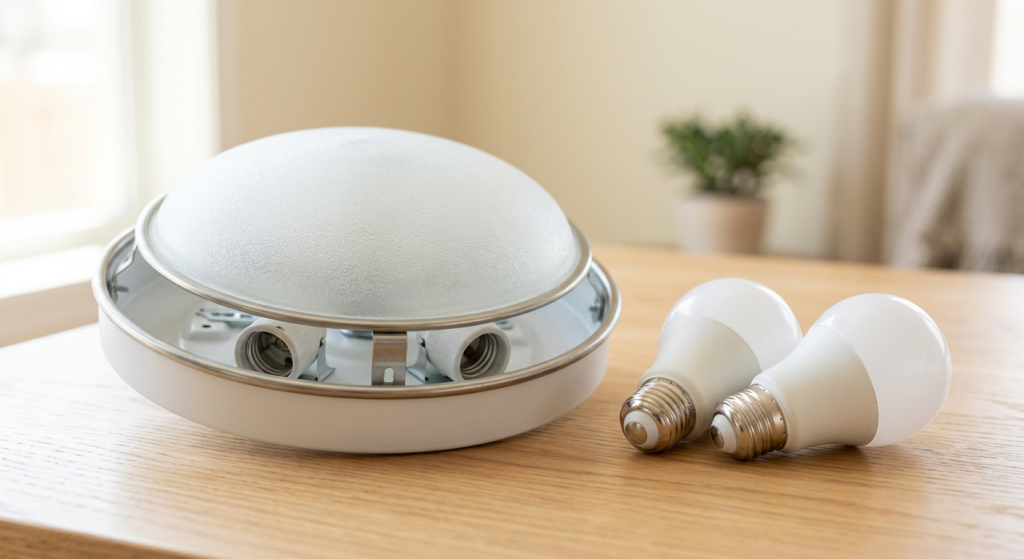
Enclosed fixtures are common in hallways, closets, ceiling lights, porch lights, globe fixtures, and some bathroom or laundry room lights. These fixtures may have a glass cover, plastic cover, globe, shade, or tight housing around the bulb.
LED bulbs usually run cooler than old incandescent bulbs, but they still create heat. The electronics inside the bulb do not like trapped heat. A bulb that works fine in an open lamp may fail quickly inside a sealed ceiling globe.
For buying purposes, start with the correct rating. After that, choose the bulb that fits the room. A hallway may need a simple soft white bulb. A laundry room may need a brighter neutral white bulb. A porch light may need a damp-rated or wet-rated bulb, depending on the fixture and exposure.
| Bulb Category | Best Use | What to Check | When to Avoid It |
|---|---|---|---|
| Enclosed-fixture-rated LED | Covered ceiling lights, globes, hallway lights | Package clearly allows enclosed use | Avoid if shape, base, or brightness does not fit |
| Dimmable enclosed-rated LED | Enclosed fixtures on dimmer switches | Bulb says dimmable and enclosed-rated | Avoid with older dimmers if flickering or buzzing occurs |
| Damp-rated LED | Bathrooms, laundry rooms, covered porches | Damp-location rating and fixture label | Avoid where water can directly hit the bulb |
| Wet-rated LED | Outdoor fixtures exposed to weather | Wet-location rating and correct fixture type | Avoid indoors if size or light color is wrong |
| High-CRI enclosed-rated LED | Kitchens, closets, bathrooms, task areas | Enclosed rating plus high color quality | Avoid if you only need basic low-cost lighting |
The best bulb is not always the brightest one. It is the one that fits the fixture safely and gives the room the right amount of light.
What Counts as an Enclosed Fixture?
An enclosed fixture is any light fixture that traps the bulb inside a cover, globe, lens, shade, or tight space. The bulb is not open to normal air flow around it.
A common example is a ceiling light with a glass dome. The bulb sits inside the dome, and the cover screws or twists into place. Closets, hallways, bedrooms, bathrooms, and basements often have this type of light.
Outdoor porch lights can also be enclosed. Some have glass panels around the bulb. Others have a sealed cover to keep out rain, dust, and insects. These fixtures may need both an enclosed-fixture rating and a damp or wet location rating.
Recessed lights can be a little different. Some use special LED trims or reflector bulbs. Others have a can-style housing. The key is to follow the fixture label and the bulb package instead of guessing.
A lampshade does not always make a fixture enclosed. A table lamp with an open shade usually allows more air flow. But a tight decorative cover, sealed globe, or closed outdoor lantern can hold heat around the bulb.
Common enclosed or partly enclosed fixtures include
- Ceiling dome lights
- Glass globe fixtures
- Closet lights with covers
- Outdoor porch lanterns
- Covered bathroom or laundry lights
- Some recessed or flush-mount fixtures
When in doubt, treat the fixture as enclosed and buy a bulb rated for enclosed use. That is usually the safer choice than using a standard LED bulb and hoping it lasts.
Why Enclosed Fixtures Are Harder on LED Bulbs
Enclosed fixtures are harder on LED bulbs because they hold heat near the bulb. LED bulbs are efficient, but they are not heat-free. The bulb base contains small electronic parts that control the light. Those parts can wear out faster when heat cannot escape.
This is why a standard LED bulb may fail early in a covered fixture. The bulb may start flickering, dimming, buzzing, or turning off before it should. In some cases, it may work for a few weeks or months and then fail much sooner than expected.
Heat can also affect brightness and color. A bulb that overheats may not perform the way the package suggests. It may look weaker, act unstable, or shut down if it has built-in protection.
This does not mean enclosed fixtures are bad. It only means the bulb needs to be made for that environment. Enclosed-rated LED bulbs are designed to handle more trapped heat than standard LED bulbs.
The fixture itself still matters. If the fixture label has a maximum wattage or bulb type, follow it. LED bulbs use less power than older bulbs, but the fixture label still sets important limits. Never use a bulb in a way the fixture label does not allow.
What to Look For Before You Buy
Start with the package or product listing. Look for clear wording that says the bulb is suitable for enclosed fixtures. Do not rely on vague phrases like “long life,” “energy saving,” or “cool running.” Those phrases do not prove the bulb belongs in a covered light.
Next, check the base size. Most standard household bulbs use a medium screw base, but not all fixtures do. Some ceiling fans, decorative lights, chandeliers, and specialty fixtures use smaller or different bases.
Then check bulb shape. An A19 bulb is common in many household fixtures, but some lights need a globe, candle, reflector, or smaller bulb. A bulb that is too large may touch the cover, block airflow, or keep the fixture from closing correctly.
Brightness matters too. Look at lumens, not just “watt equivalent.” Lumens tell you how much light the bulb produces. A higher lumen bulb is brighter. A low-lumen bulb may be fine in a hallway, while a laundry room or closet may need more light.
Color temperature changes how the room feels. Soft white bulbs feel warm and cozy. Bright white or neutral white bulbs look cleaner. Daylight bulbs look cooler and more crisp. For enclosed fixtures in living areas, soft white is usually comfortable. For closets, laundry rooms, garages, and utility spaces, neutral white or daylight may work better.
Before buying, check these details
- Enclosed-fixture rating
- Fixture label and maximum allowed bulb rating
- Bulb shape and base size
- Lumens for brightness
- Color temperature for room feel
- Dimmer, damp, or wet rating when needed
If the bulb is going into a dimmable fixture, make sure the package says dimmable. If the fixture is in a bathroom, laundry room, garage, porch, or outdoor area, check whether the bulb needs a damp-rated or wet-rated label.
If you are choosing bulb color at the same time, this guide on LED daylight vs soft white explains where each light color usually works best at home.
Best Bulb Types by Room or Fixture
For hallway ceiling lights, choose an enclosed-fixture-rated LED with moderate brightness. Soft white usually feels comfortable in hallways near bedrooms and living spaces. Neutral white can work better in darker hallways where you want a cleaner look.
For closets, enclosed-rated bulbs are important because closet lights are often covered. A brighter neutral white bulb can make clothing and stored items easier to see. If color detail matters, such as matching clothes, a high-CRI bulb is worth comparing.
For laundry rooms and utility rooms, choose an enclosed-rated bulb with enough lumens to make the room feel clear. Neutral white or daylight can work well here because these rooms are more about tasks than mood.
For bathrooms, check the fixture style and location. A covered ceiling light may need an enclosed-rated bulb. A fixture near moisture may also need a damp-location rating. Soft white can feel calmer, while neutral white often works better around mirrors and cleaning tasks.
For porch lights and outdoor lanterns, check both enclosure and weather exposure. A bulb inside a covered outdoor lantern may still need a damp-rated or wet-rated label. If rain or wind-driven moisture can reach the fixture, use the rating the fixture and bulb instructions call for.
For globe fixtures, make sure the bulb physically fits. Some globe covers leave very little space around the bulb. A compact enclosed-rated LED may be better than a larger bulb that presses close to the glass.
For recessed lights, follow the fixture label closely. Some recessed fixtures need specific bulb shapes or LED trims. Do not force a bulb that does not fit the fixture or cover.
High-CRI enclosed-rated bulbs are useful in kitchens, closets, bathrooms, hobby areas, and anywhere color accuracy matters. They can make paint colors, clothing, food, and finishes look more natural.
Dimmable enclosed-rated bulbs are a good category for bedrooms, living rooms, dining rooms, and hallways with dimmer switches. Just remember that the bulb and dimmer both need to work together. If an LED bulb flickers badly or buzzes on a dimmer, that setup may not be compatible.
Mistakes and Warning Signs to Avoid
The most common mistake is buying a standard LED bulb and assuming it will work anywhere. Many LED bulbs are not made for enclosed fixtures. The bulb may fit, turn on, and seem fine at first, but still fail early because of trapped heat.
Another mistake is buying the wrong brightness. Some homeowners choose daylight bulbs because they want “more light,” but color temperature and brightness are different things. If a room is dim, check lumens. If a room feels too yellow or too blue, check color temperature.
Do not ignore the fixture label. The label may tell you the maximum bulb rating, bulb type, or other limits. If the fixture cover no longer fits after the bulb is installed, the bulb is not a good fit for that fixture.
Older dimmers can also cause trouble with LED bulbs. A bulb may be marked dimmable but still not behave well with every dimmer. Bad flickering, buzzing, or unstable dimming means the combination may not be right.
Outdoor and damp areas need extra attention. A bulb used on a porch, in a bathroom, or in a laundry room may need a location rating in addition to the enclosed-fixture rating. Enclosed-rated and damp-rated do not always mean the same thing.
Avoid these buying and use mistakes
- Buying an LED bulb without checking for enclosed-fixture rating
- Using a bulb that prevents the fixture cover from closing correctly
- Choosing brightness by watt equivalent instead of lumens
- Using a non-dimmable LED on a dimmer
- Ignoring damp-rated or wet-rated needs
- Keeping a bulb in use after clear warning signs
Stop using the bulb if it flickers badly, buzzes loudly, smells burnt, overheats, discolors the fixture, or fails again and again. Also stop if the fixture, switch, or surrounding area feels unusually hot.
Call an electrician if multiple bulbs fail in the same fixture, the fixture shows scorching, the switch feels hot, the light crackles or sparks, or you smell burning from the fixture. Do not open electrical boxes, replace switches, modify wiring, or bypass fixture ratings as a guess.
If bulbs keep failing in the same fixture, this guide on why a light bulb keeps burning out can help you compare heat, fixture, bulb type, and compatibility issues.
Final Thoughts
The best LED bulbs for enclosed fixtures are not just ordinary LED bulbs in the right shape. They are bulbs clearly rated for enclosed use, matched to the fixture, and chosen for the room.
Start with safety and fit. Check the fixture label, bulb shape, base size, maximum rating, and enclosed-fixture wording on the package. Then choose the brightness and color temperature that make sense for the space.
For hallways and bedrooms, soft white often feels best. For closets, laundry rooms, garages, and utility spaces, neutral white or daylight may be more useful. For bathrooms, porches, and outdoor fixtures, check damp or wet ratings before buying.
A good LED bulb should fit safely, run normally, and give the room the light it needs. If a bulb flickers badly, buzzes, smells burnt, overheats, or keeps failing, stop using it and get the fixture checked before trying more bulbs.