
LED Daylight vs Soft White: Which Looks Better at Home?
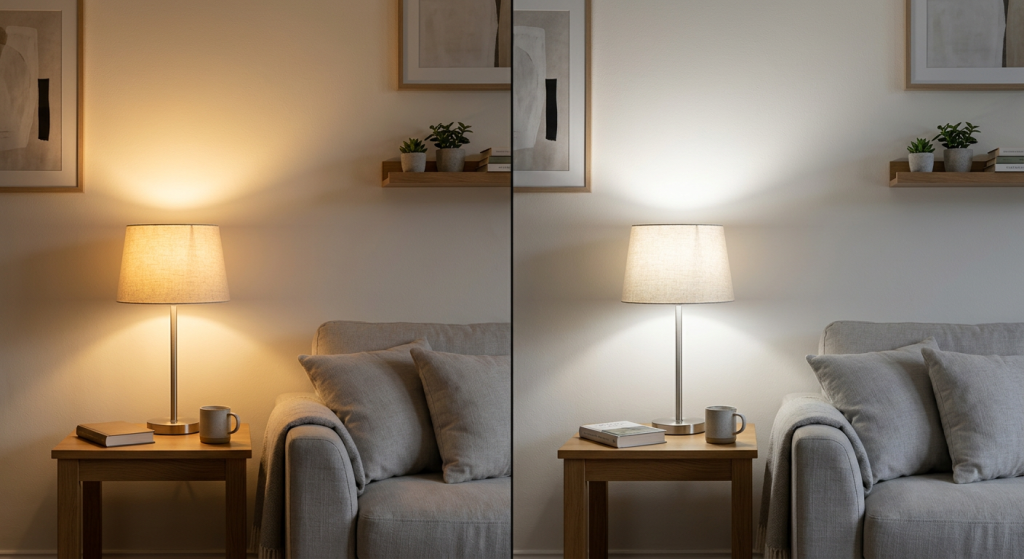
Daylight vs soft white comes down to the kind of light you want in the room. Soft white usually looks warmer and slightly yellow, creating a more relaxed feel, while daylight looks cooler, whiter, and sometimes slightly blue. Neither is better everywhere. The right choice depends on the room, the task, your finishes, and your personal preference.
| Feature | Soft White | Daylight |
|---|---|---|
| Typical color temperature | About 2700K–3000K | About 5000K–6500K |
| Appearance | Warm, slightly yellow | Cool, crisp white to slightly blue |
| Relaxation | Often preferred | Can feel more energetic |
| Task visibility | Comfortable for general use | Often useful for detailed tasks |
| Kitchens | Good for warm ambient light | Useful for prep and work areas |
| Bathrooms | Comfortable for general lighting | Useful around mirrors and task areas |
| Bedrooms | Common choice | Better suited to specific task areas |
| Living rooms | Common choice | Useful where cooler light is preferred |
| Home offices | Warm and comfortable | Often suited to task-oriented lighting |
Exact color labels and Kelvin ranges vary somewhat by manufacturer, so check the package rather than relying on the name alone.
1. What Does Soft White Look Like?
Soft white light bulbs generally produce a warm, slightly yellow-toned light similar to the appearance many people associate with traditional incandescent bulbs.
That warmer appearance can create:
- A cozy atmosphere
- Richer-looking wood tones
- A softer visual effect
- A relaxed evening feel
Soft white is commonly used in bedrooms, living rooms, dining rooms, table lamps, and other areas where comfort is more important than crisp task lighting.
It can also work well with beige, cream, wood, and other warm-colored finishes.
Soft white is not automatically the right choice for every living space, however. A homeowner who prefers a cleaner, cooler look may find even 2700K lighting too yellow.
If you are comparing nearby warm-light labels, the guide to soft white vs warm white light bulbs explains those terms in more detail.
2. What Does Daylight Look Like?
Daylight light bulbs generally produce a cooler, whiter appearance than soft white bulbs. At the higher end of the range, the light can take on a slightly bluish cast.
This cooler light may make:
- Fine details easier to distinguish
- White surfaces appear crisper
- A room feel more energetic
- Visual contrast appear stronger
Daylight bulbs are often used in workspaces, laundry rooms, workshops, utility areas, home offices, and some kitchens and bathrooms.
That does not mean daylight automatically improves visibility in every room. Fixture placement, glare, brightness, bulb quality, and the surfaces being illuminated all affect how useful the lighting feels.
A very bright daylight bulb in the wrong fixture can feel harsh even when the color temperature itself is appropriate for the task.
3. Color Temperature: What Kelvin Means
Color temperature is measured in Kelvin, abbreviated K.
For household lighting, lower Kelvin numbers generally look warmer and more yellow. Higher Kelvin numbers generally look cooler and whiter.
A practical approximate guide is:
- 2700K–3000K: soft white
- 3500K–4100K: neutral or cool white
- 5000K–6500K: daylight
These are useful ranges rather than universal definitions. One manufacturer’s “daylight” bulb may not look identical to another’s, even when the package uses the same general label.
Kelvin describes the appearance of the light, not how much light the bulb produces.
That distinction becomes especially important when comparing bulbs for different rooms.
4. Daylight vs Soft White for the Kitchen
For daylight vs soft white for kitchen lighting, consider whether the fixture is serving a task or creating general atmosphere.
Cooler or neutral-white lighting may be useful over areas where you prepare food, clean surfaces, read labels, or work at counters. The crisper appearance can make detail easier to see in some kitchens.
Soft white may be more appealing when:
- The kitchen opens directly into a living or dining room
- Decorative pendant lights are prominent
- Cabinets and finishes have warm tones
- The room is used heavily for evening entertaining
You do not necessarily need one color temperature for every fixture.
A kitchen can use task-oriented lighting at work surfaces while keeping decorative or ambient fixtures warmer. The goal is to create useful zones without producing a visibly mismatched patchwork of colors.
5. Daylight vs Soft White for the Bathroom
Daylight vs soft white for bathroom lighting depends heavily on where the light is located.
Cooler light can be useful around mirrors and other task areas where detail matters. It may make white surfaces appear crisp and can provide a clean-looking appearance.
Warmer light can feel more comfortable as general ambient lighting, especially early in the morning or later in the evening.
Color temperature is only part of the picture around a bathroom mirror. Color rendering, brightness, fixture placement, shadows, and wall colors also affect how faces and finishes appear.
A daylight bulb in a poorly placed fixture will not automatically provide better mirror lighting than a well-placed softer bulb.
6. Daylight vs Soft White for Bedrooms
Soft white is commonly chosen for bedrooms because its warmer appearance works well with relaxation-oriented spaces.
It tends to pair naturally with:
- Bedside lamps
- Warm furniture finishes
- Fabric shades
- Wood tones
- Evening ambient lighting
Daylight can still be useful in a bedroom when the space also functions as a dressing, reading, crafting, or daytime work area.
For example, a dedicated task fixture can use cooler light while the room’s general lamps remain warmer.
The choice is primarily about visual comfort and use. You do not need to choose daylight or soft white based on broad claims that one color temperature guarantees a particular health or sleep result.
7. Daylight vs Soft White for Living Rooms
Soft white light bulbs are common in living rooms because the warmer color works well with evening relaxation and many residential finishes.
Warm lighting can complement:
- Wood furniture
- Beige and cream fabrics
- Warm paint colors
- Traditional interiors
- Lamps with fabric shades
Daylight lighting can still make sense in a living room used for detailed hobbies, reading, crafts, or other tasks.
It may also appeal to homeowners who simply prefer cooler-looking rooms.
If a living room has little natural light, cooler bulbs can make the room feel visually different, but that does not automatically mean they will make the space more comfortable. Trying the color in the actual fixture is often more useful than choosing from a package description alone.
8. Daylight vs Soft White for Home Offices and Work Areas
Home offices and task-oriented spaces often benefit from neutral or daylight-style lighting because the cooler appearance can provide strong visual contrast.
That can work well for:
- Desk work
- Crafts
- Detailed hobbies
- Utility tasks
- Workshops
However, color temperature should not be considered in isolation.
Brightness and glare can matter just as much. A high-output daylight bulb aimed directly into your field of view may be uncomfortable, while a softer or better-diffused fixture could provide more usable light.
Daylight lighting also does not automatically increase productivity or improve health. Choose it because its appearance and task visibility suit the space.
9. How Paint and Furnishings Affect the Choice
Lighting color can change how surfaces appear.
Soft white can emphasize the warmth in:
- Wood
- Beige
- Cream
- Tan
- Warm fabrics
- Warm paint colors
Daylight can make cooler colors appear crisper, including:
- White
- Gray
- Blue
- Some cooler stone finishes
- Modern neutral interiors
These effects are not exact or predictable from Kelvin alone.
Color rendering, bulb quality, natural daylight, fixture shades, wall reflectance, and surrounding colors all influence what you actually see.
If paint color matters strongly in a room, test the bulb in the space before committing to several identical bulbs.
10. Brightness Is Different From Color Temperature
A common misconception is that daylight bulbs are automatically brighter than soft white bulbs.
They are not.
Kelvin describes color appearance.
Lumens describe how much visible light a bulb produces.
A 2700K soft white bulb and a 5000K daylight bulb can have the same lumen output while looking noticeably different.
The daylight bulb may appear crisper or more intense because of its cooler color, but that does not necessarily mean it produces more light.
When choosing a bulb, consider both the lumen rating and the color temperature rather than using “daylight” as a substitute for “bright.”
11. Can You Mix Daylight and Soft White Bulbs?
Yes, but the result depends on where they are used.
Mixing color temperatures can work well when different fixtures have separate purposes, such as:
- Warm ambient lighting and cooler task lighting
- Different rooms
- Separate work and relaxation zones
Mixing daylight and soft white bulbs in the same multi-bulb fixture can look inconsistent because individual bulbs may appear noticeably different beside each other.
Many homeowners prefer matching color temperatures within one fixture for a uniform appearance.
That is a preference rather than an absolute rule. If the mixed lighting looks good and works well for the room, there is no need to change it simply for consistency.
12. Which One Should You Choose?
Choose soft white when you want:
- A warmer appearance
- A cozy atmosphere
- Relaxed evening lighting
- Comfortable bedroom or living-area light
- Lighting that complements warm finishes
Choose daylight when you want:
- A cooler appearance
- Stronger-looking visual contrast
- Task-oriented lighting
- A crisp utility or workspace feel
- Lighting that complements cooler finishes
For many homes, the best answer is not choosing one color temperature everywhere.
Use the room’s purpose to guide the decision. Bedrooms and living rooms often favor warmer light, while workspaces and task areas often benefit from cooler light.
Personal preference still matters. Trying one bulb in the actual room can tell you more than comparing package labels in a store.
13. Safety and Fixture Compatibility
Color temperature does not determine whether a bulb is suitable for a particular fixture.
Before installing a bulb, check:
- The bulb base
- The fixture’s maximum wattage
- Whether the bulb is suitable for an enclosed fixture when required
- Dimmer compatibility if the fixture uses a dimmer
- Manufacturer instructions for the fixture and bulb
If you are choosing LEDs for a covered light, the guide to best LED bulbs for enclosed fixtures covers that compatibility issue separately.
Do not install a bulb that exceeds the fixture’s stated maximum wattage or use an incompatible bulb simply to obtain a preferred color temperature.
Final Thoughts
In the daylight vs soft white decision, soft white gives you warmer, more relaxed-looking light, while daylight gives you a cooler, crisper appearance that often suits task-oriented spaces.
Neither is universally better. Match the color temperature to how you use the room, consider the paint and furnishings, and remember that Kelvin describes color while lumens describe brightness. When possible, test one bulb in the actual space before changing every fixture.