Best Smart Thermostats for homeowners: How to Choose the Right One
The best smart thermostats are not always the ones with the most features, the flashiest app, or the highest price.
For most homeowners, the right smart thermostat is the one that works with the HVAC system you already have, feels easy to use every day, and helps you manage comfort without becoming a constant project.
That is where buying one can get confusing.
Some smart thermostats are built for simple schedule control. Others add learning features, room sensors, voice assistant support, energy reports, and more detailed automation. Those extras can be useful, but they are not equally helpful for every household.
This guide will help you choose a smart thermostat in a practical way. You will learn what a smart thermostat does, how it differs from a basic programmable model, and what to look for before you buy.
What a smart thermostat does
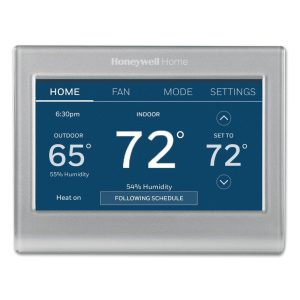
A smart thermostat controls your heating and cooling system like a regular thermostat, but it adds connected features that make control more flexible.
In plain English, a smart thermostat usually lets you adjust the temperature from your phone, create schedules, and track how your system is being used. Some models can also respond to whether you are home or away, learn your habits over time, or use room sensors to help manage comfort in different parts of the house.
That does not mean every smart thermostat works the same way.
Some focus on simple app-based control. Others lean heavily into automation. Some are a good fit for homeowners who love connected home features. Others are better for people who just want a clean screen and a reliable schedule.
Smart thermostat vs programmable thermostat
This is an important difference.
A basic programmable thermostat lets you set a schedule. For example, you can tell it to lower the temperature at night and raise it before you wake up.
A smart thermostat can usually do that too, but it adds more convenience and flexibility. You may be able to change settings remotely, adjust the temperature when you are away from home, get alerts, or use features that respond to occupancy or location.
A programmable thermostat is usually more manual.
A smart thermostat is usually more connected and more adaptable.
That said, some homeowners do not need all the extra features. If you already use a simple schedule and rarely change it, a programmable thermostat may still meet your needs just fine.
If your heating system is not working the way you expect, thermostat settings are also one of the first things to check, and our guide on furnace blowing cold air can help you narrow that down.
Best smart thermostats: what most homeowners should look for
When homeowners search for the best smart thermostats, they often end up comparing flashy features before checking the basics.
That can lead to the wrong purchase.
The best smart thermostat for your home starts with compatibility, then moves into ease of use, features, and comfort goals.
Compatibility comes first
Not every HVAC system is a perfect match for every smart thermostat.
This is the biggest thing to get right before you buy.
Most smart thermostats are designed for low-voltage residential systems, but wiring and system type still matter. A thermostat that works well with one furnace and AC setup may not be the best choice for another home with a heat pump, multi-stage system, zoned setup, or specialty equipment.
This is also where the C-wire question comes in.
A C-wire, short for common wire, is a wire that helps provide steady power to the thermostat. Some smart thermostats need one. Some can work without one in certain homes. Others may need an adapter or additional setup if a C-wire is not already present.
Do not assume all smart thermostats work the same way with missing C-wire setups.
Before buying, check these compatibility basics:
- What type of heating and cooling system you have
- Whether your current thermostat wiring includes a C-wire
- Whether you have a heat pump
- Whether your system is single-stage or multi-stage
- Whether your home has zoning
- Whether the manufacturer offers a compatibility checker or wiring guide
If you are unsure, checking the system manual or using a manufacturer compatibility tool is usually worth the extra few minutes.
Why heat pump homeowners need to be careful
Heat pumps deserve special attention when shopping for a thermostat.
A heat pump does both heating and cooling by moving heat rather than creating it in the same way a furnace does. Many heat pump systems also have auxiliary heat or emergency heat, which adds another layer of control.
That means the thermostat needs to be able to handle the correct wiring and staging.
A thermostat that is great for a basic furnace and AC system may not be the best match for a heat pump setup. Some thermostats support heat pumps well. Others support them only in certain configurations.
If you have a heat pump, do not buy based on looks or app reviews alone. Make sure the thermostat clearly supports your specific kind of system.
Heat pump homeowners should double-check:
- Whether the thermostat supports heat pump systems
- Whether it supports auxiliary or emergency heat if your system has it
- Whether the wiring setup matches your current system
- Whether professional installation is recommended for your setup
This is one of those cases where compatibility matters more than extra features.
Ease of use matters more than many people expect
A thermostat can have every feature in the world and still be a bad fit if nobody in the house likes using it.
Some homeowners want learning features, automation, app control, and voice assistant support. Others just want a thermostat that is easy to read, easy to override, and easy to schedule.
That is a real buying factor, not a minor preference.
If you prefer simple controls, too many menus and automations can become annoying fast. A thermostat should make comfort easier, not more confusing.
A simpler smart thermostat may be the better choice if you want:
- A clear display
- Easy schedule editing
- Straightforward phone control
- Fewer alerts and less automation
- Quick manual changes without digging through settings
For many homeowners, simple and reliable beats feature-heavy and frustrating.
Features worth paying attention to
Once compatibility is confirmed, the next step is deciding which features are actually useful in your home.
Not every feature matters to every buyer.
Practical smart thermostat features to compare include:
- App quality and ease of use
- Simple scheduling options
- Learning features that adjust over time
- Home and away settings
- Room sensor support
- Voice assistant support
- Energy-use reports or usage tracking
- Alerts for unusual temperature changes or system issues
- Screen readability and ease of manual control
A good feature list should match how you actually live. If you never use voice assistants, that feature should not drive the decision. If one room is always too hot or too cold, room sensors may matter a lot.
Room sensors can help with comfort problems
Room sensors are one of the more practical smart thermostat features for some homes.
A room sensor is a small device placed in another part of the house that helps the thermostat understand temperature conditions outside the hallway where the thermostat sits. Some sensors also help track occupancy.
This can be useful in homes with hot upstairs bedrooms, colder back rooms, or areas that never seem to match the main thermostat reading.
Room sensors do not fix every comfort issue. They cannot solve bad insulation, poor duct design, or major airflow problems on their own. But they can help the thermostat respond better to how the house actually feels.
Room sensors may be especially useful when:
- Bedrooms run hotter or colder than the main living area
- The thermostat is in a spot that does not represent the rest of the home well
- You want comfort focused on the rooms you use most
- The house has mild room-to-room temperature differences
They are often more helpful than homeowners expect, especially in two-story homes.
Learning features and energy-use tools
Some smart thermostats can learn your habits and begin building a schedule around your routines. Others rely more on schedules you create yourself.
Some also offer energy reports or usage insights through the app.
These features can be helpful, but they are not magic. They work best when your schedule is fairly consistent and when you are comfortable letting the thermostat automate part of the process.
Energy-use features can help you spot patterns, but they should not be treated as a promise of dramatic savings. Actual results depend on your climate, home insulation, energy prices, system efficiency, and how you use the thermostat.
A smart thermostat may help reduce wasted heating and cooling time. It is not a guaranteed shortcut to big utility bill drops.
Common mistakes homeowners make when buying a smart thermostat
This is another area where it helps to stay practical.
A lot of thermostat buying mistakes happen because homeowners shop by brand reputation or app screenshots without checking how the thermostat fits their actual system and daily habits.
Common smart thermostat buying mistakes include:
- Skipping the compatibility check
- Assuming all smart thermostats work without a C-wire
- Buying a model that is not a good fit for a heat pump
- Choosing too many features when simple controls would be better
- Assuming room sensors will fix major HVAC or insulation problems
- Expecting automatic savings without using schedules or settings properly
- Ignoring whether the app is easy to use
- Buying based only on price without looking at support and setup difficulty
A little homework before buying usually matters more than chasing the newest model.
Best smart thermostats by homeowner need
For this kind of article, the most helpful recommendations are usually category-based instead of forcing one product on every reader.
Different homes need different strengths.
Best smart thermostats for different homeowner needs
Best overall for most homeowners
A smart thermostat with broad compatibility, an easy app, clear scheduling, and strong day-to-day usability is usually the best overall choice.
For most people, the ideal model is not the most advanced one. It is the one that balances compatibility, ease of setup, reliable phone control, and a clean interface.
Best for simple everyday use
A straightforward smart thermostat with basic scheduling and app control is often the best choice for homeowners who do not want too much automation.
This type works well for people who want remote access and a modern interface without feeling like they are managing a mini computer on the wall.
Best for homes with room comfort issues
A smart thermostat that supports room sensors is often the best fit for homes where some rooms are consistently warmer or cooler than others.
This category makes the most sense when the comfort problem is moderate, not when the home has major duct or insulation problems.
Best for smart home users
A smart thermostat with strong voice assistant support and better automation features can make sense for homeowners who already use connected devices throughout the house.
If your lights, speakers, and routines already run through a smart home setup, tighter integration may actually be useful.
Best budget-friendly option
A simpler smart thermostat with fewer premium extras can still be a strong value if it covers the basics well.
Many homeowners do not need advanced learning features or extra sensors. A budget-friendly model can still be a good buy if it is compatible, easy to use, and dependable.
A simple way to choose the right one
If you are feeling stuck, it helps to narrow the decision down with a few honest questions.
Ask yourself these questions before buying:
- Is my HVAC system definitely compatible?
- Do I have a heat pump?
- Do I need C-wire support or an adapter?
- Do I want a simple schedule or more automation?
- Would room sensors actually help my comfort issues?
- Do I care about voice assistant support?
- Will I realistically use app features and energy reports?
Your answers usually point you toward the right category faster than comparing dozens of model pages.
If your AC seems to be running but the house still is not cooling well, our guide on home AC running but not cooling can help you check whether thermostat settings may be part of the problem.
Conclusion
The best smart thermostat for your home is not always the one with the longest feature list. It is the one that fits your HVAC system, feels easy to use, and supports the kind of comfort control you actually want.
For many homeowners, that means starting with compatibility, especially C-wire and heat pump details, then choosing between simple controls, sensor support, and smart home features based on real needs.
If you keep the decision practical, you are much more likely to end up with a thermostat that helps your home feel better without adding unnecessary hassle.