Spring Lawn Fertilizer: What to Use and When
Spring lawn fertilizer can help a cool-season lawn green up and recover after winter, but timing and application rate matter more than simply putting fertilizer down as early as possible.
For many northern lawns, spring feeding should be moderate rather than aggressive. The goal is to support healthy growth without pushing excessive top growth before summer heat arrives.
Homeowners should also consider the lawn’s condition, fertilizer type, and whether the grass actually needs added nutrients before applying a spring product.
What counts as northern cool-season grass
Northern lawns are often made up of cool-season grasses. That means grass types that grow best during cooler parts of the year, especially in spring and fall.
Common examples include:
- Kentucky bluegrass
- tall fescue
- fine fescue
- perennial ryegrass
These lawns usually slow down during the heat of summer and pick back up when cooler weather returns.
Spring Lawn Fertilizer Timing vs Fall Fertilizer
For most homeowners, the best time to fertilize is early fall, with another feeding often helpful in mid to late fall depending on how much lawn care you want to do.
If you only fertilize once a year, fall is usually the best time to do it.
Why fall works so well:
- the grass is actively growing again
- summer stress is easing off
- the lawn can use nutrients for recovery and thickening
- root development gets better support
- you get greener spring growth without pushing too much top growth too early
Spring feeding can still have a place, but it is usually a lighter supporting application, not the main event.
Why Heavy Spring Fertilizing Can Backfire
This is the part many homeowners miss.
A cool-season lawn naturally responds very well to fertilizer in fall. That is when it can rebuild from summer stress, fill in more densely, and prepare for winter and next spring.
Early spring fertilizer often creates a fast burst of leaf growth. That may look good at first, but too much too soon can mean extra mowing and a less balanced lawn.
In simple terms, fall feeding usually helps the lawn grow stronger, while heavy early spring feeding can make it grow faster.
A simple fertilizer schedule for beginners
You do not need a complicated lawn program to get decent results.
A practical beginner schedule looks like this
- If you only fertilize once: apply in early fall
- If you fertilize twice: apply in early fall and again in late fall
- If you fertilize three times: use a light spring feeding, then early fall, then late fall
This kind of schedule works well for many northern home lawns without turning lawn care into a full hobby.
When Spring Fertilizer Makes Sense
A light spring feeding can help if the lawn looks pale, weak, or slow to recover. But many healthy cool-season lawns do not need a heavy early spring push.
Too much spring fertilizer can lead to:
- excessive top growth
- more mowing
- softer growth that is less balanced
- more stress heading into summer
- a lawn that looks good briefly but struggles later
That is why a lighter spring approach is usually smarter than an aggressive one.
If you are also comparing fertilizer products that include weed control, our guide on weed and feed vs pre-emergent for spring lawns explains where that approach fits and where it does not.
When to Apply Spring Lawn Fertilizer
Spring fertilizer is usually more reasonable when
- the lawn is fully out of dormancy
- the ground is no longer frozen
- the grass is growing steadily
- the lawn looks thin or pale
- you are using a lighter rate instead of a heavy feeding
If the lawn already looks healthy and green, you may not need much spring fertilizer at all.
When not to fertilize
Timing mistakes cause a lot of lawn frustration.
Avoid fertilizing when
- the ground is still frozen
- the lawn is dormant
- the grass is heat-stressed in summer
- heavy rain is expected right away
- the lawn is extremely dry unless you can water properly after application
- you do not know whether the lawn actually needs feeding
Summer fertilizing is where many beginners get into trouble with cool-season lawns. In hot weather, the grass is already stressed, so feeding it then can create more problems than benefits.
Why summer is usually the wrong time
Cool-season lawns usually do not love summer heat.
When temperatures rise, growth slows and the lawn often shifts into survival mode. Fertilizing heavily during that period can push the grass when it is not in a good position to use nutrients well.
That can lead to:
- wasted fertilizer
- extra stress on the grass
- disease problems in some lawns
- poor-looking results despite the effort
For most northern cool-season lawns, summer is usually the time to maintain, not push.
What Kind of Spring Lawn Fertilizer Should You Use?
For many established cool-season lawns, a spring fertilizer with nitrogen as the primary nutrient is the most common starting point.
The exact product should depend on the condition of the lawn and what the soil actually needs. A fertilizer with slow-release nitrogen can be easier for beginners to manage because it feeds more gradually and reduces the chance of pushing a sudden burst of growth.
Before choosing a product, check:
- whether it is intended for your grass type
- the nitrogen percentage
- whether the nitrogen is primarily slow-release or quick-release
- whether the product also contains weed-control ingredients
- the recommended application rate
- whether phosphorus or potassium is actually needed
Avoid choosing fertilizer only because the bag promises fast green-up. The goal is steady, healthy growth rather than the fastest possible color change.
What fertilizer numbers mean in plain English
Every fertilizer bag shows three numbers, such as 20-0-10 or 30-0-4.
Those numbers represent the percentage of:
- nitrogen
- phosphorus
- potassium
For lawns, nitrogen is usually the nutrient that matters most for green growth. Phosphorus and potassium may or may not be needed depending on the soil.
That is why a soil test can be useful. It tells you whether your lawn actually needs more than just nitrogen.
Slow-release vs quick-release fertilizer
This label detail matters more than many homeowners realize.
A slow-release fertilizer feeds the lawn more gradually. A quick-release fertilizer becomes available faster and can push more sudden top growth.
For many northern cool-season lawns, slow-release nitrogen is a safer and more beginner-friendly choice, especially in spring.
Slow-release fertilizer can help by
- reducing sudden growth surges
- lowering the chance of overfeeding
- feeding the lawn over a longer period
- creating steadier results
That does not mean quick-release fertilizer is always bad. It just requires a little more care.
How much fertilizer should you apply?
This is where it pays to stay careful.
A common beginner mistake is assuming more fertilizer means a better lawn. Too much can lead to rapid growth, burning, runoff, and uneven color.
The safest move is to follow the product label and avoid overapplying.
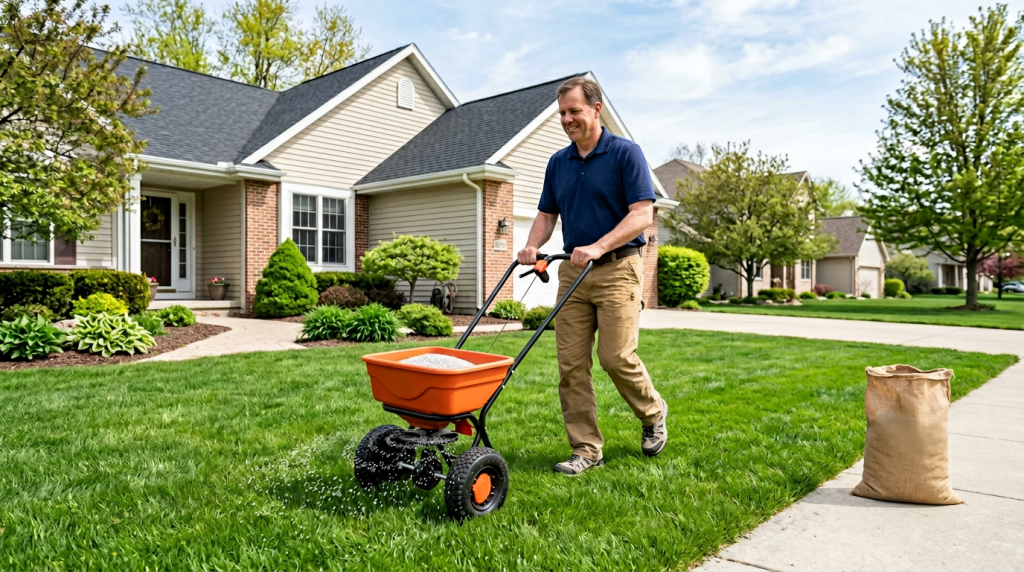
Basic safe application habits
- measure your lawn area before buying product
- use the spreader setting listed on the bag as a starting point
- apply evenly without heavy overlap
- keep fertilizer off sidewalks and driveways
- sweep up stray product instead of washing it into the street
- water in the product if the label says to
Even good timing can be wasted if the product is spread unevenly.
Safe DIY checks before you fertilize
Most homeowners can handle routine lawn fertilizing without much trouble if they slow down and check a few basics first.
Safe DIY checks include
- confirming the lawn is actually a cool-season lawn
- checking that the grass is actively growing
- reading the label for timing and spreader settings
- choosing a calm weather window
- making sure the lawn is not under heat or drought stress
- deciding whether a light spring feeding is really necessary
If you want the simplest route, a fall-first approach is usually the easiest and safest plan.
When to call a professional
Sometimes fertilizing is not the real issue.
It may be time for a pro when
- the lawn stays pale even after proper feeding
- the yard has major bare areas or repeated weed takeover
- drainage problems keep causing damage
- you are not sure whether the grass is cool-season or warm-season
- the lawn has possible disease problems
- you want a soil test and a more exact feeding plan
A professional can help if the lawn needs more than a simple seasonal fertilizer routine.
The Best Practical Spring Fertilizer Approach for Beginners
For most homeowners with cool-season grass, spring fertilizer should be used as a moderate supporting application rather than an aggressive feeding.
Wait until the lawn is actively growing, choose a fertilizer that fits the lawn’s needs, and follow the label rate instead of applying extra product for faster green-up.
If the lawn is already healthy and received adequate fertilizer the previous fall, it may need only a light spring application or none at all. Fall can still be an important feeding period, but spring fertilizer has a useful role when the lawn actually needs it.
If you are also deciding whether to loosen compacted soil in spring or wait until fall, read our guide on should you aerate a lawn in spring or fall.
Final Thoughts
Spring lawn fertilizer can be useful when a cool-season lawn is actively growing and needs additional nutrients, but an early or heavy application is usually unnecessary.
Choose a fertilizer that fits the lawn’s needs, follow the label rate, and avoid treating spring as the only important feeding season. A moderate spring application combined with proper mowing, watering, and fall lawn care is usually a better long-term approach than trying to force rapid spring green-up.