how long do washing machines last?
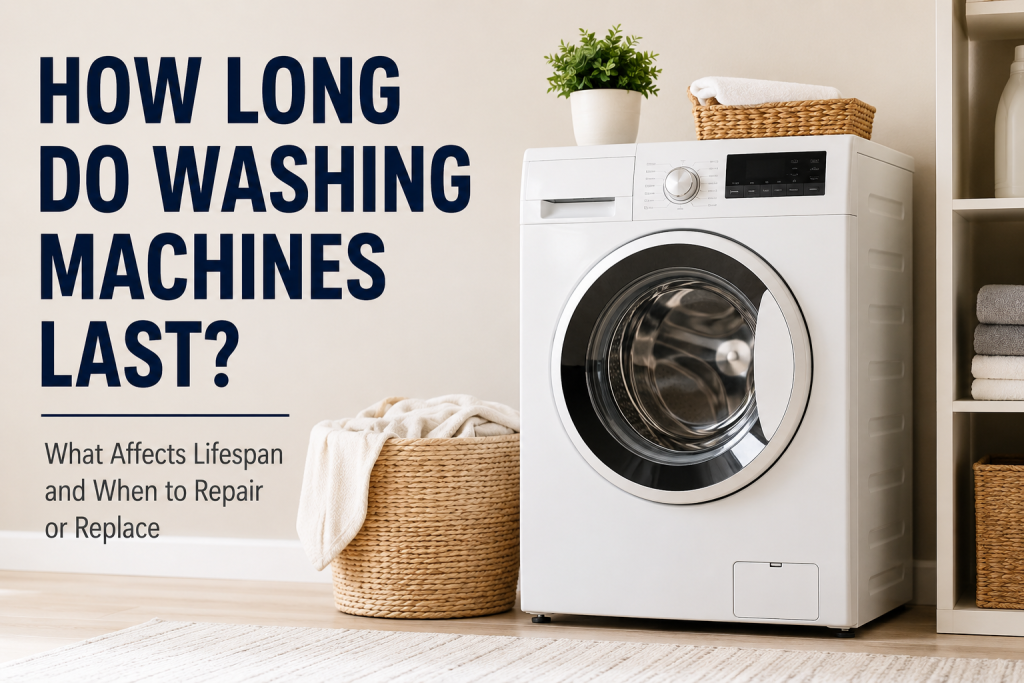
How long do washing machines last depends on more than the year they were purchased. There is no guaranteed lifespan: use, installation, maintenance, loading habits, water conditions, repair history, and washer design all affect how long a machine remains useful. Many washers may remain serviceable for roughly a decade or somewhat longer, but age alone should not determine whether you repair or replace one.
How Long Do Washing Machines Last on Average?
Many homeowners can use roughly a decade as a practical planning reference for washing machine service life, with some machines remaining useful longer and others failing sooner.
Actual lifespan varies according to:
- Frequency of use
- Typical load size
- Installation and leveling
- Detergent use
- Water conditions
- Routine maintenance
- Component quality
- Repair history
- Household usage patterns
Two washers of the same age can therefore have very different remaining usefulness.
Instead of treating a certain age as an expiration date, look at reliability, leaks, vibration, noise, performance, repair history, corrosion, and safety concerns. A dependable older washer may be worth keeping, while a newer machine with repeated major problems may not be.
Washing Machine Lifespan at a Glance
| Washer Condition | What It May Mean | Repair or Replace? |
|---|---|---|
| Newer washer with first minor problem | Likely isolated failure | Repair often makes sense |
| Midlife washer with one repair | Normal component wear may be manageable | Consider repair and overall condition |
| Older washer operating reliably | Age alone does not indicate failure | Keep using if safe and satisfactory |
| Older washer with repeated repairs | Reliability may be declining | Replacement becomes more reasonable |
| Recurring leak | Water damage risk may be increasing | Diagnose promptly; consider repair history |
| Persistent severe vibration | Could involve installation or internal wear | Diagnose before deciding |
| Major internal failure | Repair may be extensive | Compare repair scope with overall condition |
| Electrical or overheating symptoms | Potential safety issue | Stop use and arrange qualified evaluation |
The table is a decision guide, not a formula. One repairable problem does not automatically mean an older washer is finished.
What Affects How Long a Washing Machine Lasts?
Frequency of Use
A washer used every day accumulates operating cycles faster than one used a few times per week.
More use can increase wear on bearings, pumps, suspension parts, seals, drive components, and other moving parts depending on the design. That does not create a universal cycle-count lifespan, but usage matters alongside calendar age.
Load Size and Overloading
Regularly overloading a washer can place additional stress on components that support, move, and balance the load.
Depending on the machine, chronic overloading may contribute to suspension wear, vibration, bearing stress, or drive-system problems.
One oversized load does not automatically ruin a washer. The concern is repeated operation beyond the manufacturer’s intended capacity.
Installation and Leveling
A stable, properly installed washer generally operates with less unnecessary movement.
Important factors include:
- Proper leveling
- Secure water and drain connections
- Suitable flooring support
- Enough clearance for hoses and connections
Chronic rocking or severe vibration can increase stress on components and connections. Installation problems should be corrected before vibration is treated as proof that the washer is worn out.
Detergent Use
Too much detergent or detergent that is unsuitable for the washer can contribute to excessive suds, residue, odors, or poor performance.
Detergent use alone does not determine lifespan, but repeated oversudsing or buildup can create avoidable operating problems. Follow the washer and detergent manufacturer’s instructions rather than assuming more detergent improves cleaning.
Water Conditions
Mineral content and other household water conditions can contribute to buildup on parts that contact water.
The effect varies by home and washer. Hard water does not automatically mean a machine will fail early, but mineral buildup can be one factor affecting performance and maintenance needs.
Routine Maintenance
Basic upkeep can help keep small issues from becoming larger ones.
Depending on the washer, useful maintenance may include:
- Checking accessible supply hoses
- Cleaning dispensers
- Cleaning filters where applicable
- Keeping front-load gasket surfaces clean
- Using manufacturer-recommended cleaning cycles
- Addressing leaks promptly
Maintenance cannot guarantee a certain lifespan, but it can reduce avoidable problems.
Do Front-Load and Top-Load Washers Last Different Amounts of Time?
There is no reliable rule that one washer format always lasts longer than the other.
Front-load and top-load machines use different designs and may develop different wear patterns, but actual service life depends more on the individual model, component quality, installation, loading, maintenance, household use, and repair history.
For repair-versus-replace decisions, judge the washer in front of you rather than assuming its loading style determines how much life it has left.
Signs Your Washing Machine Is Aging Normally
Some wear is expected and does not automatically justify replacement.
Normal aging may include:
- Cosmetic scratches or faded markings
- Minor exterior rust spots that are not structurally significant
- A modest increase in operating noise without grinding or banging
- An isolated replaceable hose or gasket issue
- Occasional odor or residue related to maintenance
- A first repair after years of dependable operation
An older washer can remain worth keeping if it still fills, washes, drains, and spins reliably without recurring leaks or serious safety concerns.
Signs It May Be Time to Replace the Washing Machine
Replacement becomes more reasonable when problems develop into a pattern.
Warning signs can include:
- Repairs becoming frequent
- Recurring leaks
- Severe or worsening vibration
- Repeated filling or draining failures
- Major bearing or drive-system problems
- Significant cabinet corrosion or deterioration
- Repeated electrical problems
- Several unrelated failures occurring close together
- Persistent poor performance despite appropriate repairs
- Replacement parts becoming difficult to obtain
No single symptom automatically means the washer must be replaced. The decision becomes stronger when multiple problems combine with declining reliability or a major current repair.
When Repairing an Older Washer Still Makes Sense
An older washer may still be a good repair candidate when the current failure is isolated.
Repair may make sense when:
- This is the first meaningful repair.
- The failed part is reasonably straightforward to replace.
- The washer has otherwise been reliable.
- There is no severe corrosion.
- There are no recurring leaks.
- Replacement parts remain available.
- The washer performs well when functioning normally.
Avoid relying on a universal repair-cost cutoff.
Instead, compare the proposed repair with the washer’s age, overall condition, previous repairs, likely future reliability, replacement cost, and any installation changes a new machine would require.
For example, a washing machine not filling with water may have a straightforward supply, hose, valve, or control-related cause that should be diagnosed before age alone drives the replacement decision.
When Replacement Makes More Sense
Replacement deserves stronger consideration when another repair is unlikely to restore dependable service.
Examples include:
- Several repairs over a relatively short period
- Multiple developing problems
- Serious cabinet or structural corrosion
- A major internal failure on an already unreliable washer
- Recurring internal leaks
- Severe vibration linked to significant internal wear
- Electrical or overheating concerns
- Parts that are obsolete or unavailable
- Repeated failures despite previous repairs
Age can support the decision, but it should not make the decision by itself.
Should You Replace a Washing Machine Just Because It Is 10 Years Old?
No.
Ten years is a useful planning reference, not an automatic replacement deadline.
An older washer that fills, drains, spins, and operates reliably may remain worth using. If it has needed few repairs and has no serious leaks, corrosion, or safety problems, replacement based solely on age may be unnecessary.
Conversely, a newer washer with repeated major failures can sometimes be a worse repair candidate than an older machine with a dependable history.
Does a Washer Leak Mean It Should Be Replaced?
Not necessarily.
An accessible hose, seal, or gasket problem may be repairable without replacing the entire washer. The decision changes when leaks repeatedly return, originate internally, contribute to corrosion, or create a risk of damage to flooring or surrounding materials.
Repair history matters too. One isolated leak is different from repeated leaks combined with other failures.
If water is near the plug, receptacle, wiring, controls, or other electrical components, stop using the washer. Avoid wet or energized parts and isolate power safely when possible. Arrange for qualified service rather than continuing into internal diagnosis.
A washing machine leaking does not automatically mean the appliance is worn out, because hoses, drain connections, detergent issues, or other repairable causes may be responsible.
Does Severe Vibration Mean the Washer Is Worn Out?
Severe vibration can indicate a problem, but it does not automatically mean replacement is necessary.
Possible causes include:
- Uneven loading
- Improper leveling
- Unstable flooring
- Installation problems
- Internal suspension wear
- Bearing or other mechanical problems
Accessible loading and leveling issues should be ruled out first.
Persistent severe vibration becomes more concerning when it continues despite basic corrections, produces abnormal grinding or banging, or accompanies repeated service needs. At that point, professional diagnosis can help determine whether repair remains worthwhile.
Do not remove the cabinet or attempt internal suspension or bearing repairs as part of a beginner evaluation.
How Repair History Changes the Decision
Repair history often reveals more than one repair bill.
A washer needing one hose, latch, or other replaceable component after years of dependable use is different from a machine that has required several unrelated major repairs within a short period.
Consider:
- What has failed before
- How recently repairs occurred
- Whether the same problem returned
- Whether unrelated failures followed
- Whether normal performance was fully restored
A long history of reliable operation supports repairing an isolated problem. Repeated major failures suggest that another repair may only postpone the next issue.
What About Energy and Water Efficiency?
Efficiency can be part of the decision, but it does not automatically justify replacing a functioning washer.
Newer machines may differ in water and energy use, but actual savings depend on the specific models, selected cycles, household usage, and local utility rates.
Do not assume a new washer will generate enough savings to quickly recover its purchase and installation cost.
If efficiency matters, compare published specifications for your existing washer and the replacement models you are considering. Treat efficiency as one factor alongside reliability, performance, repair needs, and replacement cost.
Questions to Ask Before Repairing or Replacing a Washer
Before deciding, evaluate the washer as a whole:
- How old is it?
- Is this the first major problem?
- Has it generally been reliable?
- Does it leak?
- Does it have severe vibration or abnormal noise?
- Does it fill and drain normally when functioning?
- Is the current repair isolated or part of a pattern?
- Are replacement parts still available?
- Is there meaningful corrosion?
- Are there electrical or overheating symptoms?
- Would replacement require plumbing, electrical, flooring, or space changes?
- Are you satisfied with the washer when it works?
If most answers describe a dependable machine with one repairable problem, repair may remain reasonable. Multiple failures, safety concerns, or continued unreliability strengthen the case for replacement.
When Professional Evaluation Makes Sense
Professional diagnosis can be especially useful when a major repair may determine whether you keep or replace the washer.
Arrange appliance service when:
- Internal electrical diagnosis is required.
- A motor, pump, bearing, drive system, sensor, wiring, or control problem is suspected.
- Internal leaks repeatedly occur.
- Severe vibration continues after basic loading and leveling checks.
- The washer requires significant movement or disassembly.
- You need a repair estimate before making the decision.
Stop using the washer if you notice burning odors, sparking, arcing, damaged wiring, serious overheating, repeated breaker trips, or water near electrical components.
Do not attempt live electrical troubleshooting, energized testing, control-board work, safety-switch bypassing, powered pump or motor testing, internal wiring repair, or major washer disassembly.
Common Washing Machine Replacement Mistakes
Avoid these common decision errors:
- Replacing a washer based only on age
- Repeatedly repairing it without considering the failure pattern
- Assuming one hose leak means the washer is finished
- Ignoring severe or worsening vibration
- Ignoring electrical warning signs
- Buying a replacement without measuring the available space
- Overlooking door clearance or hookup requirements
- Assuming a newer machine will automatically cost dramatically less to operate
- Making the entire decision based on one repair estimate
How Long Do Washing Machines Last FAQ
How long do washing machines last?
When homeowners ask how long do washing machines last, roughly a decade or somewhat longer can be a useful planning reference, but it is not a guarantee. Actual service life varies with use, installation, loading habits, maintenance, water conditions, washer design, repair history, and overall condition.
Is a 10-year-old washing machine worth repairing?
It can be. If the washer has been dependable, the problem is isolated, parts remain available, and there are no serious leaks, corrosion, or electrical concerns, repair may still make sense. Repeated major failures make replacement more reasonable.
What are signs a washer is wearing out?
Look for a developing pattern. Frequent repairs, recurring leaks, persistent severe vibration, abnormal mechanical noise, repeated fill or drain problems, significant corrosion, or several failures close together can indicate declining reliability.
Does a leaking washer need to be replaced?
Not always. An accessible hose, seal, or gasket problem may be repairable. Recurring internal leaks, corrosion, water-damage risk, or leaking combined with other major failures make replacement a stronger consideration.
Can maintenance help a washing machine last longer?
Maintenance may help prevent avoidable problems and support reliable operation, but it cannot guarantee a particular lifespan. Proper loading, appropriate detergent, accessible cleaning, hose checks, and prompt attention to leaks can all help keep a washer working as intended.
Final Thoughts
There is no single answer to how long do washing machines last because age is only one repair-versus-replace factor. A washer around a decade old may still be worth keeping when it remains reliable, safe, and effective.
Give greater weight to repair history, leaks, vibration, performance, corrosion, parts availability, and safety concerns than to age alone. One isolated repair can make sense, while repeated major failures may indicate that replacement is the more practical next step.