
how to clean a bathroom sink without damaging the finish
How to clean bathroom sink surfaces safely depends on the basin material and finish. Start by identifying what the sink is made from, then use a compatible mild cleaner and a soft cloth or sponge. Rinse away cleaner as directed and dry accessible surfaces afterward. Treat mineral deposits or stubborn stains separately rather than reaching immediately for vinegar, bleach, abrasives, or another strong cleaner.
A glossy white sink is not necessarily ceramic. Vitreous china, enameled metal, acrylic, cultured marble, solid surface, and natural stone can look similar while requiring different care.
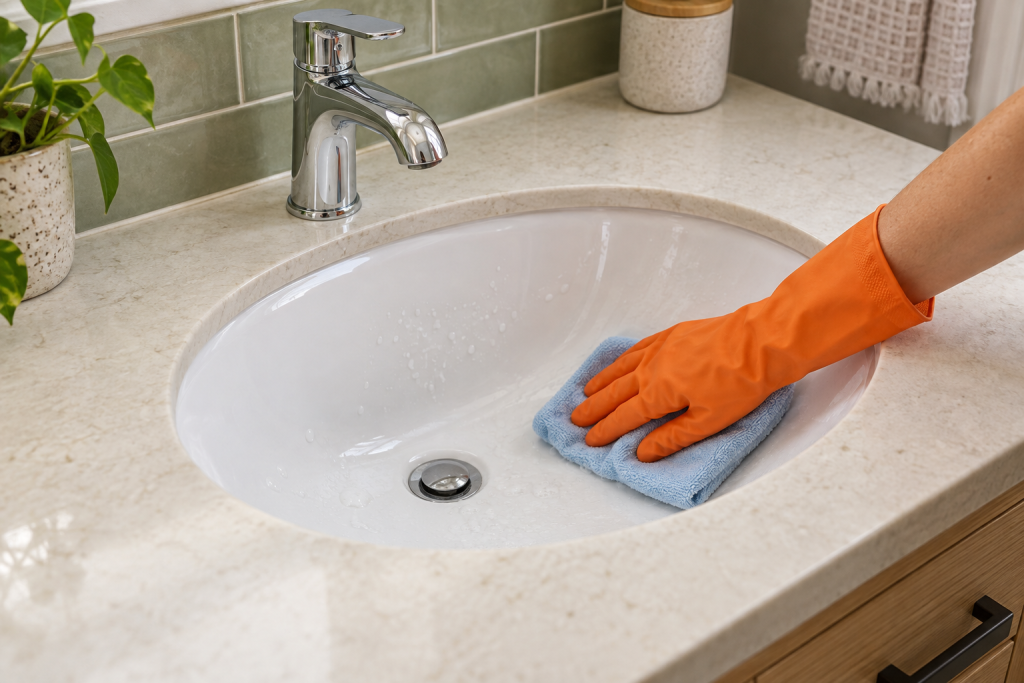
Identify the Sink Material Before Cleaning
If you still have the product paperwork, purchase record, model number, or manufacturer information, use that to identify the sink and finish. This is more reliable than guessing from color or appearance.
Common bathroom sink materials include:
- Vitreous china or ceramic: A fired, glazed surface common on pedestal, wall-mounted, vessel, and vanity sinks.
- Enameled metal: A metal basin, often cast iron, covered by a fired enamel surface.
- Acrylic or acrylic solid surface: Resin-based materials whose acceptable cleaning methods can depend heavily on the particular finish.
- Cultured marble: A manufactured material commonly protected by a gelcoat or similar surface finish.
- Solid surface: A homogeneous resin-and-mineral material that is different from gel-coated cultured marble.
- Natural stone: Materials such as granite or marble that can react differently to acids and stain treatments.
Glass and other specialty sinks also have their own care instructions. If the sink has a decorative coating, metallic finish, unusual texture, or unknown material, stay with the gentlest documented care until you can identify it.
A spot test is useful for an otherwise approved cleaner, but it does not make a prohibited product safe. If the manufacturer says not to use an acid, abrasive, solvent, or bleach product, an inconspicuous test does not override that restriction.
Bathroom Sink Material-Care Comparison
| Sink surface | Good routine starting point | Important caution |
|---|---|---|
| Vitreous china/ceramic | Soft cloth or sponge and compatible mild cleaner | Avoid damaging abrasives and metal tools |
| Enameled metal | Approved cleaner with a soft cloth or sponge | Abrasives can dull or scratch enamel |
| Acrylic/resin | Damp cloth and mild compatible cleaner | Finish-specific rules vary |
| Cultured marble | Soap and water on many glossy gelcoat finishes | Aggressive scrubbing can damage the wear surface |
| Solid surface | Soapy water or approved solid-surface cleaner | Matte and gloss finishes may require different care |
| Natural stone | Stone-compatible, nonacidic cleaner | Acids can etch some stone |
This table is a starting point, not a substitute for the exact sink manufacturer’s instructions. Even within one material category, finish and formulation can change what is permitted.
Supplies for Routine Sink Cleaning
For most routine cleaning, keep the kit simple:
- Soft microfiber or other nonabrasive cloths
- A soft sponge approved for the surface
- Warm water
- A mild detergent or cleaner approved for the sink material
- A small soft cloth for drain-trim and overflow edges
- Gloves when required by the cleaner label
- A dry cloth for finishing
You usually do not need a strong disinfectant for everyday toothpaste, soap residue, cosmetics, or ordinary dirt. Routine cleaning and disinfection are different tasks.
Never mix cleaning products. In particular, do not combine bleach with ammonia, vinegar, or other acids. Do not mix drain cleaners with other products, and do not apply one cleaner over residue from another. If you change products, follow both labels for rinsing, ventilation, protective equipment, and separation.
Also protect the materials around the basin. A cleaner approved for a sink may not be safe for a stone countertop, metal drain finish, sealant joint, painted vanity, or nearby faucet coating.
How to Clean Bathroom Sink Surfaces Step by Step
- Clear the basin and identify the cleaning limits. Remove toothbrushes, soap containers, cosmetics, jewelry, and other items from the sink area. Confirm the basin material and finish if possible, then read the applicable care instructions. Note whether the drain trim, countertop, sealant, or other adjacent surfaces require a different cleaner.
- Rinse or wipe away loose soil first. Remove loose toothpaste, hair, dust, and other debris with water or a damp soft cloth. Starting with loose material reduces the amount of rubbing needed later and keeps grit from being dragged across a finish that may scratch.
- Apply the compatible routine cleaner gently. Use the amount and application method specified for the cleaner and sink surface. For many materials, a mild detergent on a damp cloth or sponge is enough for ordinary soap residue and cosmetics. Avoid automatically substituting abrasive powder, baking soda scrubbing, melamine foam, vinegar, bleach, solvent, or descaler because those methods are not compatible with every finish.
- Work across the basin without aggressive scrubbing. Wipe the bottom, sides, rim, and accessible ledges with light pressure. Give extra attention to areas where toothpaste or soap dries, but allow the approved cleaner to do the work rather than attacking the spot with a metal scraper or abrasive pad. If the finish begins to look duller, rougher, lighter, or otherwise changed, stop.
- Clean accessible drain-trim and overflow surfaces carefully. Wipe around the visible drain flange and the accessible face or edge of the overflow opening with a soft cloth and a cleaner compatible with those finishes. Do not scrape coated drain trim with metal tools, pour cleaner into the overflow opening, force a brush deep inside it, or dismantle drain components as part of routine surface cleaning.
- Rinse away the cleaner as directed. Remove cleaning residue with clean water or a damp cloth according to the product instructions. Pay attention to the edge where the basin meets the countertop and other places where cleaner can collect. Prevent runoff from sitting on natural stone, sealant, plated drain parts, cabinet finishes, or other materials that may have different chemical tolerances.
- Dry the accessible surfaces. Use a clean, soft cloth to dry the basin, rim, drain-trim area, and other compatible surfaces. Drying can reduce water spots and the film left when mineral-containing water evaporates. A quick wipe after routine use can also reduce how often heavier buildup needs attention.
That basic process is the safest way to approach cleaning bathroom sink surfaces when the basin is in normal condition. If something remains after routine cleaning, identify the residue before making the method stronger.
What to Do About Mineral Deposits and Stubborn Stains
Treat remaining buildup as a separate cleaning problem rather than repeating routine cleaning with increasing force.
Mineral Deposits
White or chalky buildup around the basin or drain area may be mineral residue from evaporating water. Use a mineral-removal treatment only when the sink manufacturer approves it for that surface.
Do not treat vinegar as a universal bathroom-sink descaler. Acids can dull or etch calcareous natural stones such as marble, and other manufactured surfaces or nearby metal finishes may also restrict acidic cleaners.
A commercial limescale remover is not automatically safer. Check both the sink care instructions and the cleaner label for material compatibility, application method, contact time, and rinsing requirements.
Stains and Discoloration
First decide whether you are looking at removable soil or actual finish damage.
Vitreous china and enameled sinks may have manufacturer-approved products for particular marks or stains. Acrylic solid surfaces may permit different stain-removal methods depending on whether the finish is matte, satin, or glossy. Cultured marble can have a gelcoat wear layer that should not be aggressively abraded simply because discoloration remains.
Solid surface and cultured marble are especially easy to confuse. Some solid-surface manufacturers permit controlled abrasive cleaning on specified matte finishes because the material is homogeneous. A glossy gel-coated cultured-marble surface can require much gentler treatment because the visible finish is a comparatively thin wear layer.
Natural stone presents another distinction. What looks like a stain may actually be etching or another change to the stone surface. If ordinary compatible cleaning does not remove the mark, use guidance for that specific stone rather than escalating to acids, abrasive powders, or a generic stain remover.
Stop attempting stronger cleaning when the surface is:
- Chipped or cracked
- Peeling or delaminating
- Permanently rough or etched
- Losing its coating or gloss
- Persistently discolored after approved cleaning
- Damaged around the drain or basin edge
Those conditions may require finish assessment or repair rather than another cleaner. This guide does not cover refinishing or structural sink repairs.
Protect the Drain, Countertop, and Nearby Finishes
Bathroom sinks bring several materials together in a small area. The basin may be vitreous china while the drain is plated metal, the counter is natural stone, and the joint between them contains sealant.
Keep stronger cleaners confined to the surface for which they are approved. Applying a descaler across the whole sink can expose drain finishes and countertop edges unnecessarily.
Faucets deserve the same restraint. A damp soft cloth is often enough for everyday splashes, but faucet finishes have their own cleaning restrictions. Keep this cleaning routine focused on the basin and use the faucet manufacturer’s instructions if buildup remains on the fixture itself.
If cleaner accidentally reaches an incompatible neighboring surface, follow that product’s instructions for removal rather than adding a second chemical in an attempt to neutralize it.
Our guide to types of bathroom sinks explains how mounting style affects cleaning access around rims, bases, and exposed plumbing.
How Often Should You Clean a Bathroom Sink?
Use the condition of the sink and the manufacturer’s care guidance rather than one mandatory schedule.
A bathroom used by several people may need routine wiping more frequently than a lightly used guest bath. Hard-water spotting, toothpaste residue, makeup, shaving products, and soap can also make more frequent attention useful.
Consider cleaning when:
- Toothpaste or soap residue becomes visible.
- Cosmetics or grooming products are left on the basin.
- Water spots begin accumulating.
- Drain-trim edges collect visible residue.
- The manufacturer recommends recurring care for the finish.
Removing ordinary residue while it is still easy to wipe away can reduce the temptation to use aggressive cleaning later. Drying persistent splashes around the basin can also help limit mineral spotting.
Use our bathroom cleaning checklist to fit sink care into your routine for the rest of the room.
Frequently Asked Questions
Can I use vinegar on a bathroom sink?
Only when the sink and surrounding materials are confirmed as compatible; vinegar contains acid and can etch some natural stone. Other finishes, drain components, sealants, or countertops may also have restrictions. Check the exact care instructions instead of assuming vinegar is safe because the basin looks like ceramic.
Is baking soda safe for every bathroom sink?
No. Baking soda is often promoted as a mild household cleaner, but any abrasive action can affect certain glossy, coated, polished, or specialty finishes. Use an abrasive treatment only when the manufacturer permits it for the actual sink surface and finish.
Should I use bleach to disinfect my bathroom sink?
Routine sink cleaning does not automatically require disinfection. If disinfection is needed for a particular reason, first confirm that the disinfectant is compatible with the basin and nearby finishes, then follow its label. Never mix bleach or another disinfectant with other cleaners.
Why does my sink still look stained after cleaning?
The mark may not be removable soil. Etching, scratches, worn gelcoat, damaged enamel, discoloration, or another surface change can remain after the sink is clean. If approved cleaning does not change the mark, stop using stronger chemicals or abrasives and determine whether the finish itself is damaged.
Final Thoughts
Knowing how to clean bathroom sink surfaces without causing damage starts with identifying the material. Use a compatible mild cleaner for everyday residue, work with soft tools, rinse as directed, and dry the accessible surface before mineral deposits and stains become difficult to manage.
When ordinary cleaning does not remove a mark, identify the material and the type of buildup before escalating. The safest method for vitreous china may be wrong for natural stone, cultured marble, acrylic, or another finish, and surface damage cannot be cleaned away.