patchy paint: causes and how to fix an uneven finish
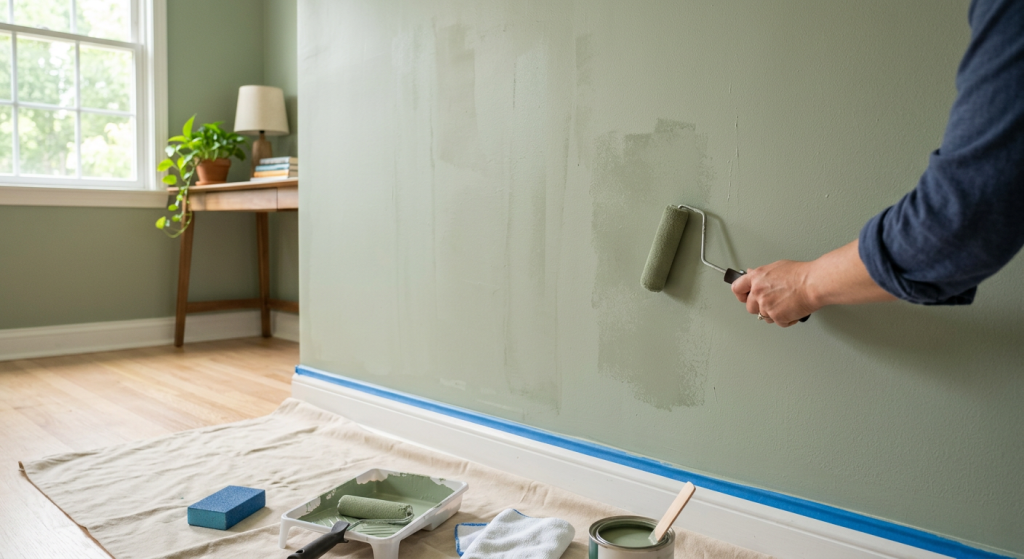
Patchy paint after drying does not always mean the wall simply needs another coat. Thin coverage may improve with one more uniform coat, but roller marks, porous repairs, stains, rough patches, contamination, or uneven absorption need different corrections. Let the paint dry as directed, inspect the wall in normal lighting, identify what is causing the uneven appearance, and fix that problem before repainting.
| What you see | Likely cause | Best next step |
|---|---|---|
| Thin or see-through areas | Uneven or insufficient coverage | Apply another uniform coat if the surface is sound |
| Roller or lap marks | Application problem | Correct technique on the next coat |
| Uneven sheen | Application or absorption differences | Identify whether the issue is paint or substrate |
| Drywall patch showing through | Porous or differently prepared repair | Prime appropriately before repainting |
| Stain bleeding through | Stain migrating through finish paint | Use an appropriate stain-blocking approach |
| Rough or raised patch | Surface defect | Smooth the repair before painting |
| Dark or light areas | Coverage, absorption, or other finish variation | Diagnose before adding more paint |
The key is not to keep adding paint blindly. First determine whether you are looking at a paint-coverage problem, an application problem, or a defect in the surface underneath.
Why Does Paint Look Patchy After It Dries?
A painted wall can look inconsistent for several reasons that produce similar symptoms from across the room.
One section may have less paint than another. A roller may have left visible patterns. A drywall repair may absorb finish paint differently from the surrounding wall. A stain can migrate through the coating, or a ridge underneath the paint can catch light and make the area look different.
These problems do not all have the same solution.
Before deciding what to do, allow the coating to dry according to its instructions. Then look at the wall in normal room lighting and from several angles. This makes it easier to separate color or coverage differences from physical texture and sheen changes.
Thin or Uneven Coverage
Sometimes patchiness really does mean the wall needs another coat.
Thin areas can occur when too little paint is loaded onto the roller, the paint is stretched too far, coverage varies across the wall, or sections receive inconsistent attention during application.
Stopping and restarting can also contribute to an uneven appearance, especially when different areas are worked under different conditions.
If the wall is smooth, clean, sound, and uniformly prepared—and the only problem is inadequate coverage—another properly applied coat may correct the finish.
The important distinction is that the additional coat is solving a coverage problem. It will not correct a ridge, stain, loose coating, or poorly prepared patch underneath.
Roller Marks and Lap Marks
Visible roller patterns can make a wall appear streaky or patchy even when the paint color itself is consistent.
Common contributors include uneven roller pressure, inconsistent loading, repeatedly working the same area, and rolling back into paint that has already begun to set.
Losing the wet edge can also leave visible transitions between sections.
Avoid trying to correct partially drying paint by repeatedly rolling over it. Once the coating has started setting, additional passes can make the texture or sheen less uniform.
After the paint has dried as directed, determine whether the marks are purely application-related or whether there is also a physical ridge or surface defect that needs smoothing.
Uneven Sheen
Patchiness can also appear as a difference in reflectivity rather than color.
Different paint thicknesses, application methods, localized touch-ups, and differences in surface absorption can all make one area reflect light differently from another.
A repaired section can be particularly noticeable if the underlying patching material absorbs paint differently from the previously painted wall. This type of visible repair can overlap with flashing.
For a closer look at absorption and sheen differences around repaired areas, see Paint Flashing: Causes and How to Fix It.
Do not assume that every shiny or dull spot needs more finish paint. First determine whether the difference comes from the coating application or from the surface underneath.
Unprimed or Porous Drywall Repairs
Drywall compound and spackle can behave differently under finish paint than an already painted wall.
A repair may look perfectly smooth before painting but stand out afterward because the patched area absorbs the finish differently. That difference can affect how the color and sheen appear under room lighting.
An appropriate primer can help create a more consistent surface before the finish coat.
If a drywall patch is smooth and sound but remains visually obvious because of surface absorption, primer may be part of the correction. For more detailed primer selection guidance, see Best Primer for Drywall: New and Patched Surfaces.
Primer is not a substitute for proper finishing. If the patch has ridges, rough sanding marks, or raised edges, correct those defects first.
Stains Bleeding Through
A discolored spot that returns through new paint may not be a simple coverage problem.
Some stains can migrate or remain visible through ordinary finish paint. Adding repeated coats of the same paint may reduce the appearance temporarily without reliably isolating the stain.
Before treating the area, determine whether the discoloration is old and dry or evidence of an active problem.
If moisture is contributing to the stain, identify and correct the source before coating the wall. Do not seal active moisture behind primer and paint.
Once the substrate is dry and sound, use an appropriate stain-blocking approach for the specific condition and follow the product instructions.
Rough Patches and Surface Defects
Paint does not reliably hide physical imperfections in a wall.
Ridges, raised patch edges, rough sanding, dents, uneven texture, and poorly feathered repairs can become more obvious after painting because light catches the surface differently.
Another finish coat will generally reproduce the same underlying shape.
Run your hand lightly over the dry surface and inspect it from an angle. If the problem can be felt as well as seen, additional surface preparation is likely needed before repainting.
How to Fix Patchy Paint After It Dries
Do not begin by automatically opening the paint can. Diagnose the finish first, then perform only the correction the wall actually needs.
If older painted surfaces may contain lead-based paint, do not use uncontrolled sanding or other methods that create suspect paint dust. Determine an appropriate lead-safe approach before disturbing the coating.
Step 1: Let the paint fully dry
Allow the coating to dry according to its label before judging the final appearance.
Paint can change as it dries, and evaluating it too early can lead to unnecessary touch-ups or additional coats.
Do not use one universal waiting period for every paint. Product formulation, temperature, humidity, ventilation, and application conditions can affect drying.
Step 2: Inspect the wall in normal lighting
Look at the wall under the lighting normally used in the room. Then view it from several angles.
Try to identify what is actually different.
Is the old color showing through? Can you see roller patterns? Does a repaired area have a different sheen? Is there a physical ridge? Is discoloration coming through the new coating?
Separating those symptoms prevents you from treating every patchy appearance as insufficient paint coverage.
Step 3: Correct the underlying problem
Make the correction that matches what you found.
A raised drywall patch may need to be smoothed. A porous repair may need appropriate primer. Surface contamination may need cleaning. A persistent stain may require a suitable stain-blocking treatment after its source has been addressed.
If the coating itself is loose or peeling, stop treating the wall as a simple patchy-finish problem. Loose paint requires an adhesion repair rather than another cosmetic coat.
Likewise, soft drywall, moisture staining, or deterioration needs investigation before repainting.
Step 4: Prime where needed
Primer can help when the prepared surface has exposed or porous drywall, patching material, a properly addressed stain, or another condition requiring a suitable base for finish paint.
That does not mean every patchy wall needs to be completely primed.
Use primer where the substrate and coating system require it, and follow its instructions for preparation, application, ventilation, drying, and recoating.
Do not apply primer over damp drywall or expect it to conceal an unresolved physical defect.
Step 5: Apply the next coat correctly
Once the surface is sound, smooth, clean, dry, and appropriately primed, apply the finish paint according to its instructions.
Load the roller consistently rather than trying to stretch a small amount of paint over too much wall. Use even pressure and an appropriate roller nap for the surface and coating.
Work in a way that maintains a wet edge and provides uniform coverage. Avoid repeatedly rolling into sections that have already started drying.
Allow the coat to dry as directed before deciding whether further work is needed.
When Another Coat of Paint Is Enough
Another uniform coat can be a reasonable solution when the wall itself is already properly prepared.
Look for these conditions:
- The surface is smooth and sound
- Existing paint is securely bonded
- There are no active stains
- Drywall repairs are properly prepared
- There is no unresolved moisture
- The problem is primarily thin or inconsistent coverage
In that situation, the next coat should focus on uniform application rather than spot-correcting every lighter area individually.
Consistent roller loading, pressure, coverage, and wet-edge control can help produce a more uniform finish.
When More Preparation Is Needed
Stop adding finish paint when the defect exists below the finish coat.
More preparation may be necessary when you find:
- Raised or rough patching
- Noticeable patch edges
- Porous drywall compound
- Grease, dust, or other contamination
- Persistent stain bleed
- Loose or peeling paint
- Soft or damaged drywall
- Moisture staining or dampness
- Uneven physical texture
Correct those conditions before applying another finish coat.
This distinction can save considerable time and paint. Recoating a defective surface may make it look better temporarily, but the underlying ridge, stain, absorption difference, or adhesion problem remains.
Common Patchy Paint Mistakes
Applying another coat without diagnosing the problem: Extra paint helps thin coverage but does not correct every uneven finish.
Overworking drying paint: Repeatedly rolling through paint that has begun to set can create visible application differences.
Rolling into partially dried sections: Losing the wet edge can contribute to lap marks and inconsistent texture.
Skipping primer on porous repairs: Drywall compound can absorb finish paint differently from the surrounding painted wall.
Expecting paint to hide surface defects: Ridges, dents, rough sanding, and raised patch edges should be corrected before the finish coat.
Using excessive roller pressure: Pressing harder is not a substitute for keeping the roller appropriately loaded and applying paint consistently.
Judging the wall too early: Let the paint dry according to its instructions before deciding whether the finished appearance is acceptable.
Repainting over moisture problems: Dampness, staining, soft drywall, or recurring moisture needs investigation before additional coating.
Ignoring loose paint: A patchy appearance caused by failing adhesion is not solved by covering the loose coating with another layer.
Final Thoughts
Patchy paint is a symptom, not a single paint problem. Thin coverage may need another uniform coat, while roller marks require better application, porous drywall repairs may need primer, stains may need appropriate blocking, and rough patches need surface correction.
Let the finish dry before evaluating it, inspect the wall in normal lighting from several angles, and identify whether the problem is coverage, sheen, texture, absorption, staining, or the substrate itself. Correct that cause first, then apply the next coating only after the wall is sound, smooth, clean, dry, and properly prepared.