
Outlet Crackling Noise: When to Call an Electrician
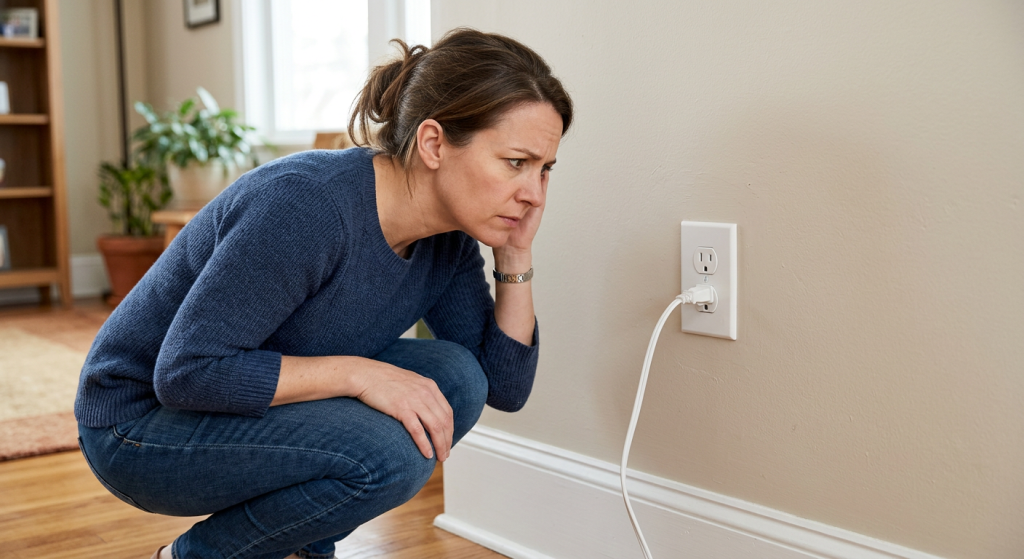
An outlet crackling noise is not normal and can indicate arcing, worn receptacle contacts, a loose electrical connection, damaged wiring, or another electrical fault. If you have an outlet making a crackling noise, stop using it, do not keep plugging devices in to reproduce the sound, and do not open the receptacle. If the crackling appears to come from the outlet or wall, have it professionally evaluated.
| What you notice | What it may mean | What to do |
|---|---|---|
| Crackling only with one device | Plug, cord, adapter, or device problem | Remove the device from service if safe |
| Crackling continues with other devices | Receptacle or connection problem | Stop using the outlet |
| Crackling plus heat | Overheating connection or arcing | Leave the outlet unused |
| Crackling plus burning smell | Electrical overheating or damage | Stop using the outlet |
| Crackling plus sparks | Possible active arcing | Stop troubleshooting |
| Plug fits loosely | Worn receptacle contacts | Leave the receptacle unused |
| Breaker or GFCI trips | Electrical fault may be present | Do not repeatedly reset it |
| Sound is steady buzzing or humming | Different outlet-noise symptom | Troubleshoot buzzing separately |
Safety First: Know When to Stop
Stop homeowner troubleshooting if you notice a burning smell, smoke, sparks, popping, snapping, unusual heat, discoloration, melted plastic, visible outlet damage, a loose outlet body, a damaged plug or cord, moisture, or repeated breaker or GFCI trips.
Keep all checks external. Do not remove the outlet cover, pull the receptacle from the electrical box, touch terminals or wiring, tighten outlet screws or electrical connections, inspect wiring behind the receptacle, perform live-voltage testing, replace the receptacle, open the electrical panel, replace a breaker, or bypass GFCI protection.
Do not repeatedly connect equipment to reproduce the noise, and do not place your ear close to the outlet to pinpoint the sound.
1. Stop Using the Outlet
When an outlet begins crackling, stop using the affected receptacle.
If a device is plugged in, turn it off using its normal control if you can do so safely. You may unplug it normally only if the plug, outlet, and surrounding area are cool, dry, visibly undamaged, and not sparking or smoking.
If the plug or receptacle is hot, melted, smoking, sparking, or visibly damaged, do not touch it. Leave the equipment alone and arrange professional help.
Once the device has been safely disconnected, keep the outlet unused. Crackling from the receptacle itself is not something to monitor through continued use.
2. Confirm Whether the Sound Comes From the Outlet or the Device
The next useful distinction is whether the sound seems to come from the outlet or from something plugged into it.
From a normal, safe position, consider whether the crackling appears to come from:
- The receptacle
- The plug
- A charger
- A power adapter
- An appliance
- A power strip
If one particular device clearly produces the sound and the outlet otherwise appears normal, the device, plug, cord, or adapter may be involved.
Do not reconnect a suspect device repeatedly to confirm the noise.
If the crackling continues after the device has been removed, or the sound appears to originate inside the receptacle or wall, stop there. Determining the cause requires electrical diagnosis beyond safe external homeowner checks.
3. Inspect the Plug and Cord Externally
Once the device is disconnected and safe to handle, inspect only the accessible exterior.
Look for:
- Scorched plug blades
- Melted or softened plastic
- Brown or black discoloration
- Damaged cord insulation
- A cracked plug body
- Bent blades
- Signs of overheating
Damaged equipment should remain out of service.
Do not repair plugs, splice damaged cords, open adapters, or attempt other electrical repairs as part of this troubleshooting.
A damaged device may explain the sound, but it does not prove the receptacle itself is unaffected. If the outlet also shows heat, discoloration, looseness, or other warning signs, leave it unused.
4. Check Whether the Plug Fits Loosely
A plug that feels unusually loose can indicate worn receptacle contacts.
Possible clues include:
- A plug falls out easily.
- A plug feels much looser than it does in other outlets.
- Several known-good plugs fit loosely in the same receptacle.
- The receptacle face is cracked or visibly damaged.
Worn contacts can create an unreliable electrical connection and may contribute to heat or arcing.
Do not deliberately wiggle an energized plug to make the noise happen again. Do not bend plug blades to make them fit tighter, and do not attempt to adjust the receptacle’s internal contacts.
If several normal plugs fit loosely in the same outlet, stop using it and have it evaluated.
5. What Can Cause Outlet Crackling Noise?
Several electrical problems can cause a crackling electrical outlet, including:
- Worn receptacle contacts
- A loose electrical connection
- Electrical arcing
- A damaged receptacle
- Damaged wiring
- An overheating connection
- A fault in the connected device
These conditions can sound similar from outside the outlet, so the noise alone cannot identify the exact failed component.
Arcing can occur when current crosses an unstable or unintended gap. A loose or deteriorated connection can also produce heat and intermittent electrical contact.
The important homeowner takeaway is that these causes cannot be reliably distinguished without opening electrical equipment. Do not remove the receptacle or attempt to locate and tighten wiring.
If the outlet crackling appears to come from inside the receptacle or wall, professional diagnosis is the appropriate next step.
6. Crackling With Heat, Burning Smell, or Discoloration
Crackling becomes more concerning when it occurs with signs of overheating.
Watch for:
- Unusual warmth or heat
- A burning odor
- Brown or black scorch marks
- Melted plastic
- Discoloration around the receptacle or plug
These symptoms can indicate overheating, deteriorated electrical contact, or arcing.
If you notice a burning smell from the outlet, stop using the receptacle rather than reconnecting equipment to see whether the odor returns.
Do not touch the outlet simply to determine how warm it is. Visible damage, an abnormal odor, or obvious heat is already enough reason to leave it unused.
7. Crackling With Sparks or Breaker Trips
Crackling accompanied by visible sparks is not ordinary receptacle operation.
The same applies when a breaker or GFCI trips while the outlet or connected equipment is making snapping, popping, or crackling sounds.
Leave the affected outlet and equipment unused.
Do not repeatedly reset the breaker or GFCI, and do not reconnect the device to see whether the problem happens again. A protective device may be responding to an electrical fault, and restoring power repeatedly does not correct that condition.
If active sparking, smoke, or rapidly worsening electrical danger develops, move away from the affected area and address the immediate hazard rather than continuing troubleshooting.
8. Crackling vs. Buzzing: Keep the Symptoms Separate
Crackling, snapping, or popping is usually intermittent. Those sounds can point more strongly toward arcing, unstable electrical contact, or another connection problem.
Buzzing or humming is generally a more continuous tone and has a different troubleshooting path. The sound may come from a charger, adapter, electronic device, or the receptacle itself.
If your symptom is better described as a steady hum rather than intermittent snaps or pops, see the separate guide to an outlet making buzzing noise.
Do not keep using an outlet simply because you are unsure how to describe the sound. Either symptom becomes more concerning when combined with heat, burning odors, sparks, discoloration, or visible damage.
9. When to Call an Electrician
Have a qualified electrician evaluate the problem when the crackling appears to come from the receptacle or wall, or when it continues after a suspect device has been removed.
Professional evaluation is also appropriate when:
- Plugs fit loosely.
- The outlet feels unusually warm or hot.
- A burning smell is present.
- Discoloration or melting appears.
- Sparks occur.
- A breaker or GFCI trips.
- The outlet body is loose or damaged.
- Further diagnosis would require opening electrical equipment.
An electrician can determine whether the problem involves worn receptacle contacts, a loose connection, damaged wiring, arcing, or another electrical fault without relying on repeated plug-in tests.
Final Thoughts
An outlet crackling noise should be treated as a warning, not a normal operating sound. Stop using the receptacle, safely disconnect a connected device only when the area is cool and undamaged, and keep your inspection limited to the exterior of the plug, cord, and outlet.
If the crackling remains at the receptacle or appears with loose plug fit, heat, burning odors, discoloration, sparks, or protective-device trips, leave the outlet unused and have it evaluated by a qualified electrician.