
Paint Flashing: causes and how to fix it
Paint flashing is an uneven difference in sheen or light reflection that makes part of a painted wall look duller, shinier, or more noticeable than the surrounding area. It often occurs when a porous drywall patch absorbs paint unevenly, but mismatched paint sheen, inconsistent priming, and uneven application can also cause it. To fix flashing, identify the cause, correct any surface defects, prime where needed, and repaint evenly.
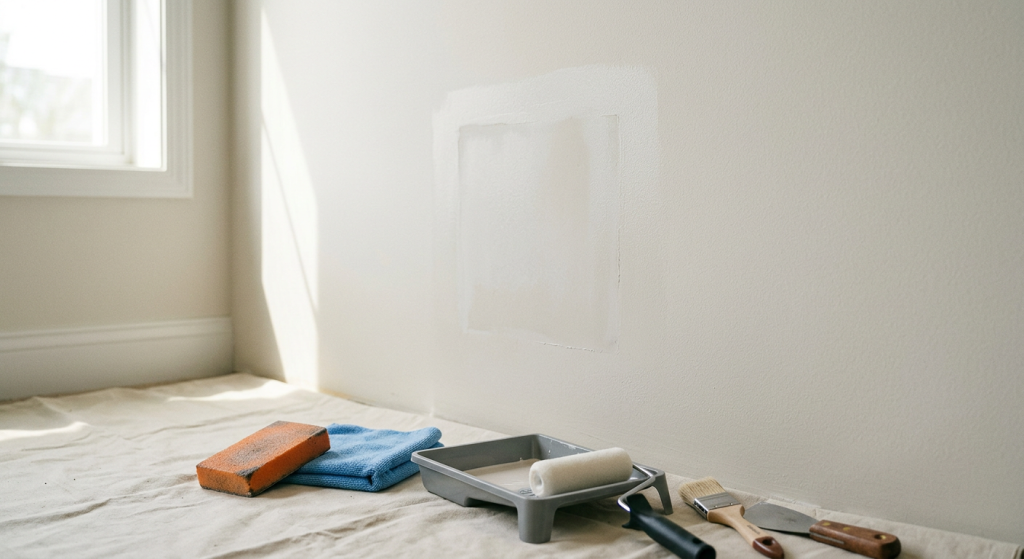
How to Recognize Paint Flashing
Flashing often appears as a dull patch, a shiny touch-up mark, or a visible outline around a repair. The color may match perfectly while the sheen or surface texture looks different.
Sunlight from a side window or a lamp aimed along the wall can make the difference more obvious. Wait until the paint has dried according to its label before judging the finish.
| What You See | Likely Cause | What Usually Helps |
|---|---|---|
| Dull spot over spackle | Porous patch or missed primer | Seal the patch, then repaint |
| Raised or rough repair outline | Poor sanding or mismatched texture | Correct the surface first |
| Shiny touch-up mark | Sheen, tool, or paint thickness difference | Match the finish or repaint a larger area |
| Uneven bands across a wall | Uneven roller coverage or overlapping dry edges | Recoat the wall evenly |
| Blotchy patch with poor adhesion | Sanding dust or contamination | Clean and correct the surface before repainting |
Flashing is primarily an appearance problem. Bubbles, peeling paint, soft drywall, and recurring water stains indicate other problems that need attention before repainting.
Safety: Do not sand or scrape painted surfaces in a home built before 1978 unless lead hazards have been addressed. If the paint’s lead status is unknown, hire a lead-safe certified contractor. Stop if the wall is damp, moldy, or deteriorating. Correct the moisture source and seek professional help for hidden or extensive damage.
What Causes Paint Flashing?
Porous Surfaces and Inconsistent Priming
Spackle, joint compound, and exposed drywall absorb paint differently from an already painted wall. Without primer, the finish coat may soak into the repair and dry with a flatter appearance.
This is why paint flashing over a drywall patch can remain visible even when the paint color matches.
Inconsistent priming can create the same problem beyond patches. One section may be sealed while another remains porous, causing noticeable differences after the topcoat dries.
Previously repaired walls are especially vulnerable when some patches were primed, and others were not.
Poor Sanding, Dust, and Texture Differences
Raised patch edges, sanding scratches, lumpy spackle, and overly smooth repair areas reflect light differently from the surrounding wall. Primer and paint generally follow these contours rather than hiding them.
Loose sanding dust can also prevent primer or paint from forming an even finish. A patch should be fully dry, smooth, sound, and clean before receiving another coating.
Application tools matter, too. A brush leaves different marks than a roller, and different roller covers can produce noticeably different textures.
A mini roller often blends better on a wall originally painted with a roller.
Sheen Mismatch and Touch-Up Paint
Flat, eggshell, satin, and semi-gloss finishes reflect light differently. Using the correct color in the wrong sheen can leave an obvious patch.
Fresh paint may also stand out against paint that has aged, faded, or been repeatedly cleaned.
Mix leftover paint thoroughly and verify that it is still usable before touching up. Even paint from the original can may not blend perfectly with an older wall.
For a closer look at this particular symptom, see Touch Up Paint Looks Shiny.
Uneven Application and Drying Conditions
Heavy paint buildup can create raised edges or a different roller texture.
Applying too little paint, using inconsistent roller pressure, or rolling back into an area after it has started drying can leave visible bands or changes in sheen.
Follow the paint’s recommended application conditions and recoat time. Temperature changes, high humidity, and condensation during drying may also affect the finish.
Lighting usually reveals flashing rather than causing it. Strong side lighting makes small texture and sheen differences easier to see.
How Primer Helps Prevent Flashing Over Drywall Patches
Primer seals porous spackle, joint compound, and exposed drywall so the finish paint absorbs more consistently. A suitable primer can prevent a patch from drying noticeably duller than the surrounding painted wall.
For an ordinary clean, dry drywall repair, use a compatible interior or drywall primer according to its label. Apply an even coat over the patch and slightly beyond its edges without building up a thick ridge.
Most visible conventional spackle repairs benefit from priming. Some specialty patching products allow direct painting; follow their instructions rather than assuming every spackle requires identical treatment.
For more detail, see Can You Paint Over Spackle Without Primer.
If a discolored patch has a persistent stain, first resolve its cause. An appropriate stain-blocking primer may be needed after the wall is dry.
Ordinary drywall primer is not a substitute for fixing a leak or covering active damage.
Tools and Supplies for a Small Flashing Repair
For a sound, dry wall with a small repair, gather the tools that match the underlying problem:
- Fine sanding sponge for minor ridges on confirmed lead-safe surfaces
- Clean microfiber cloth for removing sanding dust
- Putty knife and compatible spackle if the patch needs correction
- Suitable primer for clean, porous drywall repairs
- Matching wall paint, a small tray, and a brush for edges or tiny spots
- Mini roller or full-size roller with a cover that matches the existing wall texture
- Painter’s tape and eye protection where needed
Provide adequate ventilation and follow the paint, primer, and patching-product instructions. Avoid creating unnecessary sanding dust, and keep the work area clean.
Step-by-Step: How to Fix Paint Flashing Over a Drywall Patch
This sequence is for a small, dry, stable interior repair where disturbing the existing paint is safe.
If the surface is already smooth and properly sealed, you may only need the appropriate repainting steps.
Step 1: Let the Paint Dry and Identify the Cause
Allow the existing coating to dry for the period stated on its label.
Examine the spot from several angles. Look for a dull, porous patch, raised edges, dust, a shiny touch-up, or a mismatch in roller texture before choosing the repair.
Step 2: Correct Any Uneven Patch Texture
If the repair has a ridge or rough spot, lightly sand the dry, sound area with a fine sanding sponge. Keep the edges blended with the wall.
If the patch is sunken or crumbling, correct it with suitable patching material and let it dry fully before sanding.
Do not over-sand a textured wall until the repair becomes unnaturally smooth.
Step 3: Remove Sanding Dust
Wipe the patch and surrounding area with a clean microfiber cloth.
If you use a slightly damp cloth, let the surface dry completely before priming. Check that no loose material, chalky residue, or raised edge remains.
Step 4: Spot-Prime the Porous Repair
Apply compatible primer to the exposed spackle or drywall and slightly beyond the patch edges.
Keep the coat even rather than heavy. If the area was already properly sealed and texture is the only problem, unnecessary primer buildup may make the outline more visible.
Let the primer dry according to its label. Inspect the surface again before painting.
Step 5: Apply Matching Paint Evenly
Use the correct color and sheen.
For a rolled wall, choose a similar roller cover and apply an even coat without leaving a thick border around the repair.
A brush may be adequate for a tiny spot, but brush marks can stand out on larger rolled areas.
Avoid repeatedly rolling over paint that has begun to set. Follow the label before applying any necessary second coat.
Step 6: Check the Result in Normal Lighting
After the paint has dried, inspect the wall from normal viewing distance and from an angle.
A smooth, sealed patch may blend after a careful touch-up. If the paint still reflects light differently, determine whether the remaining issue is sheen, wall aging, or application texture before repainting again.
When a Small Touch-Up Works and When to Repaint the Full Wall
When a Small Touch-Up May Be Enough
A touch-up is most practical for a tiny, properly primed patch on a recently painted wall, particularly with a flat or matte finish.
Use the original paint when it is still in good condition, match the application tool, and keep the paint layer even.
Small repairs are less likely to disappear on satin or semi-gloss walls, dark colors, or surfaces exposed to strong side lighting.
A well-executed repair may still remain visible under certain conditions.
When to Repaint the Full Wall
Repainting from corner to corner is often preferable when several patches are visible, the existing paint has aged, or sheen and roller texture differences remain after the patch has been corrected.
It is also a practical option for broad flashing caused by uneven paint application.
First, make sure the wall is clean, sound, properly sealed where necessary, and free of texture defects.
Apply the finish evenly using a consistent roller technique and the paint’s specified drying times.
Natural boundaries at corners and trim make a full-wall finish easier to blend visually than a large painted area in the middle of a wall.
Common Mistakes and How to Prevent Future Flashing
The most common mistake is adding more paint before identifying the cause.
Another coat may improve uneven coverage on a sound, sealed wall, but it will not flatten a raised patch, remove dust, reliably seal an unprimed repair, or correct the wrong sheen.
For future repairs, avoid these errors:
- Painting spackle or joint compound before it is fully dry
- Skipping primer on porous repairs or priming patches inconsistently
- Leaving sanding dust or loose material beneath the coating
- Applying heavy paint or primer that creates raised edges
- Switching between brushes and rollers without considering texture
- Judging a fresh touch-up before it dries or under only one lighting condition
When patching several spots, prepare and seal them consistently before painting.
Use matching paint and suitable tools, and consider a full-wall finish if individual touch-ups would leave visible differences.
Final Thoughts
Paint flashing usually comes down to uneven absorption, inconsistent sheen, surface texture, or application. Drywall patches are a frequent trouble spot because fresh spackle and joint compound are more porous than surrounding painted walls.
Identify the cause before adding paint. Smooth and clean the patch, prime bare repairs where needed, and use a matching finish with consistent application. If a carefully repaired touch-up still stands out, repainting the full wall may produce a more uniform result.