
Pleated vs Fiberglass Furnace Filters: Which One Should You Use?
Choosing between pleated vs fiberglass furnace filters is one of the most common decisions homeowners face when it is time to replace a filter.
At first glance, the choice seems simple. Fiberglass filters are cheaper, while pleated filters cost more. But the better option is not just about price.
A furnace filter affects two things at the same time. It helps protect your HVAC equipment from dust and debris, and it also affects how much dust and other particles are captured before air circulates through your home.
For most homeowners, pleated filters are usually the better everyday choice. Still, that does not mean they are always the right choice for every system. Stronger filtration is not automatically better if it creates airflow problems, especially in an older or already struggling HVAC system.
The goal is to find the best balance between filtration, airflow, cost, and your home’s real needs.
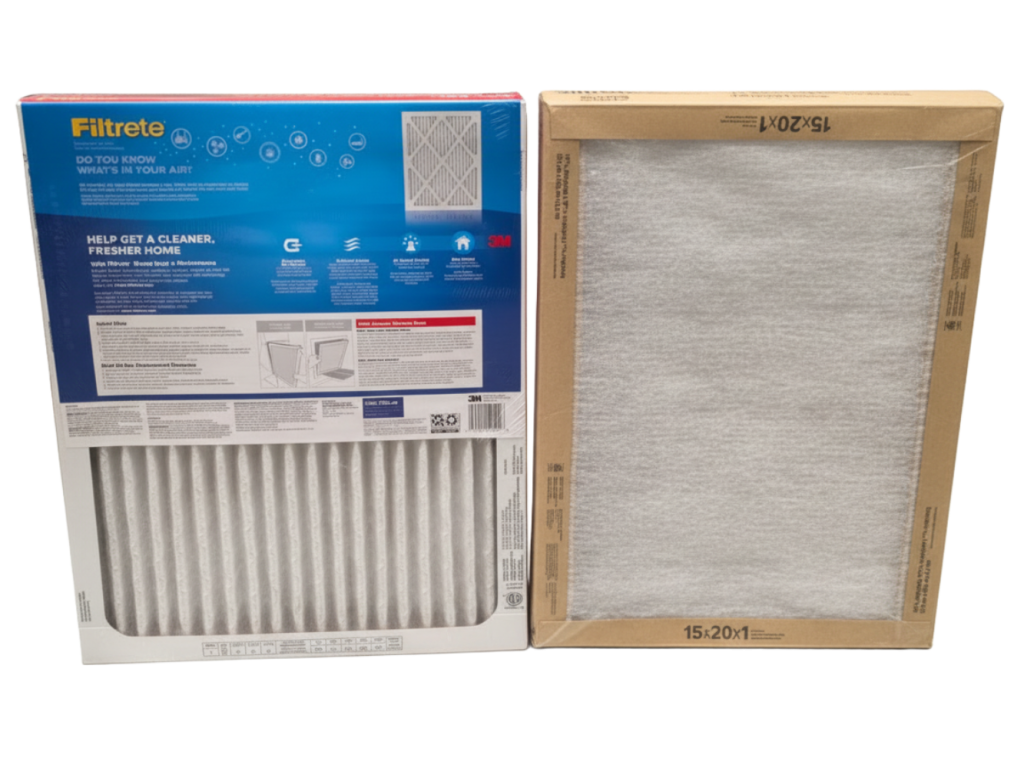
What fiberglass furnace filters are
Fiberglass furnace filters are the basic flat-panel filters many homeowners recognize right away.
They are usually made with thin layers of spun fiberglass stretched across a cardboard frame. They are inexpensive and easy to find, which is why some homeowners buy them by default.
Their main job is equipment protection. In plain English, they are better at stopping larger dust and debris from reaching the furnace or air handler than they are at cleaning the air inside the house.
That means they can help keep bigger particles out of the system, but they do not do much for finer dust, pet dander, or other smaller airborne particles that homeowners often care about.
Because they are less dense, fiberglass filters usually allow air to move through the system with very little resistance. That is their biggest advantage.
What pleated furnace filters are
Pleated furnace filters are made with folded filter material instead of a flat sheet.
Those folds create more surface area, which gives the filter more room to catch particles. That is why pleated filters usually do a better job of trapping household dust, lint, pollen, and pet dander than basic fiberglass filters.
In most homes, that means less dust blowing back into living spaces and better overall air filtration.
Pleated filters come in a range of strengths. Some are made for basic household dust, while others are designed to capture much smaller particles. This is where homeowners need to be careful. A moderate pleated filter is often a smart choice. An overly restrictive pleated filter can be a bad fit if the HVAC system is not designed for it.
So while pleated filters are usually better at filtering, they are not a case of “more is always better.”
Pleated vs fiberglass furnace filters: the practical differences
When homeowners compare pleated vs fiberglass furnace filters, four things matter most in everyday use: dust capture, airflow, cost, and value over time.
Dust capture
This is where pleated filters usually win.
Fiberglass filters are often good enough to catch larger debris, but they are not very good at trapping smaller particles that make homes feel dusty. If you find yourself wiping down furniture often or noticing dust around supply vents, a basic fiberglass filter may not be doing much to help.
Pleated filters generally capture more of the everyday particles homeowners actually notice.
In real-world terms, pleated filters usually do better at catching:
- Household dust
- Lint
- Pollen
- Pet dander
- Some smaller airborne debris
That does not make them medical-grade filters, and it does not mean they solve indoor air quality problems by themselves. But for ordinary residential use, they are usually more helpful than fiberglass filters.
Airflow
This is where the conversation gets more important.
Fiberglass filters usually allow easier airflow because they are less restrictive. That sounds great, but easy airflow does not automatically make them the best choice overall.
Pleated filters create more resistance than fiberglass filters. In many modern residential systems, a basic or moderate pleated filter is still completely reasonable. But if a homeowner jumps to a very high-efficiency filter without checking system compatibility, airflow can suffer.
When airflow drops too much, the system may have to work harder. That can lead to comfort problems, higher energy use, and extra strain on components.
That is why stronger filtration is not always the best choice. The right filter is the one your system can handle without being choked down.
Cost
Fiberglass filters are cheaper upfront. That is true almost every time.
If you are only looking at the price on the shelf, fiberglass usually wins. But that does not always mean it is the better value.
Pleated filters cost more, but they generally trap more dust and often last longer before replacement. In many homes, that makes the higher purchase price easier to justify.
The cheapest option is not always the best value if it:
- Lets more dust circulate through the house
- Needs to be replaced more often
- Does less to protect the system from buildup
- Leaves you unhappy with air quality in the home
A low price is useful, but only if the filter is still doing the job your home needs.
Everyday value
For everyday residential use, the best value usually comes from a middle-ground pleated filter rather than the cheapest fiberglass option or the most aggressive high-filtration option.
That balance matters more than homeowners often realize.
A basic fiberglass filter may save money at checkout. A super-high-efficiency pleated filter may sound impressive. But most homes do best with a practical filter that offers better dust capture without pushing airflow too far.
A quick note on filter ratings
Many furnace filters use a rating system called MERV.
You do not need to memorize the numbers, but here is the simple version: a higher rating usually means the filter can catch smaller particles. It also usually means the filter creates more resistance to airflow.
Fiberglass filters are usually on the low end of the rating scale. Pleated filters are often in the moderate range, though some go much higher.
For many homeowners, a basic to mid-range pleated filter is the sweet spot. It gives better filtration than fiberglass without going so far that airflow becomes a concern.
If your furnace manual, filter cabinet label, or HVAC contractor recommends a maximum filter rating, follow that guidance.
If you want a simpler breakdown of common filter ratings, our guide on MERV 8 vs MERV 11 vs MERV 13 can help you choose a practical level for your system.
Which type is better for the average home?
For the average home, a pleated filter is usually the better choice.
That is because most homeowners want more than bare-minimum equipment protection. They want a home that stays cleaner, vents that blow less dust, and a system that is still protected from normal household debris.
A moderate pleated filter usually offers that better balance.
For most average homes, a pleated filter makes sense when:
- The HVAC system is in normal working condition
- The home gets dusty quickly
- Someone in the house is sensitive to dust or pollen
- You want better filtration without going overboard
- You are willing to pay a little more for better everyday performance
Fiberglass filters are still an option, but in many average homes they feel more like a bare-minimum choice than the best overall choice.
What about homes with pets?
Pet homes usually benefit more from pleated filters.
Cats and dogs add hair, dander, dust, and extra debris to the air. A basic fiberglass filter may let too much of that pass through. That can mean more dust on surfaces, more buildup in the return system, and more frequent filter changes.
A pleated filter is often the better fit because it can catch more of the particles pet owners actually deal with every day.
In pet homes, a pleated filter is often the smarter choice because it helps with:
- Pet dander
- Fine dust
- Hair and lint in circulation
- Faster filter loading from extra indoor debris
The important part is staying moderate. Pet owners sometimes assume they should buy the strongest filter they can find. That is not always the right move. A reasonable pleated filter that gets changed on schedule is often better than an ultra-restrictive filter left in too long.
What about older HVAC systems?
Older HVAC systems deserve extra caution.
If the system already has weak airflow, undersized ductwork, or a history of struggling to heat or cool the home evenly, a restrictive filter can make things worse.
That does not automatically mean an older system must use fiberglass. But it does mean homeowners should avoid assuming that a stronger pleated filter is always safe.
Be careful with higher-filtration filters if:
- The furnace is older and airflow has always seemed weak
- Some rooms already get poor airflow
- The system has a history of frozen coils or overheating issues
- The return ductwork seems undersized
- An HVAC technician has warned against restrictive filters
In these situations, a basic pleated filter may still work, but it is smart to stay conservative. If there is any doubt, check the furnace manual, look for a label near the filter slot, or ask a trusted HVAC technician what filter range the system can handle.
Common homeowner mistakes when buying furnace filters
A lot of filter problems start with simple shopping mistakes.
The most common mistakes include:
- Buying by price alone
- Assuming the highest filtration level is always best
- Ignoring the filter size and buying the wrong dimensions
- Leaving a filter in too long
- Installing the filter backward
- Choosing a filter without considering system airflow
- Assuming all pleated filters are equally restrictive
- Forgetting that pets, dust, and heavy system use may require more frequent changes
One of the biggest mistakes is treating all pleated filters the same. Some are only a moderate step up from fiberglass. Others are much more restrictive. The word “pleated” alone does not tell you everything.
Another common mistake is forgetting the real purpose of the filter. Homeowners sometimes think the filter exists only to clean the air. In reality, it also has to work with the HVAC system. A filter that captures more dust but harms airflow is not a smart upgrade.
Simple recommendation: which one should you use?
For most homeowners, pleated filters are the better everyday choice.
They usually do a better job of capturing common household dust and debris, and they often offer better overall value even though they cost more upfront.
Fiberglass filters still have a place. They can make sense when a system truly needs the least possible airflow resistance, or when a technician specifically recommends a basic filter because of the equipment or duct setup.
If you are still deciding which filter type makes the most sense overall, our guide on best furnace filters gives a broader homeowner-friendly starting point.
Here is the simple version:
- Choose pleated if you want better everyday dust capture and your system can handle a standard residential filter
- Choose pleated if you have pets or want a cleaner-feeling home
- Be cautious with very high-filtration pleated filters unless you know your system can handle them
- Choose fiberglass only when low restriction is the top priority or your HVAC system needs a very basic filter setup
For most homes, the best answer is not fiberglass versus the strongest pleated filter on the shelf. It is usually a moderate pleated filter that balances filtration and airflow.
Final thoughts
Pleated vs fiberglass furnace filters is really a question of balance.
Fiberglass filters are cheaper and allow easy airflow, but they usually do much less to capture the dust and debris homeowners care about. Pleated filters usually cost more, but they do a better job in most homes and are often the better overall choice.
The key is remembering that the cheapest filter is not always the best value, and the strongest filter is not always the best choice.
For most average households, a moderate pleated filter is the safest recommendation. For pet homes, pleated is usually the better option. For older HVAC systems, it is worth being more careful and choosing a filter the equipment can handle comfortably.