
PVC exterior trim: pros, cons, cost, and where it works best
PVC exterior trim is a low-maintenance, moisture-resistant alternative to traditional wood trim. It works especially well where exterior trim is exposed to frequent moisture or recurring rot, but it usually costs more than basic wood and must be installed with temperature-related movement in mind. Its clean appearance suits many homes, though it may not be the best choice for every architectural style.
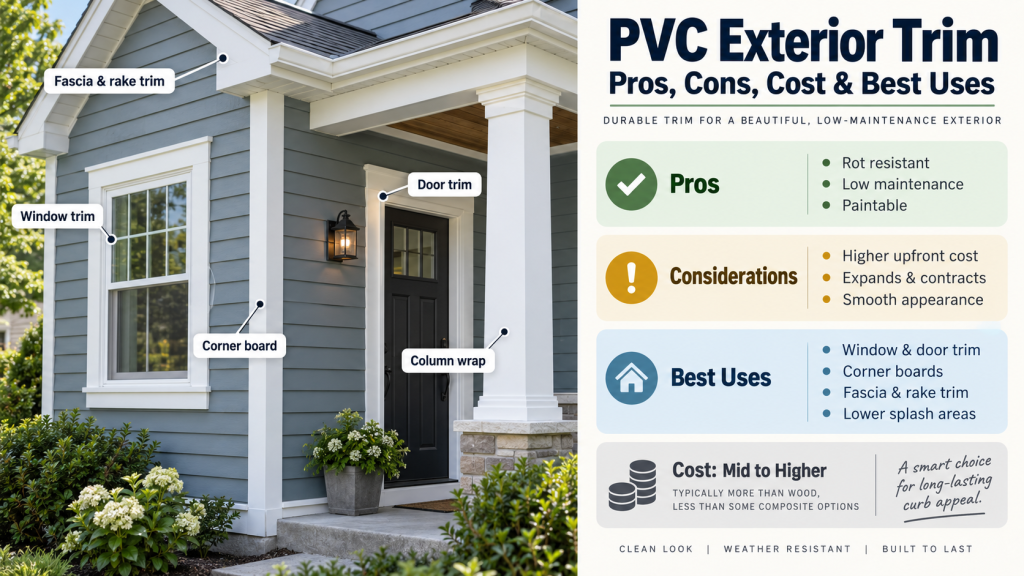
| Factor | PVC exterior trim | Homeowner takeaway |
|---|---|---|
| Moisture | Does not rot like wood | Strong option for exposed areas |
| Maintenance | Generally low | Less refinishing than wood |
| Painting | Many products can be painted | Follow product-specific paint guidance |
| Cost | Usually above basic wood | Higher upfront material expense |
| Movement | Expands and contracts with temperature | Installation details matter |
| Appearance | Clean and uniform | May not match traditional wood character |
| Durability | Resists decay but can be damaged | Durable, not indestructible |
What Is PVC Exterior Trim?
PVC exterior trim is made from polyvinyl chloride formed into boards, sheets, mouldings, and specialty profiles intended for exterior finish work. Cellular PVC is commonly manufactured in dimensions similar to conventional wood trim.
It is generally used as decorative and protective trim rather than structural framing. Unless a specific product is designed and approved for load-bearing use, PVC trim should not be treated as a structural substitute.
Where Is PVC Exterior Trim Used?
PVC is available for many common exterior details, including:
- Window and door surrounds
- Corner boards
- Fascia and rake trim where appropriate
- Frieze boards
- Skirt boards
- Porch and column wraps
- Decorative mouldings and trim details
Product profiles and approved applications vary, so the selected material should be suitable for the intended location.
Pros of PVC Exterior Trim
PVC is most attractive to homeowners who want rot resistance and less routine upkeep than conventional painted wood.
Resists Rot and Moisture
PVC does not decay from moisture the way wood can. That makes it useful around windows, lower trim, roof edges, and other exterior areas exposed to rain or splash.
However, PVC does not make the surrounding wall or roof assembly waterproof. Roof leaks, failed flashing, siding leaks, gutter overflow, and trapped moisture can still damage framing or sheathing behind the trim.
Low Maintenance
PVC avoids the natural checking, splitting, and decay associated with exposed wood. Unpainted products intended to remain in their factory finish may need little more than cleaning and periodic inspection.
Painted surfaces and sealed joints can still require maintenance as they age.
Can Be Painted
Many PVC trim products can be painted with compatible exterior coatings. Painting can help match siding, doors, windows, or other trim.
Darker colors deserve extra attention because heat buildup can increase material movement. Follow the specific trim manufacturer’s color and coating guidance.
Consistent Appearance
PVC does not have knots, grain splits, or other natural variations found in wood. That consistency works well when a smooth, uniform painted or white appearance is desired.
Useful in Exposed Areas
PVC can be practical around splash-prone lower trim, humid locations, roof-edge details, and other areas where wood has a history of staying damp.
It should not be used to conceal active leaks, rot, or damaged backing.
Cons of PVC Exterior Trim
PVC solves several common wood-trim problems, but it has its own limitations.
Higher Initial Cost
PVC commonly costs more than basic exterior-grade wood trim. Thick boards, large sheets, mouldings, and specialty profiles can increase the difference.
The premium may be worthwhile where reduced maintenance and rot resistance have clear value.
Expansion and Contraction
PVC moves as temperatures change. Long fascia, rake, frieze, and other continuous runs can make that movement especially noticeable.
Proper spacing, fastening, and joint treatment matter. Poorly managed movement can contribute to open joints, buckling, or uneven trim.
Because PVC trim moves with temperature changes, joints also need a compatible flexible sealant where sealing is required; our guide to the best exterior caulk explains how to choose by movement, paintability, and material compatibility.
Appearance
Some homeowners prefer the natural grain and traditional character of real wood, particularly on historic or highly detailed homes.
PVC offers a clean, consistent look but can appear less authentic where original millwork is an important part of the architecture.
Heat and Dark Colors
Dark finishes can absorb more solar heat, which may increase movement in PVC trim. Some products limit darker colors or require specific coating systems.
Check the requirements for the particular product before choosing a dark finish.
Damage Can Still Occur
PVC does not rot, but it can still be gouged, dented, cracked, deformed, or loosened by impact or poor installation.
It should not be treated as indestructible.
How Long Does PVC Exterior Trim Last?
PVC trim can remain serviceable for many years when the material is appropriate for the application and installed correctly.
Its main durability advantage is that it does not share the same moisture-driven decay cycle as wood. Long-term performance still depends on sun exposure, thermal movement, fastening, coatings, impact, and the condition of surrounding construction.
A durable trim board cannot compensate for leaks or deteriorated framing behind it.
Does PVC Exterior Trim Need to Be Painted?
Not always.
Many products are sold with a white surface intended to remain exposed. Others may be painted to match siding, change sheen, or achieve a particular architectural color.
Use coatings approved for the specific PVC product, especially when darker colors are planned.
PVC Exterior Trim Cost
PVC generally has a higher upfront material cost than basic wood trim. Pricing varies with board width, thickness, moulding profile, manufacturer, regional availability, and project size.
Labor can also vary depending on accessibility, trim complexity, finishing needs, and the amount of fitting required around openings or roof edges.
PVC may reduce some future repainting and decay-related maintenance, but that does not guarantee the lowest lifetime cost on every home. Local labor, exposure conditions, and maintenance expectations all influence the value.
PVC Trim vs. Wood Trim
PVC and wood serve many of the same exterior trim roles, but their strengths differ.
| Factor | PVC | Wood |
|---|---|---|
| Initial cost | Usually higher than basic wood | Often lower for common lumber |
| Rot resistance | Does not rot like wood | Depends on species and protection |
| Maintenance | Generally lower | Usually requires more finish maintenance |
| Appearance | Smooth and uniform | Natural grain and traditional character |
| Paintability | Common with compatible coatings | Broad paint and stain options |
| Movement | Primarily temperature-related | Responds to moisture and temperature |
| Custom detailing | Many standard profiles | Easy to mill into custom shapes |
PVC often makes more sense where moisture exposure and reduced upkeep are priorities. Wood may be preferable when authentic material, natural grain, historic character, or specialty millwork matters more.
PVC Trim vs. Fiber Cement Trim
Both materials resist many problems associated with conventional wood, but they behave differently.
PVC is relatively lightweight and resistant to moisture-driven decay. Fiber cement is heavier and provides a more mineral-like painted appearance.
Installation and finishing requirements differ significantly. Fiber cement may coordinate well with similar siding systems, while PVC is often attractive for trim profiles in moisture-prone areas.
If older cementitious trim is present and asbestos-containing material is suspected, do not cut, sand, drill, grind, break, or remove it. Have the material appropriately evaluated first.
PVC Trim vs. Engineered Wood Trim
Engineered wood trim can offer a more wood-like appearance and may cost less than some PVC products. It is commonly designed to be painted and is available in familiar trim dimensions.
PVC generally offers stronger tolerance of repeated moisture exposure because it contains no wood fiber. Engineered wood may better match nearby wood-based materials or a traditional exterior.
Local price, moisture exposure, appearance, and maintenance expectations should guide the choice.
Where PVC Exterior Trim Works Best
PVC is most useful where moisture exposure or maintenance demands make conventional wood less attractive.
Good applications can include:
- Exposed window and door trim
- Lower trim subject to rain splash
- Appropriate fascia and rake details
- Humid environments
- Coastal areas with compatible fasteners and accessories
- Homes with recurring wood-trim decay
- Exteriors suited to smooth painted or white trim
Its benefits are particularly noticeable in areas that are frequently wet or difficult to repaint.
If PVC is being considered because existing wood fascia has deteriorated, our fascia repair guide explains when damaged fascia can be repaired and when replacing the material makes more sense.
Where PVC May Not Be the Best Choice
Another material may fit better when architectural authenticity, natural grain, or initial cost matters more than moisture resistance.
Wood is often better suited to historic restoration or projects requiring custom traditional profiles. PVC may also provide little advantage in protected locations where properly maintained wood performs well.
It should not replace structural lumber or load-bearing components unless the specific product is designed for that purpose.
What to Check Before Buying PVC Exterior Trim
Before choosing a product, review the factors that affect fit and long-term performance:
- Exterior rating: Confirm it is intended for the planned outdoor use.
- Thickness and profile: Match adjacent trim and siding dimensions.
- Paint requirements: Check whether it can remain unfinished or be painted.
- Dark-color limits: Review any restrictions for heat-absorbing finishes.
- Expansion guidance: Check requirements for joints and long runs.
- Fastener compatibility: Use materials suitable for the product and exposure.
- Matching pieces: Confirm needed mouldings and accessories are available.
- Local availability: Consider how easy matching material will be to source later.
- Warranty: Review what the manufacturer actually covers.
- Installation requirements: Make sure the project can follow the specified installation method.
Safety and Installation Considerations
Material selection is straightforward, but exterior trim installation can involve access and hidden-condition risks.
Roof-edge fascia and rake work may require professional access rather than ladder-based DIY work. Existing leaks, rotten backing, or deteriorated framing should be repaired before new PVC covers the area.
Older painted exterior trim may contain lead-based paint, particularly on pre-1978 homes. Avoid casual sanding or scraping without appropriate lead-safe practices.
Unknown older cementitious trim may contain asbestos. If asbestos is suspected, do not cut, sand, drill, grind, break, or remove the material before appropriate evaluation.
Work near electrical service conductors or equipment also requires caution. Do not position ladders, tools, boards, or removed trim near energized service components.
Final Thoughts
PVC exterior trim can be a strong choice when moisture resistance, rot resistance, and lower maintenance matter more than the lowest upfront cost or authentic wood character. It works particularly well around exposed windows and doors, lower splash areas, and other locations where conventional wood struggles to stay dry.
Consider another material when historic authenticity, natural wood appearance, specialty millwork, or minimum initial cost takes priority. When PVC fits the home’s style and exposure conditions, choose a product suited to the application and account for painting requirements, thermal movement, fastening, and existing water-management problems before installation.