Smart Thermostat vs Programmable Thermostat: Which is Better for Your Home?
Most homeowners do not need the fanciest thermostat on the wall to stay comfortable and control energy use. When comparing a smart thermostat vs programmable thermostat, the better choice usually comes down to how you actually live, how hands-on you want to be, and whether your HVAC system is a simple setup or something more specialized like a heat pump. Newer features can be helpful, but they are not automatically better for every home.
A lot of the confusion comes from the names. Both types can help manage temperature better than an old manual thermostat. But they do not work the same way day to day. One is built around simple schedules. The other adds app control, automation, and in some cases learning features that adjust based on your habits.
For beginner homeowners, the best thermostat is usually the one you will actually use correctly. That matters more than chasing features you may never touch.
Smart thermostat vs programmable thermostat: the main difference
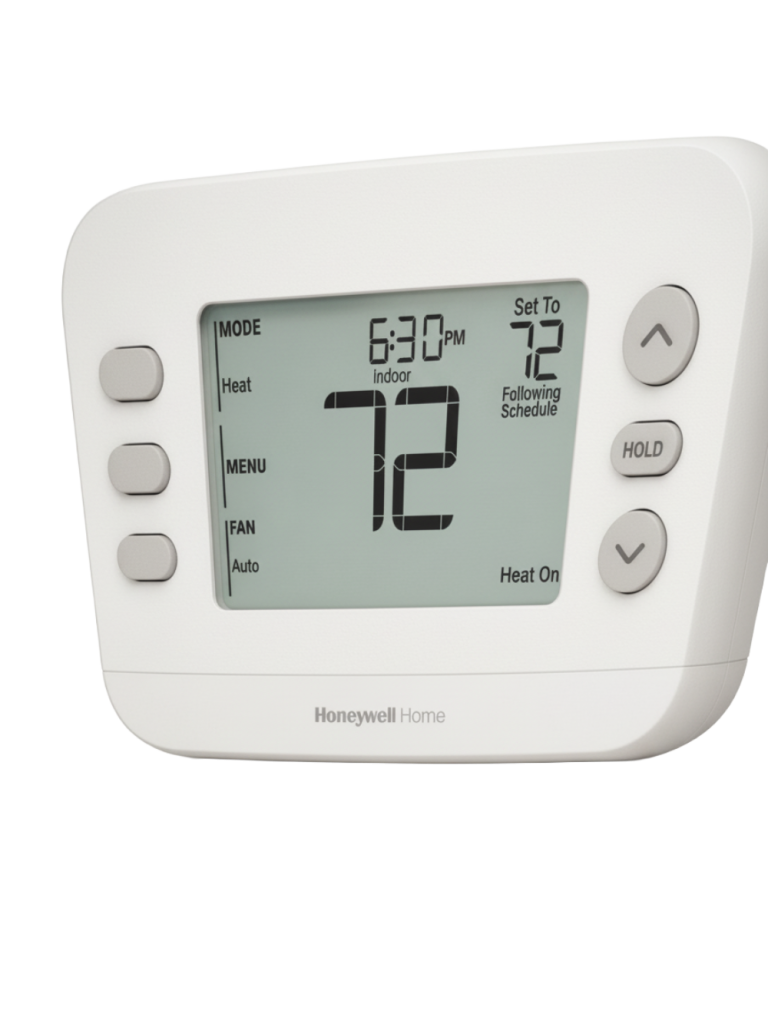
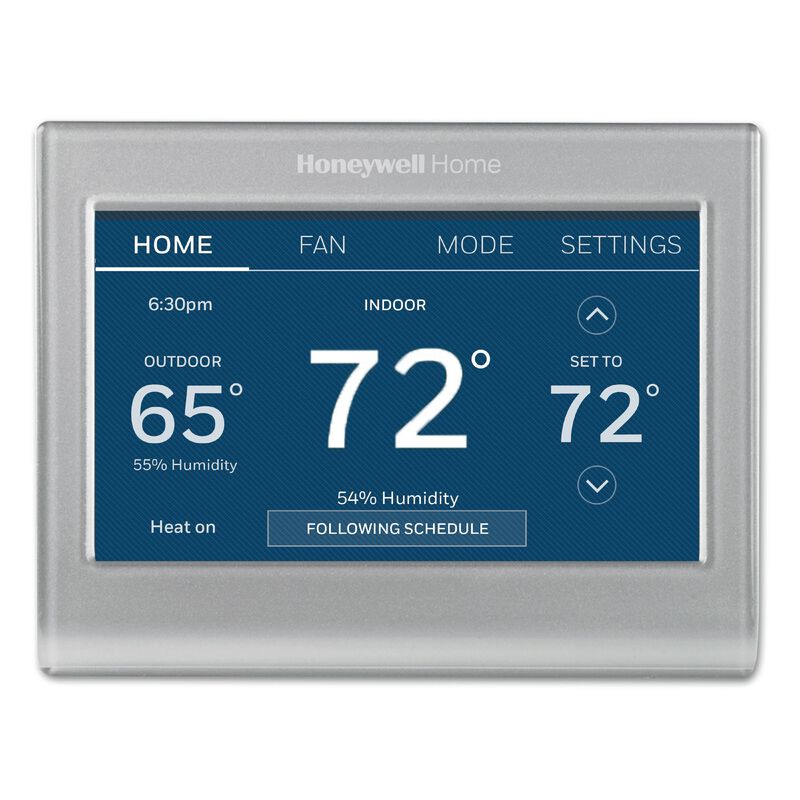
The simplest way to think about it is this: a programmable thermostat follows a schedule you set, while a smart thermostat can usually do that too, but also adds connected features and more automation.
A programmable thermostat lets you tell the system when to raise or lower the temperature. For example, you might set it to warm the house before you wake up, reduce heating while you are at work, and bring the temperature back up in the evening.
A smart thermostat does the same basic job, but it usually connects to Wi-Fi and gives you extra tools through an app. Depending on the model, it may also offer alerts, remote changes, usage reports, geofencing, or learning features.
In plain English, a programmable thermostat is more like a timer with temperature settings. A smart thermostat is more like a connected control center for your HVAC system.
What a programmable thermostat does
A programmable thermostat is designed to follow a routine. You enter the temperature settings you want for different times of day, and the thermostat handles the changes automatically.
This works well for homeowners who have fairly regular schedules and want a straightforward setup without extra app features or account logins.
A programmable thermostat is usually a good fit if you want
- A lower-cost thermostat
- Simple on-wall controls
- A set-it-and-follow-the-schedule approach
- Fewer connected features to manage
- A practical upgrade from a basic manual thermostat
Some programmable models are very simple, while others allow different weekday and weekend schedules. Either way, the main goal is consistency.
What a smart thermostat does
A smart thermostat also controls your heating and cooling schedule, but it adds internet-connected features that can make everyday use more flexible.
The biggest difference for most homeowners is remote access. If you are away from home and want to change the temperature from your phone, a smart thermostat can do that. Many models also send reminders, track energy use, and let you adjust settings without standing in front of the thermostat.
Some smart thermostats include learning features. That means they try to notice your patterns and make schedule changes automatically over time. In plain terms, the thermostat may learn when you usually leave, return, or sleep, then adjust settings to match.
Common smart thermostat features include
- App control from your phone
- Remote temperature changes
- Custom scheduling
- Alerts and maintenance reminders
- Energy reports or usage history
- Geofencing based on phone location
- Learning or auto-adjusting behavior on some models
These features can be useful, but they only help if they fit your routine. If you want a broader homeowner-friendly look at what features matter most, our guide on best smart thermostats can help you compare the main options. A homeowner who likes simple controls may find them unnecessary. Someone who travels often may find them very worthwhile.
Convenience and everyday use
This is where the real decision usually happens.
A programmable thermostat is often easier for homeowners who want predictability. Once the schedule is set, there is usually very little to think about. It works best when your daily routine stays fairly steady.
A smart thermostat is often better for people whose schedule changes from day to day. If you leave unexpectedly, come home early, forget to change the setting before vacation, or want to warm or cool the house before arriving home, remote access can be genuinely useful.
That does not mean smart is always easier. Some homeowners never open the app after installation. Others get frustrated by too many settings, notifications, or learning features that do not match their habits.
Think about your real-life routine
- Do you leave and come home at roughly the same time most days?
- Do you want to control the thermostat from your phone?
- Do you prefer simple buttons over app menus?
- Do you travel often or have an irregular schedule?
- Do you want automation, or do you just want the thermostat to follow a schedule?
The best answer usually becomes clearer once you think about those daily habits instead of the marketing.
Scheduling: simple control vs flexible control
Scheduling is where programmable thermostats still make a strong case.
With a programmable thermostat, you are usually the one building the schedule. That can be a good thing. You know exactly what the thermostat will do because you told it what to do.
With a smart thermostat, scheduling can be more flexible. You can still create a manual schedule, but many smart models also let you make changes through an app, use location-based controls, or allow the thermostat to learn patterns over time.
For some homeowners, that flexibility is a real upgrade. For others, it adds complexity without much payoff.
If your routine is stable and you do not need remote changes, a programmable thermostat may be all you need.
Learning features are not automatically better
Learning features sound impressive, but they are not the best match for every household.
A learning thermostat tries to adjust itself based on behavior. That can work well in some homes, especially where routines are fairly consistent but homeowners do not want to build a schedule manually.
In other homes, learning features can be annoying. If work hours change often, family members come and go, or someone prefers direct control, the thermostat may make choices that feel unhelpful rather than smart.
This is an important point for homeowners: newer features are not automatically better. Better means better for your habits, your comfort, and your system.
Installation and compatibility
Before choosing either type, make sure it will actually work with your HVAC system.
Programmable thermostats are often simpler from a wiring and setup standpoint, though not always. Smart thermostats may need more from the system, especially because many connected models need continuous power. That is where homeowners often hear about a C-wire.
A C-wire, or common wire, helps provide steady power to many smart thermostats. Some smart models can work without one in certain homes, and some use an adapter or power accessory. But you should never assume any thermostat will work with your wiring just because it looks similar to your old one.
If your cooling system is already acting up, thermostat settings are also one of the first things to check, and our guide on home AC running but not cooling can help you narrow that down.
Compatibility matters just as much as features. A thermostat has to match the type of heating and cooling equipment in the home.
Check these basics before buying
- Whether your system is furnace and central AC, heat pump, boiler, or something else
- Whether your current thermostat wiring supports the new model
- Whether a C-wire is present if you are considering a smart thermostat
- Whether the thermostat supports the number of heating and cooling stages in your system
- Whether your system has special controls that need brand-specific equipment
For many homeowners, installation is the point where a cheaper thermostat choice becomes more expensive if the wrong model is purchased first.
Heat pumps need extra attention
Homeowners with heat pumps should slow down and check compatibility more carefully than average.
A heat pump does not operate exactly like a basic furnace and AC setup. Many heat pump systems also use auxiliary heat or emergency heat, and the thermostat needs to control those functions correctly.
That matters whether you choose a programmable or smart thermostat. The thermostat must support heat pump operation, and it must be set up correctly during installation.
A smart thermostat can be a good option for a heat pump, especially if it is designed to manage staging well. But a simple programmable thermostat can also work well if it is heat-pump compatible and properly configured.
If you have a heat pump, pay close attention to
- Heat pump compatibility
- Auxiliary heat support
- Emergency heat control
- Proper installer setup
- System staging, if applicable
This is one area where homeowners should be careful about assuming all thermostats are interchangeable. They are not.
When a programmable thermostat may be the better choice
A programmable thermostat is still a very solid option for many homes. It is often the better fit when the homeowner values simplicity, lower cost, and predictable scheduling over connected features.
If you do not care about controlling your thermostat from your phone, there is a good chance you do not need a smart model.
A programmable thermostat may make more sense if you
- Want simple controls on the wall
- Have a regular daily routine
- Prefer a lower upfront cost
- Do not want to rely on Wi-Fi or apps
- Want fewer features and less setup
- Just need the thermostat to follow a schedule reliably
This is especially true for homeowners who like to set things once and leave them alone.
When a smart thermostat may be worth the extra cost
A smart thermostat is often worth it when the convenience features will actually get used.
Remote access is the biggest practical benefit for many homeowners. If you forget to change settings before leaving, spend time away from home, or want more control from your phone, a smart thermostat can make everyday use easier.
It may also be worth the extra cost if you want maintenance reminders, temperature alerts, or energy reports that help you notice patterns.
A smart thermostat may be worth paying more for if you
- Want app control from anywhere
- Have an irregular daily schedule
- Travel often
- Want to adjust settings before getting home
- Like energy reports and usage feedback
- Want more automation built into the system
The extra cost makes the most sense when the features solve a real problem in your routine.
Common mistakes homeowners make when choosing
A lot of thermostat regret comes from buying based on features instead of fit.
These are the most common mistakes
- Buying a smart thermostat without checking wiring or compatibility
- Assuming every smart thermostat needs the same setup
- Choosing a thermostat that does not support a heat pump properly
- Paying for app features that will never be used
- Picking a programmable thermostat, then never actually programming it
- Assuming learning features will automatically improve comfort
- Focusing only on price and ignoring installation needs
One of the biggest mistakes is forgetting that a programmable thermostat only helps if you use the schedule. If you leave it in permanent hold all the time, you are not really getting the benefit.
Simple recommendation: which option makes the most sense?
For most homeowners, the right answer depends on comfort habits more than technology.
Best choice for homeowners who want simple controls
A programmable thermostat is usually the better choice if you want basic, reliable temperature scheduling without extra features. It is often easier to live with if you prefer physical controls and a straightforward routine.
Best choice for homeowners who want remote access
A smart thermostat is usually the better fit if you want to change settings from your phone, adjust the temperature while away, or use convenience features like alerts and app scheduling.
Best choice for homeowners with a steady daily routine
A programmable thermostat often makes the most sense. If your schedule is predictable, there may be little reason to spend more for smart features you may not use.
Best choice for homeowners with changing schedules
A smart thermostat is often worth it. Flexible app control and automation can be more helpful when your routine changes often.
Best choice for homes with heat pumps
Either type can work, but compatibility matters more than feature count. Choose the thermostat that clearly supports your heat pump and any auxiliary or emergency heat functions. When in doubt, verify the model carefully before buying.
Conclusion
The right thermostat is the one that fits your home, your system, and your daily habits. In a smart thermostat vs programmable thermostat decision, programmable models still make a lot of sense for homeowners who want simplicity, lower cost, and dependable scheduling. Smart thermostats are often worth the extra money when remote access, flexible control, and connected features will actually make life easier.
For many homes, this is not really a question of which thermostat is more advanced. It is a question of which one you will use well every day. If you want simple and steady, programmable may be the better pick. If you want app control and more flexibility, a smart thermostat may be the smarter investment.