Surge Protector for Refrigerator: Is It a Good Idea?
A surge protector for refrigerator use can be a good idea, but only in the right situation. The safe answer is this: a refrigerator should not be plugged into a regular power strip or ordinary surge strip. If you use surge protection, it should be appliance-rated, matched to the refrigerator, and allowed by the manufacturer.
Many refrigerators are best plugged directly into a proper grounded wall outlet. That is the safest default for most homes. The reason is simple: refrigerators are motor-driven appliances. The compressor can draw extra power when it starts, and light-duty plug-in products may not be built for that kind of load.
The goal is not just to protect the refrigerator from power surges. It is also to avoid creating a heat, overload, or fire risk behind a major appliance.
Surge Protector for Refrigerator: The Quick Answer
A refrigerator is not the same as a TV, computer, or phone charger. It runs for years in one spot, turns on and off all day, and depends on a compressor motor. That makes the plug-in setup more important than many homeowners realize.
For many refrigerators, the best setup is a direct connection to a grounded wall outlet that is in good condition. If the owner’s manual says to plug the refrigerator directly into the wall, follow that guidance.
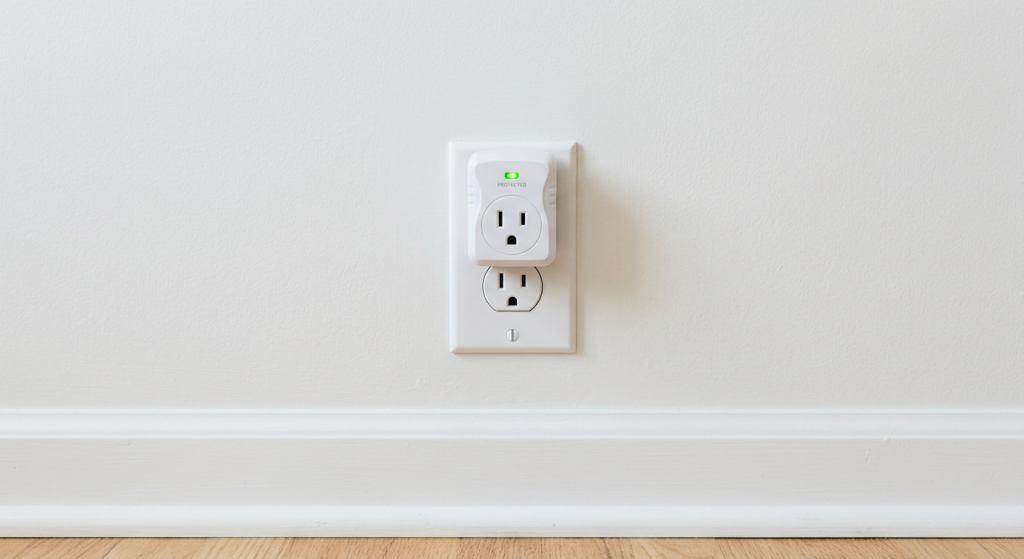
Some appliance-rated surge protectors are designed for major appliances. These are different from basic strips used for small electronics. A proper refrigerator surge protection device should be rated for appliance use, fit the refrigerator’s electrical needs, and be used only as the product instructions allow.
Here is the safest way to think about the common options:
| Setup | Best Use | Risk Level | Safest Next Step |
|---|---|---|---|
| Direct wall outlet | Normal refrigerator use when outlet is grounded and in good condition | Low when outlet is proper | Use the manual’s guidance and watch for warning signs |
| Ordinary power strip | Small electronics, not refrigerators | High | Do not use for a refrigerator |
| Ordinary surge protector | TVs, computers, and light electronics | Medium to high | Avoid unless the manufacturer clearly allows appliance use |
| Appliance-rated surge protector | Some major appliances when matched correctly | Medium to low | Check refrigerator manual and product rating first |
| Whole-home surge protection | Reducing surge risk across the electrical system | Low when professionally installed | Ask an electrician if this fits your home |
The key point is not “surge protector or no surge protector.” The better question is whether the device is actually made for a refrigerator.
Why Refrigerators Need Extra Electrical Caution
Refrigerators need extra caution because they have a compressor. When the compressor starts, it can draw more power for a short moment than it uses while running normally. This startup load is one reason a refrigerator should not be treated like a lamp or phone charger.
A weak plug-in strip may work for a while and still be the wrong choice. Problems often happen slowly. Heat can build at the plug. A loose connection can get worse. A device that is hidden behind the refrigerator may be hard to inspect. By the time a homeowner notices a smell, discoloration, or buzzing sound, the setup may already be unsafe.
Another issue is food protection. If a light-duty surge strip trips, fails, or shuts off power, the refrigerator may stop cooling. That can lead to spoiled food even if there is no obvious electrical damage.
Modern refrigerators may also have control boards, displays, sensors, and ice maker parts that homeowners want to protect from surges. That makes surge protection worth considering, especially in areas with storms, unstable power, or frequent outages. But protection should never come from a device that creates a new hazard.
A safe setup starts with the basics: a sound outlet, a proper plug fit, no adapters, no power strips, and no damaged cords.
Why Regular Power Strips Are the Wrong Choice
A regular power strip is usually the wrong choice for a refrigerator because it is designed for convenience, not major appliance load. Many strips are made to give you extra outlets for small devices. A refrigerator should not need extra outlets. It needs one safe, reliable connection.
An ordinary surge strip may look stronger than a plain power strip, but that does not automatically make it safe for a refrigerator. Many common surge strips are intended for electronics, not motor-driven appliances. The shape can also be a problem. A strip lying on the floor behind or beside a refrigerator can be exposed to dust, vibration, moisture, or physical damage.
The bigger issue is misuse. Homeowners may plug more than one item into the same strip. That can add load and clutter to an area that should stay simple. A refrigerator should not share a strip with a freezer, microwave, coffee maker, extension cord, or other appliance.
Avoid these refrigerator plug-in mistakes
- Do not plug a refrigerator into an ordinary power strip.
- Do not daisy-chain strips, surge protectors, or extension cords.
- Do not use an adapter to force a plug to fit.
- Do not remove or bypass the grounded prong.
- Do not keep using a setup that feels warm, smells odd, or buzzes.
- Do not hide a questionable connection behind the refrigerator.
If a refrigerator cord will not reach the outlet, that is not a reason to add a strip or adapter. It is a sign that the location may need a better outlet setup. That is a good time to ask an electrician what is safe for your home.
If you are comparing the two products for smaller electronics, this guide on surge protector vs power strip explains the difference and where each one fits safely.
Appliance-Rated Surge Protection vs Whole-Home Protection
Appliance-rated surge protection and whole-home surge protection solve related problems in different ways.
An appliance-rated plug-in surge protector is made for certain major appliances. Some models are sold for refrigerators, freezers, washers, or air conditioners. These may include features meant for motor-driven equipment, such as higher load ratings or delay protection that helps prevent quick restart after a power interruption.
That does not mean every appliance surge protector is right for every refrigerator. You still need to check the refrigerator manual and the surge protector specifications. The device should be rated for the type of appliance, the electrical load, and the outlet style. It should also allow the refrigerator plug to fit securely without bending the cord or pulling the device loose.
Whole-home surge protection is different. It is installed at the electrical system level by an electrician. Its job is to help reduce surge damage throughout the home, not just at one plug. This can be useful in homes with frequent storms, sensitive electronics, expensive appliances, or repeated surge-related problems.
Whole-home protection does not make unsafe plug-in habits okay. Even with whole-home surge protection, a refrigerator still needs a proper outlet and a safe cord connection.
For many homeowners, the best choice is one of these: plug the refrigerator directly into a proper wall outlet, use a manufacturer-allowed appliance-rated surge protector, or ask an electrician about whole-home surge protection.
What to Check Before Buying Anything
Before buying any refrigerator surge protection product, start with the refrigerator manual. Some manufacturers give clear instructions about plugging the refrigerator directly into a wall outlet. Others may allow certain protective devices if they meet the right rating.
Do not assume that a product is safe just because it says “heavy duty” on the package. Look for language that clearly says it is intended for major appliances or refrigerators. Also check the load rating, plug style, and whether it is listed by a recognized safety testing organization.
A good product decision is also about the outlet. Surge protection will not fix a loose, damaged, hot, or ungrounded outlet. It also will not solve a circuit that trips often or is shared with too many other loads.
Check these things before choosing refrigerator surge protection
- The refrigerator manual’s plug-in instructions
- Whether the device is appliance-rated, not just a basic surge strip
- The device’s electrical rating compared with the refrigerator’s needs
- A secure grounded plug fit with no adapters
- Enough space so the plug and cord are not crushed
- Clear product instructions that allow refrigerator use
If any of these points are unclear, do not guess. Choose the safer path and ask the refrigerator manufacturer or a licensed electrician.
Buying guidance should stay simple. For a plug-in device, compare appliance-rated surge protectors that specifically allow refrigerator use. For broader protection, compare electrician-installed whole-home surge protection. For an older or questionable outlet, put the money toward an electrician evaluation before buying plug-in accessories.
Warning Signs That Mean Stop Using the Setup
A refrigerator should run quietly and safely from a stable electrical connection. Stop using the current setup if you notice warning signs around the plug, outlet, cord, or surge device.
Heat is one of the biggest red flags. A plug that feels warm, hot, soft, or discolored should not be ignored. A burning smell, buzzing sound, sparks, or flickering lights near the outlet also point to a possible electrical problem.
A loose plug fit is another warning sign. If the plug slips out easily or does not sit firmly in the outlet, the connection may be unsafe. Do not try to fix that with tape, pressure, a plug adapter, or a different strip.
Moisture matters too. Refrigerators are often near kitchens, garages, basements, laundry rooms, and utility areas. If water has reached the outlet, plug, cord, or surge device, stop using that setup and get help.
Stop and call for help if you notice
- A hot plug, hot outlet, or warm surge device
- Burning smell, smoke, sparks, or buzzing
- Flickering lights when the refrigerator starts
- Repeated tripping breakers or shutoffs
- Discoloration, cracking, or melting around the outlet
- A damaged refrigerator cord or loose plug fit
These are not normal “old house” issues to work around. They are signs that the electrical connection needs attention.
If the surge device is old, damaged, or has an unclear protection light, this guide on when to replace surge protector devices explains the warning signs to watch for.
Call an electrician when the outlet is
- Loose, cracked, scorched, or damaged
- Ungrounded or too old for the refrigerator plug
- Shared with too many other appliances
- Frequently tripping the breaker
- Located where the cord is stretched, pinched, or exposed to moisture
- Part of a setup that already feels unsafe
The homeowner-safe step is to stop using the questionable setup and hand it off. Do not open the panel, replace the outlet, modify the plug, or test live wiring yourself.
Final Thoughts
A surge protector for refrigerator use can make sense, but only when it is the right type of protection. The safest default is still a refrigerator plugged directly into a proper grounded wall outlet, especially when the manufacturer recommends it.
Avoid regular power strips and ordinary surge strips. They are usually the wrong choice for a refrigerator because they are not designed for the compressor startup load and long-term appliance use.
For surge protection, think in categories: appliance-rated plug-in protection, whole-home surge protection, a proper refrigerator outlet, or an electrician evaluation. That keeps the decision practical, safe, and focused on protecting both the appliance and the home.