Furnace Making Loud Banging Noise? Causes and What to do
Furnace making loud banging noise at startup can point to delayed ignition in a gas furnace, but a furnace banging noise can also come from expanding ductwork, restricted airflow, a blower problem, loose internal parts, an oil-furnace ignition problem, or another heating component. A hard bang or boom from inside a gas furnace as the burners ignite needs professional attention and should not be reproduced by repeatedly restarting the system. A lighter pop or thump from distant ductwork may simply be sheet metal moving as it heats or cools.
Timing and location are the most useful clues. Gas odor, visible fire, substantial smoke, soot from the equipment, or a carbon-monoxide alarm requires immediate safety action rather than further troubleshooting.
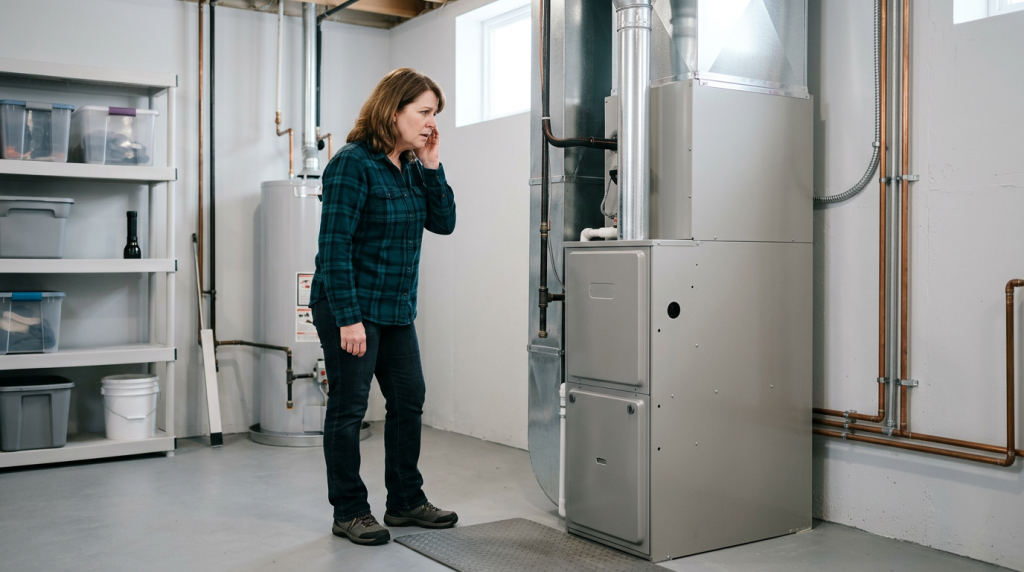
Furnace Making Loud Banging Noise? What to Do First
If the sound is new, unusually loud, or appears to come from inside the furnace cabinet, limit your checks to observation.
- Turn the heating system down or off at the thermostat if it is safe to do so. Do this only when you do not suspect a gas leak.
- Do not intentionally restart the furnace to reproduce a hard startup bang. A furnace that bangs as the burners ignite should remain off until it can be evaluated.
- Note exactly when the noise happened. Was it before ignition, at ignition, when the blower started, while the blower was running, or after shutdown?
- Note where it seemed to originate. Distinguish the furnace cabinet from nearby ductwork, a wall or ceiling, another heating appliance, or an outdoor unit.
- Look only from a safe distance. Check for visible smoke, soot, scorch marks, unusual external vibration, or obvious damage without opening the furnace.
- Leave the home for a gas odor, visible fire, substantial smoke, or a carbon-monoxide alarm.
- Call an HVAC professional for a hard internal startup bang, repeated banging, or a source you cannot identify safely.
Gas-leak instructions override ordinary furnace-shutdown instructions. If you smell a rotten-egg or sulfur-like gas odor, leave without operating the thermostat, switches, breakers, appliances, garage-door opener, or phone inside the building. Call the gas utility or 911 from a safe location.
Furnace Banging Noise: Quick Diagnostic Table
| When the Noise Happens | Where It Seems to Come From | Possible Explanation | Immediate Action | Who Should Handle It? |
|---|---|---|---|---|
| One hard bang as burners ignite | Furnace cabinet | Possible delayed ignition | Turn furnace off safely | HVAC technician |
| Repeated startup boom | Furnace cabinet | Ignition or combustion problem | Keep furnace off | HVAC technician |
| Pop after warm air starts | Wall, ceiling, or duct | Duct expansion or flexing | Check filter and vents | Homeowner checks; HVAC if persistent |
| Pop or thump after shutdown | Ductwork or cabinet | Duct contraction or mechanical stop | Note location and severity | HVAC if loud or recurring |
| Rhythmic banging while blower runs | Furnace cabinet | Blower or loose component | Shut down if strong or worsening | HVAC technician |
| Scraping or thumping with vibration | Furnace cabinet | Blower-wheel, motor, or mounting problem | Turn furnace off | HVAC technician |
| Bang with gas odor | Furnace area | Possible gas hazard | Leave immediately | Gas utility or emergency services |
| Bang with soot or smoke | Furnace area | Combustion or ignition problem | Shut down; leave if smoke is substantial | HVAC or emergency services |
| Bang from oil furnace | Burner or furnace | Delayed ignition or burner problem | Shut down safely | Oil-heating professional |
| Noise near boiler or radiator | Pipes or radiator | Hydronic or steam-system issue | Identify location only | Boiler/heating professional |
| Noise from outdoor heat pump | Outdoor unit | Defrost, compressor, fan, or other issue | Observe from a safe distance | HVAC if abnormal |
Timing and location can narrow the possibilities, but neither proves the exact diagnosis.
Why a Gas Furnace May Bang at Startup
A gas furnace follows a controlled startup sequence. The thermostat calls for heat, the furnace performs required safety and venting steps, the ignition system activates, gas reaches the burners, and the burners should ignite promptly. The blower begins moving heated air after the furnace has had time to warm.
Some clicks, a soft ignition sound, and blower startup can be part of normal operation. A sharp bang or boom at burner ignition is different.
A gas furnace making banging noise specifically as the burners light may have an ignition problem that requires professional diagnosis. Manufacturer troubleshooting guidance identifies a loud startup ignition bang as a condition requiring service rather than homeowner repair.
Delayed Ignition and Loud Furnace Bangs
Delayed ignition occurs when gas does not ignite as promptly as intended. A small amount can accumulate before ignition occurs, creating a sudden bang or boom when it finally lights.
Possible underlying conditions can involve:
- Burner contamination or deterioration
- Ignition components
- Fuel delivery
- Combustion-air conditions
- Other furnace or control problems
A furnace may continue producing heat after the bang. That does not mean the condition is safe to ignore.
If the furnace makes a loud bang when it turns on, shut it down normally if you can do so safely and there is no gas odor. Do not repeatedly restart it.
Do not open the burner compartment, clean or adjust burners, test an igniter or flame sensor, or adjust gas pressure or valves. Arrange service with a qualified HVAC technician.
Dirty Burners or Ignition-System Problems
Contamination, burner deterioration, poor ignition, or a malfunctioning ignition component can contribute to abnormal startup. However, the noise alone cannot identify which part is responsible.
Keep the furnace cabinet closed. Burner and ignition diagnosis requires access to combustion components and may involve electrical, fuel, and combustion testing.
Do not:
- Blow compressed air into the burner area
- Use brushes, wire, or solvents inside the furnace
- Attempt to watch ignition through an opened compartment
- Apply a flame to test anything
- Adjust burner alignment or fuel controls
The safe homeowner response to a hard ignition bang is shutdown and professional evaluation.
Ductwork Expansion, Flexing, and Popping
Not every furnace banging noise comes from the furnace itself. Sheet-metal ducts can move as temperatures and air pressure change.
Typical clues include:
- The sound comes from a wall, ceiling, or exposed duct rather than the furnace cabinet.
- It starts after warm airflow begins.
- It occurs shortly after the blower stops.
- It sounds like a pop, ping, or sheet-metal thump rather than a burner boom.
- The noise repeatedly comes from the same section of ductwork.
Possible contributors include thin or unsupported sheet metal, loose duct sections, temperature changes, air-pressure changes, restricted airflow, blocked registers, a dirty filter, or duct design.
Light duct ticking or popping can occur during normal heating operation. A sudden bang at the furnace itself during ignition is a different concern.
Do not drill, cut, screw into, bend, or reinforce concealed ductwork unless the location of wiring, plumbing, gas lines, and other hidden systems is known and the repair method is appropriate.
Dirty Filter and Restricted Airflow
Restricted airflow can increase pressure changes within the duct system and make flexible or thin sheet metal move more noticeably. It can also cause the furnace to operate abnormally.
A few homeowner checks are reasonable after normal shutdown:
- Inspect a normally accessible air filter.
- Replace it if visibly dirty or due according to the equipment and filter instructions.
- Confirm that the filter is installed in the correct direction.
- Make sure ordinary supply registers are open.
- Check that return grilles are not covered by furniture, rugs, boxes, or curtains.
A dirty filter can restrict airflow, and blocked vents can contribute to airflow problems.
Replacing a filter may reduce airflow-related duct noise, but it does not correct delayed ignition, an internal mechanical problem, or a damaged blower.
If you’re replacing your furnace filter, our MERV 8 vs MERV 11 vs MERV 13 comparison explains filtration differences, airflow considerations, and why choosing a filter compatible with your HVAC system matters.
Blower Motor, Blower Wheel, or Loose Internal Parts
A furnace blower moves heated air through the duct system. If a blower component becomes loose, damaged, unbalanced, or obstructed, the noise may begin when the blower starts rather than when the burners ignite.
Possible symptoms include:
- Rhythmic banging
- Repeated thumping
- Scraping
- Strong vibration
- Noise that begins as the blower starts
- Noise that continues throughout the heating cycle
Grinding, banging, vibration, weak airflow, or repeated breaker trips can accompany blower or motor problems and call for professional inspection.
Do not remove the blower access panel, reach into the compartment, turn the blower wheel by hand, tighten internal hardware, lubricate a motor, or test capacitors or wiring.
Shut the furnace down if the mechanical noise comes with strong vibration, a burning odor, sparks, smoke, or a tripped breaker.
Furnace Bangs When Shutting Off
A furnace that bangs when shutting off may be producing a different type of noise from a furnace banging at startup.
Possible causes include:
- Ductwork contracting as it cools
- Sheet metal flexing as air pressure drops
- Loose duct connections
- A blower or damper stopping abnormally
- Another mechanical component
A light pop in a distant duct after the heating cycle ends may be less urgent than a hard bang from inside the furnace cabinet.
Repeated, worsening, vibrating, scraping, or clearly internal shutdown noises should be inspected by an HVAC technician.
Oil Furnace Bang, Boom, or Puffback Symptoms
Oil-fired furnaces and boilers can also produce abnormal ignition sounds. Delayed ignition, burner problems, fuel conditions, or combustion problems can contribute to booming, puffback, smoke, or soot. Oil-burner technical guidance identifies delayed ignition and puffback as conditions associated with burner and fuel-system problems.
Warning signs can include:
- A boom at startup
- Soot around the appliance or registers
- Smoke or a strong oily odor
- Black residue
- Abnormal burner cycling
- Sudden soot released into the home
Turn the system off from a safe location and call a qualified oil-heating professional.
Do not adjust the burner, nozzle, electrodes, fuel pump, combustion settings, or oil lines.
Could the Noise Be Something Other Than the Furnace?
Heating systems contain several components that can create bangs, pops, or thumps, and the furnace may only appear to be the source.
Possibilities include:
- Boiler or hydronic piping: Moving water or pressure changes can create pipe noise.
- Steam radiators: Steam and condensate problems can produce knocking or banging.
- Plumbing pipes: Expansion and movement can sound similar to duct popping.
- Heat pumps: An outdoor unit can make distinct noises during defrost or when a compressor or fan has a problem.
- Water heaters: Burner, expansion, or sediment-related noises may be mistaken for furnace sounds.
- House framing or ductwork: Thermal movement can cause pops in walls or ceilings.
- Objects near registers: Loose items may rattle or move when airflow begins.
Note the timing and general location rather than assuming every bang is a furnace failure.
Which Furnace Sounds May Be Normal?
A furnace is not silent. Depending on the equipment, ordinary operation can include:
- A thermostat click
- A brief ignition sound or soft whoosh
- Blower startup
- Steady airflow
- Light duct ticking or pinging
- Minor metal contraction after shutdown
Normal also depends on the established sound pattern of your particular system.
A new, unusually loud, worsening, scraping, grinding, or repeatedly banging sound deserves attention even if the furnace continues to heat the home.
Safe Homeowner Checks
Keep your inspection external and observational:
- Note the exact point in the heating cycle when the sound occurs.
- Note whether it seems to come from the cabinet, a duct, a wall, or another appliance.
- Determine whether it happened once or occurs every cycle.
- Look externally for unusual vibration, smoke, soot, scorching, or damage from a safe distance.
- Inspect or replace a normally accessible filter after safe shutdown.
- Make sure ordinary supply and return openings are unobstructed.
- Record the sound from a safe distance if you can do so without restarting the furnace.
- Maintain and test smoke and carbon-monoxide alarms according to their instructions.
Do not remain beside the furnace waiting for it to attempt ignition again.
What Homeowners Should Not Do
- Do not repeatedly restart the furnace to reproduce the bang.
- Do not remove furnace access panels.
- Do not watch burners through an opened compartment.
- Do not clean or adjust burners.
- Do not adjust gas valves or gas pressure.
- Do not test ignition components.
- Do not bypass a door switch or other safety control.
- Do not touch wiring, capacitors, motors, or control boards.
- Do not reset a repeatedly tripping breaker.
- Do not perform combustion testing without proper equipment and training.
- Do not use a flame to check for gas.
- Do not assume continued heating means the furnace is safe.
When to Turn the Furnace Off
Turn the system off normally from the thermostat when it can be done safely and there is no suspected gas leak if you notice:
- A hard bang from inside the furnace at ignition
- Repeated startup banging
- Strong cabinet vibration
- Scraping or grinding
- Banging with a burning odor
- Soot or scorching
- Repeated furnace shutdowns
- A tripped breaker
- An uncertain internal noise
- Oil-furnace boom or puffback symptoms
If gas is suspected, leave without operating the thermostat or other switches.
Emergency Warning Signs
Leave the home instead of continuing to troubleshoot if you encounter:
- A rotten-egg or sulfur-like gas odor
- Flames outside their intended burner area
- Substantial smoke
- Sparks or arcing
- A carbon-monoxide alarm
- Soot suddenly released throughout the home
- Anyone feeling ill during a possible combustion or carbon-monoxide incident
For suspected gas, leave immediately with people and pets. Do not operate switches, thermostats, appliances, breakers, garage-door openers, or phones inside. Call the gas utility or 911 after moving to a safe location, and do not return until authorized.
For visible fire, substantial smoke, or a carbon-monoxide alarm, leave and call emergency services. Carbon monoxide cannot be identified by smell or furnace noise. If a CO alarm sounds, do not search for the source before leaving.
When to Call an HVAC Technician
Professional evaluation is appropriate when:
- A hard bang comes from the furnace cabinet.
- The bang happens at ignition.
- The sound repeats.
- The furnace shakes or vibrates.
- Banging continues while the blower runs.
- The furnace struggles to start.
- Heating performance has changed.
- Soot, scorch marks, smoke, or unusual odors appear.
- An internal combustion, electrical, or mechanical problem is possible.
- You cannot confidently locate the source.
Internal ignition, burner, fuel, electrical, blower, and combustion repairs are professional work.
Preventing Future Furnace Noise Problems
- Inspect or replace filters according to the equipment instructions.
- Keep normal supply registers and return grilles unobstructed.
- Schedule periodic furnace maintenance.
- Have recurring ignition noises investigated promptly.
- Have persistent loose or noisy ductwork professionally assessed.
- Maintain smoke and carbon-monoxide alarms according to their instructions.
- Keep stored combustible materials away from the furnace area.
- Pay attention when the furnace develops a sound that differs from its normal operating pattern.
Maintenance can reduce preventable problems, but it cannot eliminate every mechanical or ignition failure.
For a practical schedule of filter inspections, seasonal checks, and professional servicing, follow our preventive HVAC maintenance guide to help identify developing heating-system problems before they become more serious.
Frequently Asked Questions
Why does my furnace make a loud bang when it turns on?
If the bang comes from inside a gas furnace at the moment of ignition, delayed ignition is one possible cause. Shut the furnace down safely and have an HVAC technician inspect it rather than repeatedly restarting it.
Is a furnace banging noise dangerous?
It depends on the source. Light duct popping may come from sheet-metal movement, while a hard furnace banging noise at burner ignition can indicate a combustion or ignition problem that needs professional service.
Should I turn off a furnace that bangs?
Turn it off if the sound is a hard internal bang, repeats, occurs at ignition, causes strong vibration, or comes with smoke, soot, a burning odor, or electrical symptoms. Suspected gas requires evacuation instead of operating switches.
Can dirty burners cause a furnace to bang?
Burner contamination may contribute to ignition problems, but sound alone cannot confirm dirty burners. Burner inspection and cleaning should be performed by a qualified technician.
Can a dirty filter cause banging ductwork?
A heavily restricted filter can change airflow and duct pressure, which may contribute to popping or flexing. It does not explain every duct noise or an ignition bang.
Why does my ductwork pop when the heat starts?
Metal ducts can expand as they warm and flex as airflow pressure changes. Repeated loud popping may also involve duct support, design, or airflow restrictions that deserve evaluation.
Why does the furnace bang when it shuts off?
Cooling ductwork may contract or flex as the blower stops. A hard internal bang, scraping, strong vibration, or worsening shutdown noise should be professionally checked.
Can a blower motor cause a thumping noise?
Yes. Blower-wheel, motor, bearing, mounting, or other mechanical problems can produce rhythmic thumping, scraping, vibration, or banging while the blower runs.
Why does my oil furnace make a boom?
Delayed ignition or another oil-burner or combustion problem may cause a boom or puffback. Shut the equipment down safely and contact a qualified oil-heating professional.
Can I keep running the furnace if the bang happens only once?
A single light duct pop is different from one hard bang inside the furnace at ignition. Do not intentionally restart a gas furnace to see whether a hard startup bang happens again.
Does a furnace bang mean the heat exchanger is cracked?
No. Noise alone cannot diagnose a cracked heat exchanger. Banging has several possible causes, and heat-exchanger condition requires proper professional inspection.
Can carbon monoxide cause a banging sound?
Carbon monoxide itself is odorless and silent. A furnace bang does not identify carbon monoxide. If a carbon-monoxide alarm sounds, leave the home immediately and call emergency services from outside.
Final Thoughts
A furnace making loud banging noise needs to be judged by when and where the sound occurs. A light pop from distant ductwork may be ordinary sheet-metal movement, while a hard furnace banging noise from inside a gas furnace at startup may indicate delayed ignition and should not be reproduced by repeatedly cycling the equipment.
Leave internal ignition, fuel, combustion, electrical, and blower repairs to qualified professionals. If the noise comes with suspected gas, visible fire, substantial smoke, or a carbon-monoxide alarm, leave the home and take the appropriate emergency action rather than continuing to tro