Best Broadcast Spreader for Home Lawn Use
Choosing the best broadcast spreader for home lawn use gets a lot easier when you match the spreader to your yard size instead of chasing the biggest or cheapest model on the shelf.
A lot of homeowners buy a spreader once, use it a few times a year, and just want something that works without streaking the lawn or spilling product everywhere. That is why the best choice is usually not the most heavy-duty machine or the smallest bargain model. It is the one that gives you even coverage, simple control, and enough capacity for your yard.
For most beginner homeowners, a mid-size walk-behind broadcast spreader is the best overall fit.
What a broadcast spreader is in plain English
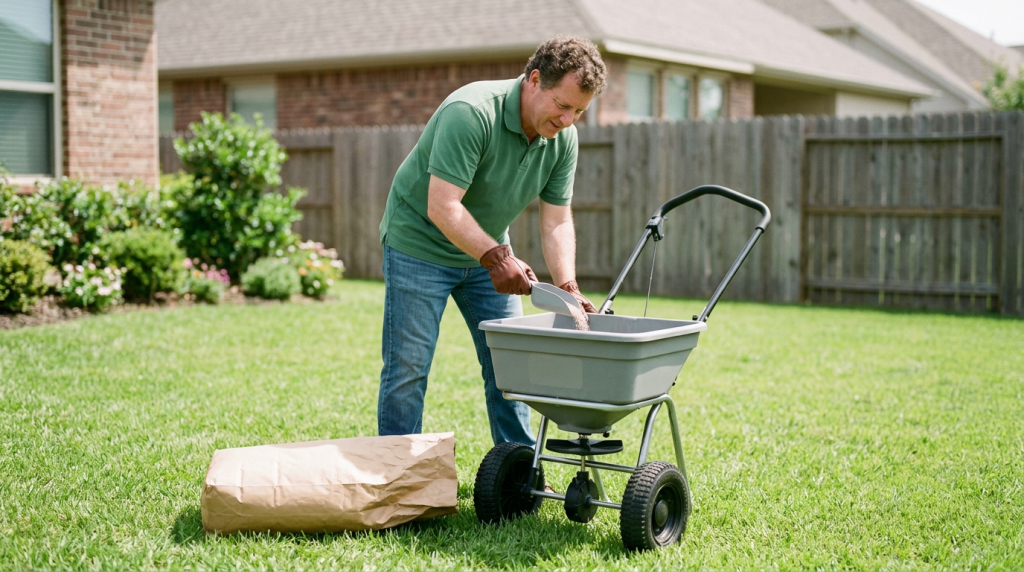
A broadcast spreader, sometimes called a rotary spreader, throws seed or fertilizer out in a wide pattern as you walk.
That makes it faster than hand spreading and usually faster than a drop spreader on open lawn areas.
In simple terms:
- a broadcast spreader covers wider areas more quickly
- a drop spreader drops product straight down in a narrower path
For most home lawns, broadcast spreaders are more practical because they cover space faster and are easier to use once you get the hang of them.
Best broadcast spreader for home lawn use
For most homeowners, the best choice is a walk-behind broadcast spreader with stable wheels, a smooth shutoff, and enough hopper space for typical lawn jobs.
That usually means a spreader in the homeowner-to-heavy-homeowner range, not the tiny entry model and not the oversized commercial machine.
A good broadcast spreader for home use should feel:
- stable on the lawn
- easy to push when loaded
- predictable when opening and closing
- simple to store
- easy to clean after use
That is the practical answer to best broadcast spreader for home lawn use. Most people do best with a solid walk-behind model that can handle fertilizer, grass seed, and occasional weed-control granules without becoming a hassle.
The best type for most homeowners
If you have a typical suburban yard, the best all-around choice is usually a mid-size push broadcast spreader.
This type gives you enough capacity to avoid constant refilling, but it is still small enough to store in a garage or shed without taking over the whole space.
A good example of this category is the Scotts Elite Spreader, which is built more heavily than many basic homeowner spreaders and is known for a large hopper, dual impellers, and foam filled tires. Another strong option in this same general lane is the EarthWay 2030P-Plus, which is also designed as a sturdier homeowner model with larger pneumatic tires and a bigger-capacity hopper.
For many homeowners, this is the sweet spot between convenience and durability.
Best option for small lawns
Not every yard needs a large walk-behind spreader.
If your lawn is small, your storage space is tight, or you only spread product a few times each year, a compact homeowner model can make more sense.
A common example is the Scotts EdgeGuard Mini, which is designed for smaller lawns and easier storage. It is not as heavy-duty as larger spreaders, but it can be practical for homeowners with modest square footage who want a simple setup.
For very small yards, patch areas, or tight spaces, a handheld broadcast spreader can also work. Models like the Scotts Wizz are often easier to store and plenty useful for light-duty jobs.
Smaller-lawn spreaders make the most sense when
- your lawn is relatively small
- you do not want to store a larger tool
- you mainly spread product a few times a year
- you are working around lots of beds, curves, or narrow lawn sections
Best choice if you want longer-term durability
Some homeowners do not mind spending more once if it means buying a spreader that feels more stable and lasts longer.
That is where heavier walk-behind models usually stand out. They often have better tires, stronger frames, and better control over where product goes.
Features that usually come with a more durable spreader
- larger pneumatic tires
- stronger frame construction
- smoother hopper flow
- better chute or side-deflector control
- more comfortable handles
- fewer problems on rough ground
That is why many homeowners who get frustrated with light-duty spreaders end up moving to something like an ECHO or EarthWay model after a season or two.
Best budget approach for beginners
A lot of beginner homeowners do not need a premium spreader right away.
If you are just getting started, the smartest budget move is usually to buy a decent compact push spreader instead of the absolute cheapest one available. A low-cost spreader can work, but poor wheel tracking, uneven flow, and awkward shutoff control can create more lawn problems than the savings are worth.
A budget-friendly homeowner spreader can still be a good choice when:
- the lawn is small
- you only apply product a few times a year
- you store tools carefully
- you are willing to walk steadily and calibrate carefully
The key is to expect more attention and more careful use from a budget spreader.
The features that matter most
Many homeowners focus on capacity first, but that is not always the most important thing.
The spreader that feels easiest to use well is often the better purchase.
The most important features to look for
- Stable wheels: larger wheels usually roll better on uneven lawns
- Smooth shutoff control: helps reduce accidental dumping at the end of a pass
- Even product flow: helps prevent stripes and patchy application
- Comfortable handle height: makes it easier to push at a steady pace
- Side deflector or edge control: useful near driveways, sidewalks, and beds
- Reasonable hopper size: enough for your yard without becoming awkward to store
- Corrosion resistance: especially helpful if you also use the spreader for ice melt
These features matter more than flashy wording on the box.
Why wheel size matters more than beginners expect
Small hard wheels can be frustrating on bumpy lawns.
When the spreader bounces, the product flow and spread pattern can become less even. That can show up later as stripes, missed areas, or heavier lines of fertilizer.
Pneumatic tires, which are air-filled tires, usually roll more smoothly on typical home lawns. They are especially helpful if your yard has rough ground, roots, or uneven sections.
That is one reason mid-range and better homeowner spreaders often feel easier to use.
Broadcast spreader vs drop spreader
Some homeowners wonder whether they should buy a drop spreader instead.
A drop spreader releases product straight down between the wheels. That can be useful when you need very precise placement, but it also means slower work and more careful overlap.
For most beginner homeowners, a broadcast spreader is the better first tool because it is more versatile for:
- fertilizer
- grass seed
- some weed-control granules
- larger open lawn sections
A drop spreader can still be useful in very tight areas, but it is usually not the best all-around first purchase for a typical lawn.
A simple recommendation by yard type
If you just want the short practical answer, here it is.
Choose based on your yard
- Small lawn: compact push spreader or handheld broadcast spreader
- Typical suburban lawn: mid-size walk-behind broadcast spreader
- Uneven lawn or homeowner who wants better durability: heavier walk-behind model with larger pneumatic tires
- Patch jobs only: handheld spreader can be enough
This is usually a better way to shop than trying to find one universal “best” model for everyone.
Common mistakes homeowners make when buying a spreader
A good spreader still needs the right setup and expectations.
Common buying mistakes include
- choosing a spreader only by price
- buying a large model for a very small yard
- buying a tiny model for a yard that needs frequent refills
- ignoring wheel quality
- assuming spreader settings are exact for every product
- expecting one spreader setting to work for every fertilizer or seed type
Different lawn products can flow differently, even when the label gives a spreader setting. That is why calibration matters.
Why calibration matters no matter what you buy
Calibration sounds technical, but the idea is simple.
It means checking that the spreader is actually applying the right amount of product for your lawn and walking speed. Bag settings are a helpful starting point, but they are not perfect in every real yard.
Good calibration habits include
- measuring your lawn square footage first
- starting with the product label setting
- testing on a smaller section if possible
- walking at a steady pace
- slightly overlapping passes evenly
- avoiding sharp turns while the hopper is open
Even the best broadcast spreader for home lawn use can leave poor results if the product rate is wrong or your walking pace keeps changing.
If one of the main jobs you are using the spreader for is crabgrass control, our guide on when to apply crabgrass preventer before first spring mow will help you get the timing right before you fill the hopper.
Safe DIY checks before using a spreader
Most homeowners can use a broadcast spreader safely with a few basic checks.
Safe DIY checks include
- making sure the hopper opens and closes smoothly
- checking tire inflation if the spreader has pneumatic tires
- confirming the spreader is dry and clean before loading product
- sweeping any spilled product off hard surfaces instead of washing it away
- reading the lawn product label before application
- testing the spreader setting carefully instead of guessing
These steps help prevent streaks, waste, and accidental overapplication.
If you are mainly spreading lawn food, read our guide on best time to fertilize northern cool-season grass so you use the tool at the right point in the season.
When to call a professional
Sometimes the issue is not the spreader. It is the lawn plan behind it.
A professional may be worth calling when
- you keep getting stripes or burn marks after careful spreading
- the lawn is large enough that homeowner equipment feels inefficient
- you are not sure which lawn products should go down at all
- the yard has steep slopes, drainage issues, or tricky application zones
- you are dealing with a lawn that is more weeds than grass
A professional can help when the bigger problem is lawn diagnosis, not just tool choice.
The best practical pick for most homeowners
If you want the most useful answer without overcomplicating it, go with this:
For most homeowners, the best broadcast spreader is a mid-size walk-behind model with good wheels, simple controls, and enough hopper capacity to handle your lawn without constant refills.
If your yard is small and storage matters more than durability, a compact model can still be the better buy. If you want something sturdier for long-term use, step up to a heavier-duty homeowner spreader with pneumatic tires.
Final takeaway
The best broadcast spreader for a home lawn is usually not the biggest and not the cheapest. It is the one that matches your yard size, rolls smoothly, spreads evenly, and feels easy enough to use correctly every time.
For most beginner homeowners, that points to a mid-size walk-behind broadcast spreader as the best overall choice. Smaller lawns can do well with compact push or handheld models, while larger or rougher yards benefit from sturdier spreaders with better wheels and more stable control.