best garden hose for homeowners
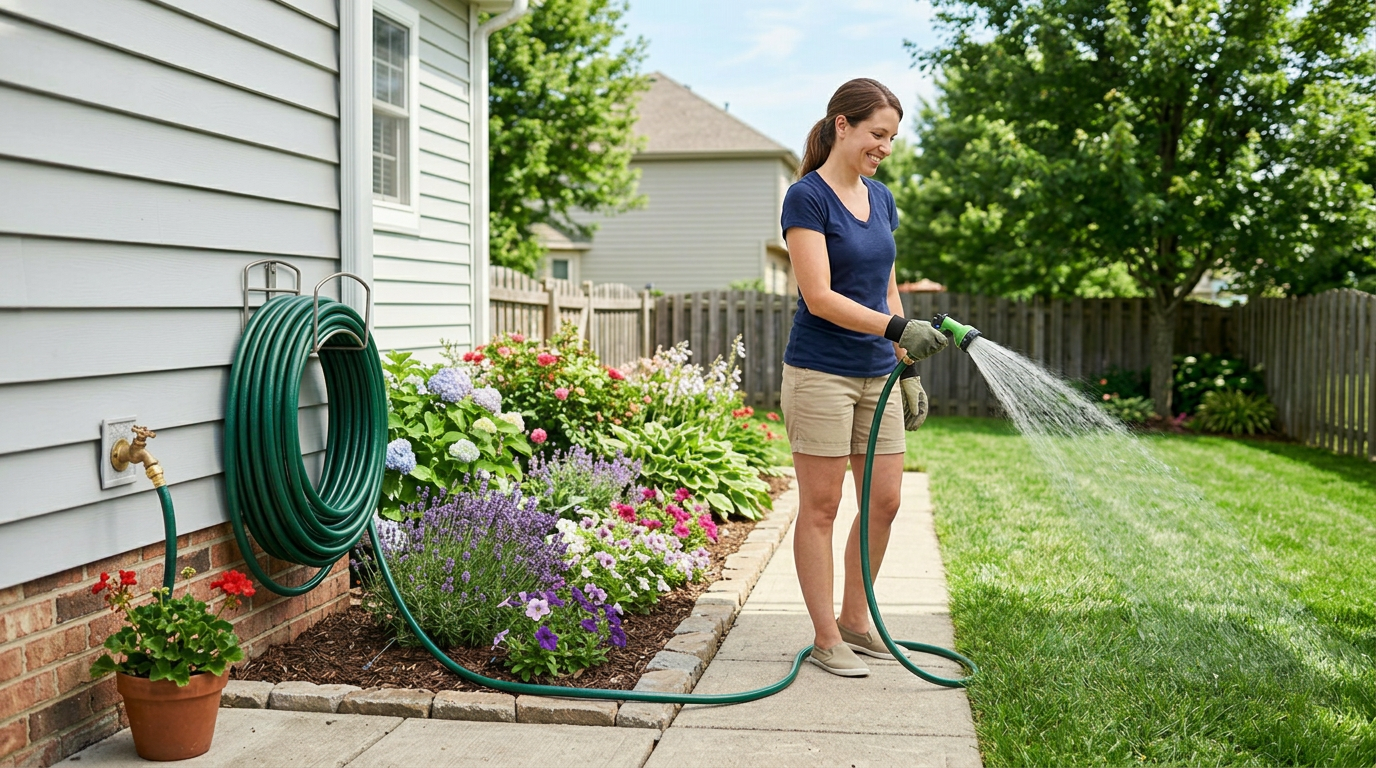
The best garden hose for your home is the one that reaches your regular watering areas without adding unnecessary weight, bulk, or storage hassle. For most homeowners, that means balancing hose length, material, diameter, flexibility, durability, and fitting quality rather than choosing the heaviest or longest hose available.
There is no single hose that works best for every property. A small patio may call for a lightweight 25-foot hose, while a larger lawn may be better served by a durable 50- or 75-foot hose. Climate, watering tasks, storage space, and budget should also shape the decision.
| Feature | Why it matters | What to look for |
|---|---|---|
| Length | Affects reach, weight, and storage | Long enough to reach your farthest regular watering point |
| Diameter | Influences water flow | Match flow needs to normal household watering tasks |
| Material | Affects weight, flexibility, and durability | Rubber, vinyl, hybrid, or expandable construction suited to your use |
| Weight | Changes how tiring the hose is to move | Lighter construction if frequent carrying matters |
| Flexibility | Helps around corners and landscaping | Hose that bends without fighting you |
| Kink resistance | Reduces interrupted water flow | Construction that resists folding sharply during use |
| Couplings | Connect hose to spigot and accessories | Solid, secure fittings that are easy to tighten |
| Storage | Determines how convenient ownership feels | A hose length and style that fits your storage setup |
| Durability | Affects useful life | Construction appropriate for weather, dragging, and frequency of use |
What Makes a Good Garden Hose?
A good garden hose should reach where you need it, move easily around the property, connect securely, and tolerate the way you actually use and store it.
The most important factors are:
- Enough length without excessive extra hose
- Suitable diameter for your watering needs
- Manageable weight
- Flexibility around beds, corners, and obstacles
- Resistance to frequent kinking
- Durable couplings
- Construction suited to your climate and storage conditions
Start by measuring from the outdoor spigot to the farthest place you regularly water. Add enough extra length to move comfortably around obstacles, but avoid buying substantially more hose than you need.
Extra length adds weight, takes up storage space, and creates more hose to pull across the yard.
Which Garden Hose Material Is Best?
Hose material affects almost everything about how a hose feels and performs. Rubber, vinyl, hybrid, and expandable hoses each have useful applications.
Rubber Hoses
Rubber hoses are often chosen when durability matters more than low weight. They can be a good fit for frequent use, larger properties, or situations where the hose is dragged across rough surfaces.
Their main drawback is weight. A long rubber hose can become tiring to move, especially when filled with water.
Rubber may make sense if you prioritize:
- Durability
- Frequent outdoor use
- Resistance to rough handling
- A more substantial hose feel
If weight and storage convenience matter more, another material may be easier to live with.
Vinyl Hoses
Vinyl hoses tend to emphasize lower weight and affordability. They can work well for lighter residential watering, especially when the hose is not regularly subjected to rough handling.
Compared with heavier constructions, lightweight vinyl hoses may be easier to carry and coil. The tradeoff can be less resistance to kinking, abrasion, or repeated hard use, depending on construction quality.
For a closer material comparison, see Rubber vs Vinyl Garden Hose for Everyday Yard Use.
Hybrid Hoses
Hybrid hoses combine materials to balance flexibility, weight, and durability. They are often a practical middle ground for homeowners who want something easier to handle than a traditional heavy rubber hose without moving all the way to the lightest construction.
A well-matched hybrid hose can be a strong general-purpose choice for lawns, gardens, washing tasks, and routine outdoor cleanup.
Expandable Hoses
Expandable hoses are designed to take up less space when not pressurized. Their compact storage and light weight can make them appealing for patios, small yards, balconies, and other locations where storage is limited.
They are less appropriate when durability under dragging, abrasion, or frequent hard use is the top priority. Their fittings and outer covering also deserve close attention because the hose’s construction differs from a conventional garden hose.
Coil hoses serve a similar compact-storage purpose. They are useful for short-distance watering but can resist stretching and may be less convenient when you need to cover a larger area.
Soaker hoses are different again. They are intended to release water gradually along their length rather than function as a general-purpose hose for nozzles, washing, or moving from task to task.
Choosing the Right Hose Length
Length is one of the easiest places to make an expensive and inconvenient mistake.
25-Foot Hose
A 25-foot hose is a strong option when the watering area is close to the house.
It works especially well for:
- Small yards
- Patios
- Container plants
- Small planting beds
- Washing items near the house
- Limited hose storage
Short hoses are generally easier to carry, coil, and store.
50-Foot Hose
A 50-foot hose is often the most versatile length for general residential use. It can cover a reasonable area without creating the bulk of a much longer hose.
For many homeowners, 50 feet provides enough flexibility for lawn watering, garden beds, vehicle washing, and outdoor cleanup.
75-Foot Hose
A 75-foot hose makes sense when 50 feet does not comfortably reach your regular watering areas.
Before buying one, consider whether you truly need the additional length. The extra hose increases weight and creates more material to drag, coil, and store.
100-Foot Hose
A 100-foot hose is best reserved for properties that actually require that reach.
For occasional distant watering, another option is to connect hoses when needed rather than handling a very long hose every time. Connections can introduce another potential leak point, however, so the setup should still be practical for your normal use.
The simplest rule is to measure first and buy the shortest hose that comfortably reaches your farthest regular watering point.
Hose Diameter and Water Flow
Hose diameter affects how easily water can move through the hose.
For routine residential tasks such as watering plants, spraying a lawn, or washing outdoor surfaces, a general-purpose diameter is usually adequate. Larger-diameter hoses can deliver more water, but they also tend to hold more water and may feel heavier in use.
Your decision should depend on what you plan to do:
- Container plants and light watering: High flow is rarely the main concern.
- General lawn and garden watering: Choose a balanced general-purpose hose.
- Tasks requiring sustained higher flow: A larger-diameter hose may be more appropriate.
Do not assume a larger hose will solve every water-flow complaint. A partially closed valve, leaking connection, poor nozzle, restricted fitting, or low household water pressure can also reduce performance.
If water pressure seems unusually weak before the hose is attached, the problem may not be the hose at all.
Weight, Flexibility, and Kink Resistance
Hose specifications matter, but handling determines whether you will enjoy using the hose.
A heavy hose may feel perfectly manageable across a short lawn but become tiring when you have to pull 75 feet around landscaping. A lighter hose can be much easier to carry between watering areas.
Flexibility matters around:
- House corners
- Raised beds
- Trees and shrubs
- Patio furniture
- Fences
- Vehicles
A hose that stays overly stiff can be frustrating even if it is highly durable.
Kinking is another major usability issue. A hose that repeatedly folds over and cuts off water flow forces you to stop, walk back, and straighten it.
No hose is completely immune to poor positioning, but flexible construction and good handling characteristics can reduce the problem. Avoid sharp bends during storage and fully untwist a hose before pulling it long distances.
Couplings, Durability, and Weather Resistance
The fittings at each end of the hose are easy to overlook, but they affect every use.
A coupling should attach securely to the outdoor spigot, nozzle, sprinkler, or other accessory without excessive effort. Poorly fitting or damaged connections can leak even when the hose body is still in good condition.
When evaluating a hose, look for:
- Securely attached couplings
- Threads that engage smoothly
- Enough fitting surface to grip comfortably
- Strain relief near the connection when provided
Check the washer inside the female coupling if a connection begins leaking. A worn, missing, or poorly seated washer can cause dripping that may be mistaken for a failed hose.
Durability also depends on how the hose is treated. Repeatedly dragging any hose across sharp concrete edges, driving over it, or leaving it in harsh conditions can shorten its useful life.
Climate matters as well. If the hose will experience intense sun, freezing temperatures, or long periods outdoors, choose construction intended for those conditions and follow the manufacturer’s storage guidance.
Storage Matters More Than You May Expect
A garden hose spends much more time stored than it does carrying water.
Before buying, decide where the hose will go when you are finished. A 100-foot hose can look manageable in a package but occupy significant space once you are coiling and storing it regularly.
Common storage options include:
- Wall-mounted hose reels
- Freestanding reels
- Hose hangers
- Hose pots
- Manual coils
- Compact expandable or coil hoses
If you want a permanent reel setup, see Best Wall-Mounted Hose Reel for Homeowners.
Drain the hose as needed before storage and avoid forcing it into tight bends that encourage kinks or put stress on the fittings.
Best Garden Hose for Small Yards and Limited Storage
Small yards generally do not need a long, heavy-duty hose.
A 25-foot lightweight hose can be an excellent fit when the spigot is close to the watering area. It gives you enough reach for nearby beds, patios, and small lawns without creating unnecessary weight or storage bulk.
Consider these types for compact spaces:
- Lightweight conventional hose for easy daily handling
- Short hybrid hose for a balance of durability and flexibility
- Expandable hose when storage space is extremely limited
- Coil hose for short-range patio or container watering
A 50-foot hose can still make sense in a small yard when the property layout requires extra reach. Yard dimensions alone do not determine the correct length; spigot location matters just as much.
Best Hose for Patios and Container Plants
Patio and container watering usually favors convenience over maximum flow or heavy-duty construction.
A shorter, lightweight hose is easier to maneuver between pots and furniture. Expandable and coil hoses may also work well when the hose needs to disappear into a small storage area after every use.
Avoid buying a long hose simply because it seems more versatile. Pulling 75 or 100 feet of hose across a small patio rarely improves the watering experience.
Best Hose for General Lawn and Garden Use
For typical homeowner use, a flexible conventional or hybrid hose in a measured length is a practical starting point.
A general-purpose hose should be easy enough to move regularly while durable enough for lawn watering, flower beds, garden chores, vehicle washing, and outdoor cleanup.
For many properties, that means prioritizing:
- Moderate weight
- Good flexibility
- Reliable fittings
- Reasonable kink resistance
- Enough reach without large amounts of excess hose
A 50-foot hose often works well in this role when that length matches the property.
When a Heavy-Duty Hose Makes Sense
A heavier-duty hose earns its extra weight when durability is more important than maximum convenience.
Consider one if you:
- Use the hose frequently
- Have a larger property
- Regularly drag the hose across rough surfaces
- Need longer hose runs
- Want more substantial construction for demanding use
- Are willing to handle additional weight
Heavy-duty construction is not automatically an upgrade for everyone. If you primarily water a few planters 20 feet from the spigot, a heavier hose can make a simple job more cumbersome.
Common Garden Hose Buying Mistakes
Choosing the wrong hose usually comes from overbuying or focusing on one specification while ignoring everyday handling.
Avoid these common mistakes:
- Buying too much length. Extra hose adds weight, clutter, and storage work.
- Ignoring hose weight. A hose that feels manageable when empty becomes heavier with water inside.
- Choosing only by material. Construction quality, flexibility, fittings, and intended use matter too.
- Ignoring the couplings. A good hose body is less useful if the fittings are difficult to connect or prone to leaking.
- Assuming every kink is a defect. Twisting, sharp bends, and poor storage can make even a flexible hose harder to use.
- Forgetting storage. Decide where the hose will live before choosing its length and style.
- Assuming low flow means the hose is bad. Check the spigot, fittings, nozzle, and household water supply before replacing the hose.
How to Choose the Right Hose for Your Property
Use your property and normal watering routine as the deciding factors.
- Measure from the spigot to your farthest regular watering point.
- Choose the shortest hose that provides comfortable reach.
- Decide how much hose weight you are willing to move.
- Match the material to your durability and flexibility needs.
- Consider hose diameter based on your typical water-flow requirements.
- Check the quality and usability of the couplings.
- Decide where and how the hose will be stored.
- Factor in sun, cold, and other weather exposure.
- Choose a compact style only when its handling and durability tradeoffs fit your use.
- Avoid paying for heavy-duty construction you do not need.
For a small patio, that process may lead to a lightweight 25-foot hose. For a typical yard, it may point toward a flexible 50-foot general-purpose hose. Larger properties or demanding use may justify a longer, heavier-duty design.
Final Thoughts
The right garden hose is not necessarily the longest, thickest, or heaviest one. Choose based on the distance you actually need to cover, how much weight you want to handle, the durability your yard demands, and the storage space you have available.
For most homeowners, measuring first and then choosing the shortest practical hose with good flexibility, fittings, and appropriate durability will lead to a better everyday experience than simply buying more hose than the property requires.