Surge Protector vs Power Strip: Which One Do You Need?
If you are comparing surge protector vs power strip options, the quick answer is this: choose a surge protector for electronics you want to protect from voltage spikes, and use a basic power strip only when you need extra outlets for low-draw items that do not need surge protection.
A power strip mainly adds more places to plug things in. A surge protector adds outlets and includes built-in protection against certain power surges. Neither one is the right choice for high-draw appliances like space heaters, portable air conditioners, microwaves, refrigerators, freezers, or sump pumps.
The safest choice depends on what you are plugging in, how much power it uses, and whether the product is in good condition.
Surge Protector vs Power Strip: The Quick Difference
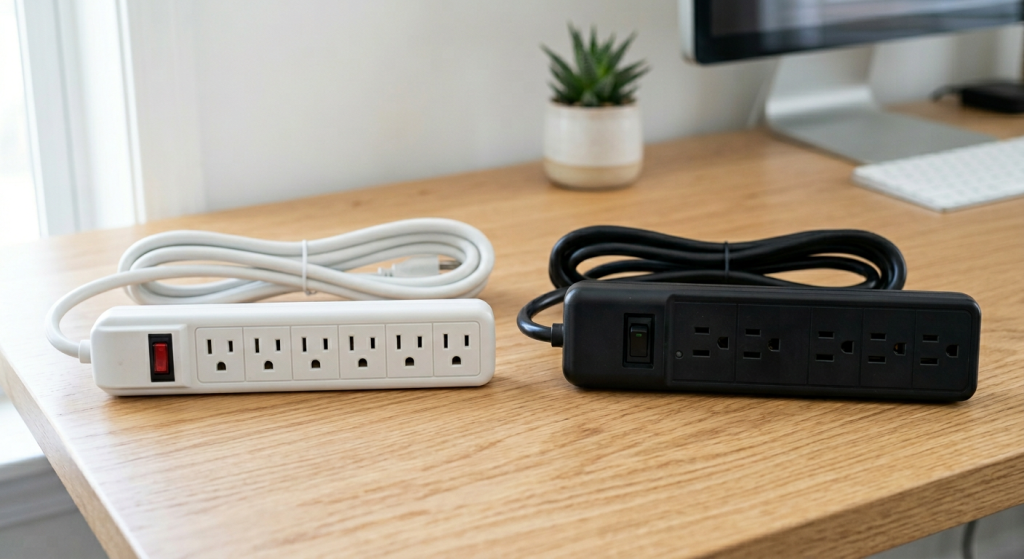
A power strip and a surge protector can look almost the same. Both may have several outlets, a cord, and an on/off switch. The important difference is what they are designed to do.
A basic power strip gives you more outlets from one wall outlet. It does not protect your electronics from voltage spikes unless the product specifically says it has surge protection.
A surge protector also gives you extra outlets, but it includes parts designed to help reduce damage from certain power surges. These surges can come from power grid changes, storms, or electrical events inside the home.
That does not mean a surge protector makes everything safe. It does not give an outlet unlimited power. It does not make high-draw appliances safe to plug into a strip. It also does not last forever.
| Product type | Best use | What it protects | What to avoid |
|---|---|---|---|
| Basic power strip | Low-draw items that need extra outlets | Usually no surge protection | Electronics you want protected |
| Surge protector | Computers, TVs, routers, game systems, chargers | Helps reduce damage from voltage spikes | High-draw appliances |
| Heavy-duty surge protector | Larger electronics or home office setups | Better capacity and protection features | Overloading or daisy-chaining |
| UPS/back-up power device | Computers, routers, or equipment needing short backup power | Surge protection plus short battery backup | Appliances and long-term power use |
For most homeowners, the choice is simple. Use a basic power strip only for light-duty convenience. Use a surge protector for electronics you care about. Use neither for appliances that pull a lot of power.
What a Power Strip Does
A power strip is a convenience product. It lets you plug several low-draw items into one outlet area. This can be useful behind a desk, near a nightstand, or in a craft area where you need to plug in small devices.
A basic power strip does not increase how much power the wall outlet can safely provide. It only gives you more plug-in spots. That is why overload is still possible.
Power strips are best for simple, low-power items. Think phone chargers, small desk lamps, alarm clocks, and similar devices. They are not meant to carry heavy appliance loads.
Some power strips have an on/off switch or a reset button. That does not always mean they have surge protection. Some also have overload protection, but that is not the same as surge protection.
If the package or label does not clearly say “surge protector” or list a surge rating, treat it as a basic power strip.
A power strip may be enough when the items are low-draw and not expensive electronics. But if you are plugging in a computer, TV, modem, router, or gaming system, a surge protector is usually the better category.
What a Surge Protector Does
A surge protector is made to help protect connected electronics from certain voltage spikes. These spikes are short bursts of extra voltage that can damage sensitive electronics.
Common home electronics often contain circuit boards and power supplies that do not like sudden voltage changes. A surge protector can help reduce that risk when it is properly rated, grounded, and in good condition.
Most surge protectors include a joule rating. In simple terms, this rating helps show how much surge energy the unit is designed to absorb over time. A higher rating usually means more protection capacity, but it is not the only thing to consider.
Many surge protectors also include an indicator light. This light may show that surge protection is active or that the unit is grounded. The label matters, so read what the light actually means on that product.
Surge protectors wear out. After enough surge events, the protection inside can weaken or stop working. The outlets may still provide power, but the surge protection may no longer be active. That is why the indicator light and product age matter.
A surge protector is a good match for many electronics, but it is not a fix for bad wiring, loose outlets, overloaded circuits, or damaged cords.
If you are unsure whether an older unit is still protecting your electronics, this guide on when to replace surge protector devices explains the warning signs to watch for.
Where Each One Makes Sense at Home
The best choice depends on what you are plugging in. Think about the item’s value, power use, and sensitivity.
A basic power strip makes sense when you simply need extra outlets for small, low-draw items. It is not the best choice for equipment that would be expensive or frustrating to replace.
A surge protector makes more sense for electronics. This includes home office equipment, entertainment centers, networking devices, and charging stations. It can also help organize cords while giving added protection.
A heavy-duty surge protector may make sense for a larger desk setup or entertainment center with several electronics. Look for the product category and rating, not just the size.
A UPS, or backup power device, is different. It includes battery backup for short outages. This can help a desktop computer, router, or modem stay on long enough to save work or shut down safely.
Common home uses by product type:
- Use a basic power strip for small lamps, phone chargers, and other low-draw convenience items
- Use a surge protector for TVs, computers, routers, modems, game systems, and home office gear
- Use a heavy-duty surge protector for larger electronics setups with several devices
- Use a UPS for computers or internet equipment that needs short backup power
- Use a direct wall outlet for high-draw appliances
- Call an electrician if the right outlet is not in the right place
The biggest mistake is using strips as a way to avoid proper outlets. If a device needs a dedicated or properly rated wall outlet, a power strip does not solve that.
What to Look For Before You Buy
You do not need to become an electrical expert to choose a safer product. Start with clear labeling and the right product category.
For electronics, look for a true surge protector, not just a strip with many outlets. Check the packaging or product label for surge protection details. A joule rating, grounded plug, and protection indicator light are useful features.
Cord condition and length also matter. A longer cord is not always better. Choose a cord long enough to reach safely, but not so long that it must run under rugs, across walkways, under furniture, or through doorways.
The plug should match your outlet without adapters. If the product has a three-prong grounded plug, do not remove the grounding prong or use an adapter to force it into a two-prong outlet.
Features worth checking:
- Clear surge protection rating for electronics
- Grounded three-prong plug when required by the product
- Protection or grounded indicator light with clear labeling
- Cord length that reaches without being stretched or hidden
- Spacing for larger plugs without crowding
- Sturdy housing with no cracks, looseness, or discoloration
For a home office or TV area, a surge protector with wider-spaced outlets may be easier to use with bulky plugs. For a router or desktop computer, a UPS may be worth comparing if short power backup matters.
Avoid buying only by outlet count. More outlets can invite overload if you plug in too much. The safer choice is the product that matches the job, not the one with the most slots.
Safety Mistakes to Avoid
Power strips and surge protectors are useful, but they are often misused. The most important rule is simple: do not plug high-draw appliances into them.
Space heaters, portable air conditioners, microwaves, refrigerators, freezers, sump pumps, toasters, hair dryers, and similar appliances should not be treated like small electronics. These items can draw heavy power and may overheat a strip or cord.
Do not daisy-chain strips. That means plugging one power strip or surge protector into another. This can overload the outlet area and create extra connection points that heat up.
Do not run cords under rugs, bedding, furniture, or carpets. Covered cords can trap heat and hide damage. Keep cords visible and away from water, pets, pinch points, and foot traffic.
Stop using a strip or surge protector if you notice:
- Warm or hot plug, cord, strip, outlet, or wall plate
- Burning smell, buzzing, crackling, sparks, or smoke
- Brown marks, melted plastic, cracks, or discoloration
- Loose plugs that slip out or wiggle
- A damaged, frayed, pinched, or taped cord
- Breakers tripping when connected items are in use
Replace the unit if it is damaged, overheated, or no longer shows active protection. Also consider replacing older surge protectors if they have handled major storms, power events, or years of regular use.
Call a licensed electrician if outlets are loose, warm, discolored, buzzing, sparking, or not located where you need them. Do not use strips, adapters, or extension cords as a permanent fix for a bad outlet layout.
If there is smoke, fire, strong burning odor, or active sparking, move away and call emergency services.
If you are thinking about using a surge protector for a refrigerator, this guide on surge protector for refrigerator use explains why ordinary strips are usually the wrong choice.
Final Thoughts
The surge protector vs power strip choice comes down to purpose. A power strip mainly adds outlets for low-draw items. A surge protector adds outlets plus protection for electronics when it is properly rated and still working.
Use surge protectors for computers, TVs, routers, modems, game systems, and similar electronics. Use basic power strips only for light-duty convenience. Consider a UPS when short battery backup matters for a computer or internet setup.
Do not use either one for high-draw appliances. Avoid damaged cords, covered cords, loose outlets, daisy-chaining, adapters, and overloaded setups.
If a strip, protector, plug, outlet, or cord feels hot, smells burnt, buzzes, sparks, trips breakers, or shows damage, stop using it. When the outlet itself seems unsafe or the room does not have power where you need it, call a licensed electrician instead of forcing a shortcut.