
Motion Sensor Light Bulb vs Motion Sensor Switch: Which Is Better?
A motion sensor light bulb vs motion sensor switch decision usually comes down to how simple or permanent you want the upgrade to be. A motion sensor light bulb is usually better for simple beginner upgrades, renters, lamps, and single fixtures. A motion sensor switch is usually better for built-in lights, multi-bulb fixtures, and whole-room control, but it usually requires electrical installation.
For most homeowners, a motion sensor bulb is the easier first choice. It can add hands-free lighting without changing the wall switch. A motion sensor switch is a stronger long-term option when one switch controls a full room, hallway, garage, closet, or outdoor light.
The safest choice is the one that fits the fixture, location, and your comfort level.
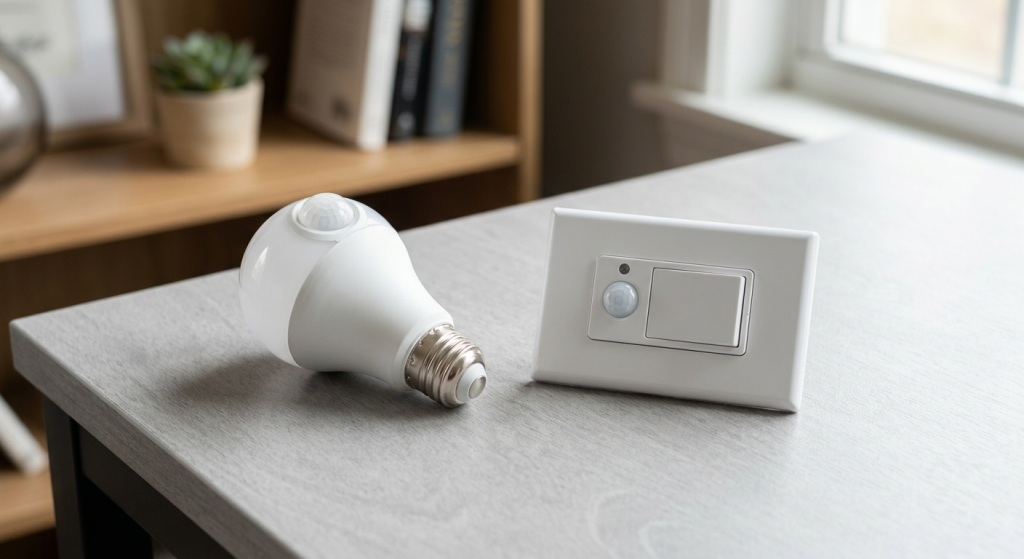
Motion Sensor Light Bulb vs Motion Sensor Switch: The Quick Difference
A motion sensor light bulb has the motion sensor built into the bulb. When it detects movement, the bulb turns on. After a set amount of time with no motion, it turns off. Some bulbs have basic timing or light-sensing features, while others are simple on/off motion bulbs.
A motion sensor switch controls the light from the wall. Instead of putting the sensor in the bulb, the sensor is part of the switch. When it detects movement in the room or area, it turns the connected lights on. This can be useful when one wall switch controls several bulbs.
The biggest difference is setup. A motion sensor bulb usually screws into a compatible fixture. A motion sensor switch is usually a hardwired device that should be handled by someone trained and comfortable with electrical work.
| Option | Best Use | Biggest Advantage | Limitation | Homeowner Safety Note |
|---|---|---|---|---|
| Motion sensor light bulb | Lamps, single fixtures, rentals, simple upgrades | Easy to add and remove | May not detect well in every fixture | Use only in compatible fixtures and locations |
| Motion sensor switch | Rooms, closets, garages, hallways, outdoor lights | Controls all lights on one switch | Usually requires electrical installation | Call an electrician if you are not trained and comfortable |
| Motion sensor dimmer | Rooms where dimming and motion control both matter | Adds automatic control and lower light levels | Must match bulb and load type | Use compatible dimmable bulbs and proper equipment |
| Plug-in motion sensor option | Plug-in lamps or simple indoor lighting | No wall switch work | Only controls what is plugged in | Do not overload the plug or outlet |
A bulb is usually the simpler product. A switch is usually the cleaner control option. The better choice depends on where the light is and how people use it.
What Motion Sensor Light Bulbs Do Best
Motion sensor light bulbs are best for quick, low-commitment upgrades. They can work well in places where you want light to come on automatically but do not want a hardwired project.
Common examples include basement stair lights, utility rooms, closets with simple fixtures, garage fixtures, porch fixtures, and some lamps. They can also be helpful for people carrying groceries, laundry, tools, or trash bags.
A motion sensor bulb is often a good rental-friendly choice. You can remove it later and take it with you. That makes it easier than changing a wall control, especially when you do not own the home.
Motion sensor bulbs can also be budget-friendly when you only need one bulb. If you have a single fixture in a small space, one bulb may solve the problem without buying a switch or hiring help.
The main weakness is sensor placement. The bulb can only detect motion from where it sits. If the fixture has a shade, globe, cover, deep recess, or awkward angle, the sensor may not “see” the room well. Some bulbs also are not rated for enclosed fixtures, damp areas, wet outdoor locations, or extreme temperatures.
Outdoor use needs extra care. A bulb used outside should be rated for the location and fixture type. A covered porch fixture is not the same as a fully exposed outdoor fixture. Damp and wet ratings matter.
Motion sensor bulbs are simple, but they are not universal. The shape, base size, brightness, color temperature, fixture rating, and sensor angle all need to fit the space.
If an outdoor motion light stays on after basic setting checks, this guide on motion sensor light stays on explains common causes like sensor aim, timer settings, weather, and fixture issues.
What Motion Sensor Switches Do Best
Motion sensor switches are better when you want the wall control to manage the whole lighting area. Instead of depending on one bulb’s sensor position, the switch senses motion from the wall location and controls the connected light or lights.
This can be a better fit for built-in lighting. Hallways, laundry rooms, garages, closets, mudrooms, bathrooms, storage rooms, and utility rooms are common examples. Outdoor lights controlled by a wall switch may also be a good fit when the product and location are appropriate.
A switch can be especially useful when one wall switch controls several bulbs. Instead of buying several motion sensor bulbs, one motion sensor switch may control the full group. That can be cleaner and easier for daily use.
Wall control also matters in shared spaces. Guests, kids, and family members understand a switch. They do not need to know which bulb has a sensor or whether a lamp switch needs to stay on.
Some motion sensor switches have adjustable settings, such as timeout length, sensitivity, daylight sensing, or manual control modes. These features can help reduce lights turning on during the day or staying on longer than needed.
The tradeoff is installation. Motion sensor switches are usually hardwired. They may require compatible wiring, enough space in the switch box, the right load type, and the right product for the lighting setup. Some homes and fixtures are not a simple match.
For that reason, a motion sensor switch is best viewed as a product choice first and an electrician handoff if needed. It is not the best beginner project for someone who is not trained and comfortable with electrical work.
If you are comparing smart lighting choices more broadly, this guide on smart light switch vs smart bulb explains when a wall control or bulb-based upgrade makes more sense.
Which Is Easier and Safer for Beginners?
For beginners, a motion sensor light bulb is usually easier and safer. It does not require opening a wall switch or working with house wiring. You still need to choose the right bulb for the fixture, but the product itself is usually more approachable.
A plug-in motion sensor option can also be beginner-friendly for a plug-in lamp or small indoor lighting setup. It can make a lamp turn on when motion is detected without replacing a wall control. It is not the same as a hardwired solution, but it can be useful in the right spot.
A motion sensor switch is different because it becomes part of the home’s electrical system. Even if the product looks simple, the wiring and compatibility behind the wall matter. Guessing is not worth the risk.
Call an electrician for a motion sensor switch if:
- You are not trained and comfortable with residential electrical work
- The existing switch setup is unfamiliar or confusing
- The product has wiring requirements you are not sure your home meets
- The lights are controlled from more than one wall location
- The fixture, switch, or breaker has had past issues
- You want a permanent upgrade handled safely
Stop using any bulb, switch, fixture, or plug-in device that buzzes, overheats, flickers badly, smells burnt, trips a breaker, or shows damage. Those signs can point to a product mismatch, overloaded device, failing fixture, or electrical problem.
For a simple upgrade, stay with removable products like motion sensor bulbs or plug-in options. For built-in wall control, treat the switch as a more permanent electrical upgrade.
What to Check Before Buying
The best product depends on the fixture, room, and control style. Start with where the light is used.
A motion sensor bulb needs a clear view of the area where motion happens. A bulb in a covered ceiling globe may not work as well as a bulb in an open fixture. A bulb inside a deep shade may miss motion from the side. A bulb in an enclosed fixture may overheat if the product is not rated for that use.
Brightness also matters. A closet may need less light than a garage. A hallway may need softer light at night. For bedrooms or bathrooms, color temperature can affect comfort. Warm white often feels calmer, while cooler white can feel brighter for utility spaces.
Indoor and outdoor ratings are important. An indoor bulb should not be used outside unless the product is rated for that location. Outdoor bulbs should match the fixture and exposure level. Damp and wet location ratings are not the same.
For switches, compatibility is even more important. A motion sensor switch may need the right wiring setup, enough box space, and the correct load type. A motion sensor dimmer also needs compatible dimmable bulbs.
Compare these buying factors before choosing:
- Fixture type, bulb shape, and base size
- Indoor, outdoor, damp, or wet location rating
- Enclosed-fixture rating, if the fixture is covered
- Brightness and color temperature
- Detection angle, range, timer, and sensitivity settings
- Whether you need bulb-level control or wall control
Budget should include more than the product price. One motion sensor bulb may be inexpensive. But if a fixture uses several bulbs, the cost can add up. A motion sensor switch may cost more upfront, especially if you hire an electrician, but it may control several lights at once.
Renters should keep removability in mind. A bulb or plug-in option is usually easier to take with you. A wall switch is more permanent and may require permission.
When to Choose Each Option
Choose the product based on how the light is controlled now and how you want it to work every day.
A motion sensor bulb is usually better when you want a fast, simple fix. It works well when one bulb covers the area and the fixture allows the sensor to detect motion clearly. It is also a good choice when you do not want hardwired work.
A motion sensor switch is usually better when one wall switch controls the space. It can make more sense for rooms, hallways, garages, laundry areas, closets, and outdoor lights where people already expect to use the wall switch.
A motion sensor dimmer may be useful when the room needs automatic lighting and softer light levels. This can work well in some bathrooms, hallways, bedrooms, or living areas, but compatibility matters more because both motion control and dimming are involved.
A plug-in motion sensor option can work for a lamp in a hallway, bedroom, entry area, or basement corner. It is a simple option when the light plugs into an outlet and you only need basic on/off control.
Choose a motion sensor light bulb when:
- You rent or want a removable upgrade
- You only need to control one lamp or one fixture
- The bulb will have a clear view of the room or area
- You want to avoid hardwired electrical work
- The fixture is compatible with the bulb’s shape, rating, and use
Choose a motion sensor switch when:
- One wall switch controls several bulbs
- You want automatic lighting for a whole room or area
- Wall control matters for daily use
- The light is built into the home instead of plugged in
- You are comfortable hiring an electrician for the upgrade
Many homes use more than one option. A motion sensor bulb may work well in a small closet. A motion sensor switch may be better in a laundry room. A plug-in option may be enough for a lamp. The right setup does not have to be the same in every room.
Final Thoughts
The motion sensor light bulb vs motion sensor switch choice is mainly about simplicity, control, and installation comfort. Motion sensor bulbs are usually better for beginners, renters, lamps, and single fixtures. Motion sensor switches are usually better for built-in lights, multi-bulb fixtures, and whole-room control.
Choose a bulb when you want a removable upgrade. Choose a switch when wall control matters and the lighting setup is worth a more permanent solution. For any hardwired motion sensor switch or dimmer, call an electrician if you are not trained and comfortable. The best product should make the light easier to use without creating a safety risk.