door sweep vs weatherstripping: what fixes which gap?
Understanding door sweep vs weatherstripping starts with identifying whether the air gap is beneath the door or along the top and side edges. A sweep or compatible door-bottom seal closes the moving gap between the bottom of an exterior door and the threshold. Perimeter weatherstripping compresses between the closed door and the top and side jambs.
These products are not interchangeable. Installing the wrong material can cause dragging, poor closure, loose contact, or continued airflow. Confirm the leak location before buying or installing anything.
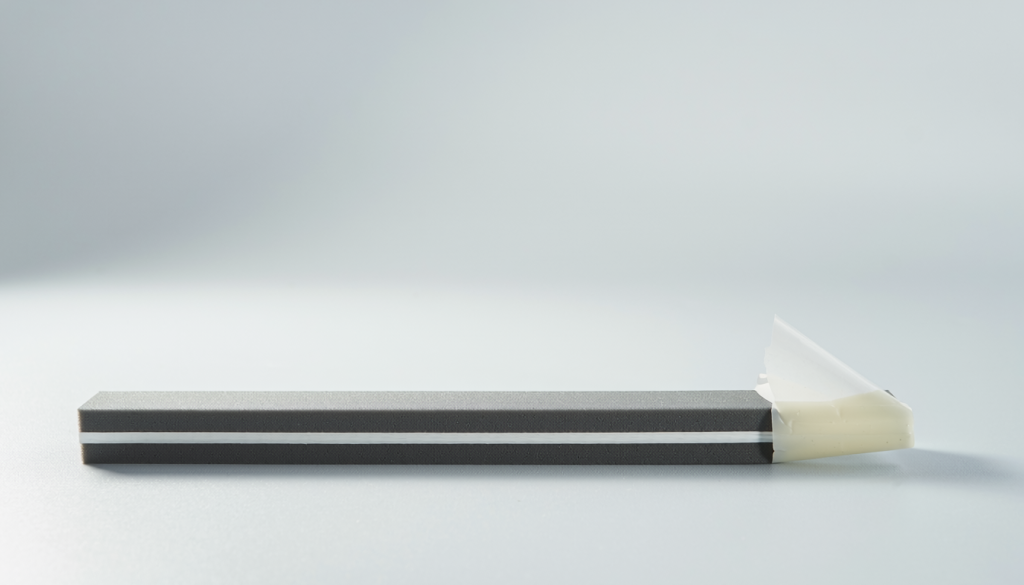
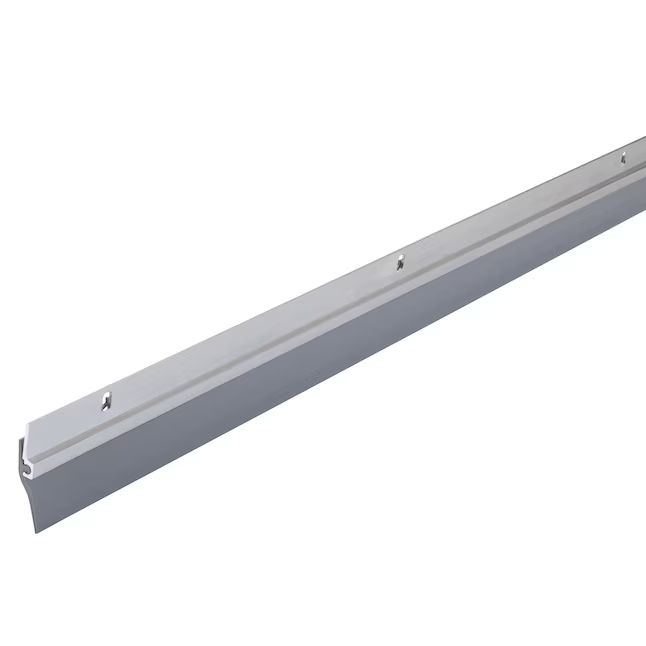
| Feature | Door sweep or bottom seal | Perimeter weatherstripping |
|---|---|---|
| Primary location | Bottom edge of the door | Top and side jambs |
| Main purpose | Seal the gap beneath the door | Seal the movable perimeter gap |
| Typical contact surface | Threshold or sill area | Door slab, stop, or frame profile |
| Common failure signs | Torn, loose, missing, dragging, or uneven contact | Flattened, cracked, loose, missing, or unevenly compressed |
| Main fit concern | Height and threshold contact | Profile, thickness, attachment, and compression |
| Can it replace the other? | No | No |
What a Door Sweep Does
A door sweep attaches at or near the bottom edge of a hinged door. When the door closes, its flexible sealing surface contacts the threshold or sill area to reduce airflow beneath the door.
Door-bottom products include surface-mounted sweeps, slide-on or wraparound designs, brush-style sweeps, flexible vinyl or rubber fins, silicone seals, and door-specific gaskets or inserts. These products fit and attach in different ways, so a replacement should be compatible with both the door and the existing threshold.
A suitable bottom seal should make controlled contact across the door’s width. It should reduce airflow without dragging so heavily that the door becomes difficult to open or close. It must also remain securely attached and avoid blocking drainage paths where the door system includes them.
Signs a sweep or bottom seal may have failed
- Airflow is concentrated beneath the door.
- Daylight is visible between the door and threshold.
- The sealing material is torn, curled, hardened, or missing.
- The sweep touches at one end but leaves a gap at the other.
- The mounting strip is loose, crooked, or positioned too high.
- The sweep drags heavily or prevents normal door movement.
Uneven contact does not always mean the sweep itself is defective. A sagging door, uneven threshold, debris, or changing bottom-gap height can produce the same symptom.
For help matching the sweep style, material, mounting method, and threshold contact, review this guide to choosing a door sweep for an exterior door.
What Perimeter Weatherstripping Does
Perimeter weatherstripping seals the movable joint between a closed door and the top and side portions of its frame. Depending on the door design, the material may contact the door slab, fit into a groove, attach to the stop, or follow a frame-specific profile.
Common categories include kerf-in compression gaskets, tubular or bulb seals, adhesive-backed foam, V-strip or tension seals, and door-specific profiles. The correct category depends on the existing attachment method and the amount of space available for compression.
Properly fitted jamb weatherstripping should make consistent contact without creating excessive resistance. It should compress lightly when the door closes, remain seated in its groove or channel, and avoid interfering with hinges, latches, or other hardware.
Signs perimeter weatherstripping may have failed
- Air moves along the top or one of the side edges.
- Daylight appears where the seal should contact the door.
- Material is cracked, flattened, brittle, torn, or missing.
- Sections have pulled loose or separated at the corners.
- The gasket does not touch the closed door.
- The seal is so thick that the door is difficult to close.
- Compression varies sharply from one part of the frame to another.
Uneven compression can indicate door or frame alignment trouble. Adding thicker material may hide part of the gap while making normal closure worse.
Which Product Fixes Which Gap?
Choose the repair category by locating the gap rather than by guessing which product looks easier to install.
Gap beneath the door
A confirmed gap beneath an exterior door usually points toward the door-bottom sealing system. Possible causes include a worn sweep, a failed door-bottom gasket, poor threshold contact, debris, or an uneven relationship between the door and threshold.
Perimeter weatherstripping installed along the jamb cannot extend across the opening beneath the door. Adding more foam to the top or sides will not close a bottom gap.
Gap along the top
A top-edge draft usually involves missing or compressed head-jamb weatherstripping, poor seal contact, a damaged stop, door sag, or frame movement.
A door sweep will not repair this area. Sweeps are designed to work across the bottom edge and against a threshold, not across the head jamb.
Gap along a side jamb
A side gap commonly involves worn perimeter weatherstripping, an incorrect profile, loose material, or an uneven door-to-frame relationship. Door sag, warping, hinge trouble, and frame movement can also change the gap.
Do not mount a door sweep vertically along the jamb. Its shape, attachment method, and contact action are designed for the bottom of a door, not the hinge or latch side.
Gaps in several locations
Several confirmed leak locations may require more than one repair. A door might have a torn bottom sweep and flattened weatherstripping along the latch side. Another may have good top-and-side contact but an open bottom corner.
Multiple uneven leaks can also indicate alignment or frame trouble rather than several unrelated seal failures. Look at how the door sits in the opening before assuming every visible gap needs another layer of material.
When Both Seals Are Needed
An exterior door normally relies on several coordinated sealing surfaces. These include weatherstripping across the top, weatherstripping along both side jambs, a sweep or gasket at the bottom, threshold contact, and fixed sealed joints around the frame.
Both a bottom seal and perimeter weatherstripping may need replacement when each is visibly damaged in its own location. Confirm the airflow and inspect the existing attachment method before replacing either product.
Replacing every seal automatically can create new problems. Stacking materials may increase closing resistance, roll or tear the gasket, make the latch difficult to engage, or force the sweep to drag. It can also shift pressure to another part of the door and leave the original alignment problem unresolved.
The goal is consistent, light sealing contact—not the thickest possible barrier.
How the Threshold Affects a Door Sweep
The threshold provides the contact surface for many sweeps and door-bottom gaskets. A new sweep can still leave a gap when the threshold is too low, uneven, damaged, dirty, or incompatible with the seal profile.
Contact may also vary because the door is sagging or because the distance between the door bottom and threshold changes from one side to the other. A sweep that seals tightly at the hinge corner but misses the latch corner may be revealing an alignment problem.
Do not lower a sweep excessively to compensate for a damaged or badly uneven threshold. Heavy contact can make the door difficult to operate, rapidly wear the flexible material, or prevent dependable closing.
Threshold adjustment or replacement is a separate repair decision. First determine whether the threshold is sound, stable, and suitable for the existing door-bottom system.
When the existing threshold is adjustable and the sweep contact is uneven, this guide explains how to adjust door threshold height using small, controlled changes.
Basic Checks Before Choosing Either Product
A short inspection can help you avoid buying a seal that does not address the actual opening.
Confirm the leak location
Close and latch the door normally. Move a bare hand or a lightweight tissue slowly around the bottom, top, and side edges. Look for repeatable air movement rather than a brief change caused by nearby heating or cooling equipment.
Do not use candles, incense, smoke, or an open flame to locate drafts.
Inspect the existing seals
- Look for missing, cracked, torn, or flattened material.
- Check for loose attachment and open corners.
- Note where the seal touches and where it misses.
- Look for uneven wear or material installed in the wrong position.
- Check whether several layers were added over an older seal.
- Watch for signs that the material was stretched or compressed during installation.
Check normal door operation
Open, close, and latch the door without lifting, slamming, or forcing it. Watch for rubbing, sagging, an uneven perimeter gap, loose movement when closed, heavy sweep drag, or contact at only one corner.
A door that does not operate normally may need alignment, frame, hinge, stop, or hardware evaluation before new sealing material is added.
Identify the original attachment method
For perimeter weatherstripping, look for a kerf or groove, adhesive residue, a flange, a retainer, fasteners, or a tension strip.
At the bottom of the door, look for a surface-mounted strip, slide-on channel, wraparound body, underside insert, gasket, or existing fastener holes. The original design is often the best clue to the intended replacement category.
Common Product-Selection Mistakes
The most common mistake is trying to solve a location problem with the wrong product.
Mistakes that can worsen fit or operation
- Buying a sweep for a top or side gap.
- Applying perimeter foam beneath the door.
- Replacing every seal without confirming where air enters.
- Choosing weatherstripping that is too thick to compress normally.
- Lowering a sweep until it drags heavily.
- Ignoring an uneven or damaged threshold.
- Adding several layers to hide a changing gap.
- Assuming a seal will correct door sag or frame movement.
- Blocking drainage openings or service points.
- Forcing the door after new material has been added.
- Treating all door-bottom systems as interchangeable.
Stretching flexible material during installation can also cause it to pull away or shrink back later. Compression seals should fit their intended path without being forced into a shorter or longer space.
After any seal change, verify that the door opens freely, closes fully, latches securely, and can still serve as an emergency exit.
When Neither Product Is the Complete Repair
A sweep or weatherstripping can close a suitable movable gap, but it cannot repair the door assembly itself.
Problems that require a different repair category
- A badly sagging or warped door
- Loose, bent, or damaged hinges
- Severe or changing gaps around the opening
- A frame that appears out of square
- Rotten or soft wood
- A loose or damaged door stop
- Broken or insecure hardware
- A cracked, loose, or unsuitable threshold
- Active rainwater intrusion
- Visible structural movement
- Broken or unstable glass
- A concealed installation gap around the frame
A seal that contacts tightly in one area but completely misses the door elsewhere often indicates alignment, threshold, or frame trouble. Adding thicker material may increase pressure at the tight spot without closing the larger gap.
Safety and When to Call a Professional
Most seal inspections are low-risk, but the door must remain easy to operate, secure when closed, and dependable as an exit.
Arrange professional evaluation when
- The door cannot open, close, or latch normally.
- The door cannot remain secure.
- The slab or frame is badly warped.
- The door needs to be removed or rehung.
- The opening appears severely out of square.
- Hinges, stops, framing, or hardware need major alteration.
- The threshold is loose, rotten, cracked, or severely damaged.
- The original sealing system cannot be identified.
- Water enters during rain.
- Soft wood, widespread staining, mold, or hidden moisture is present.
- Structural movement is visible.
- Glass is cracked, loose, shifting, or unstable.
- Security or emergency exit operation may be affected.
- Older painted surfaces may contain lead and would be disturbed.
- You cannot determine whether the gap comes from the seal, threshold, alignment, or frame.
Do not continue adding or tightening materials when the door must be slammed or forced. A qualified door installer, carpenter, or appropriate repair professional can evaluate the entire opening and identify which parts need correction.
Final Thoughts
A door sweep seals beneath an exterior door, while perimeter weatherstripping seals the top and side jambs. One does not replace the other, and some doors need both.
Confirm exactly where air enters, inspect the existing seals, and make sure the door operates normally before choosing a product. A new seal should create light, consistent contact without dragging, forcing the latch, or interfering with security and emergency use. When gaps are severe, uneven, affected by water, or connected to frame and hardware problems, repair the underlying door assembly instead of stacking more sealing material.