how to clean a wood deck without a pressure washer
Learning how to clean a wood deck without a pressure washer starts with gentle tools, a compatible cleaner, and enough time for thorough rinsing and drying. A broom, deck brush, and garden hose can remove ordinary dirt and buildup without exposing the wood to an aggressive water stream.
Inspect the deck before it becomes wet. Loose railings, unstable stairs, widespread rot, severe board damage, sagging, or structural movement require professional evaluation before cleaning begins.
| Deck condition | Best first step | What to avoid |
|---|---|---|
| Loose leaves and dirt | Sweep thoroughly while the deck is dry | Washing debris into board gaps |
| Food or drink spills | Blot or rinse promptly | Grinding residue into the wood |
| Grease near a grill | Use an approved wood-deck degreaser | Harsh solvents |
| Mildew or algae | Apply a cleaner compatible with the wood and finish | Mixing bleach with other cleaners |
| Ground-in grime | Use a deck brush with moderate pressure | Aggressive repeated scrubbing |
| Peeling or damaged finish | Test cleaning carefully and assess the coating | Assuming cleaning will restore the finish |
Inspect the Deck Before Cleaning
Walk around the deck from the ground before stepping onto it. Look for sagging, movement, leaning supports, or separation between the deck and the house.
Inspect the walking surface for loose or damaged boards, raised nails, loose screws, cracks, and splinters. Notice whether any board moves significantly under normal foot pressure.
Dark staining alone does not prove that wood is rotten. Soft, crumbling, deeply deteriorated wood is more concerning, especially when it appears across several boards or near structural connections.
Check railings with gentle hand pressure only. Do not lean your body weight against a questionable railing. Inspect stairs from stable ground and look for loose treads, shifting handrails, or movement where the stairs meet the deck.
Standing water may indicate blocked drainage, surface depressions, or a larger moisture problem. Do not begin washing if water is already collecting around the house or deck supports.
Structural movement, widespread rot, unstable stairs or railings, or severely damaged boards require professional evaluation before cleaning. Keep people away from unsafe areas and do not work beneath an unstable deck.
Use the complete deck inspection checklist when you find moving boards, unstable stairs, loose railings, drainage concerns, or possible structural deterioration.
Gather the Right Cleaning Supplies
Choose tools that loosen dirt without cutting, scratching, or tearing the wood fibers.
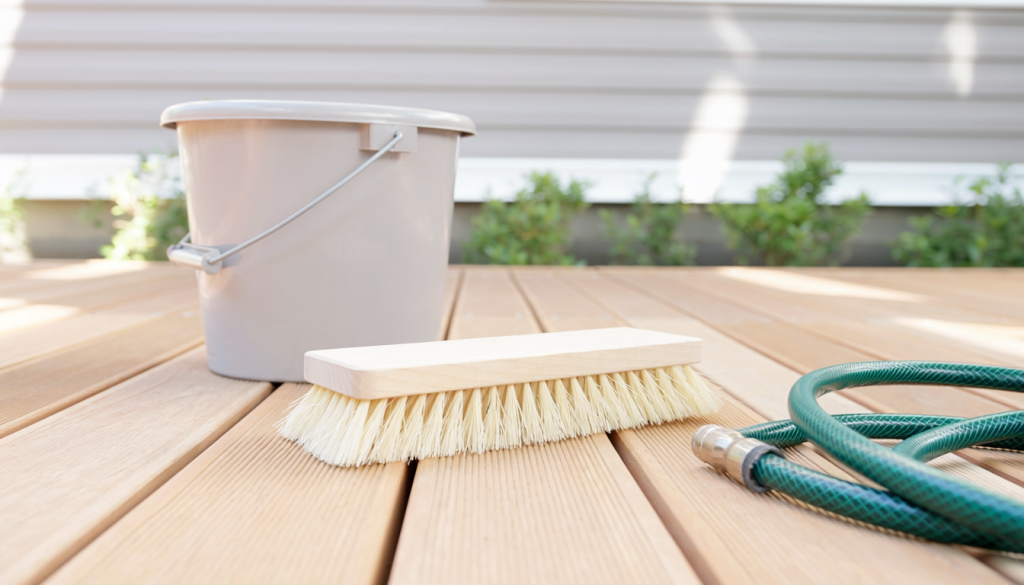
Basic supplies for cleaning a wood deck
- Outdoor broom
- Soft or medium deck brush
- Bucket
- Garden hose
- Compatible wood-deck cleaner
- Non-abrasive sponge or cloth
- Gloves and eye protection when required by the product label
Wire brushes can tear wood fibers and leave metal fragments that may stain. Sharp scrapers, stiff metal tools, and aggressive sanding equipment can gouge boards, damage edges, and remove sound finish along with the dirt.
A long-handled brush can reduce bending and help you work with even pressure. Make sure the handle and brush head are secure before use.
Remove Furniture and Loose Debris
Move lightweight furniture, planters, grills, rugs, and mats when practical. Lift items rather than dragging them across the boards.
Sweep leaves, pollen, dirt, twigs, and other dry debris from the entire surface. Clear corners, stair treads, railing bases, and areas near exterior doors.
Remove material trapped between boards with a non-damaging tool or soft brush. Do not force sharp objects into the gaps.
Check beneath grills and planters for grease, damp leaves, soil, rust marks, or discolored wood. These covered areas may remain wet long after the rest of the deck dries.
Dry debris removal keeps dirt from turning into mud during washing. It also reduces scratching and reveals stains or damaged areas that need closer attention.
Choose a Cleaner That Matches the Deck
Identify the wood and existing finish when possible. A cleaner suitable for bare pressure-treated lumber may not be appropriate for painted, stained, or sealed boards.
Follow both the deck-coating manufacturer’s instructions and the cleaner label. Confirm that the product is compatible with the wood, finish, and type of buildup you are treating.
Use the specified dilution. A stronger mixture is not necessarily more effective and may discolor the wood or damage the coating.
Follow the stated contact time and rinsing procedure. Test the cleaner in a small, inconspicuous area and allow the spot to dry before treating the entire deck.
Protect nearby plants according to the label. Control runoff so cleaner does not collect beside the house, around supports, in planting beds, or in storm drains when prohibited.
Never mix cleaning products. Do not combine bleach, ammonia, acids, degreasers, mildew treatments, or other chemicals. Homemade mixtures may damage the deck and create hazardous fumes.
How to Clean a Wood Deck Without a Pressure Washer
- Choose suitable weather. Follow the cleaner’s temperature, sunlight, rain, and drying requirements. Avoid conditions that could make the product dry too quickly.
- Remove furniture and debris. Clear the deck and sweep it thoroughly before adding water.
- Test the cleaner. Apply it to a hidden area using the planned dilution and brush. Check the dry result for discoloration or coating damage.
- Wet the deck only when required. Some products work on damp wood, while others must be applied to a dry surface.
- Apply cleaner in manageable sections. Work on an area you can scrub and rinse before the solution dries.
- Scrub gently with the grain. Use moderate, even pressure and give stained areas extra attention without grinding the surface.
- Keep the cleaner from drying. Unless the instructions say otherwise, do not allow it to form a dry film.
- Rinse thoroughly with a garden hose. Remove cleaner from boards, gaps, edges, stairs, and railings.
- Check for residue. Look for foam, streaks, or slippery areas and rinse again when the instructions permit it.
- Let the deck dry completely. Keep furniture, rugs, planters, and foot traffic off the surface until it is suitably dry.
Sweep and Pre-Rinse the Deck
Always sweep before introducing water. Washing loose dirt across the surface can turn it into abrasive mud and push debris farther into gaps.
Pre-rinse only when the cleaner instructions call for it. Some cleaners need a damp surface, while others work best on dry wood.
Use normal garden-hose pressure. A gentle spray is usually enough to wet or rinse the boards without damaging softened fibers.
Avoid forcing water into open joints, damaged boards, loose connections, or gaps near the house. Do not flood one section or allow rinse water to collect around posts and supports.
Apply Cleaner in Small Sections
Work in the shade or during conditions recommended by the cleaner manufacturer. Direct sun and warm boards can cause some products to dry before they can be scrubbed and rinsed.
Measure the cleaner and water carefully. Follow the dilution and dwell-time directions rather than estimating.
Apply only as much cleaner as you can manage promptly. Dividing a large deck into smaller sections gives you better control over scrubbing and rinsing.
Do not let the cleaner dry unless the label specifically permits it. Add only the amount of moisture allowed by the instructions if a section begins drying too quickly.
Keep children, visitors, and pets away from the work area. Wet cleaner and loosened buildup can make the deck extremely slippery.
Scrub Without Damaging the Wood
Use a soft or medium deck brush approved for the surface. Test the brush along with the cleaner before cleaning a visible area.
Scrub in the direction of the wood grain when practical. This reduces cross-grain marks and helps the brush follow the board texture.
Use moderate pressure. The goal is to lift dirt, not grind away the surface.
Give stained sections extra attention, but avoid scrubbing the same spot aggressively. Several gentle passes are safer than one forceful attempt.
Stop if the wood fibers begin lifting, fuzzing, or fraying. Allow the test area to dry before deciding whether further cleaning is appropriate.
Rinse Thoroughly
Use a garden hose to rinse away cleaner and loosened dirt. Begin where the manufacturer recommends and direct the water toward a suitable drainage area.
Rinse the board surfaces, gaps, edges, stair treads, railing bases, and any vertical surfaces that received cleaner.
Watch for foam, cloudy runoff, streaks, and slippery residue. Rinse again when allowed by the product directions.
Avoid flooding one location or directing large amounts of water toward the house. Protect nearby plants and manage runoff according to the cleaner label.
Leftover cleaner can attract dirt, discolor wood, interfere with a finish, or leave the deck slippery. Complete rinsing is an essential part of the cleaning process.
Clean Food and Drink Spills
Blot liquid spills or rinse them promptly. Pick up solid food carefully rather than rubbing it into the grain.
Use a mild cleaner compatible with the wood and finish when plain water is not enough. Apply it only to the affected area unless broader cleaning is needed.
Scrub gently and rinse away all residue. Repeat the treatment only when the product instructions permit it.
Some food, wine, and colored beverages may leave a visible mark after cleaning. Avoid aggressive methods intended to force complete stain removal.
Remove Grease and Grill Stains
Blot fresh grease with an absorbent material without spreading it across the boards. Remove solid residue carefully.
Use a deck degreaser only when it is approved for the wood and existing finish. Test the product first and follow its dilution and contact-time instructions.
Rinse thoroughly after treatment. Check beneath grill mats for trapped grease, moisture, heat damage, and coating deterioration.
Harsh solvents may soften or strip a finish, discolor wood, or drive grease deeper into porous boards. Do not use a general-purpose solvent unless the deck and coating manufacturers specifically approve it.
Clean Mildew and Algae
Mildew and algae often develop where shade, moisture, pollen, and organic debris remain together. Areas beneath rugs, planters, furniture, and dense vegetation are common trouble spots.
Use a cleaner approved for the wood and its finish. Scrub gently and rinse completely.
Keep the area closed to foot traffic while it is wet. Algae, cleaner, and loosened residue can make the surface slippery.
Move rugs, furniture, and planters that prevent the deck from drying. Remove wet leaves promptly and avoid directing planter drainage onto the same area repeatedly.
Never mix bleach with another cleaner. Surface cleaning may remove visible growth, but it does not correct hidden rot, structural moisture problems, or drainage failure.
What Not to Use on a Wood Deck
Avoid these potentially damaging products and methods
- Wire brushes: They tear wood fibers and may leave staining metal fragments.
- Metal scrapers: They can gouge boards and damage coatings.
- Sharp shovels: Their edges may cut the surface or catch on boards.
- Harsh unapproved solvents: They can soften finishes and spread stains.
- Mixed cleaning chemicals: Combinations may damage materials or create dangerous fumes.
- Undiluted bleach: It may discolor wood, affect finishes, and damage nearby materials.
- Aggressive pressure washing: High force can raise fibers and leave permanent marks.
- Paint stripper: Use it only as part of an appropriate refinishing process.
- Sanding as a substitute for cleaning: Sanding removes wood rather than simply lifting dirt.
- Unapproved household cleaners: They may leave residue or react poorly with the finish.
Let the Deck Dry Fully
Drying time depends on temperature, shade, humidity, airflow, wood condition, recent rain, and the cleaner instructions. There is no reliable universal drying time.
Do not replace rugs, planters, or furniture while the wood remains damp. Covered moisture can contribute to staining, mildew, and uneven drying.
Wood must be properly dry before applying paint, stain, or sealer. Coating damp boards can cause poor adhesion, uneven color, peeling, or other finish failure.
Check sheltered areas and spaces beneath furniture locations, not only boards exposed to direct sun.
Should You Sand After Cleaning?
Cleaning may raise loose fibers, especially on weathered or previously damaged wood. Light roughness can become more noticeable after the deck dries.
Limited sanding may be appropriate as part of preparation for refinishing, but the wood must be fully dry first. The correct approach depends on the board condition, fasteners, finish, and intended coating.
Aggressive sanding can thin boards, expose fasteners, round edges, and create uneven areas. It should not be used as a routine substitute for cleaning.
A separate sanding guide should be followed when preparing an entire deck for stain or another finish.
When cleaning is part of a refinishing project, allow the boards to dry fully before following the separate process for how to sand a deck before staining.
Clean Railings and Stairs Carefully
Use products compatible with the railing, stair, and deck materials. Painted wood, bare wood, metal hardware, and composite components may require different care.
Clean hand-contact areas with a non-abrasive sponge or soft brush. Rinse stair treads carefully so cleaner does not collect in corners or textured surfaces.
Inspect visible fasteners and connections while cleaning. Do not attempt structural repairs when railings, stairs, or their supports move.
Restrict access until stair treads, handrails, and walking surfaces are fully rinsed and dry.
Prevent Future Buildup
Use these simple cleaning habits
- Sweep the deck regularly.
- Remove wet leaves promptly.
- Clean food, drink, and grease spills early.
- Move furniture, rugs, and planters occasionally.
- Keep grill areas free of dropped food and grease.
- Clear accessible board gaps.
- Improve simple drying conditions around covered areas.
- Follow the deck finish and cleaner manufacturers’ care instructions.
When to Call a Professional
Stop routine cleaning when deterioration or movement makes the deck unsafe or the surface requires extensive restoration.
Arrange professional evaluation for
- Widespread soft or rotten wood
- Boards that move significantly
- Loose railings
- Unstable stairs
- Sagging or structural movement
- Separation between the deck and the house
- Severe peeling or widespread coating failure
- Large areas that need refinishing or board replacement
- Persistent stains or discoloration after safe testing
- Questions involving structural repair
Do not work beneath an unstable deck or assume that cleaning or refinishing will correct structural damage.
Final Thoughts
A broom, compatible wood cleaner, deck brush, and garden hose can remove ordinary dirt and buildup without the surface damage associated with aggressive pressure washing. Work in manageable sections, scrub with moderate pressure, rinse completely, and allow the wood to dry before replacing outdoor items.
Gentle methods and product compatibility matter more than speed. When the deck has widespread rot, severe board damage, unstable railings or stairs, sagging, or structural movement, stop cleaning and contact a qualified professional.