
Roof Shingle Curling: Causes, Warning Signs, and What It Means
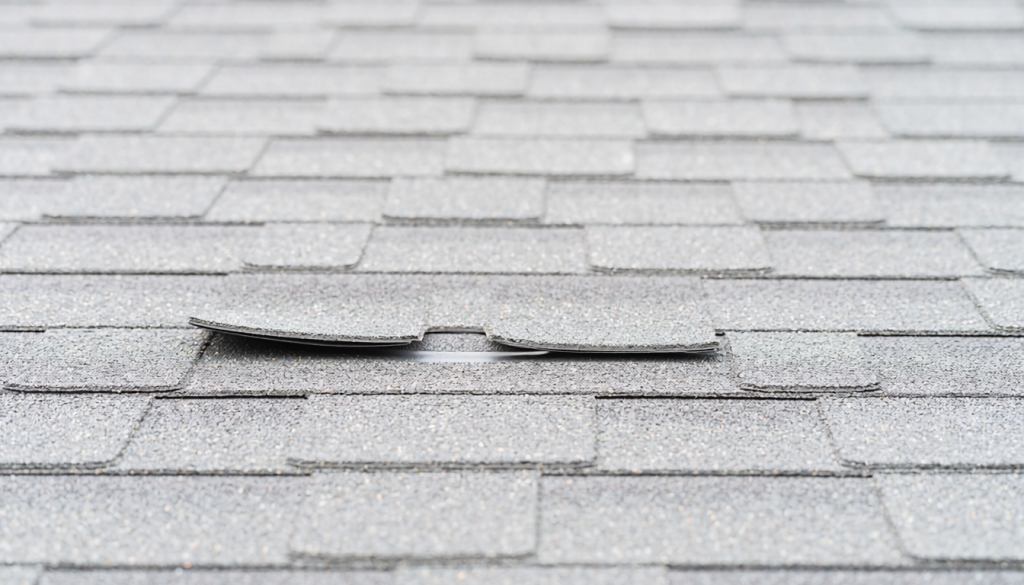
Roof shingle curling means an asphalt shingle is no longer lying flat as intended. A few curled shingles may point to localized wear, installation trouble, or damage, while curling across many shingles or a large roof area can indicate broader aging, heat, moisture, installation, or roof-deck problems.
Not every curled shingle means the roof needs replacement. The pattern, extent, and other visible signs matter.
Beginner homeowners should inspect only from the ground. Do not walk on the roof, climb a ladder for inspection, flatten or lift shingles, drive nails through exposed shingle surfaces, apply roofing cement as a general fix, perform elevated repairs, or work near overhead electrical lines.
| What You Observe | Possible Meaning | What It Suggests |
|---|---|---|
| A few curled corners | Localized wear or damage | The problem may be limited |
| Widespread lifted edges | Broader deterioration or installation issue | More of the roof may be affected |
| Curling across one roof slope | Uneven exposure or roof-system condition | Compare with other slopes |
| Brittle or cracked curled shingles | Advanced material wear | Deterioration may be more significant |
| Curling plus noticeable granule loss | Aging or surface deterioration | Additional wear is present |
| Curling on a relatively new roof | Installation, material, heat, moisture, or decking issue | Early evaluation is appropriate |
| Raised lines or waves across several shingles | Decking, underlayment, or roof-system distortion | Cause may extend below the shingles |
| Curling that appears to be spreading | Progressive deterioration | Professional evaluation becomes more important |
What Roof Shingle Curling Means
Asphalt shingles are intended to lie relatively flat and overlap correctly so rainwater sheds downward across the roof surface. When edges or corners remain turned upward or become distorted, the shingle has lost some of its intended shape or support.
One or two curled shingles do not automatically indicate roof-wide failure. A localized problem may result from isolated wear, damage, or an installation issue affecting only a small area.
Concern increases when curling is widespread, continues to worsen, or appears with other signs such as cracking, brittleness, heavy granule loss, missing or loose shingles, or visible waviness across the roof surface.
The overall pattern is more useful than the appearance of one shingle.
Curling Versus Cupping Versus Lifting
Several roofing conditions can look similar from the ground, so it helps to understand the differences.
Curling generally means an edge or corner turns upward or becomes distorted.
Cupping describes a shingle that develops a curved or dish-like shape rather than remaining flat.
Lifting occurs when a tab or portion of a shingle rises away from the material below it. This may involve sealing, fastening, wind, or distortion.
Buckling or waviness appears more like raised lines, ripples, or uneven areas across multiple shingles. That pattern may involve underlayment, decking, or another roof-system condition rather than the shingle alone.
These terms can help describe what you see, but they do not allow a homeowner to determine the hidden cause with certainty from the ground.
Why Asphalt Shingles Curl
Several conditions can create similar-looking shingle distortion.
The location and pattern help narrow the possibilities. Curling limited to one small area suggests a different problem than curling across one entire slope or throughout much of the roof.
Age and Material Deterioration
Long-term exposure to sun, heat, rain, wind, and temperature changes can gradually alter asphalt shingles. Over time, shingles may lose flexibility, become brittle, crack, shed granules, or stop lying flat.
Widespread curling on an older roof becomes more concerning when it appears with cracking, brittleness, or other substantial wear. However, no single roof age determines when curling should occur.
Visible granules in gutters may provide additional information about asphalt-shingle wear when curling is also present. Granule loss should be considered as one part of the overall condition rather than proof of failure by itself.
Pronounced curling on a relatively new roof deserves evaluation rather than being dismissed as normal aging.
Heat and Moisture Effects
Prolonged heat can accelerate the aging of asphalt roofing materials. Moisture within the roof assembly can also affect the decking and roofing materials above it.
Wood decking may expand, contract, swell, or become uneven as moisture conditions change. Those changes can contribute to distorted shingles or an irregular roof surface.
Curled shingles do not prove that attic ventilation is poor. Ventilation may be one contributor, but moisture, air leakage, insulation, roof-deck condition, and installation may also need to be considered.
If moisture is also visible inside the attic or near the roof structure, distinguishing a roof leak vs condensation can help clarify whether the moisture is related to rain intrusion or indoor humidity conditions.
Installation Problems
Curling or lifting that develops unusually early may involve installation conditions rather than ordinary aging.
Possible contributors can include incorrect fastener placement, inadequate fastening, poor sealing, shingles that were already distorted during installation, uneven underlayment, or roofing installed over an unsuitable or uneven surface.
Irregularities from an existing roof layer may also affect how the new roofing lies where that type of installation is present.
These possibilities require professional evaluation. They should not be treated as a reason for a homeowner to lift, fasten, seal, or otherwise manipulate shingles from a ladder or roof.
Roof Decking and Structural Movement
Shingles follow the surface beneath them. If the roof decking becomes warped, swollen, uneven, or moves, the roofing above it may develop waves, raised areas, buckling, or other distortion.
Moisture changes in wood decking may contribute to these conditions. More significant roofline sagging or obvious structural movement can indicate a problem beyond the shingles themselves and should be professionally evaluated.
Homeowners should not attempt to investigate the roof structure invasively or access unsafe attic or roof areas to determine the cause.
Wind and Weather Exposure
Wind can worsen an edge that is already curled or lifted.
Once part of a shingle is raised, wind can catch beneath it more easily. That can increase the chance of additional lifting, tearing, or eventual shingle loss.
Wind is not necessarily the original cause. Aging, installation conditions, or distortion may have raised the edge first, with wind later making the problem worse.
Why Widespread Curling Matters More Than One Isolated Shingle
The extent of the condition is one of the most useful clues.
One or two curled corners may remain a localized repair issue, particularly if nearby shingles lie flat and appear sound. Widespread curling across many shingles suggests a broader roof-system condition.
Concern increases when curling appears with cracking, brittleness, heavy granule loss, numerous loose or lifted edges, missing shingles, waves or uneven roof surfaces, or continued spreading of the distortion.
Even then, curling alone should not be used to declare that the entire roof needs replacement. A roofer can evaluate whether the condition is localized, repairable, or part of more extensive deterioration.
Curling on a Relatively New Roof
Significant curling relatively early in a roof’s service life should not automatically be attributed to normal aging.
A roofing professional may evaluate installation, fastening, sealing, decking condition, moisture, heat exposure, and the roofing material itself to determine why the shingles are becoming distorted.
The visible pattern can help guide that evaluation. Curling concentrated in one area may point to a different cause than similar distortion across several slopes.
Homeowners should avoid assuming that early curling proves a manufacturer defect or warranty issue unless that has been documented.
Can Curled Shingles Be Repaired?
A small number of affected shingles may sometimes be repaired or replaced individually when the damage is localized, surrounding roofing remains sound, the roof deck is stable, and shingles are not broadly brittle or deteriorated.
Widespread curling changes the decision. Repeatedly addressing individual shingles becomes less practical when many shingles are showing the same distortion or when the problem reflects broader material or roof-system deterioration.
Homeowners should not try to flatten curled shingles, drive nails through exposed surfaces, apply roofing cement, or replace shingles from a ladder or roof.
The purpose of evaluation is to determine whether the condition is isolated or part of a larger problem.
What Homeowners Can Safely Observe From the Ground
A useful first assessment can be made without leaving the ground.
Look at whether the problem affects one shingle or many, one small area, one slope, or much of the roof. Compare curled corners with entire raised edges and look for associated cracking, missing shingles, granule loss, visibly raised tabs, or waves across the roof surface.
Also compare different roof slopes. One side may show noticeably more distortion than another because conditions can differ across the roof.
Watch for major roofline changes or sagging and note whether the pattern appears to worsen over time.
Safe photographs taken from the same ground-level location can help document changes. Binoculars or camera zoom may also help provide a clearer view without approaching the roof.
Do not move beneath unstable roofing, climb for a closer look, or position yourself near overhead electrical conductors.
Common Mistakes
One of the most serious mistakes is walking on the roof to inspect curling more closely. Roofing surfaces can be slippery, fragile, steep, or unstable, and walking on already deteriorated shingles may cause additional damage.
Homeowners should also avoid trying to flatten shingles by hand, driving exposed nails through shingle faces, spreading roofing cement over curled areas, or attempting ladder-based repairs. These actions may not address the underlying cause and can create additional roofing problems.
Another mistake is assuming every curled shingle means the roof requires complete replacement. Localized curling may still be repairable.
The opposite assumption can also be misleading. Curling should not be ignored simply because no active leak is visible. It may be an early sign of material deterioration, installation trouble, or another roof-system condition.
Age should not automatically be blamed, and attic ventilation should not be singled out without considering the broader roof and moisture conditions.
When to Call a Roofing Professional
Professional evaluation is appropriate when curling is widespread, distortion is getting worse, shingles appear brittle or cracked, or significant granule loss is also visible.
A roofer should also evaluate conditions involving missing or loose shingles, a wavy roof surface, suspected decking problems, or noticeable curling on a relatively new roof.
If evaluating the condition safely would require roof or ladder access, leave the inspection to a qualified professional.
Final Thoughts
Roof shingle curling is a condition to investigate, not an automatic verdict that the entire roof has failed.
Localized curling may still be repairable. Widespread curling combined with cracking, brittleness, granule loss, lifting, or roof-surface distortion deserves professional evaluation.
Homeowners should focus on safe ground-level observation and the overall pattern rather than attempting roof-level repairs.