best garden tools for homeowners
The best garden tools are the ones that match the work you actually do, fit your yard, and feel comfortable enough to use regularly. Most homeowners need a small core set for mowing, trimming, digging, weeding, pruning, and watering—not a shed full of specialized equipment.
Start with tools that solve recurring jobs, then add equipment only when a specific need appears. Yard size, storage space, tool weight, mobility, and maintenance requirements matter as much as raw power or durability.
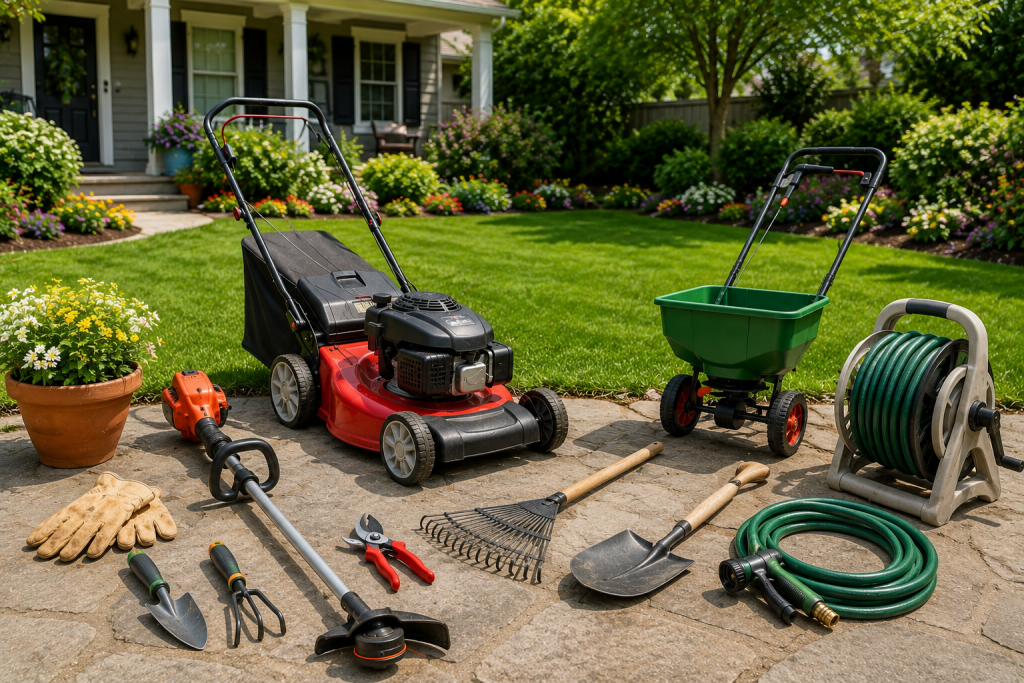
| Tool category | Best for | What matters most |
|---|---|---|
| Hand weeding tools | Removing individual weeds | Comfortable grip and useful reach |
| Shovels and spades | Digging, planting, edging soil | Handle length, blade shape, weight |
| Pruners | Cutting small stems and branches | Clean cutting action and hand comfort |
| Lawn mower | Routine grass cutting | Yard size, terrain, propulsion, storage |
| String trimmer | Grass around obstacles and edges | Weight, balance, runtime |
| Lawn edger | Creating defined lawn borders | Control and whether you need a dedicated tool |
| Broadcast spreader | Seed, fertilizer, or lawn treatments | Capacity, adjustment, even distribution |
| Garden hose | General outdoor watering | Length, handling, durability |
| Sprinkler | Watering larger areas | Coverage pattern and water pressure |
| Hose reel | Hose storage | Capacity, mounting location, ease of winding |
What Garden Tools Do Most Homeowners Actually Need?
A practical beginner tool collection can stay fairly small.
For a typical property with lawn, planting beds, and a few shrubs, a useful starting set often includes:
- A sturdy hand trowel
- A hand weeding tool
- Bypass pruners
- A shovel or spade
- A rake
- A lawn mower
- A string trimmer where mowing cannot reach cleanly
- A garden hose
- A sprinkler or other basic watering tool
A spreader becomes useful if you regularly apply grass seed, fertilizer, or other lawn treatments. A dedicated edger, large pruning saw, cultivator, powered tiller, or specialty irrigation equipment should usually come later.
Think in terms of recurring jobs. If you perform a task several times each season, owning the right tool can make sense. If a tool would leave storage only once every few years, renting or borrowing it may be more practical.
Tool overlap matters too. A string trimmer can handle many rough lawn edges, for example, while a dedicated lawn edger mainly becomes worthwhile when you want sharply defined borders along sidewalks or driveways.
Best Hand Tools for Everyday Garden Work
Small hand tools do a surprising amount of work around a home.
Hand trowel
A hand trowel is one of the most useful basic garden tools. It works for planting annuals, moving small amounts of soil, filling containers, and making minor adjustments in beds.
Look for a handle that fits comfortably in your hand and a blade that feels sturdy without making the tool unnecessarily heavy. A solid connection between the handle and blade matters more than decorative features.
Hand weeding tool
A dedicated weeding tool can make removing taproot weeds and working between plants easier than relying on a trowel for everything.
Different styles suit different situations. Short hand weeders provide control in flower beds, while longer-handled versions reduce bending and kneeling.
Homeowners who want to reduce strain may benefit from comparing weeding tools designed for older homeowners. The same features can also help anyone with limited hand strength, back discomfort, or mobility concerns.
Hand cultivator
A small cultivator can help loosen the surface of garden soil and work around established plants. It is useful, but it overlaps with a trowel and other hand tools enough that many beginners can wait before buying one.
If you rarely maintain planting beds, it may not belong in your first round of purchases.
Best Digging and Soil Tools
For most homeowners, one good digging tool is more valuable than several specialized versions.
Shovel
A round-point shovel is a versatile choice for digging holes, moving loose soil, planting shrubs, and handling general yard work.
For occasional homeowner use, pay close attention to weight. A heavy-duty shovel that becomes exhausting after a few minutes may be less useful than a lighter model you can control comfortably.
Spade
A spade usually has a flatter, straighter blade than a general-purpose shovel. It is useful for cutting clean soil lines, dividing plants, working in defined beds, and creating edges.
Homeowners with extensive gardens may eventually want both a shovel and a spade. For light landscaping and occasional planting, one versatile digging tool may be enough.
Rake
Rakes serve different purposes, so choose based on the work.
A flexible leaf rake is useful for leaves, grass clippings, and light debris. A rigid garden rake is better for leveling soil and working prepared beds.
Buying both can make sense when you maintain both lawn and garden areas, but avoid assuming every rake is interchangeable.
Best Weeding Tools
The right weeding tool depends on where weeds are growing and how you prefer to work.
For individual weeds in beds or lawns, a hand weeder can provide precise control. For larger garden areas, a hoe or long-handled cultivator may let you work without crouching.
Consider:
- Whether you can comfortably kneel or bend
- How deeply rooted the weeds tend to be
- Whether you work between closely spaced plants
- How much ground you need to cover
- Whether a long handle would reduce strain
Do not automatically buy several weeders with slightly different shapes. Start with the type that matches your most common weeds and working position.
A tool that lets you maintain good posture and use controlled movements is often a better purchase than a heavier or more aggressive design.
Best Cutting and Pruning Tools
Bypass pruners are a practical starting point for trimming live stems, flowers, and relatively small branches. They cut with two passing blades, which helps create a cleaner cut than crushing-style tools on many live plants.
Comfort matters here because the same tool may be opened and closed dozens of times in one session.
Look for:
- A grip that fits your hand
- A spring action that feels manageable
- A locking mechanism you can operate easily
- Replaceable blades or parts when available
- A cutting capacity suited to the plants you maintain
Loppers provide additional leverage for larger branches, while pruning saws handle work beyond ordinary hand-pruner capacity. Most beginners do not need all three immediately.
Do not force a small pruner through material that is too large for it. Follow the manufacturer’s cutting limits, keep cutting edges maintained, and use eye protection when branches or debris could spring toward you.
Best Lawn Tools
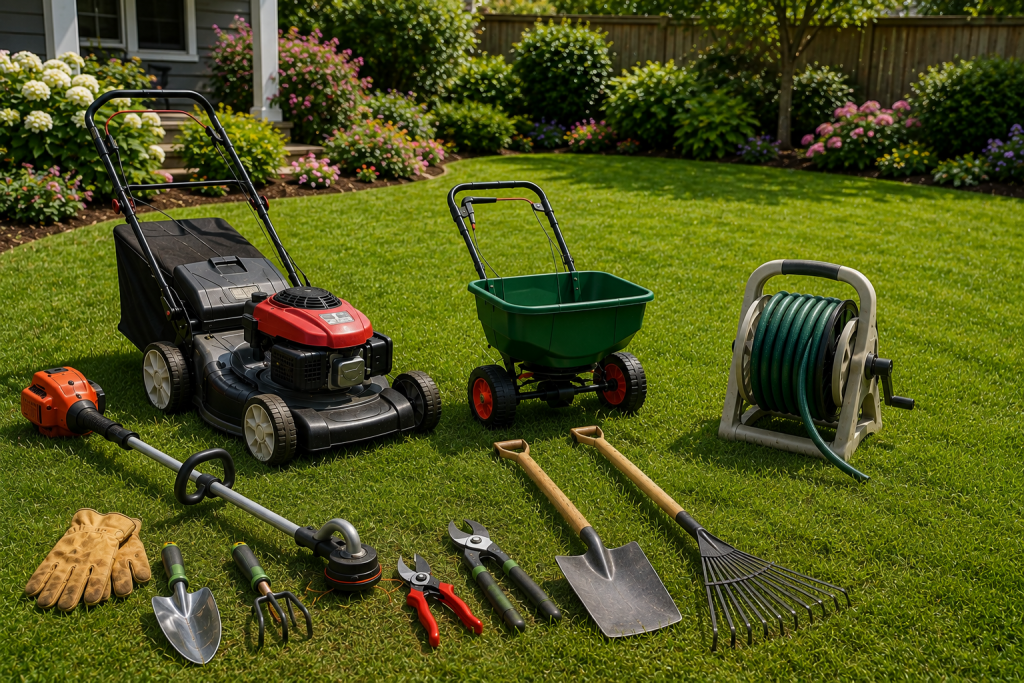
For properties with turf, the mower is usually the largest and most important garden-tool purchase.
Lawn mower
Lawn size, terrain, physical effort, storage, and maintenance requirements should drive your choice.
A small, flat lawn may not require a large or powerful mower. Larger areas, slopes, uneven ground, and thicker grass can make propulsion and runtime more important.
Self-propelled models can reduce pushing effort. For homeowners who prioritize easier handling, the HRA guide to self-propelled lawn mowers for seniors explains useful comfort and control considerations.
Do not choose solely by power. A mower that is difficult to turn, lift, store, or maintain can become frustrating on an ordinary residential yard.
For power-source tradeoffs, see gas versus battery lawn mowers.
String trimmer
A string trimmer reaches grass around trees, fences, posts, garden borders, and other places a mower cannot cut neatly.
Weight and balance deserve special attention. A tool can feel manageable for a few seconds in a store but become tiring during a full trimming session.
Battery models are often convenient for routine residential trimming because they avoid fuel storage and engine maintenance. Runtime and battery compatibility become more important as the property gets larger.
Lawn edger
A dedicated edger creates a more defined boundary where lawn meets pavement or another hard surface.
It is more specialized than a string trimmer. If you only need occasional cleanup along sidewalks, a trimmer may be enough. If crisp, repeated edging is important to you, a dedicated tool can provide more consistent control.
The guide to string trimmers versus lawn edgers can help determine whether you actually need both.
For powered lawn equipment, wear appropriate eye protection and hearing protection where needed. Follow manufacturer instructions and avoid operating equipment on slopes, unstable ground, or other conditions outside its intended use.
Spreaders: Useful, but Not for Every Yard
A broadcast spreader distributes grass seed, fertilizer, and some other granular lawn products across a wide area.
It can be worthwhile for homeowners who regularly seed or treat a moderate or large lawn. Someone with a very small yard or no recurring lawn-treatment plan may use one too rarely to justify the storage space.
Capacity should match the property. An oversized spreader can be awkward in narrow areas, while an undersized one means repeated refilling.
Also look for controls that are easy to adjust and a frame that remains stable while moving over your lawn.
If this is a recurring part of your lawn care, see the HRA guide to choosing a broadcast spreader for home lawn use.
Best Watering Tools
Watering equipment should match both the area you need to cover and the way water is delivered at your home.
Garden hose
A garden hose is useful for far more than watering plants. It can supply sprinklers, wash tools, fill containers, and support routine outdoor cleanup.
Choose enough length to reach the areas you actually use without buying significantly more hose than necessary. Extra length adds weight, bulk, and storage difficulty.
Handling is especially important if you frequently move the hose around beds, corners, or landscaping.
The HRA guide to the best garden hose for homeowners covers practical selection factors for smaller properties.
Sprinkler
Sprinklers vary in pattern, coverage, and how well they operate under different water-pressure conditions.
Choose one based on the shape and size of the watering area rather than assuming maximum advertised coverage is always better.
If weak flow is a recurring problem, see the guide to choosing a sprinkler for low water pressure.
Hose reel
A hose reel is primarily a storage and handling tool. It becomes useful when dragging, coiling, or storing a long hose is a regular inconvenience.
Wall-mounted reels can keep a hose contained and off the ground, but the mounting location and available space need to make sense first.
The HRA guide to wall-mounted hose reels for homeowners covers the main buying considerations.
Best Tools for Raised Beds and Small Gardens
Small gardens usually benefit from compact, versatile tools rather than powered equipment.
A useful setup might include:
- Hand trowel
- Hand weeder
- Bypass pruners
- Small cultivator if needed
- Watering wand or hose nozzle
- Kneeling pad or garden seat if comfort is a concern
Raised beds can also reduce the need for large digging tools once the soil is established.
If you are still deciding how to create the growing area itself, the HRA guide to raised garden beds for homeowners explains the major selection considerations.
For regular vegetable-bed watering, a hose may not always be the most convenient long-term system. The comparison of soaker hoses versus drip irrigation can help determine which approach better fits the layout.
Corded, Battery, or Gas: Which Makes Sense?
Power source matters most for mowers, trimmers, edgers, blowers, and other powered yard equipment.
Battery tools are often practical for ordinary residential yards. They start easily, require less engine maintenance, and eliminate the need to store gasoline. They can be especially appealing when several tools share the same battery platform.
Gas equipment may still make sense for long sessions, larger properties, demanding cutting conditions, or situations where recharging would interrupt the work.
Corded tools can offer steady power without batteries or fuel, but the extension cord limits working range and introduces another item to manage around landscaping.
Consider the whole system rather than one tool alone. If you already own compatible batteries, adding another tool on the same platform may reduce cost and storage. If every battery tool requires a different charger and battery, that convenience quickly disappears.
What to Look for Before Buying Garden Tools
A tool should fit the homeowner as well as the job.
Weight and balance
Do not automatically choose the heaviest-duty version. Extra weight can make repetitive work harder and may provide no real benefit for light residential use.
Whenever possible, consider how the tool feels in the working position rather than judging weight alone.
Handle length
A handle that is too short can increase bending. One that is unnecessarily long can reduce control in confined areas.
Long-handled weeders, cultivators, and digging tools can be especially helpful for homeowners who want to reduce kneeling or bending.
Grip comfort
Pruners, trowels, weeders, and other frequently held tools should not require excessive squeezing or awkward wrist angles.
People with arthritis, limited hand strength, or reduced mobility may benefit from larger grips, lighter tools, longer handles, or powered assistance where appropriate.
Storage
Consider where the tool will live before buying it.
Long-handled tools need wall or floor space. Mowers may need to fold or stand more compactly. Battery chargers require dry storage and accessible outlets. Gas equipment adds fuel and maintenance considerations.
Parts and maintenance
Replaceable blades, trimmer line, wheels, batteries, handles, and other wear components can extend a tool’s useful life.
A simple tool you can maintain and repair may be a better long-term purchase than a complicated design with limited serviceability.
Which Garden Tools Are Worth Buying First?
Prioritize tools in the order you will actually use them.
For many homeowners, a sensible purchase sequence is:
- Basic hand tools: Start with a trowel, weeder, and bypass pruners if you maintain beds or shrubs.
- One digging tool: Choose a shovel or spade based on your most common jobs.
- A rake: Match the rake type to leaves, lawn cleanup, or soil work.
- A mower: If you have turf, choose one sized appropriately for the property.
- A string trimmer: Add one when the mower leaves significant areas unfinished.
- Watering equipment: Buy a hose and watering device that reach the areas you maintain.
- A spreader: Add one only when seeding or lawn treatments make it useful.
- Specialized tools: Buy edgers, loppers, cultivators, hose reels, and similar equipment when recurring work justifies them.
This approach keeps the tool collection useful without paying for equipment that spends most of its life unused.
When to Skip Buying and Rent Instead
Some yard tools solve real problems but are difficult to justify for occasional homeowner use.
Rental can make more sense for equipment used for a single project or once every several years, especially when the tool is expensive, bulky, or requires substantial storage.
Possible examples include:
- Large tillers
- Heavy aerators
- Sod cutters
- Stump grinders
- Large chippers
- Specialized landscape equipment
Before renting powered equipment, make sure you understand the controls, weight, transportation requirements, and safe operating limits. Follow the rental provider’s and manufacturer’s instructions.
Hiring the work out may be more sensible when equipment requires skills you do not have, the terrain is unsafe, or the job involves unstable slopes, large trees, overhead hazards, or other conditions beyond routine homeowner yard work.
Final Thoughts
The most useful garden tool collection is usually smaller than beginners expect. Start with versatile tools for the jobs you repeat—basic hand tools, a digging tool, mower, trimmer where needed, and dependable watering equipment—then add specialized tools only when a recurring task gives you a reason.
Choose for fit as much as function. A lighter tool, comfortable handle, manageable mower, or simpler watering setup can be more valuable than extra power or features you rarely use. The right tools should make routine lawn and garden work easier without filling your garage with equipment you did not need.