washing machine leaking: causes and what to do
Washing machine leaking problems are often easier to narrow down when you note where the water appears and when during the cycle it happens. Start with visible supply hoses, drain connections, detergent, and drainage. If water is near the plug, receptacle, power cord, controls, or other electrical parts, stop using the washer and address the electrical hazard before continuing.
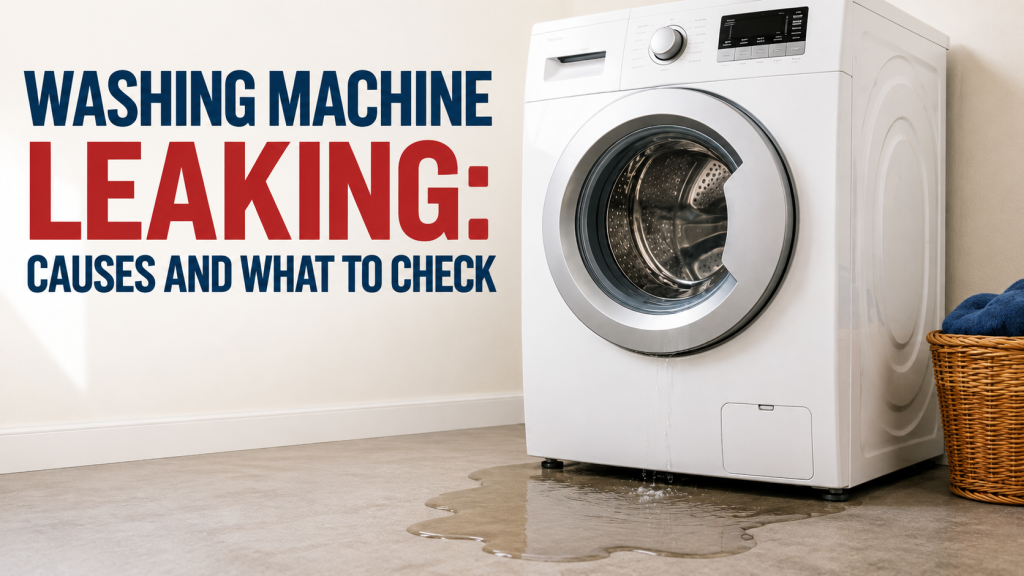
Washing Machine Leaking? Start With These Checks
Use the location and timing of the leak to decide where to look first.
| Where or When It Leaks | Possible Cause | Safe First Check |
|---|---|---|
| Behind washer during fill | Supply hose, fitting, or valve | Look for fresh drips at accessible connections |
| Underneath washer | Hose or internal component | Observe where water first appears without reaching underneath |
| Front of front-load washer | Door gasket or trapped debris | Inspect accessible gasket folds |
| Detergent-dispenser area | Residue, excess detergent, dispenser overflow | Check and clean accessible dispenser parts |
| During drain or spin | Drain hose, standpipe, internal drain system | Watch hose and household drain area |
| Standpipe overflows | Restricted household drain | Stop washer and consider a plumber |
| Washer leaks while unused | Supply-side leak or nearby plumbing | Inspect hoses, valves, and connections |
| Excess foam or suds | Detergent type or amount | Confirm detergent and dosing instructions |
| Water appears from inside cabinet | Internal hose, pump, valve, or tub area | Stop before disassembly and arrange service |
If water has reached electrical equipment, do not stand in pooled water while touching the washer, plug, receptacle, breaker equipment, or other electrical components. Unplug the washer only if the plug and surrounding area are dry and safely accessible. Otherwise, isolate power appropriately or use qualified professional help.
First, Find Out When the Washer Leaks
Leak timing can provide useful clues without requiring you to open the washer.
While Filling
A leak that starts as water enters the washer may involve:
- A supply hose
- A hose connection
- A household shutoff valve
- The detergent dispenser
- An internal water-inlet component
Start with visible hoses and plumbing. Internal inlet components should be diagnosed by an appliance technician if accessible checks do not reveal the problem.
During Washing
Water appearing once washing begins may be associated with excessive suds, a front-load door gasket, the dispenser area, or an internal hose or tub-related problem.
Check only accessible areas. Do not remove cabinet panels to follow the water internally.
During Draining or Spinning
Leaks that appear as the washer pumps water out may point toward the drain hose, household standpipe, an internal drain hose or pump, or an improper drain arrangement.
The timing is particularly useful because water on the floor during draining does not necessarily mean the washer cabinet itself is leaking.
While the Washer Is Off
A washer that leaks while sitting unused deserves attention to the supply side. Supply hoses, household valves, connections, and nearby plumbing can remain under water pressure even when the washer is not operating.
Check the Washing Machine Supply Hoses
Hot and cold supply hoses are among the most accessible places to inspect.
Look for:
- Moisture around threaded connections
- Drips from the hose body
- Cracks or abrasion
- Bulging
- Corrosion near fittings
- Water running down the back of the washer
If possible, dry the accessible area and watch for fresh moisture. This can help distinguish an active drip from water left behind by an earlier cycle.
If an actively leaking hose can be controlled by a nearby water shutoff that is safely accessible and operating normally, shut off the supply.
Do not force a valve or fitting that is stuck, heavily corroded, or difficult to move. Forcing an old plumbing connection can turn a small leak into a larger one.
Check the Household Shutoff Valves
The leak may come from the home’s plumbing rather than from the washing machine.
Inspect the accessible hot and cold shutoff valves for:
- Water around the valve body
- Drips at fittings
- Corrosion
- Moisture on nearby supply tubing
- Water marks running down the wall
A functioning, easily accessible shutoff may be used to stop an active leak. Do not use excessive force on a valve that will not turn normally.
If the valve itself is leaking or water appears to be coming from concealed household plumbing, a plumber is usually more appropriate than an appliance technician.
Inspect the Washer Drain Hose
A drain hose problem is more likely when water appears during draining or spinning.
Check visible portions of the hose for:
- Cracks
- Kinks or crushing
- Water running down its exterior
- A hose that has shifted out of position
- An accessible connection that appears loose
Do not pull the washer out abruptly to gain access. Moving a washing machine can strain water hoses, disturb the drain hose, pull on the power cord, damage flooring, or affect nearby plumbing.
If the washer cannot be accessed without significant movement or there is pooled water around electrical equipment, stop and use professional help.
Could the Standpipe or Household Drain Be Overflowing?
Water on the floor during the drain portion of a cycle may be coming from the household drain rather than from the washer.
Clues include:
- Water rising visibly in the standpipe
- Overflow occurring only when the washer pumps out
- Gurgling from nearby drains
- Water appearing at the wall or standpipe instead of beneath the cabinet
- Other drains backing up at the same time
A restricted household drain may be unable to accept the washer’s discharge fast enough.
This is a plumbing problem rather than an internal washer repair. Stop repeated cycles that cause overflow and contact a plumber if household drainage appears to be the source.
Check for Too Much Detergent or Excessive Suds
Excess detergent can create foaming that escapes from areas where liquid water normally would not.
Use detergent appropriate for the washing machine. High-efficiency washers generally require compatible low-sudsing detergent, but the correct amount can vary with detergent concentration, load size, water conditions, and manufacturer instructions.
More detergent is not necessarily better.
If you see foam or sudsy water near the dispenser, door, or drain area, review how much detergent was used. Do not blame detergent when clean water is clearly dripping from a hose, valve, or plumbing connection.
Check the Detergent Dispenser
The dispenser can sometimes overflow or leak because of residue, incorrect detergent placement, excessive detergent, or a drawer that is not seated normally.
Inspect accessible dispenser components for:
- Heavy detergent buildup
- A drawer that is crooked or not fully seated
- Detergent placed in the wrong compartment
- Water marks around the dispenser opening
- Excessive foam
Clean only parts intended for homeowner removal and cleaning, following the washer manufacturer’s instructions.
Do not open the cabinet to repair internal dispenser hoses or water valves.
Front-Load Washer: Inspect the Door Gasket
Front-load washing machines typically use a flexible gasket or boot around the door opening to contain water.
With the washer off, inspect accessible portions of the gasket for:
- Hair or debris on the sealing surface
- Small objects caught in folds
- Detergent residue
- Visible tears
- Deformation
- Water marks near the lower edge of the door
Wipe accessible folds and remove loose debris carefully.
Do not remove the gasket, retaining clamps, or cabinet panels. A torn, displaced, or damaged gasket may require appliance service.
Check Whether the Washer Door or Lid Is Closing Normally
For a front-load washer, make sure clothing or other items are not caught between the door and gasket. The door should close normally without needing to be forced.
For a top-load washer, confirm that the lid closes without obstruction.
Do not bypass or modify a door or lid safety switch.
A closing problem does not explain every washer leak, but visible water around the opening can help narrow down where the leak originates.
What If Water Is Leaking From Under the Washer?
Water beneath the washer can be misleading because it may travel from another location before reaching the floor.
Possible sources include:
- Supply hoses
- Drain hose
- Internal drain pump
- Internal hoses
- Tub or seal area
- Dispenser path
- Water running down from a connection higher on the machine
If it is safe to do so, dry the accessible floor and observe where fresh water first appears during operation from a safe position.
Do not reach beneath a powered washer through pooled water.
If locating the leak requires lifting or tilting the washer, removing panels, or reaching internal components, stop and arrange appliance service.
If an older washer has developed an internal leak along with other recurring problems, its overall condition and repair history can help determine whether another repair still makes sense.
What If the Washer Leaks Only During Spin?
A leak that appears during spin may actually be related to draining, because washers commonly remove water during portions of the spin process.
Possible causes include:
- A drain hose that leaks or moves
- A standpipe that overflows
- An internal drain-system leak
- Excessive suds
- Vibration that exposes an intermittent hose or connection problem
Severe vibration can move water or stress connections, but it should not automatically be assumed to be the root cause.
Do not remove the cabinet or attempt internal suspension, pump, or tub repairs as part of a homeowner leak check.
What If the Washer Leaks Only While Filling?
A fill-only leak narrows attention toward the water-supply side.
Check accessible:
- Supply hoses
- Hose connections
- Household shutoff valves
- Detergent dispenser
If the washer also struggles to take in water normally, use our washing machine not filling with water guide to check the household supply, shutoff valves, hoses, and other filling-related causes.
An internal inlet valve or related component can also leak depending on the washer design, but diagnosis beyond visible external checks generally belongs to an appliance technician.
What If the Washer Leaks Even When It Is Off?
This pattern is especially helpful because it points away from problems that occur only during draining or spinning.
A washer that develops water around it while idle may have a leak involving:
- A supply hose
- A household shutoff valve
- A pressurized connection
- Nearby household plumbing
Check accessible supply-side components and surrounding plumbing.
If the water comes from a household valve, supply pipe, or concealed plumbing rather than from the washer, contact a plumber.
When a Washing Machine Leak Needs Professional Service
Use an appliance technician when the accessible hoses and household connections appear normal but the washer itself still leaks.
Appliance service is appropriate when:
- Water appears to come from underneath the cabinet.
- A front-load gasket is torn or displaced.
- An internal pump or hose is suspected.
- The washer requires significant movement or disassembly.
- The leak repeatedly returns.
- Severe vibration occurs with the leak.
- Internal valves or controls may be involved.
Call a plumber when:
- A household shutoff valve leaks.
- Supply plumbing is leaking.
- The standpipe overflows.
- Household drains back up.
- Concealed plumbing may be involved.
Stop using the washer if there is water near electrical equipment, sparking, arcing, a burning odor, damaged wiring, repeated breaker trips, or unusual overheating.
Do not perform live electrical troubleshooting, voltage measurements, energized pump tests, internal wiring repair, control-board testing, safety-switch bypassing, or major cabinet disassembly.
Common Washing Machine Leak Troubleshooting Mistakes
Avoid these common diagnostic errors:
- Assuming water underneath the washer proves an internal leak
- Failing to note when during the cycle water appears
- Overlooking supply hoses and household valves
- Ignoring an overflowing standpipe
- Using excessive or unsuitable detergent
- Forcing a stuck or corroded shutoff valve
- Pulling the washer out abruptly
- Reaching under a powered machine through pooled water
- Removing cabinet panels before checking accessible causes
- Attempting energized pump or electrical testing
- Assuming every front-load leak requires a new door gasket
Washing Machine Leaking FAQ
Why is my washing machine leaking from underneath?
A washing machine leaking from underneath may have a supply-hose, drain-hose, internal pump, internal hose, tub, seal, or dispenser-related problem. Water can also travel from a connection higher on the machine before reaching the floor. Check accessible external sources first and stop if locating the leak would require reaching beneath a powered washer or opening the cabinet.
Why does my washer leak only during spin?
The washer may be draining during part of the spin process. Check the drain hose and household standpipe for visible leaking or overflow. Excessive suds, vibration, or an internal drain-system problem can also contribute.
Can too much detergent cause a washing machine to leak?
Yes, excessive detergent can create too many suds, which may contribute to foaming or overflow. Use detergent suited to the washer and follow the detergent and appliance manufacturer’s dosing guidance.
Why is my front-load washer leaking from the door?
Debris on the gasket, an item trapped near the door, detergent residue, or a torn or deformed gasket may allow water to escape. Clean and visually inspect accessible gasket surfaces, but do not remove the boot, retaining clamps, or cabinet panels.
Should I call a plumber or appliance technician for a washer leak?
Call a plumber when the problem appears to involve household shutoff valves, supply piping, the standpipe, or household drainage. An appliance technician is usually more appropriate when water appears to originate inside the washer, from a damaged door gasket, or from an internal pump, hose, valve, or other appliance component.
Final Thoughts
For a washing machine leaking, narrow the problem in order: identify where the water appears, note when in the cycle it happens, inspect accessible supply hoses and valves, check the drain hose and household drainage, review detergent and dispenser conditions, and inspect the front-load door gasket where applicable.
Stop before internal pump, valve, electrical, tub, or cabinet work. If water is near electrical equipment, avoid wet or energized components and stop using the washer. Once accessible checks point toward an internal appliance problem, an appliance technician is the appropriate next step; if the source is household valves, piping, or drainage, call a plumber.