
water seeping through a basement wall: causes and next steps
When you find water seeping through basement wall areas, the first goal is to determine where the moisture begins and when it appears. Water may move through porous masonry, cracks, penetrations, or the wall-floor joint, but condensation and plumbing leaks can create similar symptoms. Timing after rain, the exact wet area, and conditions outside the foundation can help narrow the cause.
Do not enter standing water if outlets, wiring, appliances, sump equipment, or other electrical components may be energized. If water has reached electrical equipment or you would need to stand in water to reach a shutoff, stay clear and have the electrical hazard addressed safely.
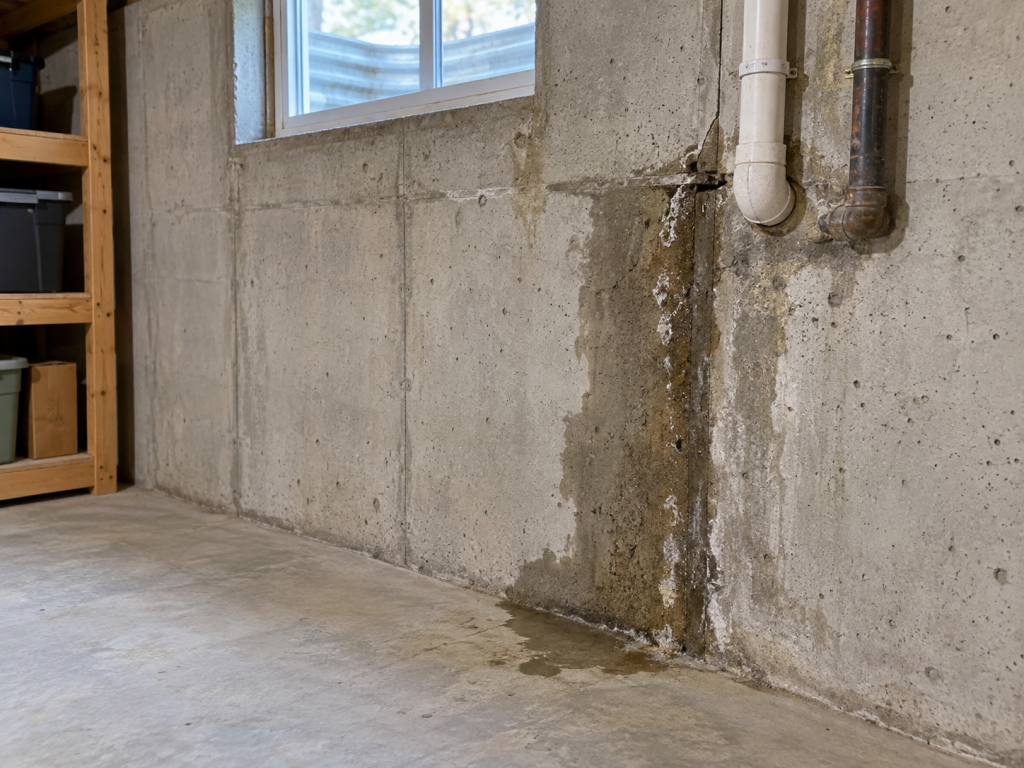
| What you see | Possible explanation | Useful clue |
|---|---|---|
| Broad damp patch on masonry | Moisture moving through wall | Often develops gradually |
| Water following a crack | Crack acting as entry path | May worsen during wet weather |
| Wetness around a pipe or utility opening | Penetration leak | Concentrated around one location |
| Water at wall-floor joint | Perimeter or foundation drainage conditions | Begins at bottom edge of wall |
| Damp wall during humid weather | Condensation | May occur without rain |
| Wet area near plumbing or appliance | Indoor leak | May follow fixture or appliance use |
What Water Seeping Through a Basement Wall Can Look Like
Basement seepage is not always a visible stream.
You may notice a darkened patch on concrete, damp mortar joints, droplets, streaks, peeling paint, mineral deposits, or a small wet area that gradually expands during a storm. More significant seepage may produce running water or puddles at the base of the wall.
The location where you first see moisture matters more than where the water eventually collects. Water can travel down a wall, along joints, and across a basement floor before becoming obvious.
Try to identify the highest or earliest wet point rather than assuming the lowest puddle marks the source.
Why Location and Timing Matter
The relationship between seepage and weather can help distinguish foundation moisture from indoor sources.
Water that appears during heavy rain may be associated with concentrated runoff or soil becoming wet beside the foundation. Moisture that develops only after several hours or days of rainfall may point more toward saturated soil and changing groundwater conditions.
A recurring wet area that appears in the same location after storms suggests a consistent moisture pathway.
Moisture that occurs during dry weather deserves a broader look. Plumbing leaks, appliance leaks, condensation, or other indoor sources may be responsible.
Keep simple notes about:
- When the rain started
- When the wall first became damp
- Which part of the wall became wet first
- Whether the problem occurs after every rain or only prolonged storms
- How long the wall remains wet afterward
A few observations across different weather events can reveal a pattern that one inspection cannot.
Common Paths for Water Seeping Through Basement Wall Areas
Seepage through porous concrete or masonry
Concrete, concrete block, mortar, and other masonry materials can transmit moisture.
A broad damp area without one obvious crack or opening may indicate moisture moving through the masonry rather than entering through a single visible defect. Concrete block walls may show moisture along individual blocks or mortar joints, while poured concrete may develop larger darkened areas.
This does not automatically mean groundwater pressure is the only cause. Surface runoff, wet soil against the foundation, construction details, and existing drainage conditions can all influence how much moisture reaches the wall.
Water entering through a crack
A foundation crack can provide a concentrated path for moisture, especially when the surrounding soil becomes wet.
Look for whether the dampness clearly begins along the crack. Staining or mineral deposits following the crack can also indicate recurring moisture movement.
Do not assume every wet wall is caused by a crack, and do not assume that filling a visible crack will solve the underlying water problem.
Significant horizontal cracking, bowing, displacement, widening cracks, or other movement deserves evaluation by an appropriate foundation or structural professional. Those conditions should not be treated as a routine DIY sealing project.
Water around pipes and utility penetrations
Where pipes, conduits, cables, or other utilities pass through a foundation wall, the opening around them can sometimes become a moisture pathway.
This pattern is often localized. You may see staining, dampness, or droplets concentrated around the penetration while surrounding masonry remains relatively dry.
Check whether the pipe itself could be leaking before blaming the foundation opening. Condensation on a cold pipe can also drip onto the wall and create misleading stains.
Moisture at the wall-floor joint
Water appearing where the basement wall meets the floor is an important diagnostic distinction.
It may look like water is seeping directly through the wall face when the actual entry path is at the perimeter joint between the foundation wall and slab.
This pattern can be related to water collecting around the foundation, groundwater conditions, or the way an existing perimeter drainage system is functioning.
If moisture consistently starts at the bottom edge rather than higher on the wall, avoid treating it as an ordinary wall-surface problem.
How Rain, Saturated Soil, and Runoff Contribute
A foundation wall below grade is surrounded by soil. During wet weather, that soil can hold more water and remain saturated longer.
Water in the surrounding ground can increase pressure against below-grade walls and seek available paths through cracks, joints, penetrations, or porous materials. Hydrostatic pressure may contribute in some situations, but it should not be treated as the explanation for every damp basement wall.
Conditions above ground can also increase the amount of water reaching one part of the foundation.
From a safe location outside, compare the affected wall with the same area around the exterior of the house. Look for obvious conditions such as:
- A downspout discharging nearby
- Roof runoff collecting near the foundation
- Ground that directs water toward the house
- A low spot beside the affected wall
- Hard surfaces sending runoff toward the foundation
- Persistent pooling after rain
These observations are diagnostic clues, not instructions to redesign the yard. Larger grading, drainage, or foundation-water-management problems should be addressed as separate repairs.
Do not excavate beside the foundation as a diagnostic step.
If the seepage appears mainly during or after storms, our guide to water in the basement after rain can help you compare wall, floor, crack, and window-related entry patterns.
Seepage, Condensation, or a Plumbing Leak?
A damp basement wall does not always mean exterior water is passing through the foundation.
Condensation
Condensation can develop when warm, humid air contacts a cool basement wall.
It tends to create surface dampness rather than a clearly defined stream through a crack or penetration. The problem may be more noticeable during humid weather even when it has not rained.
Similar condensation on cold pipes, windows, or other cool surfaces supports humidity as a possible contributor.
Plumbing or appliance leaks
Water from supply piping, drains, water heaters, washing machines, sinks, or plumbing above the basement can run along walls and mimic foundation seepage.
A plumbing source becomes more likely when moisture:
- Appears during dry weather
- Follows use of a fixture or appliance
- Begins below visible piping
- Occurs beneath a kitchen, bathroom, or laundry area
- Does not track with rainfall
Do not open finished walls casually simply to investigate. A plumber can help when the pattern points toward a concealed supply or drain problem.
What Stains, Mineral Deposits, and Peeling Paint May Tell You
Basement walls often retain evidence of previous moisture even when they are currently dry.
White or pale mineral deposits on masonry can indicate that moisture has moved through the material and left soluble salts behind as it evaporated. Recurring deposits suggest recurring moisture movement.
Peeling, blistering, or flaking paint can also indicate that moisture is affecting the bond between the coating and the wall.
Dark stains or repeated damp patches can help identify where water has traveled, but appearance alone does not tell you the exact source.
Photographing the wall when dry and again during a wet-weather event can make changes easier to compare.
Safe Homeowner Observations During and After Rain
You can gather useful information without drilling, excavating, or opening the foundation.
When conditions are safe:
- Note the first point where moisture appears
- Compare the affected wall with nearby dry walls
- Look at visible cracks, joints, and penetrations
- Check whether water begins high, mid-wall, or at the floor
- Observe whether the wet area grows during the storm
- Check nearby plumbing and appliances
- Compare the indoor location with exterior runoff conditions
- Photograph stains and wet areas for later comparison
After the rain stops, note how quickly the wall dries and whether seepage continues.
Water that continues appearing well after rainfall may reflect saturated surrounding soil rather than only direct surface runoff.
Why Coatings and Crack Sealers Are Not Always the Answer
An interior coating can be appropriate for certain basement-wall conditions, but it does not remove water from saturated soil or repair every path through the foundation.
Applying a coating over active seepage may hide the symptom temporarily without correcting why water is reaching the wall.
The same caution applies to cracks. Sealing the visible opening without understanding whether the crack is stable, whether water pressure remains behind it, or whether structural movement is present may leave the real problem unresolved.
Choose a repair only after identifying the most likely moisture pathway and contributing conditions.
If the moisture problem extends beyond one crack or wall surface, compare the main basement waterproofing options before choosing a repair approach.
When Professional Evaluation Is Appropriate
A basement drainage or waterproofing professional may be appropriate when seepage repeatedly follows rainfall, affects large sections of wall, appears at several locations, or seems connected with broader foundation drainage conditions.
A plumber is a better choice when the moisture pattern follows fixture or appliance use or appears connected to water-supply or drain piping.
A foundation or structural professional should evaluate significant horizontal cracking, bowing, displacement, widening cracks, movement, or recurring leakage associated with visible structural deterioration.
An electrician should be involved when seepage has reached outlets, wiring, panels, appliances, or other electrical equipment.
Substantial recurring flooding, unexplained water entry, or a problem that would require excavation or specialized drainage work also deserves professional evaluation rather than continued surface repairs.
Final Thoughts
When diagnosing water seeping through basement wall areas, focus on three things: where the moisture first appears, when it occurs, and what conditions exist on the other side of that section of foundation. Those clues can help distinguish porous masonry seepage, cracks, penetrations, perimeter entry, condensation, and indoor leaks.
Do not automatically coat the wall or seal the first visible crack. If water repeatedly returns, the wall shows structural movement, or the source remains unclear, identifying the underlying moisture path is the more important next step.