
water in the basement after rain: where it may be coming from
Water in basement after rain usually points to a problem with how water is reaching or moving around the foundation. The location and timing of the moisture are two of the best clues to the source. Water at the wall-floor joint often suggests saturated soil around the foundation, while wet walls, cracks, window areas, or isolated floor spots can point to different entry paths. Start by documenting where the water first appears and comparing that area with conditions outside.
Do not enter standing water if outlets, appliances, electrical panels, wiring, sump equipment, or other energized equipment could be involved. If you would have to stand in water to shut off power, stay out and contact a qualified electrician. Treat water that may contain sewage as contaminated rather than ordinary rainwater.
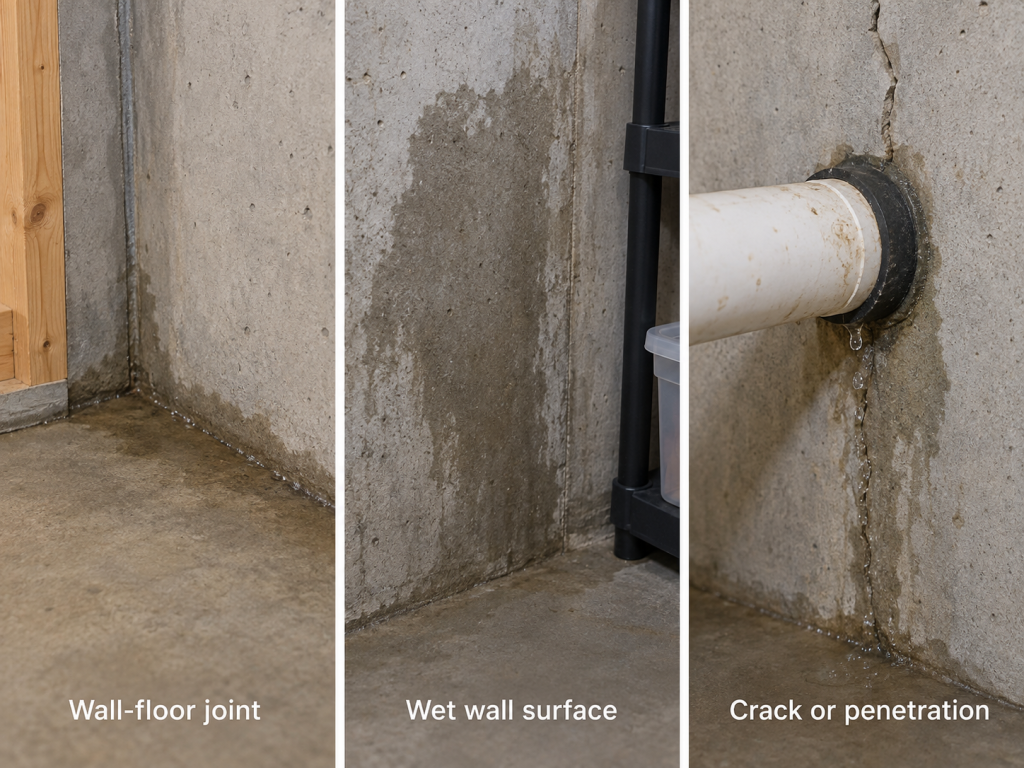
| What you see indoors | Possible source | What to compare outside |
|---|---|---|
| Wet wall-floor joint | Water collecting beside foundation | Downspouts, low spots, pooling |
| Damp or wet wall surface | Moisture moving through foundation wall | Saturated soil against that wall |
| Water at a crack or penetration | Concentrated entry path | Water collecting near same location |
| Wetness below basement window | Window or window-well problem | Water in well, drainage, window seal |
| Water appearing through floor | High groundwater or pressure below slab | Widespread saturated conditions |
| One isolated wet area | Localized exterior or penetration issue | Nearby pooling or runoff source |
Why Rain Timing Matters
The relationship between rainfall and the first appearance of water helps separate rain-related entry from other basement moisture problems.
Water that appears while rain is still falling can point toward a relatively direct route. Examples include a leaking basement window, a window well filling with water, runoff collecting against one part of the foundation, or water entering through an accessible crack or penetration.
A delay of several hours may suggest that water is moving through saturated soil before reaching the foundation. Water may also appear after the rain has stopped if the surrounding soil continues absorbing runoff and the groundwater level continues rising.
If the basement stays dry during ordinary showers but becomes wet after long storms, repeated storms, or rapid snowmelt combined with rain, the amount of water in the soil may be more important than rainfall alone.
Keep in mind that timing is evidence, not proof. Different conditions can produce similar symptoms.
What the Location of Water in Basement After Rain May Tell You
Water at the wall-floor joint
A wet line or small stream where the basement wall meets the floor is a common rain-related pattern. That joint is a vulnerable area because the wall and slab are separate parts of the foundation assembly.
Water there does not automatically mean that the visible joint itself is the root problem. Saturated soil, groundwater, exterior drainage conditions, or an existing foundation drainage system may all influence how much water reaches the foundation.
Look for whether the wetness follows a long section of wall or stays concentrated in one corner. A long wet section after major storms suggests a broader moisture load than one small recurring spot.
Seepage through a basement wall
Concrete and masonry basement walls can show damp patches, darker areas, streaks, or visible seepage when moisture is present outside the foundation.
Compare the height and width of the wet area. A broad damp area may indicate moisture affecting a larger section of wall, while a narrow path may lead you toward a crack, joint, penetration, or other specific entry point.
Avoid assuming that applying an interior coating will solve the underlying problem. If substantial water is reaching the outside of the foundation, the moisture source needs to be identified before choosing a waterproofing approach.
Water through cracks or penetrations
Water may follow an existing crack or an opening where a pipe, conduit, utility line, or other component passes through the foundation.
During rain, observe whether the water clearly begins at that feature rather than merely flowing past it from somewhere else. A small amount of water can travel along a wall or floor and make the apparent leak location misleading.
Do not attempt structural crack repair based only on the fact that a crack leaks. Cracks that are wide, changing, displaced, accompanied by bowing or movement, or otherwise suggest structural distress should be evaluated by an appropriate foundation or structural professional.
Basement windows and window wells
Water directly beneath a basement window deserves a close look at the window and, if present, its well.
From a safe location, check whether rainwater is collecting in the well, whether debris is obstructing its bottom, or whether runoff appears to be entering faster than it can drain. Also look for staining or wetness around the window frame that indicates water may be entering above the floor.
This article does not cover window-well drainage repairs in detail. Once the window area is clearly identified as the source, the next step is diagnosing that specific assembly rather than treating the entire basement as a general waterproofing problem.
If water is collecting outside a basement window, our window well drainage guide explains the common reasons a well may fill and what to check before assuming the window itself is the problem.
Water coming through the floor or low spots
If water first appears in floor cracks, around penetrations through the slab, or at low areas away from exterior walls, conditions below the floor may be involved.
During prolonged wet weather, saturated soil and a high groundwater level can increase the amount of water around and beneath a basement. The resulting pattern may differ from a simple wall leak.
Floor-entry problems deserve their own diagnosis because the appropriate response may involve groundwater management, an existing sump or drainage system, or other below-slab conditions. Avoid treating them as ordinary surface leaks without confirming the source.
If the water appears to be entering through the slab rather than running down a wall, see our guide to water coming up through basement floor areas for likely causes and next steps.
Compare the Indoor Wet Area With Conditions Outside
Once you know where the basement becomes wet, inspect the corresponding exterior area from ground level when conditions are safe.
You are looking for relationships, not performing a full drainage evaluation. Useful observations include:
- A downspout discharging close to the wet section of the basement
- Overflowing gutters sending roof water beside the foundation
- Soil or hard surfaces directing runoff toward the house
- A visible depression where rainwater collects
- Water standing near a basement window or window well
- Concentrated runoff reaching one corner of the house
These observations can explain why one part of a basement becomes wet while the rest stays dry.
Gutters, downspouts, grading, and yard drainage can be important contributors, but each is a separate repair topic. If you identify an obvious exterior water-management problem, address that focused issue rather than immediately assuming the foundation itself needs major waterproofing work.
Do not excavate around the foundation as a diagnostic experiment. Excavation and foundation drainage work can involve buried utilities, structural concerns, heavy equipment, and specialized installation requirements.
Simple Checks During and After Rain
You can learn a great deal about water entry without opening walls or performing invasive repairs.
During a safe rain event, note where moisture first becomes visible. Take photos from the same positions and record approximately when the rain started and when the water appeared.
Mark the limits of damp areas with removable painter’s tape or another non-damaging reference so you can see whether they expand. Check nearby windows, wall penetrations, floor cracks, and the wall-floor joint.
Outside, remain on stable ground and compare the wet basement area with the same section of the foundation. Observe runoff, downspout discharge, pooling, and window wells without climbing onto the roof or entering unsafe flooded areas.
After the storm, check again. A basement that continues getting wetter for hours after rainfall stops may be responding differently from one that leaks immediately and then quickly stops.
Also document storm severity. A leak that occurs after every small rain is a different pattern from one that appears only after several days of wet weather.
One Storm May Not Reveal the Full Pattern
Basement leaks can be frustrating because seemingly similar storms do not always produce the same result.
Rainfall intensity matters, but so do storm duration and how wet the ground was beforehand. A short heavy storm after a dry period may affect the house differently from a moderate rain falling on already saturated soil.
Wind direction can also matter around windows and exposed above-grade portions of the foundation.
For recurring problems, keep a simple log showing the date, approximate rain conditions, where water appeared, and how extensive it became. Photos can make patterns easier to recognize and give a contractor useful information if professional diagnosis becomes necessary.
Avoid waiting through repeated damaging floods simply to gather more evidence. Documentation is useful only when conditions are reasonably safe, and the amount of water is manageable.
Localized Versus Widespread Water Entry
A localized leak usually has a clearly defined relationship to one part of the house. Examples include water repeatedly appearing beneath one window, around one penetration, at one crack, or in a particular corner when runoff collects outside that area.
Those patterns often justify investigating that specific entry path first.
Widespread wetness deserves broader evaluation. Warning signs include:
- Several walls becoming wet during the same storm
- Water entering along long sections of the wall-floor joint
- Multiple floor areas becoming wet
- Recurring standing water after substantial rainfall
- A sump or drainage system that cannot keep up
- Increasing frequency or severity of flooding
A widespread problem may involve saturated soil, groundwater, drainage-system limitations, or multiple contributing conditions rather than one isolated opening.
Drying the Basement Is Not the Same as Stopping the Leak
After the source has stopped and electrical conditions are safe, removing moisture from the basement can help limit lingering dampness.
A dehumidifier may be useful for lowering indoor humidity and helping the space dry after a minor water event. It does not prevent groundwater, runoff, or rainwater from entering the basement.
Do not place or operate electrical drying equipment in standing water or where electrical equipment has been exposed to flooding without appropriate safety evaluation.
Wet carpet, drywall, insulation, stored belongings, and other absorbent materials may require prompt attention after significant water entry. If flooding is extensive, contaminated, or difficult to dry, professional water-damage cleanup may be appropriate.
When to Bring In a Professional
The right professional depends on what your observations suggest.
A basement waterproofing or drainage contractor may be appropriate when water entry is recurring, widespread, associated with groundwater conditions, or apparently related to an existing foundation drainage or sump system.
A plumber should investigate water that may actually be coming from a supply pipe, drain, sewer, sump discharge, or other plumbing system rather than rain passing directly through the foundation.
A foundation or structural professional is appropriate when water entry occurs with significant cracking, displacement, wall movement, bowing, settlement, or other signs that raise structural concerns.
An electrician should evaluate electrical equipment or circuits that have been exposed to water or when standing water prevents safe access to electrical controls.
Seek professional assistance promptly for substantial recurring flooding, sewage or suspected contamination, unexplained rapid water entry, or a problem that would require major excavation or structural work to diagnose or correct.
Final Thoughts
The best way to diagnose water in the basement after rain is to connect three clues: when the water appears, where it first appears indoors, and what is happening outside that same part of the house. That comparison can often distinguish a localized window, crack, or penetration problem from broader wall, floor, groundwater, or drainage-related conditions.
Document the pattern before choosing a repair whenever it is safe to do so. Once the likely entry path is clear, address that specific problem or bring in the professional suited to it instead of treating every rain-related basement leak as the same waterproofing issue.