
soffit repair: common problems, costs, and repair options
Soffit repair can involve anything from replacing one cracked or loose panel to removing larger sections damaged by water, rot, pests, or failing roof-edge details. The right repair depends on the soffit material, how far the damage extends, and—most importantly—what caused it. Fixing the visible damage without correcting an active leak or moisture problem often leads to another repair later.
Because soffits are at the roof edge, limit homeowner inspection to what you can safely see from the ground. Work requiring ladders, roof access, extensive removal, or investigation of hidden roof-edge damage is generally better handled by a qualified professional.
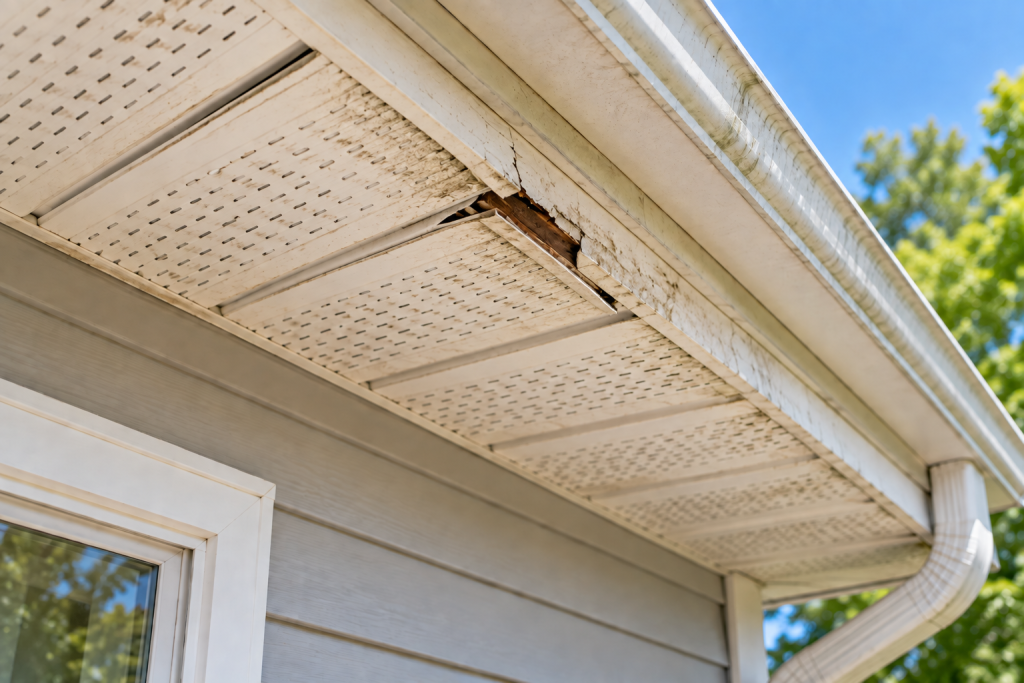
| What you see | What it may indicate | Typical response |
|---|---|---|
| Small crack or hole | Impact or localized damage | Patch or replace a small section |
| Staining or swelling | Repeated moisture exposure | Find the water source before repair |
| Soft or rotten wood | Prolonged moisture | Replace damaged material and correct the cause |
| Several loose or sagging panels | Fastener, backing, wind, or moisture problems | Evaluate a larger section |
| Blocked or broken vents | Restricted intake airflow | Restore the vented area correctly |
What Is a Soffit and Why Does It Matter?
The soffit is the finished surface underneath a roof overhang. Look up at the underside of the eave from the ground, and the horizontal or angled surface between the exterior wall and the outer roof edge is usually the soffit.
Soffits cover and help protect the underside of the roof overhang while providing a finished appearance. Depending on the house, they may be made from vinyl, aluminum, wood, plywood, or other engineered or cementitious panels.
Many homes also use perforated or vented soffit panels as part of a vented attic system. These openings allow intake air to enter near the lower edge of the roof. Damage, paint, insulation, nests, or debris that blocks those openings can reduce airflow.
Common Soffit Problems
Different materials fail in different ways, but several symptoms appear repeatedly.
Water Damage
Water-damaged soffit may show stains, discoloration, swelling, soft areas, distorted panels, or sagging. With some materials, seams can open, or panels can begin separating from their supports.
Repeated moisture usually means there is a problem above or near the soffit rather than a problem with the soffit alone. Roof leakage, gutter overflow, wind-driven rain, or deteriorated roof-edge components are possible sources.
Rotten Soffit
Rot mainly affects wood and wood-based soffit materials. The material may become soft, crumbly, discolored, or unable to hold fasteners.
A rotten soffit is evidence of prolonged moisture exposure. Replacing only the visibly rotten piece will not solve the problem if water is still entering the assembly.
Cracked or Broken Soffit Panels
Vinyl, aluminum, fiber cement, wood, and other panel materials can crack, split, dent, or break. Possible causes include impacts, storm debris, wind, age, movement, and brittle material.
A single damaged panel may be a limited repair if adjacent panels and their supports remain sound.
Sagging or Loose Soffit
Loose or sagging sections can result from failed fasteners, damaged backing or framing, moisture deterioration, age, or wind.
One displaced panel is different from a long run of sagging soffit. Widespread movement can indicate that the supporting material needs inspection before new panels are installed.
Peeling Paint or Failing Finish
Peeling paint on a wood soffit may simply reflect an aging finish, but repeated peeling, bubbling, or staining deserves closer attention. Persistent finish failure can occur when moisture is reaching the material from behind or above.
On an older home, do not casually sand or scrape painted soffit or trim when lead-based paint could be present.
Pest or Bird Damage
Birds, insects, rodents, and other animals may enter through openings or enlarge existing gaps. Signs can include displaced panels, holes, nesting material, droppings, or repeated activity near the eaves.
Do not reach blindly into a soffit cavity. If bees, wasps, bats, rodents, birds, or other animals may be occupying the space, appropriate pest or wildlife professionals may need to address that problem before the soffit is opened.
Blocked or Damaged Soffit Vents
Vented soffit can lose effectiveness when perforations are painted over, clogged with debris, blocked by nests, damaged, or obstructed by insulation from inside the attic.
Dark or mildew-like staining can also appear on soffits exposed to persistent moisture. Appearance alone does not establish the cause, so recurring staining should prompt an investigation of moisture conditions rather than repeated cosmetic cleaning or painting.
What Causes Soffit Damage?
Soffit damage often begins somewhere else around the roof edge. Common contributors include:
- Roof leaks that allow water to reach the eaves
- Overflowing or leaking gutters
- Water getting behind roof-edge details
- Nearby fascia deterioration
- Wind-driven rain
- Ice and snow exposure
- Trapped moisture or ventilation problems
- Birds, insects, or other pests
- Falling branches or other physical impacts
- Long-term sun, temperature, and weather exposure
Visible warning signs include stains, holes, cracks, soft wood, crumbling material, sagging, loose sections, peeling finishes, damaged vents, and recurring animal activity.
Pay particular attention to repeated moisture. A stain that returns after painting or a replacement panel that deteriorates again suggests the underlying source was never fully corrected.
Damage seen from below also may not show the full extent of the problem. Water can affect concealed backing, roof-edge wood, or adjacent components before the damage becomes obvious from the ground.
Can a Damaged Soffit Be Repaired?
Yes. Limited soffit repair can make sense when the damage is isolated, surrounding material is solid, the cause has been corrected, and a compatible replacement or repair material is available.
A minor hole or localized break may sometimes be patched depending on the material and location. A badly cracked, distorted, rotten, or missing panel is more likely to require section replacement.
When vented soffit is involved, the repair should preserve the intended vent openings rather than covering or blocking them.
When Should Soffit Be Replaced?
Replacing a larger section becomes more reasonable when:
- Rot or deterioration extends beyond one small area
- Several panels are broken, sagging, or loose
- Supporting material is deteriorated
- Moisture damage continues across the eave
- Vented panels are broadly damaged
- Previous patches keep failing
- Older material cannot be matched or repaired effectively
Extensive damage does not automatically mean every soffit on the house needs replacement. The appropriate scope depends on how far the deterioration actually extends and whether related roof-edge components are affected.
When deterioration affects both parts of the roof edge, our soffit and fascia replacement guide explains when combined replacement may be more practical than making separate repairs.
Soffit Repair Cost
Soffit repair cost varies substantially because replacing one accessible panel is a very different project from opening a long section of deteriorated eave.
The main cost factors are:
- Material: Vinyl, aluminum, wood, and panel products have different material and installation requirements.
- Amount of damage: More damaged sections mean more removal, fitting, and replacement.
- Height and access: Upper-story soffits and difficult rooflines usually increase labor requirements.
- Hidden damage: Deteriorated backing or other concealed moisture damage can expand the job once the soffit is opened.
- Related repairs: A roof leak, gutter problem, or damaged roof-edge component may need separate work.
- Vent configuration: Vented panels may need to be matched so the intended intake openings are maintained.
- Finish work: Wood repairs may require preparation and finishing.
- Local labor rates: Contractor pricing varies considerably by market.
For budgeting, it is more useful to obtain a quote based on the actual damaged length, soffit width, material, access, and underlying condition than to rely on a single price-per-foot figure.
Vinyl or Aluminum Soffit
Repair commonly involves replacing damaged panels or sections. Labor can increase when existing profiles or colors are difficult to match or when several panels must be removed to reach the damaged area.
Wood Soffit
Wood can require more investigation when rot is present because visible deterioration may not end at the edge of the damaged piece. Finish preparation and painting can also add labor after sound replacement material is installed.
Fiber Cement or Other Panel Materials
Panel size, fastening method, weight, finish, and availability of matching material can affect the repair. Older cementitious exterior materials also deserve caution: if asbestos-containing material is suspected, do not cut, drill, sand, grind, break, or remove it before appropriate evaluation.
Why the Cause of Soffit Damage Matters
A successful repair addresses the damage and the condition that created it.
Installing new soffit beneath an unresolved roof leak, overflowing gutter, failed roof-edge detail, deteriorated adjacent fascia, trapped moisture problem, or pest entry point can conceal the symptom temporarily without stopping additional damage.
What If the Damage Is Near the Fascia?
Soffit and fascia meet along the roof edge, so the same moisture problem can sometimes affect both.
That does not mean both automatically need replacement. The soffit may have isolated damage while the fascia remains sound, or investigation may reveal deterioration in both components. Broad fascia diagnosis and repair should be treated as a separate part of the project rather than assumed from soffit damage alone.
If the fascia is also deteriorated, our fascia repair guide explains common damage, repair options, costs, and when replacing part or all of the board makes more sense.
Can Soffit Damage Affect Attic Ventilation?
It can when the home relies on vented soffit for attic intake air.
Painted-over perforations, nests, debris, damaged vent panels, or insulation blocking openings from the attic side can interfere with airflow. Restoring damaged vented soffit should maintain the home’s intended ventilation path rather than replacing a vented section with an unvented barrier without considering the overall design.
A complete attic ventilation assessment is a separate job if airflow problems extend beyond the soffit itself.
How to Inspect Soffit Safely
Start with a ground-level inspection during daylight. Walk around the house and look for changes in color, alignment, and condition.
Useful checks include:
- Look for stains, holes, cracks, sagging, and missing pieces.
- Compare suspicious sections with nearby soffit that appears sound.
- Check whether visible vent perforations appear open or damaged.
- Watch for bird, insect, or animal activity around openings.
- Use binoculars or a phone camera with zoom to examine upper areas.
Avoid climbing onto the roof or improvising ladder access to investigate an eave. High soffits, extensive sagging, active leaks, and areas that require roof-edge access are appropriate reasons to call a professional.
| Condition | Limited repair may fit | Larger replacement or evaluation is more likely |
|---|---|---|
| Damage area | One isolated spot | Several panels or a long section |
| Surrounding material | Firm and secure | Soft, loose, sagging, or deteriorated |
| Moisture source | Identified and corrected | Ongoing or unknown |
| Material matching | Compatible material available | Existing material difficult to match |
| Hidden damage | No clear signs | Suspected behind the soffit |
| Access | Safely accessible from ground | Ladder or roof-edge access required |
Professional evaluation also makes sense when water intrusion continues without a clear source, roof sheathing or other roof-edge components may be damaged, pests occupy a large opening, or venting problems cannot be identified through safe observation.
For older painted soffits, consider lead-safe requirements before disturbing coatings. Suspected asbestos-containing cementitious material also requires appropriate evaluation rather than exploratory cutting or removal.
Final Thoughts
Soffit repair works best when the visible damage and its underlying cause are treated as two parts of the same problem. Identify what is damaged, determine where moisture, impact, pests, or movement came from, and then decide whether a localized repair or larger section replacement is justified.
When deterioration is extensive, the source of water is uncertain, or safe inspection requires working at the roof edge, professional evaluation can prevent a cosmetic repair from hiding a larger problem.