
door sweeps for bugs: how to choose the right type
A door sweep for bugs works best when it closes the gap beneath an exterior door without dragging or preventing the door from closing properly. The right type depends on the gap size, door material, threshold, floor surface, weather exposure, and attachment method. Brush, rubber or vinyl blade, adhesive-backed, screw-on, and automatic designs each suit different situations.
| Sweep Type | Best Fit | Main Advantage | Main Limitation |
|---|---|---|---|
| Brush | Slightly uneven floors or thresholds | Flexible and low-friction | May not seal large gaps tightly |
| Rubber or vinyl blade | Smooth thresholds and exterior doors | Continuous seal | Can drag if installed too low |
| Automatic door bottom | Doors where a seal should lift while opening | Drops only when the door closes | Costs more and is more involved to fit |
| Adhesive-backed | Light-duty or simple installations | No drilling required | Adhesion can fail on rough or damp surfaces |
| Screw-on or track-mounted | Long-term exterior use | Secure and often adjustable | Must suit the door material |
What a Door Sweep Does
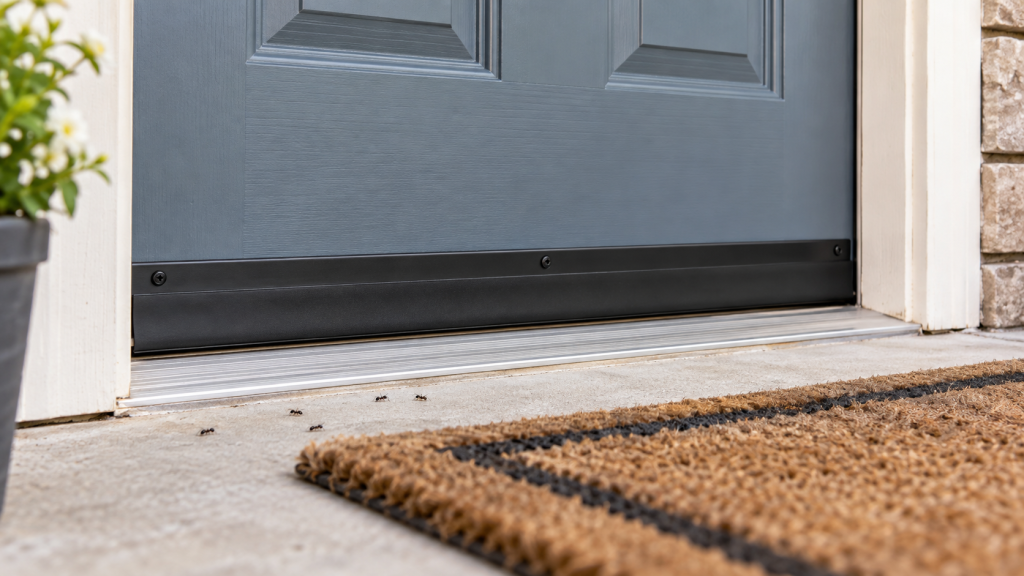
A door sweep sits along the lower edge of a door and closes the space between the door and the threshold or floor.
That gap can let in insects, drafts, dust, and light. A properly fitted sweep creates a barrier without making the door difficult to use.
A sweep only addresses the bottom. If you see daylight around the sides or top, weatherstripping, alignment, or another frame repair may be needed instead.
Main Types of Door Sweeps
The best door sweep for bugs is the one that matches the door, gap, and surface beneath it.
Brush door sweeps
Brush sweeps use flexible bristles that contact the threshold or floor. They are useful over slightly uneven surfaces because the bristles can flex over small irregularities with less drag than a solid blade.
They may not close a large gap as tightly as a continuous seal, and the bristles can wear or collect debris over time.
Rubber or vinyl blade sweeps
Rubber and vinyl blade sweeps create a continuous seal along the door bottom. They are common on exterior doors and can reduce insect entry, drafts, dust, and light.
They work best over a reasonably even surface. If installed too low, the blade may drag. Weather and temperature exposure can also cause some flexible materials to harden or crack with age.
Automatic door bottoms
An automatic door bottom lowers a seal when the door closes and lifts it when the door opens.
This helps avoid constant floor drag and can provide a cleaner appearance. The tradeoffs are higher cost, more involved fitting, and greater compatibility concerns.
Some automatic bottoms require more door preparation than others. Check manufacturer guidance before modifying a metal, rated, or specialty door.
Adhesive-backed or stick-on sweeps
Adhesive-backed sweeps are simple because they do not require drilling. They can suit light-duty applications when the door surface is smooth, clean, dry, and compatible with the adhesive.
Moisture, rough surfaces, dirt, weather, and repeated movement can weaken the bond, so they may be less durable on exposed exterior doors.
Screw-on or track-mounted sweeps
Screw-on and track-mounted sweeps use mechanical fasteners and often allow some adjustment.
They can be a better fit for long-term exterior use, but the fasteners must suit the door material. Wood, metal, fiberglass, and specialty doors may have different requirements.
Do not drill into a metal, fire-rated, or specialty door until you have confirmed that the modification is appropriate.
How to Choose the Right Door Sweep for Bugs
Start with the actual gap rather than the appearance of the product.
Match the sweep to the gap and surface
A small, even gap over a smooth threshold may work well with a rubber or vinyl blade. A slightly irregular surface may favor a brush or adjustable design.
If the gap changes substantially across the door, the problem may involve a damaged threshold, warped door, uneven sill, or alignment issue rather than the sweep alone.
Also consider the surface the sweep will contact. Tile, wood, carpet, concrete, and metal thresholds create different amounts of friction and wear.
Match the sweep to the door and exposure
Before buying, check:
- Door material
- Gap height
- Door width
- Threshold height and condition
- Interior or exterior exposure
- Rain and moisture exposure
- Floor surface
- Adjustment range
- Attachment method
- Whether the door can still operate freely
For an exterior door, choose materials and attachment methods intended for weather exposure.
A door sweep works best as one part of a broader exclusion plan, so also check our whole-home guide on how to keep bugs out by sealing other common entry points and reducing attractants.
Measure the Gap Before Buying
Close the door fully and inspect the bottom from both sides. Look for visible daylight and note whether the gap is even.
Measure at several points if the floor or threshold is irregular, then confirm the door width so the sweep is long enough to cover the lower edge.
The sweep should close the opening without binding against the threshold or preventing the door from closing and latching normally.
If your main concern is rodent entry rather than insects alone, see how to keep mice out of your house for a broader look at door gaps, garage-door edges, and other mouse entry points.
Door Sweep vs. Threshold and Weatherstripping
A sweep and threshold work together, but they are different parts.
The sweep attaches to or moves with the door. The threshold is the raised surface at the bottom of the doorway. If the threshold is broken, severely uneven, loose, or too low, a new sweep alone may not solve the gap.
Weatherstripping seals the sides and top of the door. Visible light around those edges points to a different sealing problem.
Best Door Sweep Type for Uneven Floors
For small surface irregularities, a brush sweep or adjustable design can be more forgiving than a stiff blade.
Flexible bristles can follow minor changes in floor height or grout lines with less dragging. They cannot compensate for a badly damaged or severely uneven threshold, however.
Best Door Sweep Type for Exterior Doors
Exterior doors need a sweep that tolerates weather, repeated use, and temperature changes.
Look for:
- Materials intended for exterior exposure
- Water- or corrosion-resistant components
- Secure attachment
- Adjustability where useful
- A seal that remains flexible
- Replaceable inserts if serviceability matters
Rubber, vinyl, and brush designs can all work if they match the threshold and exposure.
Interior Garage-to-House Doors Need Extra Care
A door between an attached garage and the house may be subject to fire-separation or other code requirements depending on the home and local rules.
Do not make modifications that could interfere with required construction, closing, latching, or rated performance. Before drilling into or altering a labeled, rated, metal, or specialty door, check manufacturer guidance and applicable requirements.
Adhesive vs. Screw-On Installation
Adhesive-backed sweeps
Advantages:
- No drilling
- Simple installation
- Useful for temporary or light-duty applications
Limitations:
- Surface preparation matters
- Adhesion can weaken
- Moisture and weather can reduce durability
Screw-on or track-mounted sweeps
Advantages:
- Stronger attachment
- Better durability in many exterior applications
- Adjustment on many designs
Limitations:
- More installation effort
- Fasteners must suit the door
- Poor placement can interfere with closing
- Permanent holes may be inappropriate on some doors
Common Door Sweep Mistakes
Avoid:
- Buying before measuring the gap
- Installing the sweep so low that it drags
- Leaving a visible gap beneath part of the door
- Expecting a sweep to fix side or top leaks
- Using an indoor-only product on an exposed door
- Applying adhesive to a dirty or damp surface
- Ignoring a damaged threshold
- Choosing a sweep that blocks normal door operation
When a Door Sweep Is Not Enough
A new sweep will not solve pest entry if the real problem is elsewhere.
Check for gaps around the frame, damaged weatherstripping, a broken threshold, a warped door, damaged sill material, or nearby siding and foundation gaps.
Garage doors can also have separate bottom, side, and corner gaps that a standard entry-door sweep will not address.
The goal is to close the opening insects are actually using rather than adding a heavier sweep to a door that already seals at the bottom.
Final Thoughts
The right door sweep for bugs is the one that closes the lower gap without dragging, binding, or preventing normal door operation. Brush designs handle slight surface irregularities well, rubber or vinyl blades can create a tighter continuous seal, and automatic bottoms can reduce floor drag where their added complexity makes sense.
Measure first, check the threshold and door material, and choose a product suited to the exposure and attachment method. If the gap comes from a damaged threshold, warped door, or poor frame fit, address that condition rather than expecting the sweep to compensate for it.