
how to keep bugs out of your house: a whole-home prevention guide
How to keep bugs out of house entry points and living spaces starts with a simple strategy: make your home harder to enter and less rewarding once insects get inside. Seal accessible entry points, control food and moisture, reduce shelter and clutter, and watch for recurring activity. No home can be completely insect-proof, but consistent prevention can greatly reduce the conditions that allow pests to enter and become established.
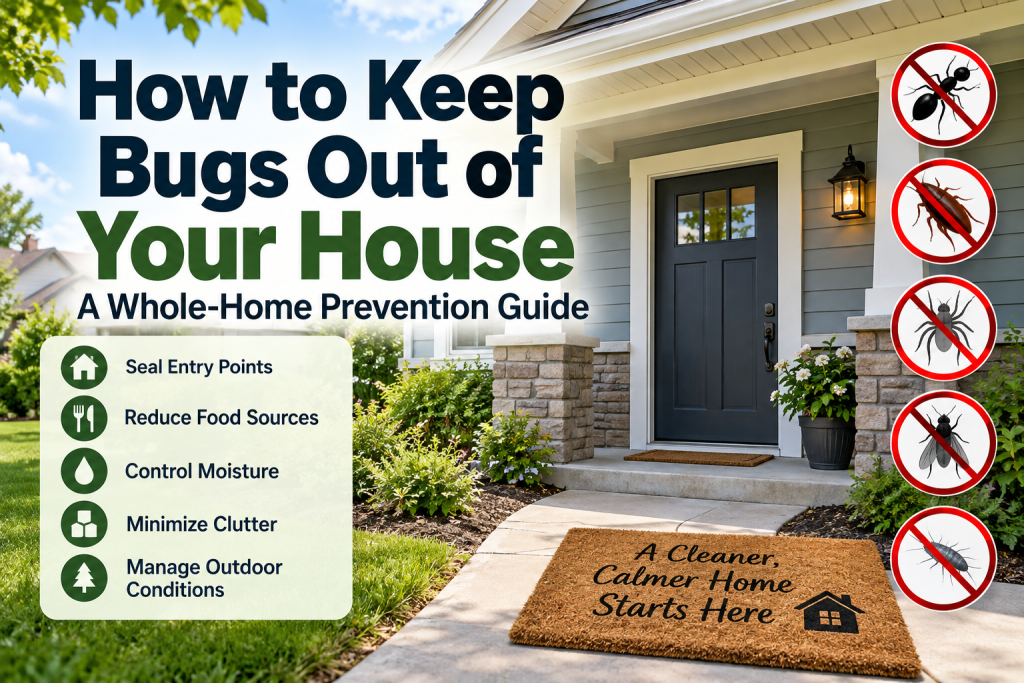
| Prevention area | What to look for | Practical response |
|---|---|---|
| Entry points | Gaps, torn screens, worn seals | Repair or seal suitable openings |
| Food | Crumbs, open packages, residue | Clean spills and store food securely |
| Moisture | Leaks, condensation, standing water | Dry the area and correct the source |
| Shelter | Cardboard, clutter, undisturbed storage | Organize and inspect periodically |
| Outdoors | Vegetation, debris, water near the house | Reduce direct pest access and moisture |
Why Bugs Get Into Houses
Household bugs usually need one or more of three things: a way inside, something useful once they arrive, and a place where they can remain undisturbed.
Access can be surprisingly simple. Small cracks in the foundation, spaces around pipes and wires, gaps beneath doors, torn screens, loose trim, and other openings can provide routes indoors. Garages, crawlspace openings, vents, and utility penetrations can also become entry points when seals or coverings deteriorate.
Once indoors, food makes a home more rewarding. Crumbs beneath cabinets, residue around appliances, open dry goods, pet food, ripe produce, trash, and dirty recycling can all support pest activity.
Moisture matters too. A slow plumbing leak, condensation, a damp basement corner, standing water, wet cleaning materials, or moisture beneath a sink can create favorable conditions for insects that prefer humid environments.
Shelter is another factor. Bugs can remain unnoticed in cardboard boxes, stored fabrics, cluttered shelving, wall-edge storage, and other quiet locations.
Seasonal conditions also influence pest pressure. Warm weather can increase insect activity outdoors, while cooling temperatures may encourage some pests to move toward sheltered spaces. The goal is not to eliminate every insect near the home. It is to reduce the easiest routes and resources that make your house attractive.
How to Keep Bugs Out of House Openings and Entry Points
For whole-home prevention, the exterior is usually the best place to start. Blocking easy access is more efficient than repeatedly dealing with insects after they have established themselves indoors.
Walk around the house from ground level and look for visible openings or deteriorated seals. Focus on places where different building materials meet and where something passes through the exterior.
Check:
- Foundation cracks and obvious gaps
- Openings around pipes, wires, cable lines, and other utility penetrations
- Exterior door frames and thresholds
- Garage-door edges and lower seals
- Window frames and screens
- Worn or missing weatherstripping
- Loose or damaged trim
- Accessible siding gaps
- Vents and other exterior openings
- Crawlspace openings where applicable
This inspection should stay visual and homeowner-safe. You do not need to dismantle siding, open walls, climb onto a roof, or investigate inaccessible structural spaces to improve routine pest prevention.
Seal small gaps with the right material
Small exterior gaps may be suitable for exterior-grade caulk when the surrounding materials and location are appropriate. Weatherstripping can help close movable joints around doors and windows, while a properly fitted door sweep can reduce the open space beneath an exterior door.
Damaged screens should generally be repaired or replaced rather than left with tears or loose edges. Deteriorated seals around obvious utility penetrations can also be corrected when the repair is accessible and does not interfere with the utility itself.
Different openings require different materials. A flexible joint may need a flexible seal, while a screen opening needs screen repair rather than caulk.
Do not seal openings that are intended for ventilation, drainage, pressure relief, or another building function. If you cannot tell why an opening exists, identify its purpose before closing it.
Pay Special Attention to Doors and Windows
Doors and windows combine moving parts, joints, screens, and weather seals, which give insects several possible ways inside.
During daylight, close each exterior door and look for visible light around the edges or beneath the door. A clear gap may indicate a worn sweep, poor adjustment, or deteriorated weatherstripping.
Inspect:
- Door sweeps for cracking, gaps, or missing sections
- Weatherstripping for flattening, tearing, or separation
- Screen doors for gaps along the edges
- Window screens for holes or loose corners
- Frames for visible openings
- Seals where frames meet surrounding trim
A door sweep does not need to drag heavily across the floor to work well. It should close the lower gap without preventing the door from operating normally.
Screens are useful only when they fit properly. A small tear, bowed frame, or loose corner can defeat an otherwise intact screen.
Include garage doors in the same inspection. Daylight along the bottom or sides may point to deteriorated seals or a door that no longer closes evenly. Problems involving damaged tracks, springs, or powered door mechanisms should be handled separately from basic pest-prevention maintenance.
If the gap is beneath an exterior door, see our guide to choosing a door sweep for bugs so you can match the sweep style to the door and threshold.
Reduce Food and Moisture Indoors
Exclusion works best when the interior is also less rewarding to pests. This does not require keeping a perfectly spotless house. It means removing the easy, recurring sources that can support activity.
Make food harder to reach
Store pantry staples in secure packaging or containers appropriate for the food. Pay particular attention to items that may sit for long periods, such as flour, cereal, grains, baking supplies, pet food, and bulk dry goods.
Useful habits include:
- Cleaning crumbs and spills reasonably soon
- Wiping food-preparation surfaces after use
- Avoiding unnecessary overnight pet-food exposure
- Cleaning accessible areas beneath and behind appliances periodically
- Removing produce that has become overripe or decayed
- Keeping trash containers reasonably clean
- Rinsing or managing recycling that contains food residue
Do not overlook small accumulations. A little flour spilled behind a pantry container or food residue beneath a toaster may remain undisturbed for weeks.
Control moisture where you find it
Moisture reduction is both pest prevention and good home maintenance.
Look for:
- Dripping faucets
- Visible plumbing leaks
- Condensation on pipes or surfaces
- Water beneath sinks
- Damp basement areas
- Standing water
- Wet mops, sponges, or cleaning materials left damp for long periods
- Appliance leaks
- Persistently humid rooms
Dry accessible wet areas and correct obvious sources when the repair is within your normal maintenance ability. A persistent leak, hidden moisture, or repeated water intrusion deserves further investigation rather than repeated drying alone.
Ventilation can also help in rooms that routinely become damp. Bathrooms, laundry areas, and other humid spaces should be allowed to dry after use instead of remaining wet for long periods.
If you are seeing silverfish in damp rooms, our guide on how to get rid of silverfish explains how moisture control, storage, and targeted monitoring work together.
Keep Kitchens, Bathrooms, and Storage Areas Less Attractive
Different rooms create different opportunities for bugs, so prevention becomes easier when you focus on the conditions in each area.
Kitchens and pantries
Check dry-goods packaging periodically, especially products that remain in storage for months. Rotate older items forward so they are used rather than forgotten.
Remove spilled grains, flour, crumbs, and other dry food from shelving and floor edges. Avoid allowing stacks of bags, boxes, and rarely used packages to become undisturbed storage zones.
When bringing groceries home, a quick look at packaging can help you notice damaged containers before they disappear into the back of a cabinet.
If small moths or larvae are already appearing around stored food, see how to get rid of pantry moths by finding and removing the infested food source.
Bathrooms and laundry rooms
These spaces tend to need more attention to moisture than food.
Remove standing water, dry persistently damp surfaces, and address accessible leaks. Avoid leaving wet towels, cloths, or other absorbent materials piled in an undisturbed area for long periods.
Check the visible spaces around plumbing penetrations as part of routine maintenance. An opening beneath a sink or behind an accessible fixture can provide both shelter and a route between spaces.
Garages, basements, and storage rooms
Storage areas can combine exterior access, moisture, clutter, and long periods without disturbance.
Reduce large accumulations of cardboard when practical. Store pet food securely, keep an eye on damp corners, and inspect items that remain untouched for long periods.
Leaving at least some visual access around walls can also make inspection easier. When boxes and belongings are packed tightly against every wall, pest signs and moisture problems are easier to miss.
A functional storage area does not need to look empty. The goal is simply to reduce undisturbed hiding places and make routine inspection possible.
Manage the Area Around the House
Indoor prevention begins outside. The conditions immediately around a foundation can affect how easily insects reach the structure and how much moisture is present near it.
Where practical:
- Trim vegetation that remains in direct contact with siding
- Avoid allowing dense plants to completely hide the foundation
- Store firewood and other outdoor materials away from the house rather than directly against it
- Avoid piling excessive mulch against the foundation or siding
- Remove containers or other objects that hold unnecessary standing water
- Keep gutters and drainage systems functioning
- Manage outdoor trash so food residue and spills do not accumulate around containers
The goal is moderation, not a bare or sterilized landscape. Plants, mulch, gardens, and outdoor storage can coexist with good pest prevention. What matters most is reducing direct contact, excess moisture, and protected pathways immediately next to the building.
Drainage deserves particular attention. Water repeatedly collecting beside a foundation is a maintenance concern even apart from insects. Keep accessible drainage paths clear and address recurring water problems rather than relying on pest-control products to compensate for them.
Inspect Items That Come Inside and Watch for Early Signs
Not every bug walks through an exterior crack. Some can arrive with items brought into the house.
Cardboard boxes, packages, groceries, used furniture, stored holiday decorations, firewood, and plants can sometimes carry insects or provide temporary shelter.
You do not need to inspect every shopping bag as though it were contaminated. Use more attention with items that have been stored outdoors, kept in garages or warehouses, purchased secondhand, or left undisturbed for a long time.
Before bringing higher-risk items deep into the home:
- Look over boxes for visible insects or damage
- Inspect used furniture before placing it in living areas
- Check stored decorations as they are unpacked
- Avoid storing firewood inside longer than necessary
- Look over plants and their containers
- Discard unnecessary shipping materials instead of letting them accumulate
Monitoring can then provide an early warning that prevention needs attention.
Notice where and how often insects appear. A single bug near an open door is different from repeated sightings in the same kitchen cabinet.
Watch for recurring insects, damaged food packaging, shed skins, droppings, or other unusual signs around likely entry and feeding areas. Kitchens, damp rooms, storage spaces, doors, and windows are useful places to check during ordinary cleaning and maintenance.
Appropriate monitoring traps can sometimes help confirm whether activity is continuing, but they should remain a monitoring tool rather than a substitute for correcting food, moisture, shelter, and entry problems.
If you use any pesticide or pest-control product, follow its label. Consider children, pets, food-contact surfaces, water sources, ventilation, and the possibility of contaminating stored food. Routine broad spraying is not the foundation of good whole-home prevention.
Adjust Prevention With the Seasons
Pest pressure changes during the year, so periodic inspection is more useful than treating prevention as a one-time project.
Spring often brings increased outdoor insect activity, making it a useful time to inspect screens, exterior seals, and moisture conditions.
During summer, doors and windows may be open more frequently, vegetation is active, and insects are abundant outdoors. Keep screens intact and continue managing food, trash, and standing water.
As temperatures begin to cool in fall, inspect door sweeps, weatherstripping, garage seals, and other exterior openings before insects begin seeking protected spaces.
Winter is a good time to notice indoor patterns. Repeated activity in a heated home may indicate an entry point or an established source that deserves closer identification rather than waiting for warmer weather.
These seasonal checks do not need to become a complicated calendar. A few focused inspections each year, plus routine attention during cleaning and maintenance, can catch many small problems before they grow.
For a common fall invader, see how to get rid of stink bugs and reduce the gaps that allow them to overwinter inside the house.
A Practical Whole-Home Bug Prevention Checklist
Use this checklist as a recurring maintenance review rather than a one-time project.
- Inspect exterior door seals and sweeps.
- Repair torn or loose window and door screens.
- Seal suitable small exterior gaps with the appropriate material.
- Check accessible utility penetrations for obvious openings.
- Do not block required vents, drainage openings, or other functional openings.
- Clean food spills and crumbs promptly.
- Store pantry foods and pet food securely.
- Check older dry goods and rarely used food packages.
- Remove decaying produce.
- Manage food residue in trash and recycling.
- Address dripping faucets and accessible leaks.
- Dry standing water and persistently damp surfaces.
- Check beneath sinks and around appliances for moisture.
- Reduce excessive cardboard and undisturbed clutter.
- Inspect stored items periodically.
- Check garage-door edges and foundation access points.
- Keep vegetation from remaining densely pressed against the structure.
- Manage standing water and drainage around the house.
- Keep outdoor trash areas reasonably clean.
- Watch for repeated pest sightings or recurring signs.
Prevention cannot guarantee a completely bug-free home. An insect can enter through an open door, arrive in a package, or find a tiny opening you have not discovered.
What matters is the pattern. Repeated sightings, increasing numbers, damaged materials or food, unexplained structural warning signs, or activity that continues despite basic prevention may point to a specific pest problem. At that point, accurate identification and targeted control become more useful than adding more general prevention measures.
Final Thoughts
The most effective way to keep bugs out of your house is to combine exclusion with making the interior less rewarding to pests. Close practical entry points, control food and moisture, limit undisturbed shelter, manage conditions near the foundation, and notice recurring activity early.
Aim for steady maintenance rather than a perfectly sealed, insect-free house. A few well-chosen repairs and habits can reduce pest pressure substantially while helping you spot the situations that need more targeted attention.