
how to get rid of silverfish: control moisture and prevent their return
How to get rid of silverfish starts with reducing the damp, sheltered conditions that allow them to remain in the home. Find where activity is concentrated, check for leaks or excess moisture, reduce clutter and accessible food sources, protect stored papers and dry goods, and use monitoring or targeted labeled controls only as needed. Lasting control usually depends more on changing the environment than killing individual insects.
| What you notice | What it may suggest | What to do first |
|---|---|---|
| Silverfish near sinks or bathrooms | Moisture or condensation nearby | Check for leaks and damp surfaces |
| Repeated sightings in a basement | Humidity, storage, or hidden moisture | Dry the area and inspect stored items |
| Silverfish around books or boxes | Shelter plus paper-based materials | Improve storage and reduce damp cardboard |
| Activity in several rooms | Conditions may exist in more than one area | Monitor each location and check moisture sources |
| Numbers stay high after treatment | The underlying moisture or shelter problem remains | Reassess leaks, humidity, clutter, and storage |
What Silverfish Are
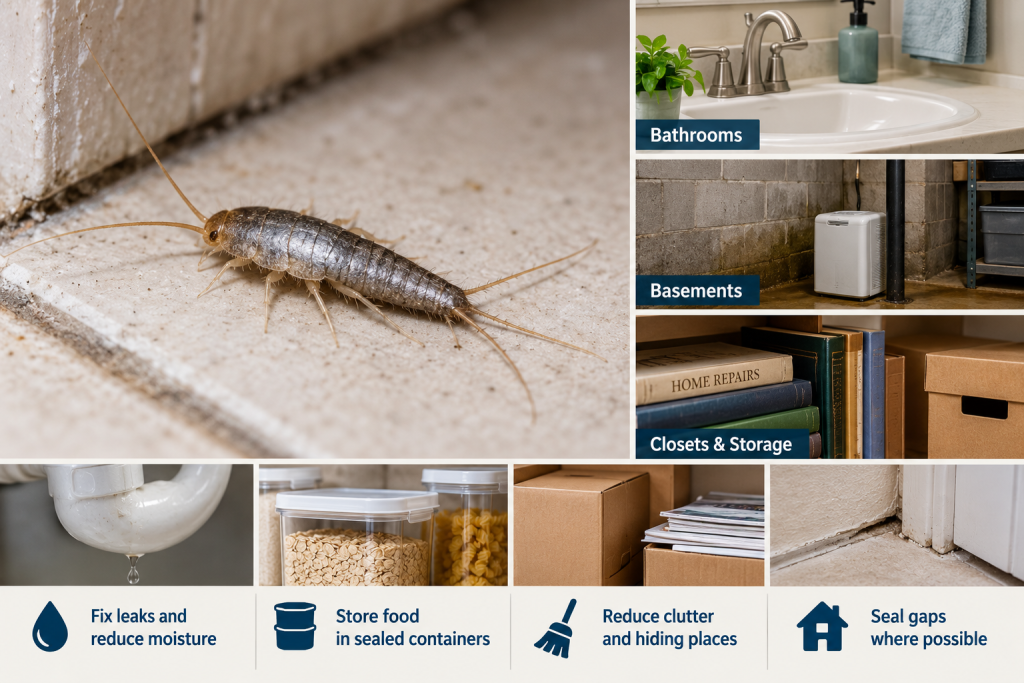
Silverfish are small, wingless insects with tapered bodies, long antennae, and three tail-like appendages. Their bodies are typically gray or silvery, and they often move quickly when disturbed.
They are commonly active at night and favor quiet, protected locations. Because they tend to hide during the day, homeowners may first notice them when turning on a bathroom light, moving a storage box, or opening a rarely used cabinet.
Silverfish are especially associated with places where moisture, shelter, and suitable food materials overlap.
Why Silverfish Appear in Homes
Silverfish do not automatically indicate poor housekeeping. A clean home can still provide the humidity, hiding spaces, and materials these insects need.
Conditions that may support silverfish include:
- High humidity
- Plumbing leaks
- Condensation
- Damp basements or laundry areas
- Bathrooms with poor moisture removal
- Cardboard boxes and paper piles
- Quiet closets and storage rooms
- Books and paper products
- Starch-containing materials and some adhesives
- Food crumbs or dry-food residue
- Pet-food spills
Repeated sightings in the same room can be useful because they help narrow down where favorable conditions may exist.
Where Silverfish Are Commonly Found
Silverfish may show up anywhere suitable conditions exist, but certain rooms deserve closer attention.
Common locations include:
- Bathrooms
- Basements
- Laundry rooms
- Closets
- Kitchens
- Storage rooms
- Garages
- Attics
- Under sinks
- Around plumbing
- Near books and paper storage
- Inside or around cardboard boxes
Look for patterns rather than focusing on one insect. Several sightings under the same sink, for example, are more useful diagnostically than an occasional silverfish wandering through a hallway.
Start With Moisture Control
Reducing excess moisture is one of the most important long-term steps when figuring out how to get rid of silverfish.
The goal is not to make the house perfectly dry. It is to correct unnecessary dampness that provides favorable shelter.
Check for leaks and recurring water
Inspect accessible areas around:
- Sink plumbing
- Faucets
- Toilets
- Washing machines
- Other water-using appliances
- Basement walls and floors
- Laundry areas
- Pipes where condensation develops
Dry standing water and damp materials promptly. If you find a persistent plumbing leak, appliance leak, or building moisture problem, treat it as a maintenance issue that needs proper repair rather than relying on pest control alone.
Do not perform electrical work around wet areas or enter unsafe crawlspaces to search for moisture.
Improve everyday moisture control
Use bathroom exhaust fans where available, especially during and after showers. Avoid leaving wet towels, clothing, or other damp materials piled on floors.
If condensation repeatedly forms on accessible pipes or surfaces, note when and where it occurs. Persistent condensation may point to a moisture or ventilation issue worth addressing separately.
Can dehumidifiers help with silverfish?
A dehumidifier can help when silverfish activity is concentrated in a persistently humid basement, laundry room, or similar space.
However, a dehumidifier does not repair leaks, remove standing water, or eliminate insects by itself. It should be properly sized for the area, maintained according to its instructions, and used as part of a broader moisture-control approach.
If water is actively entering the space, identify and address that problem rather than expecting a dehumidifier to compensate for it.
Reduce Clutter and Hiding Places
Silverfish favor undisturbed spaces where they can stay concealed. Storage areas packed with cardboard, paper, and rarely moved belongings can provide extensive shelter.
You do not need to empty the room or discard useful possessions. Focus on making storage easier to inspect and less favorable to insects.
Consider:
- Removing empty cardboard boxes you no longer need
- Organizing paper piles
- Keeping stored items away from persistently damp walls
- Avoiding tightly packed storage that cannot be inspected
- Moving rarely used belongings occasionally
- Replacing deteriorated damp cardboard when practical
Clutter reduction works best when paired with moisture control. A neatly organized storage room can still support silverfish if it remains persistently damp.
Protect Books, Papers, and Stored Items
Silverfish can feed on starch-containing and cellulose-based materials and may damage paper products, book bindings, wallpaper materials, and some stored fabrics.
Valuable books, photographs, documents, and papers deserve extra protection in areas where silverfish have been active.
Practical measures include:
- Keeping valuable papers dry
- Moving important documents away from damp floors or walls
- Using durable storage containers with secure lids
- Avoiding long-term storage in damp cardboard
- Checking stored books and papers periodically
- Keeping boxes off visibly damp basement or garage floors where practical
Do not discard books or important papers simply because silverfish have been found nearby. Inspect them first and improve the conditions around their storage.
Reduce Accessible Food Sources
Moisture and shelter are usually the larger issues, but sanitation can also reduce materials silverfish may use for food.
Clean up:
- Crumbs
- Flour or starch residue
- Dry-food spills
- Pet-food residue
- Paper debris
- Food particles beneath shelving or appliances where safely accessible
Silverfish can also feed on materials that cannot realistically be removed from a normal home, including some paper products and adhesives. The goal is to eliminate unnecessary food residue, not strip every potentially edible material from the room.
Improve Storage in Damp Areas
Storage choices can make silverfish activity easier to manage and monitor.
Plastic bins or other durable containers with secure lids can protect papers, fabrics, and household goods better than aging cardboard in a damp location.
Leave enough space around stored items to check walls, floors, and corners periodically. Avoid pressing cardboard boxes tightly against a wall that regularly feels damp or develops condensation.
In garages, basements, or utility areas, periodically inspect stored paper and fabric items instead of leaving them untouched for years.
Use Monitoring to Find Active Areas
Sticky monitoring traps can help show where silverfish activity is strongest and whether numbers are declining after moisture and storage improvements.
Monitoring can be especially useful when sightings occur in several rooms. A trap showing repeated activity in one area may help direct your attention toward nearby plumbing, damp storage, or hiding spaces.
Monitoring does not correct the underlying conditions. Its main value is showing where insects are active and whether your control efforts are making a difference.
What About Silverfish Baits or Insecticides?
Some pest-control products are labeled for silverfish and may be appropriate for targeted use in certain locations. They should be considered a supporting measure rather than the foundation of control.
If you use a pest-control product:
- Follow the label exactly
- Use it only in locations permitted by the label
- Keep it away from children and pets
- Avoid food and food-contact surfaces
- Keep products away from water sources unless the label specifically permits the application
- Store unused products securely
Do not use foggers, homemade pesticide mixtures, restricted-use products, or improvised treatments. Broad spraying will not fix a leak, high humidity, or cluttered damp storage that continues to support the insects.
If you are considering plug-in ultrasonic devices instead of bait or other targeted control, see what the evidence shows about whether ultrasonic pest repellers work.
Seal Accessible Gaps and Hiding Areas
After moisture and storage problems are addressed, sealing appropriate gaps can reduce hiding places and movement.
Accessible locations may include:
- Baseboard gaps
- Trim gaps
- Cabinet joints
- Small cracks
- Openings around plumbing penetrations
Do not seal required ventilation, drainage, or other functional building openings.
Exclusion is most useful as a finishing step. Sealing gaps while leaving a damp environment unchanged may simply move visible activity elsewhere.
For a broader prevention plan beyond silverfish, see our whole-home guide on how to keep bugs out by reducing entry points, food, moisture, shelter, and clutter.
Why Silverfish May Keep Coming Back
Persistent silverfish usually mean favorable conditions still exist somewhere.
Common reasons include:
- Humidity remains elevated in an affected area
- A plumbing or appliance leak continues
- Condensation is still occurring
- Cardboard and clutter continue providing shelter
- Damp storage has not been reorganized
- Activity exists in another room
- A hidden moisture problem has not been identified
- Control focused only on visible insects
Repeated pesticide use alone will not resolve an ongoing moisture problem.
If silverfish decline in one room but appear regularly somewhere else, treat the new sightings as useful information and inspect that area for moisture and shelter conditions.
A Practical Silverfish Control Sequence
Step 1: Identify where silverfish are active
Note the rooms and specific areas where sightings occur most often.
Step 2: Check for moisture and leaks
Inspect accessible plumbing, damp surfaces, condensation, and other obvious water sources.
Step 3: Reduce excess humidity
Use existing ventilation appropriately and consider a dehumidifier in persistently humid spaces where suitable.
Step 4: Remove standing water and damp materials
Dry wet surfaces and avoid leaving damp towels, cardboard, or stored belongings in piles.
Step 5: Organize clutter and cardboard
Reduce unnecessary hiding places while keeping storage accessible for future inspection.
Step 6: Protect books, papers, and stored goods
Move vulnerable materials into dry locations or durable containers with secure lids.
Step 7: Clean accessible food and debris
Remove crumbs, dry-food spills, pet-food residue, and loose paper debris.
Step 8: Use monitoring or targeted control if needed
Use sticky monitoring traps or appropriately labeled pest-control products as supporting measures, not substitutes for moisture control.
Step 9: Seal appropriate gaps
Close accessible cracks and gaps that provide shelter without blocking required ventilation or drainage.
Step 10: Reassess continued activity
If sightings remain frequent, check whether another moisture source, storage area, or room has been overlooked.
When Professional Help May Be Useful
Professional pest evaluation may be worthwhile when silverfish remain numerous after moisture, storage, and sanitation improvements or when activity extends through several rooms and the source cannot be identified.
A pest professional may also help when insects appear to be coming from inaccessible structural spaces or valuable books, documents, or stored materials continue to be damaged.
If the larger problem appears to be a persistent leak, hidden water intrusion, ventilation problem, or another building issue, the appropriate next call may instead be a plumber, contractor, HVAC professional, or other qualified building specialist.
Final Thoughts
The most effective way to approach how to get rid of silverfish is to focus on the conditions that allow them to remain. Check for excess moisture first, then improve storage, reduce unnecessary clutter, clean accessible food residue, and monitor the areas where activity has been strongest.
Targeted pest-control products may help in appropriate situations, but they cannot substitute for correcting persistent dampness. If silverfish continue appearing despite those changes, look for an overlooked moisture source or bring in the appropriate pest or building professional.