
how to get rid of stink bugs and keep them out or your house
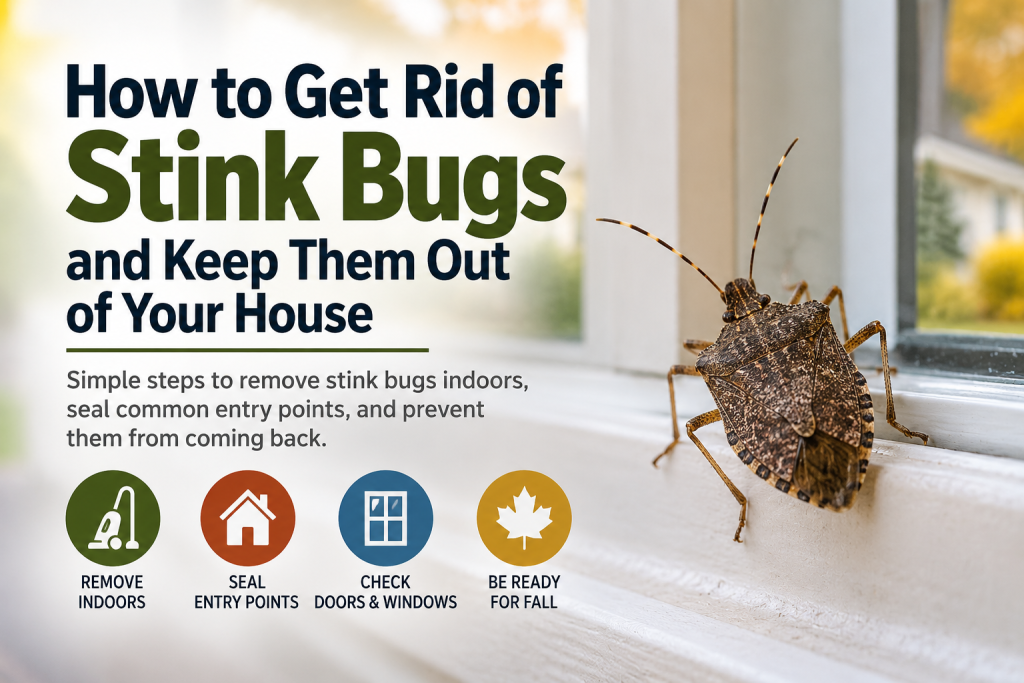
How to get rid of stink bugs starts with removing the insects already indoors without crushing them, then sealing the accessible gaps that allow more to enter. Vacuum clusters or capture individual bugs with a container, check doors and windows for entry points, repair screens and weatherstripping, and complete accessible exclusion work before peak fall activity. Leave high soffit, roofline, and upper-wall repairs to a qualified professional.
| What you notice | What to do |
|---|---|
| One or two stink bugs indoors | Capture them with a cup or container |
| A cluster of bugs | Vacuum them and dispose of the contents promptly |
| Bugs repeatedly near one window or door | Check nearby screens, seals, and weatherstripping |
| Bugs appearing from upper walls or ceilings | Note the location and inspect the exterior from the ground |
| High or inaccessible exterior gaps | Have an appropriate professional inspect and repair them |
What Stink Bugs Are
Stink bugs are shield-shaped insects, and common nuisance species found around homes often have a brown or mottled appearance. They can release a noticeable odor when disturbed or crushed.
Some stink bugs seek protected places to spend the winter. They may gather on warm, sunny exterior walls before slipping into cracks and sheltered building spaces.
Once indoors, nuisance stink bugs generally do not reproduce in living areas or damage the structure. They may remain hidden for months and then appear during temperature changes.
Why Stink Bugs Come Inside
Stink bugs often begin looking for overwintering sites in late summer and fall. Buildings provide protected spaces inside wall voids, attics, trim gaps, and other sheltered areas.
Common entry routes can include:
- Gaps around doors and windows
- Damaged window or door screens
- Worn weatherstripping
- Utility penetrations
- Siding and trim gaps
- Openings around soffits or fascia
- Attic and upper-wall openings
- Gaps around garage doors
Sunny exterior walls may attract large numbers during seasonal movement. Bugs that entered concealed spaces in fall can later emerge into living areas during winter warm-ups or spring.
How to Get Rid of Stink Bugs Indoors
Indoor control is mainly a matter of physical removal. Avoid crushing the insects because doing so can release their characteristic odor.
Use a vacuum for multiple bugs
Vacuuming works well when several stink bugs are gathered around a window, curtain, wall, or other accessible surface.
A bagged vacuum can simplify disposal because the bag can be removed afterward. With a bagless vacuum, empty the collection container promptly after removing the bugs.
The vacuum itself may retain stink bug odor temporarily, especially after collecting several insects.
Use a cup or container for one or two bugs
For an individual stink bug, place a cup or similar container over the insect and gently slide a piece of paper or thin cardboard underneath.
Carry the covered container outside and release the insect away from the entry door.
Why you should avoid crushing them
Stink bugs release odor as a defensive response. Smashing them against walls, windows, curtains, or furniture can make the smell more noticeable and may leave residue on the surface.
Physical capture or vacuuming is usually cleaner.
Should you flush stink bugs?
You can flush an individual bug, but it is generally unnecessary. Capturing and removing the insect or using a vacuum is more practical and uses less water.
Can you use soapy water?
A small container of soapy water can be used to dispatch stink bugs that have already been captured.
There is no need to spray homemade soap mixtures broadly around the house.
Where Stink Bugs Gather Indoors
Indoor gathering points can help narrow down possible entry routes.
Look around:
- Windows and window frames
- Exterior doors
- Curtains
- Upper walls and ceilings
- Light fixtures
- Sunny rooms
- Attic areas that are safely accessible
- Areas beside exterior walls
Repeated activity near one window may point toward a loose screen, frame gap, or worn seal nearby. Bugs emerging around ceilings or upper walls may have entered through higher portions of the building.
Do not open electrical fixtures or wall cavities to search for them.
Find and Seal Accessible Entry Points
Exclusion is the main way to reduce repeat indoor activity.
Inspect only areas you can safely reach from the floor or ground. Do not dismantle siding, trim, soffits, or wall assemblies to hunt for openings.
Check doors and windows
Look for:
- Torn or loose screens
- Worn weatherstripping
- Missing or damaged door sweeps
- Gaps around frames
- Doors that do not seal evenly
- Windows that do not close tightly
Repair screens and replace worn seals as appropriate. The goal is to close ordinary insect-sized gaps without interfering with how the opening is designed to drain or ventilate.
If the gap is beneath an exterior door, see our guide to choosing a door sweep for bugs so you can match the sweep style to the door and threshold.
Check accessible penetrations and trim gaps
Stink bugs may also use openings where pipes, cables, or other utilities pass through the exterior.
Small appropriate gaps can often be sealed with a suitable exterior-grade sealant. Larger defects or damaged trim may need proper building repair rather than simply filling the opening with caulk.
Do not seal required ventilation openings, drainage paths, weep holes, or combustion-air openings.
Check garage-door edges
Inspect the garage-door perimeter for damaged bottom seals, side seals, or visible gaps.
Garages can provide additional sheltered space for overwintering insects when exterior seals have deteriorated.
What About Attics, Soffits, and Upper Walls?
Stink bugs may enter through upper portions of a building, but those locations can create fall hazards.
Homeowners can safely observe the roofline, soffits, vents, and upper siding from the ground and note damaged screens, loose trim, or areas where insects repeatedly cluster.
Do not climb onto a roof, work from a tall or unstable ladder, lean out of an upper-story window, or dismantle soffits to search for entry points.
If the likely opening is high or difficult to reach, have an appropriate repair professional inspect it.
When to Do Stink Bug Exclusion Work
Exclusion is most useful before large numbers of stink bugs begin seeking winter shelter.
Late summer is a practical time to inspect accessible doors, windows, screens, seals, and exterior gaps. Complete appropriate repairs before cooler fall weather drives insects toward protected spaces.
Exact timing varies by region and weather, so watch for stink bugs gathering on sunny exterior walls rather than relying on a fixed date.
Recheck doors and windows as seasons change because weatherstripping, screens, and seals can deteriorate over time.
For a broader whole-home exclusion plan, see our guide on how to keep bugs out by checking common entry points, food, moisture, shelter, and seasonal pest pressure.
What About Exterior Pesticide Sprays?
Broad pesticide spraying is not the main homeowner strategy for stink bugs entering a house. Exclusion addresses the entry problem directly and continues working after pesticide residues would have worn away.
Pesticides also have limited value once stink bugs are already sheltered inside wall voids or other concealed spaces.
If an exterior pesticide is used, it must be labeled for the intended pest, location, and application and used exactly according to its directions. Do not spray pesticides into wall cavities or use indoor foggers for overwintering stink bugs.
Treatment of upper stories, rooflines, soffits, or other elevated areas may require professional equipment and should not become a reason for unsafe ladder or roof work.
Why Stink Bugs Keep Appearing After You Seal Gaps
Seeing another stink bug after exclusion work does not necessarily mean the repair failed.
Some insects may already be overwintering inside wall voids or concealed spaces, where warm, sunny conditions can cause them to emerge gradually.
Continued sightings may also mean an entry point was missed or another side of the house is involved. Note where new bugs appear and recheck accessible openings in that area.
Do Stink Bugs Damage the House or Harm People?
Common nuisance stink bugs found overwintering indoors do not typically chew structural wood, clothing, or furniture. Their main indoor impact is nuisance activity.
They also are not generally considered a major household health threat. Their odor can be unpleasant, and some people may experience irritation after contact with the insects or their defensive secretions.
Avoid unnecessary handling and wash exposed skin if irritation occurs.
A Practical Stink Bug Control Sequence
Step 1: Remove visible stink bugs
Capture individual insects or vacuum clusters without crushing them.
Step 2: Note where they gather
Pay attention to repeated activity around specific windows, doors, ceilings, or exterior walls.
Step 3: Inspect accessible entry points
Check screens, weatherstripping, door edges, frames, and visible utility penetrations.
Step 4: Repair screens and seals
Correct damaged screens, worn weatherstripping, and other ordinary accessible defects.
Step 5: Seal appropriate gaps
Close suitable cracks and penetrations without blocking required ventilation or drainage.
Step 6: Inspect high areas from the ground
Look for obvious problems around soffits, vents, trim, and upper siding without climbing.
Step 7: Recheck during seasonal activity
Continue removing insects that emerge and watch for patterns that reveal another entry point.
Step 8: Get help for inaccessible entry routes
Consider professional inspection when repeated entry appears to involve areas you cannot reach safely.
Common Mistakes
Avoid:
- Crushing stink bugs indoors
- Focusing only on visible insects while ignoring entry points
- Ignoring worn screens or weatherstripping
- Sealing required drainage or ventilation openings
- Broadly spraying pesticides indoors
- Using unsafe ladder or roof access to reach exterior gaps
- Assuming every new stink bug means exclusion work failed
When Professional Help May Be Useful
Professional help can make sense when stink bugs enter in large numbers, or the suspected openings are around high soffits, rooflines, upper siding, vents, or other inaccessible locations.
A pest professional may help assess persistent nuisance activity. If the underlying problem is damaged siding, trim, screening, or another building-envelope defect, a contractor or appropriate repair professional may be the better choice.
Final Thoughts
The best way to approach how to get rid of stink bugs is to remove the insects already inside without crushing them and then reduce future entry. Focus on accessible screens, weatherstripping, door and window gaps, and appropriate exterior penetrations before peak seasonal movement.
Do not turn nuisance-pest prevention into risky exterior work. Observe high areas from the ground and bring in a qualified professional when the suspected entry point is beyond safe reach.