
signs of termites: what homeowners can check before calling a pro
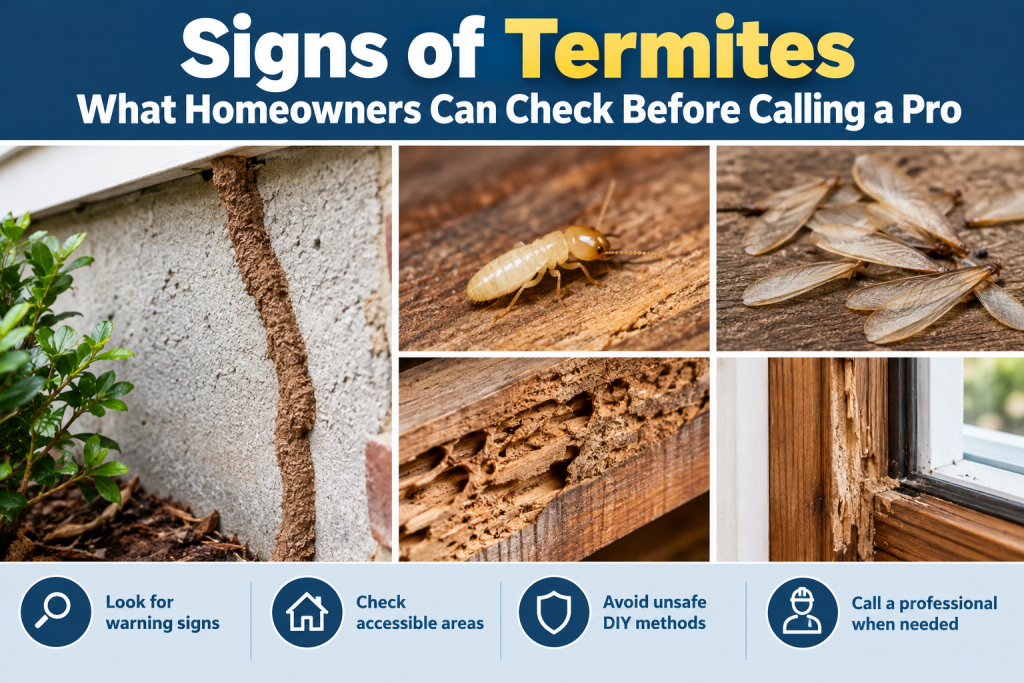
Signs of termites can include mud tubes, discarded wings, swarmers indoors, and suspicious wood damage, but no single clue confirms an infestation by itself. Because termites often stay hidden inside wood, soil, or concealed building areas, the safest homeowner approach is to look for visible patterns, document what you find, and arrange a professional inspection when the evidence is concerning.
| What you notice | What it may indicate | Homeowner next step |
|---|---|---|
| Mud-like tubes on a foundation or support | Possible termite travel route | Photograph the area and call a pest professional |
| Winged insects or piles of wings indoors | Possible termite swarm | Save a photo or specimen for identification |
| Soft, hollow-sounding, or blistered wood | Termites, rot, moisture, or another wood-damaging problem | Avoid destructive testing and get suspicious damage evaluated |
| Wood close to soil plus moisture | Conditions that can conceal or favor termite activity | Inspect visible areas and correct accessible moisture sources |
| Several warning signs together | Greater reason for concern | Schedule a professional termite inspection |
What Termites Are
Termites are insects that feed on cellulose, a material found in wood and many wood-based building products. Depending on the type of termite and the building conditions, activity may occur below ground, inside wood, or in areas that are difficult to see.
That hidden behavior is why a house can have termite activity without obvious insects moving through living spaces. Homeowners are more likely to notice indirect evidence such as tubes, wings, swarmers, or changes in exposed wood.
Common Signs of Termites
Visible warning signs can appear individually or in combination. None should be treated as proof by itself because moisture, decay, carpenter ants, and ordinary deterioration can sometimes produce similar symptoms.
Mud tubes
Subterranean termites may build narrow, soil-like tubes that provide a protected route between the ground and a food source. Look for them on accessible foundation walls, masonry, piers, supports, sill areas, or along cracks and edges.
Do not repeatedly break tubes open as a monitoring method. Finding a suspicious tube is enough reason to photograph its location and consider a professional inspection.
Swarmers and discarded wings
Winged reproductive termites, often called swarmers, may appear when a colony releases adults to establish new colonies.
Possible clues include:
- Winged insects collecting near windows or doors
- Similar-looking insects appearing indoors in noticeable numbers
- Small piles of shed wings on windowsills, floors, or other surfaces
- Repeated wing discoveries in the same part of the house
A few unidentified winged insects outdoors do not necessarily indicate a problem inside the house. Swarmers emerging indoors or repeated piles of wings are more concerning and deserve proper identification.
Wood damage and surface changes
Termite-damaged wood can remain deceptively normal on the surface while damage develops inside. Possible warning signs include:
- Wood that sounds unusually hollow when tapped lightly
- Soft or weakened exposed wood
- Blistered, rippled, or damaged-looking surfaces
- Thin surface material covering deteriorated wood beneath
- Visible galleries in wood that is already exposed
- Damage around baseboards, trim, sill areas, or accessible framing
Use only light observation. Do not drill, cut, pry, or aggressively probe structural wood to search for hidden damage.
Doors or windows that suddenly begin sticking can also accompany damaged or swollen wood. However, binding can have many causes, including seasonal movement and moisture, so it is not a termite diagnosis.
What Termite Mud Tubes Look Like
Termite mud tubes usually resemble narrow lines or tunnels made from dried soil or mud. They may run vertically along a foundation, cross masonry, follow a crack, or appear along the edge of a support.
Common accessible locations include:
- Basement foundation walls
- Foundation piers
- Exposed supports
- Crawlspace entrances visible from a safe position
- Areas where masonry meets structural wood
- Utility penetrations near the foundation
Do not enter a cramped, wet, unstable, poorly ventilated, or otherwise unsafe crawlspace to look for tubes. A visual check from an accessible entrance is enough for a homeowner inspection.
Because dirt, old construction material, and other insect activity can sometimes be mistaken for termite tubes, identification by a qualified pest professional is useful when the appearance is uncertain.
Swarmers: Termites vs. Flying Ants
Flying ants are commonly confused with termite swarmers. Looking at several body features together can help with a preliminary identification.
| Feature | Termite swarmer | Flying ant |
|---|---|---|
| Antennae | Relatively straight | Elbowed |
| Waist | Broad | Narrow or pinched |
| Wings | Similar in length | Front wings often longer than rear wings |
Photograph suspicious insects rather than relying on memory. If possible, keep an intact dead specimen in a small container for identification.
These features are useful clues, not a substitute for professional identification when insects are damaged, extremely small, or difficult to see clearly.
Termite Damage vs. Moisture, Rot, or Carpenter Ants
Wood deterioration does not automatically mean termites.
Moisture and rot
Water problems can soften, discolor, swell, crack, or deteriorate wood. Moisture can also affect trim, sill areas, framing, doors, and windows in ways that resemble insect damage.
Look for visible conditions that may help explain the damage, including:
- Plumbing leaks
- Roof leaks visible from inside
- Damp basement or crawlspace conditions
- Condensation
- Poor exterior drainage
- Overflowing or poorly directed gutters and downspouts
- Water collecting near the foundation
Moisture does not prove termite activity. It can simply be a separate source of deterioration or a condition that makes inspection more complicated.
Termites vs. carpenter ants
Carpenter ants excavate wood to create nesting areas rather than consuming the wood itself. They may leave coarse, sawdust-like material near an active area and are often associated with damp or previously damaged wood.
Termites consume cellulose and can cause internal damage with less obvious debris. Subterranean termites may also produce mud tubes.
Because both pests can be associated with damaged wood, do not assume the cause based on softness or deterioration alone.
If the signs point more toward large ants, coarse sawdust-like debris, and damp or damaged wood, see our guide to carpenter ants and the warning signs homeowners should watch for.
Common Places Homeowners Can Check Safely
A termite check should remain visual, accessible, and non-destructive. You do not need to open the building to perform a useful first inspection.
Check accessible areas
Look around:
- The exterior foundation perimeter
- Basement foundation walls
- Accessible sill areas
- Exposed structural wood
- Garage walls and wood near the slab
- Exterior doors and accessible window trim
- Porch and deck connections visible from the ground
- Utility penetrations
- Crawlspace entrances viewed from a safe location
- Areas with a history of leaks or dampness
Document suspicious findings with photos and note their location. That information can make a later professional inspection more efficient.
Watch for wood-to-soil contact
Wood touching or nearly touching soil can make termite access more difficult to notice.
Visible conditions worth noting include:
- Siding or wood trim very close to soil
- Wood debris piled against the foundation
- Buried scraps of lumber
- Landscape timbers touching the house
- Firewood stored directly against the structure
- Porch, step, or deck components contacting soil
These conditions do not prove termites are present. They are simply locations where visible access routes may be harder to recognize.
For broader pest prevention around foundations, doors, utility penetrations, moisture, and other common entry conditions, see our whole-home guide on how to keep bugs out.
What You Can Safely Check Yourself
The homeowner’s role is observation, not invasive diagnosis.
A practical inspection can include:
- Look for visible mud tubes along accessible foundations and supports.
- Check windowsills and floors for discarded wings.
- Photograph winged insects for later identification.
- Observe exposed wood for obvious damage or surface changes.
- Tap suspicious accessible wood lightly and stop if it appears fragile.
- Note blistered, soft, cracked, or deteriorated areas without digging into them.
- Look for visible wood-to-soil contact.
- Check accessible areas for leaks, drainage problems, or persistent dampness.
- Record where each suspicious sign appears and whether several signs occur in the same area.
What not to do
Do not turn an inspection into demolition or treatment.
Avoid:
- Drilling into walls or wood
- Cutting into framing
- Tearing off trim
- Removing siding to search for termites
- Spraying pesticides blindly into wall cavities
- Injecting pesticides
- Mixing or applying structural termiticides
- Disturbing structural components
- Entering unsafe crawlspaces
- Climbing onto roofs to investigate possible damage
If the evidence is hidden beyond what you can see safely, that is the point to hand the inspection over to a professional.
When to Call a Pest or Building Professional
A qualified pest professional should inspect the home when you find visible mud tubes, indoor swarmers, repeated piles of discarded wings, suspicious wood deterioration, or several signs of termites in the same area.
Professional identification is also appropriate when you cannot confidently distinguish termites from ants or another wood-damaging insect, when activity appears to originate from structural wood, or when the home has a known history of termite problems.
DIY spot treatment is not a reliable substitute for determining the extent of the problem. The visible location may not show where the colony or concealed activity is located, and treating one accessible spot may leave other activity undiscovered.
When a building professional may also be needed
Pest control and building repair are separate issues. If wood has substantial visible deterioration, a carpenter, contractor, structural professional, or another appropriate building specialist may need to evaluate the repair.
Seek additional building evaluation when you notice:
- Visibly damaged framing
- Sagging floors or other apparent movement
- Badly deteriorated structural wood
- Failing sill or trim areas
- Extensive moisture-related deterioration
- Damage whose repair scope is unclear
Do not cut into questionable framing or attempt to determine structural safety by testing damaged members yourself.
A Practical Termite Warning-Sign Checklist
Consider arranging a professional termite inspection if you find one strong warning sign or several less-specific signs together:
- Mud tubes on a foundation, pier, support, or exposed wood
- Winged termites appearing indoors
- Repeated piles of discarded wings
- Hollow-sounding, soft, or visibly damaged wood
- Blistered or altered wood surfaces
- Visible galleries in already-exposed damaged wood
- Suspicious deterioration around trim, sill areas, or framing
- Wood touching or nearly touching soil
- Persistent moisture near structural wood
- Repeated suspicious insect activity in the same area
- Multiple warning signs concentrated in one part of the house
The pattern matters. A swollen baseboard beside a plumbing leak may point toward moisture, while damaged wood accompanied by mud tubes or indoor swarmers gives a pest professional more reason to investigate termite activity.
Final Thoughts
The safest way for homeowners to respond to possible signs of termites is to stay focused on what can be seen without damaging the house. Look for mud tubes, swarmers, discarded wings, suspicious wood changes, moisture problems, and vulnerable areas where wood approaches soil.
If the evidence suggests concealed activity, document it and call a qualified pest professional rather than opening walls or attempting spot treatment. When significant building damage is also visible, bring in an appropriate building professional to evaluate the repair separately.